Kirjojen hintavertailu – 12 859 819 kirjaa ja 27 kauppaa

Kirjailija

Rosalind Edwards

Kirjat ja teokset yhdessä paikassa: 18 kirjaa, julkaisuja vuosilta 1993–2024, suosituimpiin kuuluu Understanding Families Over Time. Vertaile teosten hintoja ja tarkista saatavuus suomalaisista kirjakaupoista.

18 kirjaa

Kirjojen julkaisuvuodet: 1993–2024.

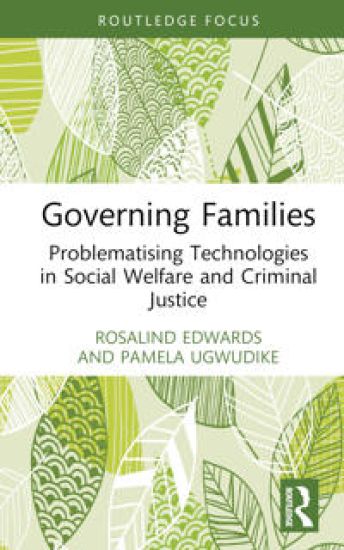
Governing Families

Governing Families

Rosalind Edwards; Pamela Ugwudike

TAYLOR FRANCIS LTD
2024
nidottu
This book provides a focused discussion of how families are governed through technologies. It shows how states attempt to influence, shape and govern families as both the source of and solution to a range of social problems including crime. The book critically reviews family governance in contemporary neo-liberal society, notably through technologies of self-responsibilisation, biologisation, and artificial intelligence. The book draws attention to the poor working class and racialised families that often are marked out and evaluated as culpable, dysfunctional, and a threat to economic and social order, obscuring the structural inequalities that underpin family lives and discriminations that are built into the tools that identify and govern families. Filling a gap where disciplinary perspectives cross-cut, this book brings together sociological and criminological perspectives to provide a unique cross-disciplinary approach to the topic. It will be of interest to researchers, scholars and lecturers studying sociology and criminology, as well as policy-makers and professionals working in the fields of early years and family intervention programmes, including in social work, health, education, and the criminologically-relevant professions such as police and probation.
Big Qual

Big Qual

Susie Weller; Emma Davidson; Rosalind Edwards; Lynn Jamieson

Springer International Publishing AG
2023
nidottu
This upper-level textbook presents a new approach to large scale qualitative analysis – the pioneering breadth-and-depth method. It covers the strengths and deployment of “big qual” as a distinct research methodology. The book will appeal to students and researchers across disciplines and methodological backgrounds. The growing availability of large qualitative data sets presents exciting opportunities. Pooling multiple qualitative data sets enhances the possibility of theoretical generalisability and strengthens claims from qualitative research about understanding how social processes work. Given the evolving possibilities that big data offers the humanities and social sciences, this book will be a must-have resource, building capacity and provoking new ways of thinking about qualitative research and its analysis.
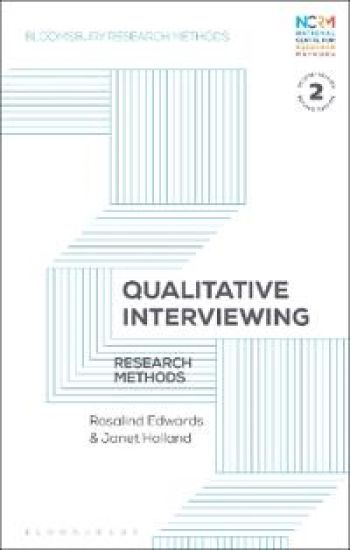
Qualitative Interviewing

Qualitative Interviewing

Rosalind Edwards; Janet Holland

BLOOMSBURY PUBLISHING PLC
2023
nidottu

Halvin toimitettuna 32,40 €

First published Open Access under a Creative Commons license as What is Qualitative Interviewing?, this title is now also available as part of the Bloomsbury Research Methods series. This book is a step-by-step guide for new and experienced social science researchers looking to use interviews in their projects. Rosalind Edwards and Janet Holland explain a range of interview types and practices, providing real research examples as informative illustrations of qualitative interviewing in practice, and the use of a range of creative interview tools. This new and expanded edition includes:- recent developments in the radical critique of interviews debate focusing on form and content of interviews;- the strategic shift to online interviewing in response to the Covid-19 pandemic;- discussion of the decolonization of methodology and research, and the growing attention to indigenous methodologies for generating data;- an assessment of the changing landscape for qualitative interviewing. The authors explore the use of new technologies as well as issues around asking and listening, and power dynamics in research. Written in a clear and accessible style, the book concludes with an updated annotated bibliography of key texts and journals in the field.
Qualitative Interviewing

Qualitative Interviewing

Rosalind Edwards; Janet Holland

BLOOMSBURY PUBLISHING PLC
2023
sidottu
First published Open Access under a Creative Commons license as What is Qualitative Interviewing?, this title is now also available as part of the Bloomsbury Research Methods series. This book is a step-by-step guide for new and experienced social science researchers looking to use interviews in their projects. Rosalind Edwards and Janet Holland explain a range of interview types and practices, providing real research examples as informative illustrations of qualitative interviewing in practice, and the use of a range of creative interview tools. This new and expanded edition includes:- recent developments in the radical critique of interviews debate focusing on form and content of interviews;- the strategic shift to online interviewing in response to the Covid-19 pandemic;- discussion of the decolonization of methodology and research, and the growing attention to indigenous methodologies for generating data;- an assessment of the changing landscape for qualitative interviewing. The authors explore the use of new technologies as well as issues around asking and listening, and power dynamics in research. Written in a clear and accessible style, the book concludes with an updated annotated bibliography of key texts and journals in the field.
Governing Families

Governing Families

Rosalind Edwards; Pamela Ugwudike

TAYLOR FRANCIS LTD
2023
sidottu
This book provides a focused discussion of how families are governed through technologies. It shows how states attempt to influence, shape and govern families as both the source of and solution to a range of social problems including crime. The book critically reviews family governance in contemporary neo-liberal society, notably through technologies of self-responsibilisation, biologisation, and artificial intelligence. The book draws attention to the poor working class and racialised families that often are marked out and evaluated as culpable, dysfunctional, and a threat to economic and social order, obscuring the structural inequalities that underpin family lives and discriminations that are built into the tools that identify and govern families. Filling a gap where disciplinary perspectives cross-cut, this book brings together sociological and criminological perspectives to provide a unique cross-disciplinary approach to the topic. It will be of interest to researchers, scholars and lecturers studying sociology and criminology, as well as policy-makers and professionals working in the fields of early years and family intervention programmes, including in social work, health, education, and the criminologically-relevant professions such as police and probation.
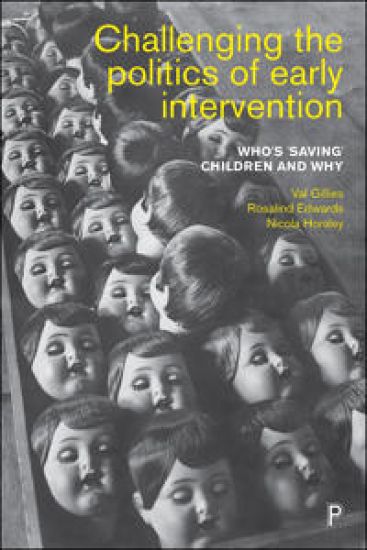
Challenging the Politics of Early Intervention

Challenging the Politics of Early Intervention

Val Gillies; Rosalind Edwards; Nicola Horsley

Policy Press
2017
nidottu
A vital interrogation of the internationally accepted policy and practice consensus that intervention to shape parenting in the early years is the way to prevent disadvantage. Given the divisive assumptions and essentialist ideas behind early years intervention, in whose interests does it really serve? This book critically assesses assertions that the ‘wrong type of parenting’ has biological and cultural effects, stunting babies’ brain development and leading to a life of poverty and under-achievement. It shows how early intervention policies underpinned by interpretations of brain science perpetuate gendered, classed and raced inequalities. The exploration of future directions will be welcomed by those looking for a positive, collectivist vision of the future that addresses the real underlying issues in the creation of disadvantage.
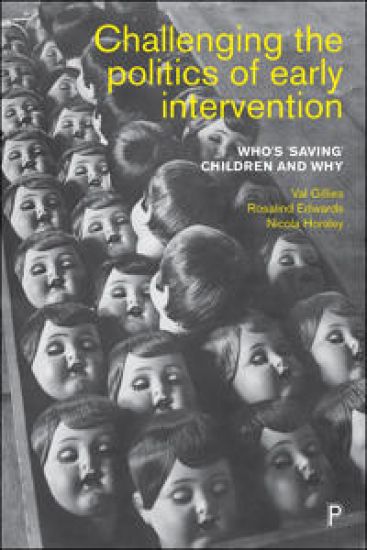
Challenging the Politics of Early Intervention

Challenging the Politics of Early Intervention

Val Gillies; Rosalind Edwards; Nicola Horsley

Policy Press
2017
sidottu
A vital interrogation of the internationally accepted policy and practice consensus that intervention to shape parenting in the early years is the way to prevent disadvantage. Given the divisive assumptions and essentialist ideas behind early years intervention, in whose interests does it really serve? This book critically assesses assertions that the ‘wrong type of parenting’ has biological and cultural effects, stunting babies’ brain development and leading to a life of poverty and under-achievement. It shows how early intervention policies underpinned by interpretations of brain science perpetuate gendered, classed and raced inequalities. The exploration of future directions will be welcomed by those looking for a positive, collectivist vision of the future that addresses the real underlying issues in the creation of disadvantage.
Understanding Families Over Time

Understanding Families Over Time

Rosalind Edwards

Palgrave Macmillan
2014
sidottu
Drawing on research from the Timescapes Study, this volume discusses the life chances and experiences of children and young people, parents and older generations. A unique qualitative longitudinal study forms the basis for the chapter contributions, delivering policy-relevant findings to address individual and family lives over time.
Understanding Families Over Time

Understanding Families Over Time

Rosalind Edwards

Palgrave Macmillan
2014
nidottu
Drawing on research from the Timescapes Study, this volume discusses the life chances and experiences of children and young people, parents and older generations. A unique qualitative longitudinal study forms the basis for the chapter contributions, delivering policy-relevant findings to address individual and family lives over time.
What is Qualitative Interviewing?

What is Qualitative Interviewing?

Rosalind Edwards; Janet Holland

Bloomsbury Publishing PLC
2013
nidottu

Halvin toimitettuna 42,50 €

This book is available as open access through the Bloomsbury Open Access programme and is available on bloomsburycollections.com. What is Qualitative Interviewing? is an accessible and comprehensive ‘what is’ and ‘how to’ methods book. It is distinctive in emphasising the importance of good practice in understanding and undertaking qualitative interviews within the framework of a clear philosophical position. Rosalind Edwards and Janet Holland provide clear and succinct explanations of a range of philosophies and theories of how to know about the social world, and a thorough discussion of how to go about researching it using interviews. A series of short chapters explain and illustrate a range of interview types and practices. Drawing on their own and colleagues’ experiences Holland and Edwards provide real research examples as informative illustrations of qualitative interviewing in practice, and the use of a range of creative interview tools. They discuss the use of new technologies as well as tackling enduring issues around asking and listening and power dynamics in research. Written in a clear and accessible style the book concludes with a useful annotated bibliography of key texts and journals in the field. What is Qualitative Interviewing? provides a vital resource for both new and experienced social science researchers across a range of disciplines.
What is Qualitative Interviewing?

What is Qualitative Interviewing?

Rosalind Edwards; Janet Holland

Bloomsbury Academic
2013
sidottu
This book is available as open access through the Bloomsbury Open Access programme and is available on bloomsburycollections.com. What is Qualitative Interviewing? is an accessible and comprehensive ‘what is’ and ‘how to’ methods book. It is distinctive in emphasising the importance of good practice in understanding and undertaking qualitative interviews within the framework of a clear philosophical position. Rosalind Edwards and Janet Holland provide clear and succinct explanations of a range of philosophies and theories of how to know about the social world, and a thorough discussion of how to go about researching it using interviews. A series of short chapters explain and illustrate a range of interview types and practices. Drawing on their own and colleagues’ experiences Holland and Edwards provide real research examples as informative illustrations of qualitative interviewing in practice, and the use of a range of creative interview tools. They discuss the use of new technologies as well as tackling enduring issues around asking and listening and power dynamics in research. Written in a clear and accessible style the book concludes with a useful annotated bibliography of key texts and journals in the field. What is Qualitative Interviewing? provides a vital resource for both new and experienced social science researchers across a range of disciplines.
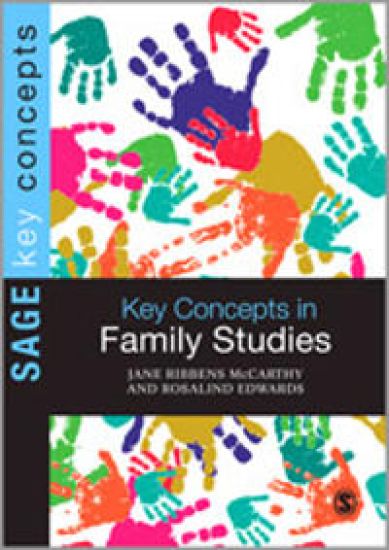
Key Concepts in Family Studies

Key Concepts in Family Studies

Jane Ribbens McCarthy; Rosalind Edwards

SAGE Publications Inc
2010
nidottu
"This is a thoughtful and sometimes challenging elaboration of some of the key concepts in contemporary family studies... Students and researchers will want to have this book close to hand, not simply as a reference work but as a stimulus to critical social analysis." - David H J Morgan, University of Manchester "Written in an intelligent, engaging, and accessible manner by two leading and highly respected family scholars whose contributions to the field over the past two decades have been path-breaking. This is an important resource for students and professionals studying, and working in, the field of family studies within and across the disciplines of sociology, social policy, social work, health studies, education, and gender studies." - Andrea Doucet, Carleton University This book's individual entries introduce, explain and contextualise key topics within the study of family lives. Definitions, summaries and key words are developed throughout with careful cross-referencing allowing students to move effortlessly between core ideas and themes. Each entry provides: Clear definitionsLucid accounts of key issuesUp-to-date suggestions for further readingInformative cross-referencin. Relevant, focused and accessible, this book will provide students with an indispensible guide to the central concepts of family studies.
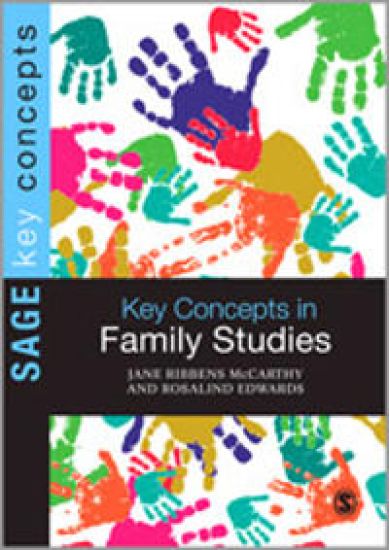
Key Concepts in Family Studies

Key Concepts in Family Studies

Jane Ribbens McCarthy; Rosalind Edwards

SAGE Publications Inc
2010
sidottu
"This is a thoughtful and sometimes challenging elaboration of some of the key concepts in contemporary family studies... Students and researchers will want to have this book close to hand, not simply as a reference work but as a stimulus to critical social analysis." - David H J Morgan, University of Manchester "Written in an intelligent, engaging, and accessible manner by two leading and highly respected family scholars whose contributions to the field over the past two decades have been path-breaking. This is an important resource for students and professionals studying, and working in, the field of family studies within and across the disciplines of sociology, social policy, social work, health studies, education, and gender studies." - Andrea Doucet, Carleton University This book's individual entries introduce, explain and contextualise key topics within the study of family lives. Definitions, summaries and key words are developed throughout with careful cross-referencing allowing students to move effortlessly between core ideas and themes. Each entry provides: Clear definitionsLucid accounts of key issuesUp-to-date suggestions for further readingInformative cross-referencin. Relevant, focused and accessible, this book will provide students with an indispensible guide to the central concepts of family studies.
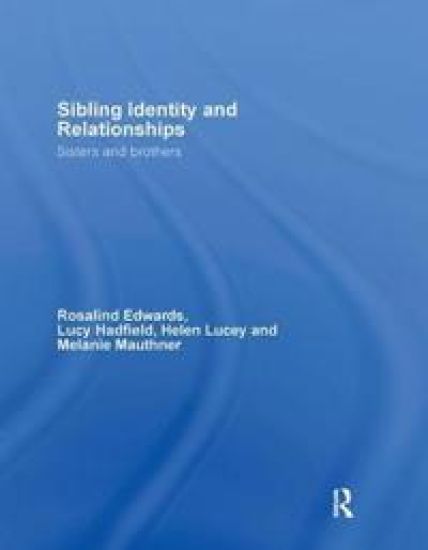
Sibling Identity and Relationships

Sibling Identity and Relationships

Rosalind Edwards; Lucy Hadfield; Helen Lucey; Melanie Mauthner

Routledge
2006
sidottu
Sibling Identity and Relationships explores the special place that siblings occupy in the lives of children and young people, providing new insights into sibling identity and relationships. Drawing on social constructionist and psychodynamic perspectives, it discusses who constitutes a sibling, emotional connections and separations, conflict and aggression and how siblings construct and conduct their relationship out of the home, at school and in local communities. Shedding light on broader debates about social and psychic divisions in wider society, this book explores the ways that siblings are important for children and young people’s social and emotional sense of self in relation to others. Reviewing current literature on sibling relationships as well as proposing alternative theoretical perspectives, Sibling Identity and Relationships will be a valuable resource to academics and students of childhood studies and social work as well as health and social care professionals.
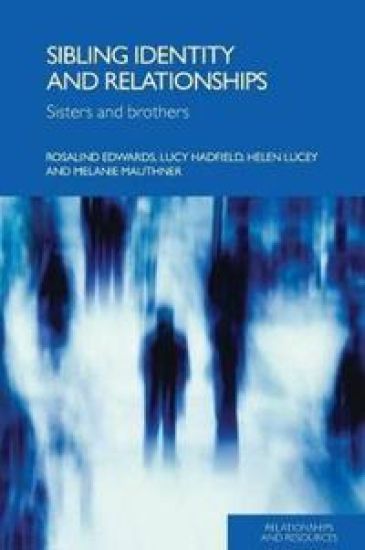
Sibling Identity and Relationships

Sibling Identity and Relationships

Rosalind Edwards; Lucy Hadfield; Helen Lucey; Melanie Mauthner

Routledge
2006
nidottu
Sibling Identity and Relationships explores the special place that siblings occupy in the lives of children and young people, providing new insights into sibling identity and relationships. Drawing on social constructionist and psychodynamic perspectives, it discusses who constitutes a sibling, emotional connections and separations, conflict and aggression and how siblings construct and conduct their relationship out of the home, at school and in local communities. Shedding light on broader debates about social and psychic divisions in wider society, this book explores the ways that siblings are important for children and young people’s social and emotional sense of self in relation to others. Reviewing current literature on sibling relationships as well as proposing alternative theoretical perspectives, Sibling Identity and Relationships will be a valuable resource to academics and students of childhood studies and social work as well as health and social care professionals.
Mothers and Education: Inside Out?

Mothers and Education: Inside Out?

Rosalind Edwards; Mary Hughes; Jane Ribbens; Miriam E David

Palgrave Macmillan
1993
nidottu
Examines the various aspects of the relationships between mothers and education at different levels in the education system. In particular, mothers of young children in relation to various educational policies are looked at in interaction with their children's schools and teachers.
Mature Women Students

Mature Women Students

Rosalind Edwards

Taylor Francis Ltd
1993
nidottu
First Published in 1993. At a time when more mature women are encouraged to enter higher education, this book investigates the effects that being a student has on women's family and social relationships. Taking a multidisciplinary approach, Mature Women Students draws on in-depth interviews with women of different ethnic backgrounds and social classes -all mothers and in long-term relationships with a man. The result is a comprehensive picture of the shifting patterns of the women's lives at various stages of social science degree-level study. This picture reveals, amongst other things, that the public and private spheres of education and family are not separate entities; they interact and impinge, with particular implications for the position of women within each sphere. This accessible and challenging book illuminates an important and growing issue in women's lives and in society.