Kirjojen hintavertailu – 12 903 724 kirjaa ja 27 kauppaa

Kirjailija

Rosalyn Black

Kirjat ja teokset yhdessä paikassa: 5 kirjaa, julkaisuja vuosilta 2011–2020, suosituimpiin kuuluu Young People in Digital Society. Vertaile teosten hintoja ja tarkista saatavuus suomalaisista kirjakaupoista.

5 kirjaa

Kirjojen julkaisuvuodet: 2011–2020.

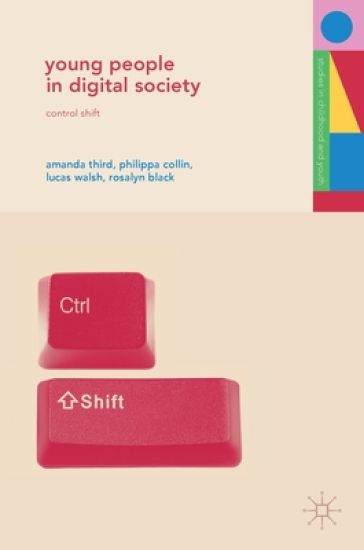
Young People in Digital Society

Young People in Digital Society

Amanda Third; Philippa Collin; Lucas Walsh; Rosalyn Black

Palgrave Macmillan
2020
sidottu
This book adopts a critical youth studies approach and theorizes the digital as a key feature of the everyday to analyse how ideas about youth and cyber-safety, digital inclusion and citizenship are mobilized. Despite a growing interest in the benefits and opportunities for young people online, both ‘young people’ and ‘the digital’ continue to be constructed primarily as sites of social and cultural anxiety requiring containment and control. Juxtaposing public policy, popular educational and parental framings of young people’s digital practices with the insights from fieldwork conducted with young Australians aged 12–25, the book highlights the generative possibilities of attending to intergenerational tensions. In doing so, the authors show how a shift beyond the paradigm of control opens up towards a deeper understanding of the capacities that are generated in and through digital life for young and old alike. Young People in Digital Society will be of interest to scholars and students in youth studies, cultural studies, sociology, education, and media and communications.
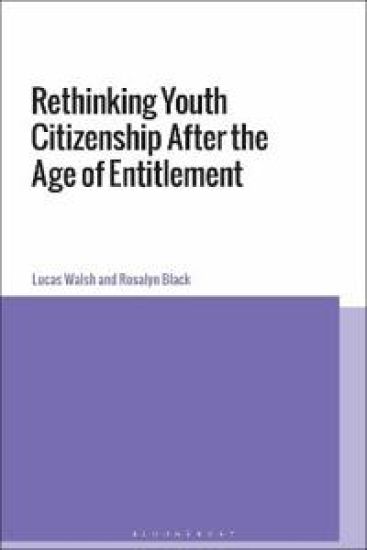
Rethinking Youth Citizenship After the Age of Entitlement

Rethinking Youth Citizenship After the Age of Entitlement

Lucas Walsh; Rosalyn Black

Bloomsbury Academic
2019
nidottu
Rethinking Youth Citizenship After the Age of Entitlement provides a primer for exploring hard questions about how young people understand, experience and enact their citizenship in uncertain times and about their senses of membership and belonging. It examines how familiar modes of exclusion are compounded by punitive youth policies in ways that are concealed by neoliberal discourses. It considers the role of key institutions in constructing young people’s citizenship and looks at the ways in which some young people are opting out of established enactments of citizenship while creating new ones. Critically reflecting on recent scholarly interest in the geographical, relational, affective and temporal dimensions of young people’s experiences of citizenship, it also reinvigorates the discussion about citizenship rights and entitlements, and what these might mean for young people. The book draws on global research and theories of citizenship but has a particular focus on Australia, which provides a unique example of a country that has fared well economically yet is mimicking the austerity measures of the United Kingdom and Europe. It concludes with an argument for a rethinking of citizenship which recognises young people’s rights as citizens and the ways in which these interact with their lived experience at a time that has been characterised as ‘the end of the age of entitlement’.
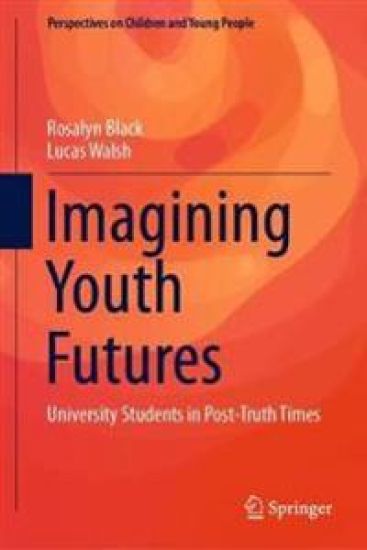
Imagining Youth Futures

Imagining Youth Futures

Rosalyn Black; Lucas Walsh

Springer Verlag, Singapore
2019
sidottu
This book offers a much-needed analysis of how young people understand and navigate their lives as workers, family members and political actors in an era of uncertainty, Brexit and Trump. Drawing on the latest and most seminal international research and the unique stories of 30 young university students from Australia, France and Britain, it explores the nature of higher education and post-education trajectories for young people facing a ‘post-truth’ world in which opportunities for home ownership, work security and the formation of committed relationships have been thoroughly eroded. It also presents a timely reflection on young people’s hopes and concerns in the wake of global political upheaval, demographic change, financial crises, labour market uncertainties and unprecedented human mobility. Imagining Youth Futures makes a unique contribution to the fields of youth studies, transitions to university, and contemporary youth patterns in the areas of work, family, politics and mobility.
Rethinking Youth Citizenship After the Age of Entitlement

Rethinking Youth Citizenship After the Age of Entitlement

Lucas Walsh; Rosalyn Black

Bloomsbury Academic
2018
sidottu
Rethinking Youth Citizenship After the Age of Entitlement provides a primer for exploring hard questions about how young people understand, experience and enact their citizenship in uncertain times and about their senses of membership and belonging. It examines how familiar modes of exclusion are compounded by punitive youth policies in ways that are concealed by neoliberal discourses. It considers the role of key institutions in constructing young people’s citizenship and looks at the ways in which some young people are opting out of established enactments of citizenship while creating new ones. Critically reflecting on recent scholarly interest in the geographical, relational, affective and temporal dimensions of young people’s experiences of citizenship, it also reinvigorates the discussion about citizenship rights and entitlements, and what these might mean for young people. The book draws on global research and theories of citizenship but has a particular focus on Australia, which provides a unique example of a country that has fared well economically yet is mimicking the austerity measures of the United Kingdom and Europe. It concludes with an argument for a rethinking of citizenship which recognises young people’s rights as citizens and the ways in which these interact with their lived experience at a time that has been characterised as ‘the end of the age of entitlement’.
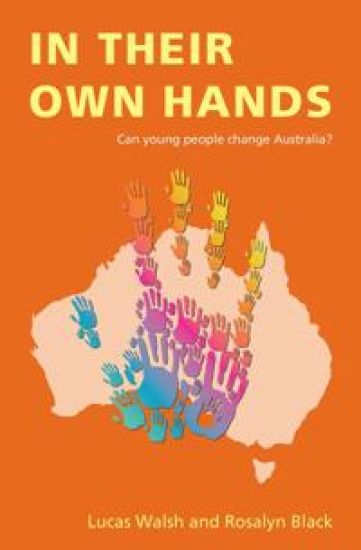
In Their Own Hands

In Their Own Hands

Lucas Walsh; Rosalyn Black

Australian Council Educational Research (ACER)
2011
nidottu
This book will explore the ways in which children and young people’s participation in society operates as a good in itself. It will also explore the ways in which social participation and change making by children and young people have positive outcomes for other domains that are central to their wellbeing as well as to the wider social good.