Kirjojen hintavertailu – 12 903 724 kirjaa ja 27 kauppaa

Kirjailija

Rosamund Sutherland

Kirjat ja teokset yhdessä paikassa: 7 kirjaa, julkaisuja vuosilta 1996–2013, suosituimpiin kuuluu A Spreadsheet Approach to Maths for GNVQ Engineering. Vertaile teosten hintoja ja tarkista saatavuus suomalaisista kirjakaupoista.

7 kirjaa

Kirjojen julkaisuvuodet: 1996–2013.

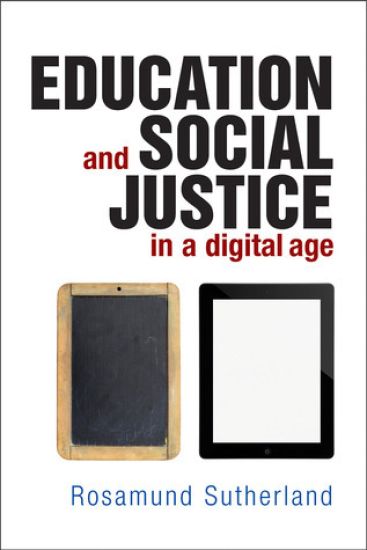
Education and Social Justice in a Digital Age

Education and Social Justice in a Digital Age

Rosamund Sutherland

Policy Press
2013
sidottu
In many countries the school curriculum oscillates between focusing on traditional subjects and focusing on skills that are linked to the needs of the 21st-century digital age. Rosamund Sutherland argues against such a skills-based curriculum, maintaining that, from a social justice perspective, the priority of schools should be to give young people access to the knowledge that they are not likely to learn outside school. She draws on the work of Michael Young, Lev Vygotsky, Amartya Sen and David Olson to develop new theoretical and practical insights that offer ways of changing policy and practice to improve equality and life chances for young people, while acknowledging the potential transformative role of digital technologies. This timely book will be invaluable to teachers, academics, students and policy makers interested in the ways in which the digital landscape transforms the nature of the debate about equity and social justice in education.
Education and Social Justice in a Digital Age

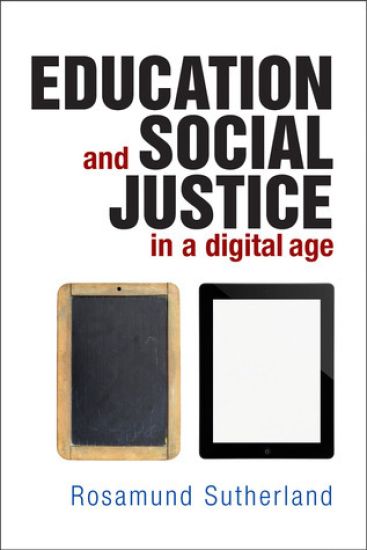
Education and Social Justice in a Digital Age

Rosamund Sutherland

Policy Press
2013
nidottu
In many countries the school curriculum oscillates between focusing on traditional subjects and focusing on skills that are linked to the needs of the 21st-century digital age. Rosamund Sutherland argues against such a skills-based curriculum, maintaining that, from a social justice perspective, the priority of schools should be to give young people access to the knowledge that they are not likely to learn outside school. She draws on the work of Michael Young, Lev Vygotsky, Amartya Sen and David Olson to develop new theoretical and practical insights that offer ways of changing policy and practice to improve equality and life chances for young people, while acknowledging the potential transformative role of digital technologies. This timely book will be invaluable to teachers, academics, students and policy makers interested in the ways in which the digital landscape transforms the nature of the debate about equity and social justice in education.
Grand Challenges in Technology Enhanced Learning

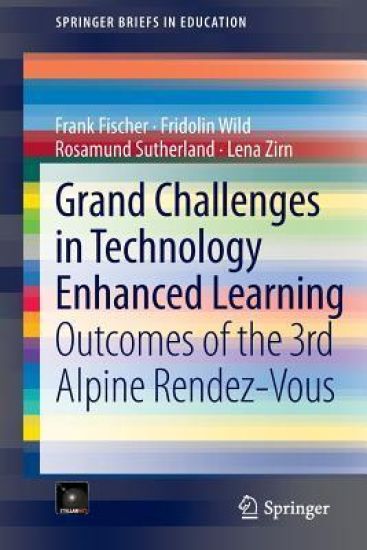
Grand Challenges in Technology Enhanced Learning

Frank Fischer; Fridolin Wild; Rosamund Sutherland; Lena Zirn

Springer International Publishing AG
2013
nidottu
This book presents a key piece of the vision and strategy developed in STELLAR. It sets out a new mid-term agenda by defining Grand Challenges for research and development in technology-enhanced learning. Other than mere technology prizes, STELLAR Grand Challenges deal with problems at the interface of social and technical sciences. They pose problems that can be solved only in interdisciplinary collaboration. The descriptions of the Grand Challenge Problems were sent out to a number of stakeholders from industry, academia, and policy-making who responded with insightful, creative and critical comments bringing in their specific perspectives. This book will inspire everyone interested in TEL and its neighboring disciplines in their future projects. All of the listed problems, first hints with respect to the approach, measurable success indicators and funding sources are outlined. The challenges focus on what noted experts regard as important upcoming, pending, and innovative fields of research, the solution of which is within reach in a timeframe of a mere 2 to 15 years of work.
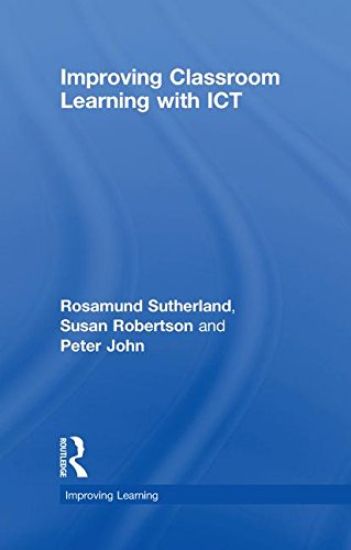
Improving Classroom Learning with ICT

Improving Classroom Learning with ICT

Rosamund Sutherland; Susan Robertson; Peter John

Routledge
2008
sidottu
Improving Classroom Learning with ICT examines the ways in which ICT can be used in the classroom to enhance teaching and learning in different settings and across different subjects. Weaving together evidence of teachers’ and learners’ experiences of ICT, the authors: explain why the process of integrating ICT is not straightforward; discuss whether hardware and infrastructure alone are sufficient to ensure full integration and exploitation of ICT investment; emphasise the pivotal role that teachers play in supporting learning with ICT across the curriculum; argue that teachers need a greater understanding of how to put ICT to use in teaching and learning; highlight that out-of-school use of ICT has an impact on in-school learning; consider what kinds of professional development are most effective in supporting teachers to use technologies creatively and productively. Case studies are used to illustrate key issues and to elaborate a range of theoretical ideas that can be used in the classroom. This book will be of interest to all those concerned with maximising the benefits of ICT in the classroom.
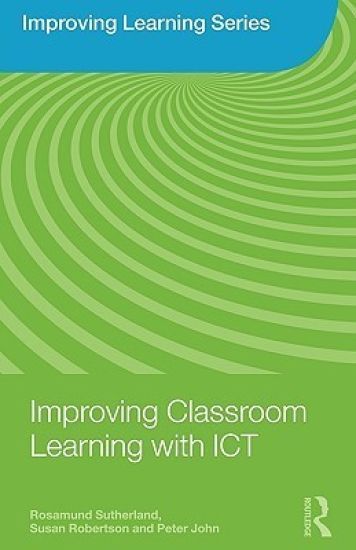
Improving Classroom Learning with ICT

Improving Classroom Learning with ICT

Rosamund Sutherland; Susan Robertson; Peter John

Routledge
2008
nidottu
Improving Classroom Learning with ICT examines the ways in which ICT can be used in the classroom to enhance teaching and learning in different settings and across different subjects. Weaving together evidence of teachers’ and learners’ experiences of ICT, the authors: explain why the process of integrating ICT is not straightforward; discuss whether hardware and infrastructure alone are sufficient to ensure full integration and exploitation of ICT investment; emphasise the pivotal role that teachers play in supporting learning with ICT across the curriculum; argue that teachers need a greater understanding of how to put ICT to use in teaching and learning; highlight that out-of-school use of ICT has an impact on in-school learning; consider what kinds of professional development are most effective in supporting teachers to use technologies creatively and productively. Case studies are used to illustrate key issues and to elaborate a range of theoretical ideas that can be used in the classroom. This book will be of interest to all those concerned with maximising the benefits of ICT in the classroom.
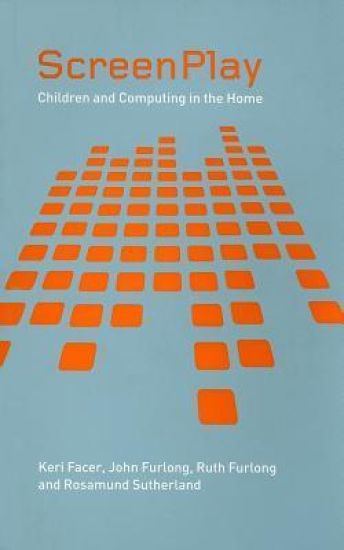
Screenplay

Screenplay

Keri Facer; John Furlong; Ruth Furlong; Rosamund Sutherland

Routledge
2003
nidottu
What are young people really doing on computers at home? Computers feature heavily in the lives of today's young people, and this book sets out to question commonplace assumptions about the use of technology by children at home. Bringing together research from the perspective of psychology, sociology, education and media studies, the authors ask whether we are really witnessing the rise of a new 'digital generation'. Drawing upon the results of their in-depth research project, the authors filter and assess their findings accessibly, offering fascinating reading on: * how computers are used in the home * how parents and children negotiate access to and use of the computer * what role the computer plays in the day to day lives of families. This book makes use of illuminating case studies, and highlights key issues of concern around issues of equality and access in a wider social context. This truly interdisciplinary perspective will be instrumental in reshaping the understanding of teachers, ICT advisors, policy makers and all involved in ICT for children.
A Spreadsheet Approach to Maths for GNVQ Engineering

A Spreadsheet Approach to Maths for GNVQ Engineering

Rosamund Sutherland; Alison Wolf; Daniel Howell

Butterworth-Heinemann Ltd
1996
nidottu
This unique text uses tried and tested methods developed by the authors during a recent Nuffield Foundation project set up to investigate maths needs for GNVQ. Most areas of engineering mathematics are well suited to the spreadsheet approach and many students find the techniques easier to handle than more conventional computational methods. This text covers spreadsheet procedures for application of number core skills, and about two thirds of the areas of maths needed for the GNVQ Maths for Engineering (advanced) unit, but does not attempt to cover those problems more sensibly tackled by conventional means. By attempting the questions and assignments within the book the student compiles a record of competence, suitable for inclusion in the portfolio and assessment. To this end worked examples have solutions, but answers to all other exercises are to be found in the lecturers' guide, available free to teaching staff only. For lecturers' guide please write on college headed paper, and enclosing an A4 sized SAE to: Marketing Department, Edward Arnold, 338 Euston Road, London NW1 3BH, UK. Please note: the guide is free of copyright to purchasers of the textbook.