
Kirjailija
Rose Macaulay
Kirjat ja teokset yhdessä paikassa: 74 kirjaa, julkaisuja vuosilta 1995–2026, suosituimpiin kuuluu Mystery at Geneva. Vertaile teosten hintoja ja tarkista saatavuus suomalaisista kirjakaupoista.
74 kirjaa
Kirjojen julkaisuvuodet: 1995–2026.
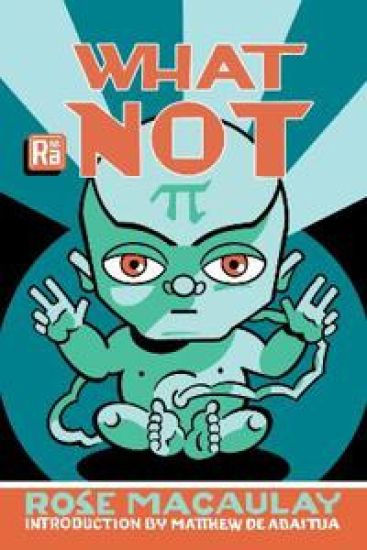
An early novel by Rose Macaulay about a government program of compulsory selective breeding in a dystopian future England. In a near-future England, a new government entity--the Ministry of Brains--attempts to stave off idiocracy through a program of compulsory selective breeding. Kitty Grammont, who shares author Rose Macaulay's own ambivalent attitude, gets involved in the Ministry's propaganda efforts, which the novel details with an entertaining thoroughness. (The alphabetical caste system dreamed up by Macaulay for her nightmare world would directly influence Aldous Huxley's 1932 dystopia Brave New World.) But when Kitty falls in love with the Minister for Brains, a man whose genetic shortcomings make a union with her impossible, their illicit affair threatens to topple the government. Because it ridiculed wartime bureaucracy, the planned 1918 publication of What Not was delayed until after the end of World War I.

Keeping Up Appearances
Rose Macaulay; Simon Thomas
British Library Publishing
2022
nidottu
Halvin toimitettuna 16,60 €
'Oh God, one should not go to parties, Daisy sighed, sinking in wan defeat in the melancholy dawn. One should not mingle with others; one should keep oneself to oneself...' Lying awake after a hotel party on holiday in the Mediterranean, Daisy Simpson reflects on her lacklustre social performance and muses on the impression her confident and graceful half-sister Daphne may have made on the other guests. What is it that makes Daphne, Daphne and Daisy, Daisy? And which of the two will attract the attentions of one of their hosts, Raymond, whom they have both fallen for? Returning to London, Daisy's life is strained by the efforts of presenting the right elements of her personality to the right people, resulting in embarrassments, difficulties and deceits as she navigates her relationships and social standing. Rose Macaulay's novel, first published in 1928, offers a sharp and witty commentary on how we twist our identities to fit, delivered in an intelligent and innovative style.
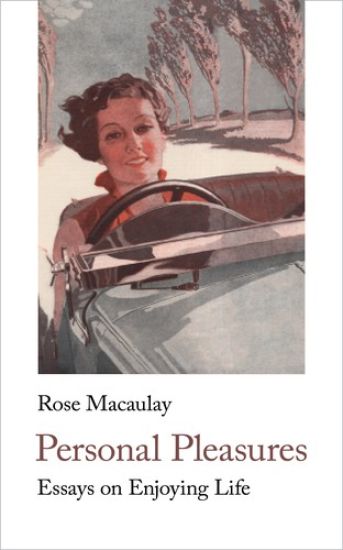
In 1935 Rose Macaulay (1881-1958) was a well-established novelist, reviewer, columnist and feminist wit. She was part of the 'intellectual aristocracy' of England, but was also passionately interested in everyday life and its foolishnesses. Personal Pleasures is an anthology of 80 short essays (some of them very short) about the things she enjoyed most in life. Her subjects include: Bed (Getting Into It) Booksellers Catalogues Christmas Morning Driving a Car Flattery Heresies Not Going to Parties Shopping Abroad Writing While each essay can be read on its own as a short dose of delicious writing, the collection is also an autobiographical selection, revealing glimpses of Rose's own life, and making us laugh helplessly with her inimitable humour.
This book has been considered important throughout the human history, and so that this work is never forgotten we have made efforts in its preservation by republishing this book in a modern format for present and future generations. This whole book has been reformatted, retyped and designed. These books are not made of scanned copies of their original work and hence the text is clear and readable.
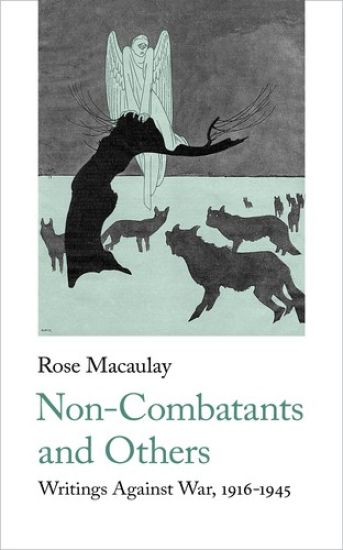
All Rose Macaulay’s anti-war writing, collected together in one fascinating and thought-provoking volume. Her novel Non-Combatants and Others (1916) is a classic of pacifist writing, and was one of the first novels to be written and published during the First World War that set out the moral and ideological arguments against war. It’s scathing and heart-breaking, yet finds a way for pacifists to work for an end to conflict. Her journalism for The Spectator, Time & Tide, The Listener and other magazines from the mid-1930s to the end of the Second World War, details the rise of fascism and the civilian response to the impending war. Witty, furious and despairing in turn, these forgotten magazine columns reveal new insights into how people find war and its tyrannies creeping up on them. These are supported by Macaulay’s two inter-war essays on pacifism,`Apeing the Barbarians’ and `Moral Indignation’. Macaulay’s only wartime short story, `Miss Anstruther’s Letters’, is a devastating account of the loss of her flat and all her possessions in the Blitz. But more desperate a loss than her books were the letters from her secret lover, who had just died. The Introduction is by Jessica Gildersleeve of the University of Southern Queensland. The cover illustration, `Peace Angel’, is by the Norwegian caricaturist Olaf Gulbransson, published in the German satirical magazine Simplicissimus in 1917.
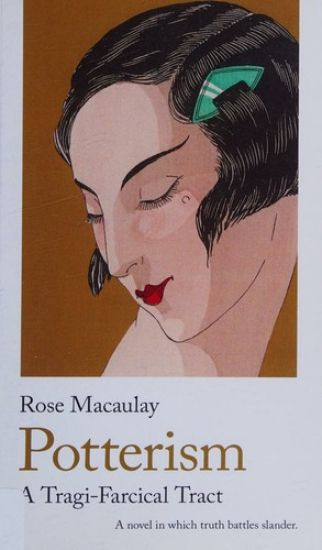
Rose Macaulay’s 1920 satire on British journalism and the newspaper industry will be back in print in the UK for the first time in seventy years. It will be published alongside a new collection of her pacifist writing from 1916 to 1945, Non-Combatants and Others: Writings Against War (ISBN 9781912766307). Potterism is about the Potter newspaper empire, and the ways in which journalists struggled to balance the truth and what would sell, during the First World War and into the 1920s. When Jane and Johnny Potter are at Oxford they learn to despise their father’s popular newspapers, though they still end up working for the family business. But Jane is greedy, and wants more than society will let her have. Mrs Potter is a well-known romantic novelist, whose cheap novelettes appear in the shop-girls’ magazines. She has become unable to distinguish fact from fiction, and her success gives her an unhealthy estimation of her own influence. When she visits a medium to try to find the truth about the murder of her son-in-law, she wreaks terrible damage. Arthur Gideon works for Mr Potter as an editor. He respects his employer’s honesty while he despises the populist newspapers he has to produce. His turbulent campaigning spirit, and his furious resistance to anti-Semitic attacks, make him unpopular, and becomes an unwitting target of malice.
Rose Macaulay takes a lively and perceptive look at three generations of women within the same family and the 'dangers' faced at each of those stages in life. The book opens with Neville celebrating her 43rd birthday and contemplating middle age now that her children are grown. Her mother, in her sixties, seeks answers to her melancholy in Freudianism. Her sister, Nan, 33, a writer who has hitherto led a single and carefree life in London, experiences the loss of love and with it her plan for the future. And Neville's principled daughter Gerda, who is determined not to follow her mother's generation into the institute of marriage, finds herself at an impasse with the man she loves.
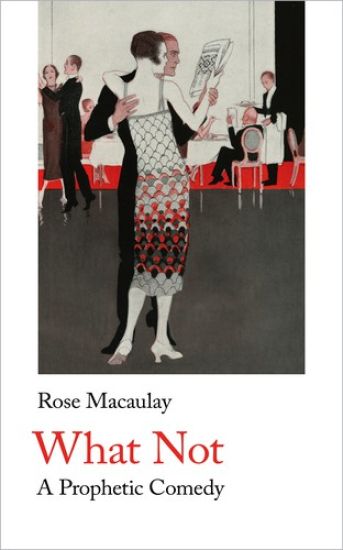
What Not is Rose Macaulay’s speculative novel of post-First World War eugenics and newspaper manipulation that anticipated Aldous Huxley’s Brave New World by 14 years. Published in 1918, it was hastily withdrawn due to a number of potentially libellous pages, and was reissued in 1919. But by then it was quickly overshadowed by Macaulay’s next two novels, and never gained the attention it deserved. What Not is a lost classic of feminist wit and protest at social engineering, now republished with the suppressed pages reinstated. Kitty Grammont and Nicholas Chester are in love, but Kitty is certified as an A for breeding purposes, while politically ambitious Chester has been uncertificated, and may not marry. But why? There’s nothing apparently wrong with him, he is admired in his field, and is charming and decisive. Although Kitty wields power as a senior civil servant in the Ministry of Brains, which makes these classifications, she does not have the freedom to marry who she wants. They ignore the restrictions, and carry on a discreet affair. But it isn’t discreet enough for the media: the popular press, determined to smash the brutal regime of the Ministry of Brains, has found out about Kitty and Chester, and scents an opportunity for a scandalous exposure. The introduction is by Sarah Lonsdale, senior lecturer in journalism at City University London.
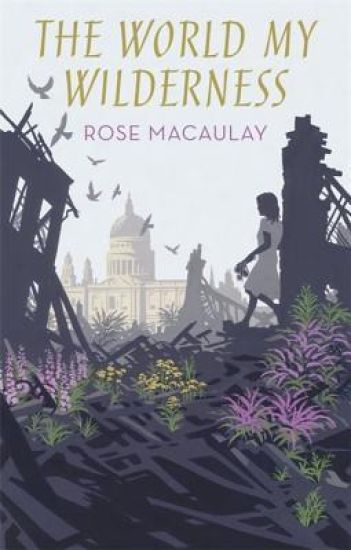
It is 1946 and the people of France and England are facing the aftermath of the war. Banished by her beautiful, indolent mother to England, Barbary Deniston is thrown into the care of her distinguished father and conventional stepmother. Having grown up in the sunshine of Provence, allowed to run wild with the Maquis, experienced collaboration, betrayal and death, Barbary finds it hard to adjust to the drab austerity of postwar London life. Confused and unhappy, she discovers one day the flowering wastes around St Paul's. Here, in the bombed heart of London, she finds an echo of the wilderness of Provence and is forced to confront the wilderness within herself.
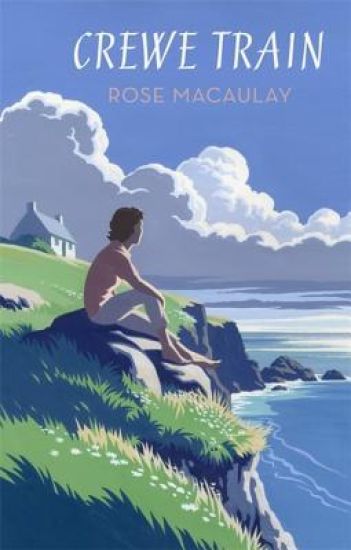
Denham Dobie has been brought up in Andorra by her father, a retired clergyman. On his death, she is snatched from this reclusive life and thrown into the social whirl of London by her sophisticated relatives. Denham, however, provides a candid response to the niceties of 'civilised' behaviour. CREWE TRAIN is one of Macaulay's wittiest satires. The reactions of Denham to the manners and modes of the highbrow circle in which she finds herself provide a devastating - and very funny - social commentary as well as a moving story. This bitingly funny, elegantly written comedy of manners is as absorbing and entertaining today as on the book's first publication in 1967.


Mystery at Geneva An Improbable Tale of Singular Happenings
Rose Macaulay
Createspace Independent Publishing Platform
2015
nidottu