Kirjojen hintavertailu – 12 859 818 kirjaa ja 27 kauppaa

Kirjailija

Rose Mary Sheldon

Kirjat ja teokset yhdessä paikassa: 8 kirjaa, julkaisuja vuosilta 2004–2025, suosituimpiin kuuluu Renseignement Et Espionnage Dans La Rome Antique. Vertaile teosten hintoja ja tarkista saatavuus suomalaisista kirjakaupoista.

8 kirjaa

Kirjojen julkaisuvuodet: 2004–2025.

Kill Caesar!

Kill Caesar!

Rose Mary Sheldon

Rowman Littlefield
2018
sidottu
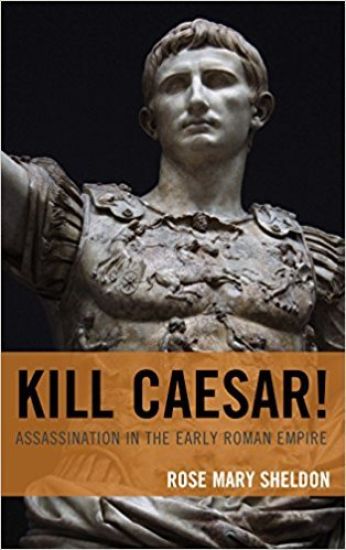
Exploring the history of internal security under the first Roman dynasty, this groundbreaking book answers the enduring question: If there were 9,000 men guarding the emperor, how were three-quarters of Rome’s leaders assassinated? Rose Mary Sheldon traces the evolution of internal security mechanisms under the Julio-Claudians, evaluating the system that Augustus first developed to protect the imperial family and the stability of his dynasty. Yet in spite of the intensive precautions taken, there were multiple attempts on his life. Like all emperors, Augustus had a number of competing constituencies—the senate, the army, his extended family, the provincials, and the populace of Rome—but were they all equally threatening? Indeed, the biggest threat would come from those closest to the emperor—his family and the aristocracy. Even Roman imperial women were deeply involved in instigating regime change. By the fourth emperor, Caligula, the Praetorian Guards were already participating in assassinations, and the army too was becoming more politicized. Sheldon weighs the accuracy of ancient sources: Does the image of the emperor presented to us represent reality or what the people who killed him wanted us to think? Were Caligula and Nero really crazy, or did senatorial historians portray them that way to justify their murder? Was Claudius really the fool found drooling behind a curtain and made emperor, or was he in on the plot from the beginning? These and other fascinating questions are answered as Sheldon concludes that the repeated problem of “killing Caesar” reflected the empire’s larger dynamics and turmoil.
Rome's Wars in Parthia

Rome's Wars in Parthia

Rose Mary Sheldon

Vallentine Mitchell Co Ltd
2010
nidottu
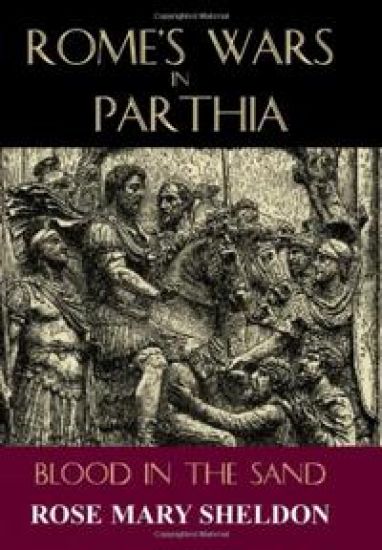
The leader of an empire invades Iraq. He has inadequate intelligence and underestimates the resistance of the locals, but he believes his overwhelming military strength will bring him a swift victory. His army overruns the area between the Tigris and the Euphrates, but as soon as he occupies the area a massive insurgency arises, made up of various ethnic and religious groups. What began as a simple conquest for dominance bogs down in deadly fighting as the once-victorious commander-in-chief now desperately searches for an exit strategy... This scenario could be any number of Roman campaigns, not to mention America in 2003 CE. Both ancient and modern attempts to invade Iraq have been plagued with the same problems. These problems have been caused by lack of adequate intelligence gathering, both strategic and tactical, and have resulted in long drawn out wars that have been costly in both money and manpower. Ultimately, they led to little political or military gain. Could more have been accomplished through diplomacy rather than brute force? This book details Rome's military encounters with Parthia from the bumbling campaign of Crassus to the fall of the Parthian regime. America's recent war in Iraq has shown that invading Mesopotamia without proper intelligence is a bad idea, but it is not a new idea. Time after time the Romans stormed into the area between the Tigris and Euphrates thinking 'shock and awe' was all they needed to prevail. What they discovered was that it takes more than just overrunning an empire to defeat it. *** "Sheldon's analysis of the consequences of the frequent conflicts on the political, economic, and military health of both empires, is quite useful, and she observes that the occasional diplomatic solutions often proved more beneficial than any of the wars. An important read for anyone interested in ancient military history..." -- The NYMAS Review, Issue No. 59, December 2015 [Subject: History, Intelligence Studies, Military History]
Renseignement Et Espionnage Dans La Rome Antique

Renseignement Et Espionnage Dans La Rome Antique

Rose Mary Sheldon

Les Belles Lettres
2009
nidottu
Les activites de renseignement font partie integrante de l'art de gouverner et, sans elles, les Romains n'auraient pas pu edifier et proteger leur empire. Meme s'il ne separaient pas les differentes fonctions du renseignement entre activites civiles et militaires, il n'en demeure pas moins qu'une grande partie de leurs activites de renseignement ressemblaient aux notres et qu'il est possible d'utiliser le concept moderne de cycle du renseignement pour les decrire. L'eventail des activites concernees est assez large: collecte de renseignements, contre-espionnage, infiltration, operations clandestines, utilisation de codes et de chiffres, et diverses techniques d'espionnage. Toutes ont laisse des traces litteraires, epigraphiques et archeologiques qu'il est possible de suivre en partie. Rose Mary Sheldon retrace le developpement des methodes de renseignement romaines des debuts de la Republique jusqu'au regne de Diocletien (284-305 apres J.-C.), d'une forme embryonnaire et souvent entachee d'amateurisme jusqu'au systeme tres elabore d'Auguste et de ses successeurs. L'ouvrage est rythme tant par des chapitres consacres a l'etude de certains des echecs romains que par l'examen des reseaux de communication, des signaux de transmission, des activites d'espionnage, des operations militaires et de la politique frontaliere. C'est pourquoi les questions plus larges soulevees dans ce livre sont d'une pertinence immediate pour le present: bien que les methodes de renseignement aient radicalement change avec l'avenement de la technologie moderne, les principes restent etonnamment similaires. Les questions politiques essentielles portant sur la place des services de renseignement dans une democratie et une republique plongent leurs racines dans le monde greco-romain. Professeur au Virginia Military Institute, Rose Mary Sheldon a publie de nombreux articles et plusieurs ouvrages sur les activites de renseignement dans l'Antiquite. Elle a notamment publie Espionage in the Ancient World: An Annotated Bibliography (McFarland, 2003), Spies in the Bible (Greenhill Books, 2007), Operation Messiah: St. Paul, Roman Intelligence and the Birth of Christianity, (Vallentine-Mitchell, 2008) et Rome's Wars in Parthia: Blood in the Sand (Vallentine-Mitchell, 2009).

Intelligence Activities in Ancient Rome

Intelligence Activities in Ancient Rome

Rose Mary Sheldon

Routledge
2007
nidottu
Professor Sheldon uses the modern concept of the intelligence cycle to trace intelligence activities in Rome whether they were done by private citizens, the government, or the military. Examining a broad range of activities the book looks at the many types of espionage tradecraft that have left their traces in the ancient sources: * intelligence and counterintelligence gathering* covert action* clandestine operations* the use of codes and ciphersDispelling the myth that such activities are a modern invention, Professor Sheldon explores how these ancient spy stories have modern echoes as well. What is the role of an intelligence service in a free republic? When do the security needs of the state outweigh the rights of the citizen? If we cannot trust our own security services, how safe can we be? Although protected by the Praetorian Guard, seventy-five percent of Roman emperors died by assassination or under attack by pretenders to his throne. Who was guarding the guardians? For students of Rome, and modern social studies too - this will provide a fascinating read.
Intelligence Activities in Ancient Rome

Intelligence Activities in Ancient Rome

Rose Mary Sheldon

Routledge
2004
sidottu
Professor Sheldon uses the modern concept of the intelligence cycle to trace intelligence activities in Rome whether they were done by private citizens, the government, or the military. Examining a broad range of activities the book looks at the many types of espionage tradecraft that have left their traces in the ancient sources: * intelligence and counterintelligence gathering* covert action* clandestine operations* the use of codes and ciphersDispelling the myth that such activities are a modern invention, Professor Sheldon explores how these ancient spy stories have modern echoes as well. What is the role of an intelligence service in a free republic? When do the security needs of the state outweigh the rights of the citizen? If we cannot trust our own security services, how safe can we be? Although protected by the Praetorian Guard, seventy-five percent of Roman emperors died by assassination or under attack by pretenders to his throne. Who was guarding the guardians? For students of Rome, and modern social studies too - this will provide a fascinating read.