Kirjojen hintavertailu – 12 859 818 kirjaa ja 27 kauppaa

Kirjailija

Rosefielde Steven

Kirjat ja teokset yhdessä paikassa: 4 kirjaa, julkaisuja vuosilta 2006–2014, suosituimpiin kuuluu Russia Since 1980. Vertaile teosten hintoja ja tarkista saatavuus suomalaisista kirjakaupoista.

4 kirjaa

Kirjojen julkaisuvuodet: 2006–2014.

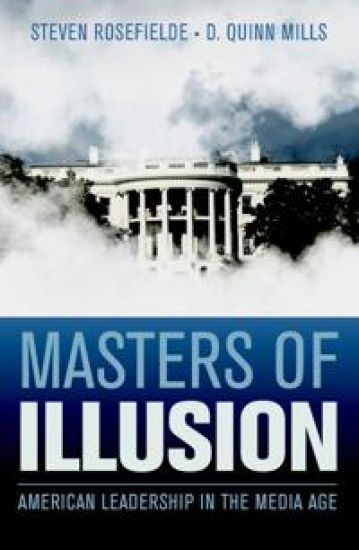
Masters of Illusion

Masters of Illusion

Rosefielde Steven; Mills D. Quinn

Cambridge University Press
2014
pokkari
The United States will confront a series of fundamental challenges through the middle of the twenty-first century. Using a theory of economic systems to gauge present and future global conflicts, Steven Rosefielde and D. Quinn Mills see the challenges as posed sequentially by terrorism, Russia, China, and the European Union. In the cases of terrorism, Russia, and China, Western leaders appreciate aspects of these perils, but they are crafting unduly soft policies to deal with the challenges. The authors believe that 'globalists' notwithstanding, such views are myopic in an era where nuclear proliferation has invalidated the concept of mutually assured destruction. What America requires is a new security concept that the authors call 'strategic independence' to enable keeping the peace in dangerous times and foster new generations of leaders capable of acting sanely despite a current public culture addicted to wishful thinking.
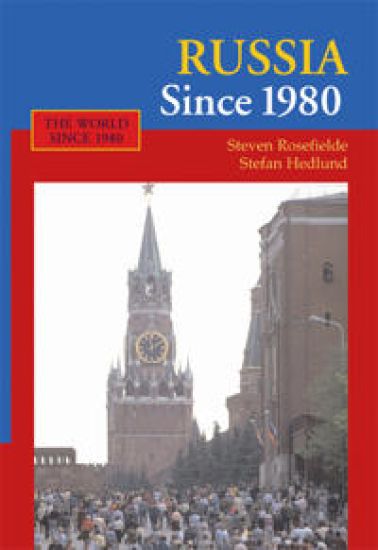
Russia Since 1980

Russia Since 1980

Rosefielde Steven; Stefan Hedlund

Cambridge University Press
2008
sidottu
Russia Since 1980 recounts the epochal political, economic, and social changes that destroyed the Soviet Union, ushering in a perplexing new order. Two decades after Mikhail Gorbachev initiated regime-wrecking radical reforms, Russia has reemerged as a superpower. It has survived a hyperdepression, modernized, restored private property and business, adopted a liberal democratic persona, and asserted claims to global leadership. Many in the West perceive these developments as proof of a better globalized tomorrow, while others foresee a new cold war. Globalizers contend that Russia is speedily democratizing, marketizing, and humanizing, creating a regime based on the rule of law and respect for civil rights. Opponents counterclaim that Russia before and during the Soviet period was similarly misportrayed and insist that Medvedev's Russia is just another variation of an authoritarian 'Muscovite' model that has prevailed for over five centuries. The cases for both positions are explored while chronicling events since 1980.
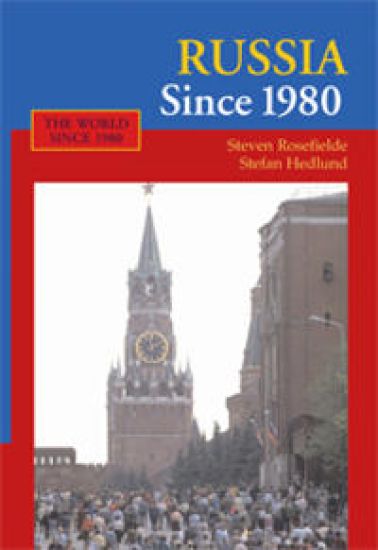
Russia Since 1980

Russia Since 1980

Rosefielde Steven; Stefan Hedlund

Cambridge University Press
2008
pokkari
Russia Since 1980 recounts the epochal political, economic, and social changes that destroyed the Soviet Union, ushering in a perplexing new order. Two decades after Mikhail Gorbachev initiated regime-wrecking radical reforms, Russia has reemerged as a superpower. It has survived a hyperdepression, modernized, restored private property and business, adopted a liberal democratic persona, and asserted claims to global leadership. Many in the West perceive these developments as proof of a better globalized tomorrow, while others foresee a new cold war. Globalizers contend that Russia is speedily democratizing, marketizing, and humanizing, creating a regime based on the rule of law and respect for civil rights. Opponents counterclaim that Russia before and during the Soviet period was similarly misportrayed and insist that Medvedev's Russia is just another variation of an authoritarian 'Muscovite' model that has prevailed for over five centuries. The cases for both positions are explored while chronicling events since 1980.
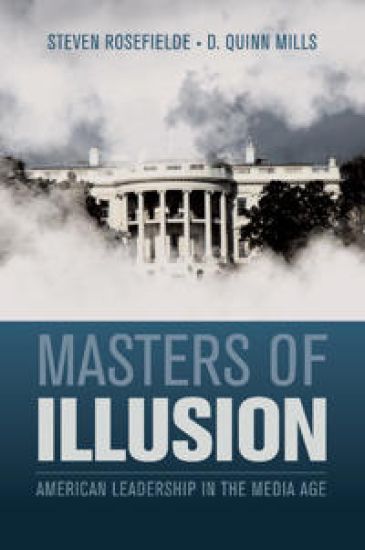
Masters of Illusion

Masters of Illusion

Rosefielde Steven; Mills D. Quinn

Cambridge University Press
2006
sidottu
The United States will confront a series of fundamental challenges through the middle of the twenty-first century. Using a theory of economic systems to gauge present and future global conflicts, Steven Rosefielde and D. Quinn Mills see the challenges as posed sequentially by terrorism, Russia, China, and the European Union. In the cases of terrorism, Russia, and China, Western leaders appreciate aspects of these perils, but they are crafting unduly soft policies to deal with the challenges. The authors believe that 'globalists' notwithstanding, such views are myopic in an era where nuclear proliferation has invalidated the concept of mutually assured destruction. What America requires is a new security concept that the authors call 'strategic independence' to enable keeping the peace in dangerous times and foster new generations of leaders capable of acting sanely despite a current public culture addicted to wishful thinking.