
Kirjailija
Ross King
Kirjat ja teokset yhdessä paikassa: 47 kirjaa, julkaisuja vuosilta 2002–2026, suosituimpiin kuuluu Florence. Vertaile teosten hintoja ja tarkista saatavuus suomalaisista kirjakaupoista.
47 kirjaa
Kirjojen julkaisuvuodet: 2002–2026.
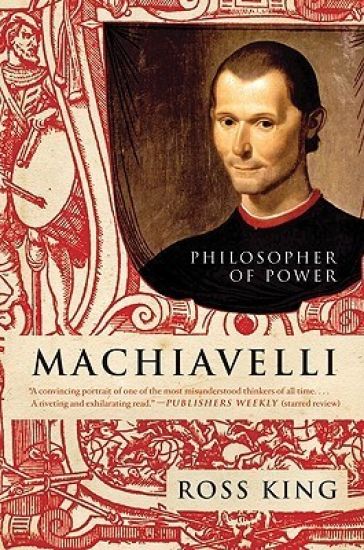
Part of the acclaimed Eminent Lives series, Machiavelli is a superb portrait of the brilliant and revolutionary political philosopher--history's most famous theorist of "warfare, terror, murder, and bloodshed"--and the age he embodied. Ross King, the New York Times bestselling author of Brunelleschi's Dome, argues that the author of The Prince was a far more complex and sympathetic character than is often portrayed.

Arguably Southeast Asia's most spectacular city, Kuala Lumpur--widely known as KL--has just celebrated fifty years as the national capital of Malaysia. But KL now has a very different twin in Putrajaya, the country's new administrative capital. Where KL is a diverse, cosmopolitan, multiracial metropolis, Putrajaya fulfills an elitest vision of a Malay-Muslim utopia. KL's multicultural richness is reflected in the brilliance and diversity of its architecture and urban spaces; Putrajaya, by contrast, is an architectural homage to an imagined Middle East. The purity of Putrajaya throws the cosmopolitan diversity of Kuala Lumpur into sharp relief, and the tension between the two places reflects the rifts that run through Malaysian society. In this copiously illustrated book, Ross King considers what form of metropolis the Kuala Lumpur-Putrajaya region might foreshadow, arguing that signs of this future city are to be sought in the collision points between the utopian dreams of imagined futures and the reality of purposely forgotten pasts. Drawing on postcolonial studies, media studies, and critical social theory, Kuala Lumpur and Putrajaya makes a significant contribution to architecture, urban planning, urban design, and Malaysian politics and society.
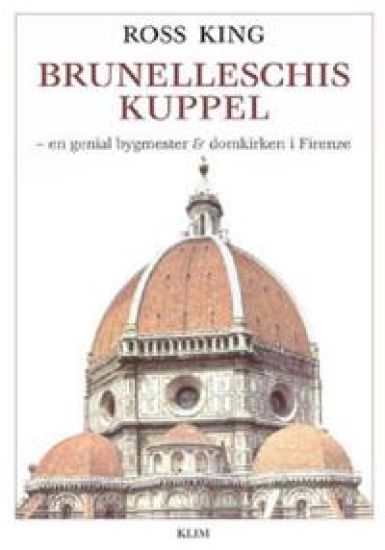
I Brunelleschis kuppel får vi historien om den egensindige hovedbygmester Filippo Brunelleschi, hvis liv var fyldt med ambitioner, opfindsomhed, intriger - og ikke mindst hans livslange rivaliseren med Lorenzo Ghiberti. Fortællingen udspiller sig på baggrund af pestens hærgen, politiske stridigheder og bystaternes krige - men også med afsæt i det frodige kunstneriske og videnskabelige miljø, som renæssancens Firenze gav grobund for.» Kings bog er et godt og spændende supplement til rejseguiderne og specielt for dem, der vil vide mere.«- PolitikenBogen har stået på toppen af New York Times´ bestsellerliste og er blevet kåret som årets bedste non-fiction bog.
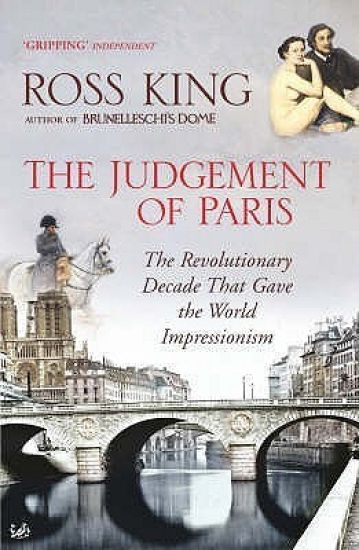
In 1863, the French painter Ernest Meissonier was one of the most famous artists in the world and the darling of the 'Salon' - that all important public art exhibition held biannually in Paris. Manet, on the other hand, was struggling in obscurity. Beginning with the year that Manet exhibited his ground-breaking Déjeuner Sur L'Herbe and ending in 1974 with the first 'Impressionist' exhibition, Ross King plunges into Parisian life during a ten-year period full of social and political ferment with his usual narrative brillliance. These were the years in which Napoleon III's autocratic and pleasure-seeking Second Empire fell from its heights into the ignominy of the Franco-Prussian war and the ensuing Paris Commune of 1871. But it was also a period in which a group of artists, with Manet in the vanguard began to challenge the establishment by turning to the landscapes and ordinary people they saw around them. The struggle between Meissonier and Manet to get their paintings exhibited in pride of place at the Salon was not just about art, it was about how to see the world.
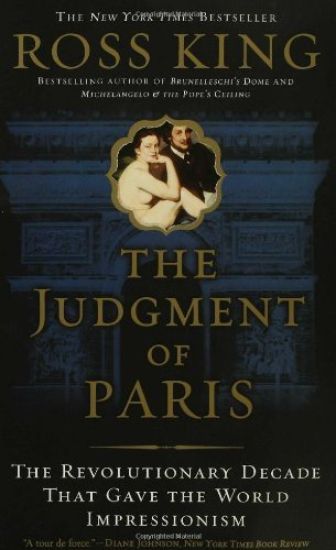
The Judgment of Paris: The Revolutionary Decade That Gave the World Impressionism
Ross King
Bloomsbury USA
2006
nidottu
With a novelist's skill and the insight of an historian, bestselling author Ross King recalls a seminal period when Paris was the artistic center of the world, and the rivalry between Meissonier and Manet. While the Civil War raged in America, another revolution took shape across the Atlantic, in the studios of Paris: The artists who would make Impressionism the most popular art form in history were showing their first paintings amidst scorn and derision from the French artistic establishment. Indeed, no artistic movement has ever been quite so controversial. The drama of its birth, played out on canvas and against the backdrop of the Franco-Prussian War and the Commune, would at times resemble a battlefield; and as Ross King reveals, it would reorder both history and culture, and resonate around the world.
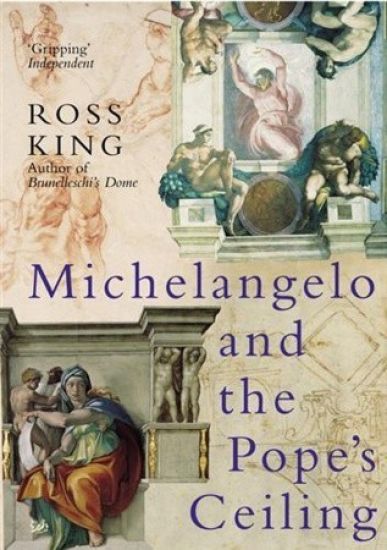
In 1508, Pope Julius II commissioned Michelangelo to paint the ceiling of the Sistine Chapel. The thirty-three-year-old Michelangelo had very little experience of the physically and technically taxing art of fresco; and, at twelve thousand square feet, the ceiling represented one of the largest such projects ever attempted. Nevertheless, for the next four years he and a hand-picked team of assistants laboured over the vast ceiling, making thousands of drawings and spending back-breaking hours on a scaffold fifty feet above the floor. The result was one of the greatest masterpieces of all time. This fascinating book tells the story of those four extraordinary years and paints a magnificent picture of day-to-day life on the Sistine scaffolding - and outside, in the upheaval of early sixteenth-century Rome.