Kirjojen hintavertailu – 12 859 829 kirjaa ja 27 kauppaa

Kirjailija

Ross L Jones

Kirjat ja teokset yhdessä paikassa: 6 kirjaa, julkaisuja vuosilta 2013–2025, suosituimpiin kuuluu Dhoombak Goobgoowana. Vertaile teosten hintoja ja tarkista saatavuus suomalaisista kirjakaupoista.

Nimi esiintyy myös muodoissa: Ross L. Jones

6 kirjaa

Kirjojen julkaisuvuodet: 2013–2025.

Dhoombak Goobgoowana

Dhoombak Goobgoowana

Ross L Jones; Waghorne James; Langton Marcia

Melbourne University Press
2025
Nidottu
Dhoombak Goobgoowana Volume II: Voice reveals the pivotal role played by Indigenous people in the history of the University of Melbourne. It traces the University's role in ignoring and quietening Indigenous peoples' voices, and the reverberations created by those voices that broke through. It shows how collections of art and cultural objects have transitioned from texts for western interpretation to expressions of self-identity. It reveals the Indigenous pioneers who gained admission to the University as students more than a century after it was established, and then later as staff, and documents their triumphs and struggles. This second volume, following the revelations of Dhoombak Goobgoowana Volume I: Truth, shows how Indigenous communities challenged and disrupted the University, how they contributed to its research endeavours and exhorted it to introduce Indigenous knowledge into the academic sphere. Gradually, and often reluctantly, the University began to change. But there remains much work to be done.
Missing Skulls and a Flying Coffin

Missing Skulls and a Flying Coffin

Ross L Jones

LeRoy Press
2024
pokkari
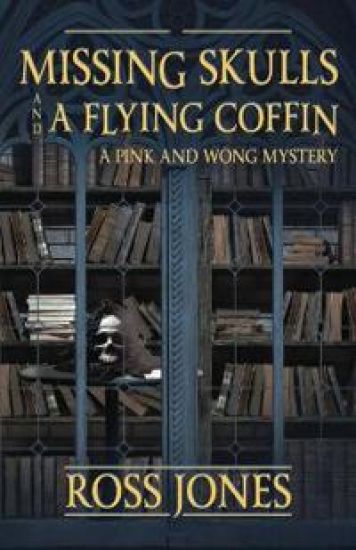
On a blustery winter day in Melbourne's Oddfellow's clinic for the sick poor, Dr Ambrose Pink's life changed dramatically and irreversibly. As a consequence he would meet a famous diva and an Australian prime minister. He would cross swords with terrorists, chefs, surgeons, fascists and anthropologists with ancient skulls. And all of this was because on that day in Fitzroy he was presented with a tiny baby with a disease that didn't exist.
Dhoombak Goobgoowana

Dhoombak Goobgoowana

Ross L Jones; Waghorne James

Melbourne University Press
2024
Nidottu
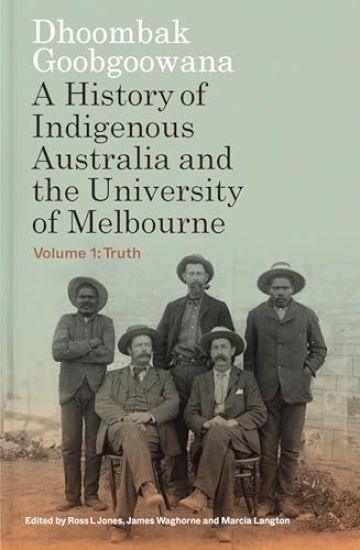
Dhoombak Goobgoowana acknowledges and publicly addresses the long, complex and troubled relationship between the Indigenous people of Australia and the University of Melbourne. It is a book about race and how it has been constructed by academics in the University. It is also about power and how academics have wielded it and justified its use against Indigenous populations, and about knowledge, especially the Indigenous knowledge that silently contributed to many early research projects and collection endeavours. By appropriating Wurundjeri land for its buildings, and accepting donations drawn from the proceeds of colonisation of Indigenous Country, the University of Melbourne advertised its superiority as a whole institution to Indigenous people. Within its buildings, academics and students explored a worldview that effectively banished Indigenous knowledge and culture. The University has supported injustices called progress, half-truths presented as facts, and prejudices pretending at objectivity. It follows the failings of many biographies and institutional histories that excluded race from their stories of achievement, overlooking how racist ideas complicated and shaped their narratives. Although many things have changed, the stain of the past remains. But the University no longer wishes to look away. Dhoombak Goobgoowana can be translated as 'truth-telling' in the Woi Wurrung language of the Wurundjeri Woi Wurrung people on whose unceded lands several University of Melbourne campuses are located. The cover photograph shows the members of a 1901 expedition through central Australia led by Frank Gillen (seated, left) and Baldwin Spencer (seated, right). To the rear stands mounted constable Harry Chance. Beside these white men are two Arrernte men, Erlikilyika (to the left) and Purunda (to the right). This image has been chosen to represent the unacknowledged participation of Indigenous people in the activities of academics in the University's history. The uncredited work of Erlikilyika as interpreter of both language and culture informed many of the conclusions of the white ethnographers and the anthropologists who followed. The expedition would have been impossible without the knowledge of these Indigenous men, and the scholarship it produced exists only because of them.
Dhoombak Goobgoowana

Dhoombak Goobgoowana

Ross L Jones; James Waghorne; Marcia Langton

MELBOURNE UNIVERSITY PRESS
2024
pokkari
Dhoombak Goobgoowana acknowledges and publicly addresses the long, complex and troubled relationship between the Indigenous people of Australia and the University of Melbourne. It is a book about race and how it has been constructed by academics in the University. It is also about power and how academics have wielded it and justified its use against Indigenous populations, and about knowledge, especially the Indigenous knowledge that silently contributed to many early research projects and collection endeavours. By appropriating Wurundjeri land for its buildings, and accepting donations drawn from the proceeds of colonisation of Indigenous Country, the University of Melbourne advertised its superiority as a whole institution to Indigenous people. Within its buildings, academics and students explored a worldview that effectively banished Indigenous knowledge and culture. The University has supported injustices called progress, half-truths presented as facts, and prejudices pretending at objectivity. It follows the failings of many biographies and institutional histories that excluded race from their stories of achievement, overlooking how racist ideas complicated and shaped their narratives. Although many things have changed, the stain of the past remains. But the University no longer wishes to look away. Dhoombak Goobgoowana can be translated as 'truth-telling' in the Woi Wurrung language of the Wurundjeri Woi Wurrung people on whose unceded lands several University of Melbourne campuses are located. The cover photograph shows the members of a 1901 expedition through central Australia led by Frank Gillen (seated, left) and Baldwin Spencer (seated, right). To the rear stands mounted constable Harry Chance. Beside these white men are two Arrernte men, Erlikilyika (to the left) and Purunda (to the right). This image has been chosen to represent the unacknowledged participation of Indigenous people in the activities of academics in the University's history. The uncredited work of Erlikilyika as interpreter of both language and culture informed many of the conclusions of the white ethnographers and the anthropologists who followed. The expedition would have been impossible without the knowledge of these Indigenous men, and the scholarship it produced exists only because of them.