Kirjojen hintavertailu – 12 903 725 kirjaa ja 27 kauppaa

Kirjailija

Ross W. Jamieson

Kirjat ja teokset yhdessä paikassa: 3 kirjaa, julkaisuja vuosilta 1999–2020, suosituimpiin kuuluu Domestic Architecture and Power. Vertaile teosten hintoja ja tarkista saatavuus suomalaisista kirjakaupoista.

3 kirjaa

Kirjojen julkaisuvuodet: 1999–2020.

Domestic Architecture and Power

Domestic Architecture and Power

Ross W. Jamieson; Prudence M. Rice

Kluwer Academic/Plenum Publishers
1999
sidottu
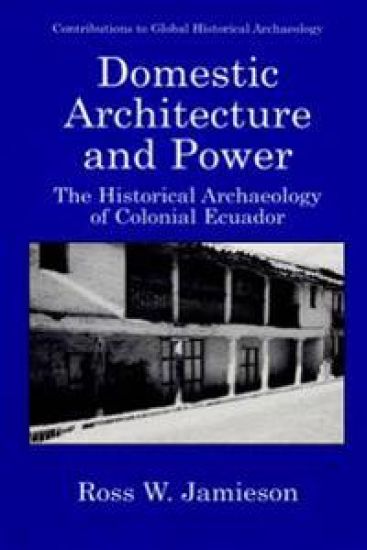
Historical archaeology, one of the fastest growing of archaeology’s sub fields in North America, has developed more slowly in Central and p- ticularly South America. Happily, this circumstance is ending as a gr- ing number of recent projects are successfully integrating textual and material culture data in studies of the events and processes of the last 500 years. This interval and this region–often called Ibero-America–have been studied for a century or more by historians with traditional perspectives and emphases focusing on colonial elites and large-scale politico-economic events. Such inclinations fit well into world-system and other core-peri- ery models that have had a major impact on historical thought since the 1970s. Over the past 20 years or so, however, world-system models have come under fire from historians, anthropologists, and others, in part because the emphasis on global trends and the growth of capitalism - nies the importance of understanding variability in local histories and circumstances. Historians have increasingly turned their attention to lo cal, rural, and domestic contexts, thereby illuminating the great diversity of responses to colonial domination that were played out in the vast arena of the Americas. It is not coincidental that this is the intellectual climate in which historical archaeology is establishing itself in Central and South America.
Historical Ecology and Archaeology in the Galápagos Islands

Historical Ecology and Archaeology in the Galápagos Islands

Peter W. Stahl; Fernando J. Astudillo; Ross W. Jamieson; Diego Quiroga; Florencio Delgado

University Press of Florida
2020
sidottu
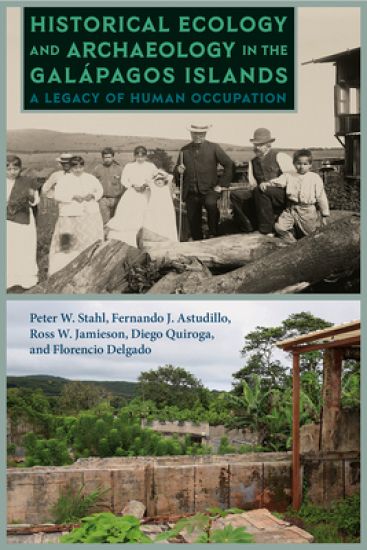
The Galápagos Islands are one of the world's premiere nature attractions, home to unique ecosystems widely thought to be untouched and pristine. Historical Ecology and Archaeology in the Galápagos Islands reveals that the archipelago is not as isolated as many imagine, examining how centuries of human occupation have transformed its landscape. This book shows that the island chain has been a part of global networks since its discovery in 1535 and traces the changes caused by human colonization. Central to this history is the sugar plantation Hacienda El Progreso on San Cristóbal Island. Here, zooarchaeological and archaeobotanical evidence documents the introduction of exotic species and landscape transformations, and material evidence attests that inhabitants maintained connections to the outside world for consumer goods. Beyond illuminating the human history of the islands, the authors also look at the impact of visitors to Galápagos National Park today, raising questions about tourism's role in biological conservation, preservation, and restoration.
Domestic Architecture and Power

Domestic Architecture and Power

Ross W. Jamieson; Prudence M. Rice

Springer-Verlag New York Inc.
2013
nidottu
Historical archaeology, one of the fastest growing of archaeology’s sub fields in North America, has developed more slowly in Central and p- ticularly South America. Happily, this circumstance is ending as a gr- ing number of recent projects are successfully integrating textual and material culture data in studies of the events and processes of the last 500 years. This interval and this region–often called Ibero-America–have been studied for a century or more by historians with traditional perspectives and emphases focusing on colonial elites and large-scale politico-economic events. Such inclinations fit well into world-system and other core-peri- ery models that have had a major impact on historical thought since the 1970s. Over the past 20 years or so, however, world-system models have come under fire from historians, anthropologists, and others, in part because the emphasis on global trends and the growth of capitalism - nies the importance of understanding variability in local histories and circumstances. Historians have increasingly turned their attention to lo cal, rural, and domestic contexts, thereby illuminating the great diversity of responses to colonial domination that were played out in the vast arena of the Americas. It is not coincidental that this is the intellectual climate in which historical archaeology is establishing itself in Central and South America.