Kirjojen hintavertailu – 12 859 827 kirjaa ja 27 kauppaa
Kirjailija
Roxanne Dunbar-Ortiz
Kirjat ja teokset yhdessä paikassa: 14 kirjaa, julkaisuja vuosilta 1998–2026, suosituimpiin kuuluu Red Dirt. Vertaile teosten hintoja ja tarkista saatavuus suomalaisista kirjakaupoista.
Nimi esiintyy myös muodoissa: Roxanne Dunbar Ortiz
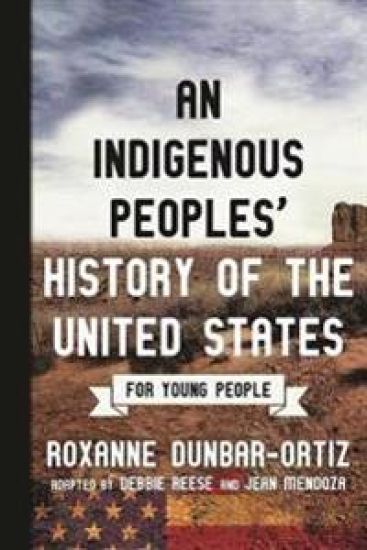
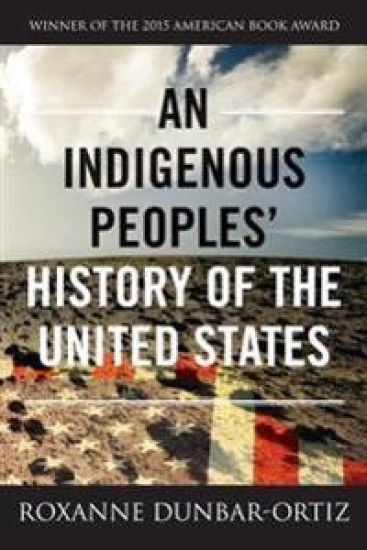
New York Times Bestseller Now part of the HBO docuseries "Exterminate All the Brutes," written and directed by Raoul Peck Recipient of the American Book Award The first history of the United States told from the perspective of indigenous peoples Today in the United States, there are more than five hundred federally recognized Indigenous nations comprising nearly three million people, descendants of the fifteen million Native people who once inhabited this land. The centuries-long genocidal program of the US settler-colonial regimen has largely been omitted from history. Now, for the first time, acclaimed historian and activist Roxanne Dunbar-Ortiz offers a history of the United States told from the perspective of Indigenous peoples and reveals how Native Americans, for centuries, actively resisted expansion of the US empire. With growing support for movements such as the campaign to abolish Columbus Day and replace it with Indigenous Peoples' Day and the Dakota Access Pipeline protest led by the Standing Rock Sioux Tribe, An Indigenous Peoples' History of the United States is an essential resource providing historical threads that are crucial for understanding the present. In An Indigenous Peoples' History of the United States, Dunbar-Ortiz adroitly challenges the founding myth of the United States and shows how policy against the Indigenous peoples was colonialist and designed to seize the territories of the original inhabitants, displacing or eliminating them. And as Dunbar-Ortiz reveals, this policy was praised in popular culture, through writers like James Fenimore Cooper and Walt Whitman, and in the highest offices of government and the military. Shockingly, as the genocidal policy reached its zenith under President Andrew Jackson, its ruthlessness was best articulated by US Army general Thomas S. Jesup, who, in 1836, wrote of the Seminoles: "The country can be rid of them only by exterminating them." Spanning more than four hundred years, this classic bottom-up peoples' history radically reframes US history and explodes the silences that have haunted our national narrative. An Indigenous Peoples' History of the United States is a 2015 PEN Oakland-Josephine Miles Award for Excellence in Literature.
Debunks the pervasive and self-congratulatory myth that our country is proudly founded by and for immigrants, and urges readers to embrace a more complex and honest history of the United States Whether in political debates or discussions about immigration around the kitchen table, many Americans, regardless of party affiliation, will say proudly that we are a nation of immigrants. In this bold new book, historian Roxanne Dunbar-Ortiz asserts this ideology is harmful and dishonest because it serves to mask and diminish the US's history of settler colonialism, genocide, white supremacy, slavery, and structural inequality, all of which we still grapple with today. She explains that the idea that we are living in a land of opportunity--founded and built by immigrants--was a convenient response by the ruling class and its brain trust to the 1960s demands for decolonialization, justice, reparations, and social equality. Moreover, Dunbar-Ortiz charges that this feel good--but inaccurate--story promotes a benign narrative of progress, obscuring that the country was founded in violence as a settler state, and imperialist since its inception. While some of us are immigrants or descendants of immigrants, others are descendants of white settlers who arrived as colonizers to displace those who were here since time immemorial, and still others are descendants of those who were kidnapped and forced here against their will. This paradigm shifting new book from the highly acclaimed author of An Indigenous Peoples' History of the United States charges that we need to stop believing and perpetuating this simplistic and a historical idea and embrace the real (and often horrific) history of the United States.
Settler Colonialism examines the genesis in the USA of the first full-fledged settler state in the world, which went beyond its predecessors in 1492 Iberia and British-colonized Ireland with an economy based on land sales and enslaved African labor, an implementation of the fiscal-military state. Both the liberal and the rightwing versions of the national narrative misrepresent the process of European colonization of North America. Both narratives serve the critical function of preserving the "official story" of a mostly benign and benevolent USA as an anticolonial movement that overthrew British colonialism. The pre-US independence settlers were colonial settlers just as they were in Africa and India or like the Spanish in Central and South America. The nation of immigrants myth erases the fact that the United States was founded as a settler state from its inception and spent the next hundred years at war against the Native Nations in conquering the continent. Buried beneath the tons of propaganda-from the landing of the English "pilgrims" (Protestant Christian evangelicals) to James Fenimore Cooper's phenomenally popular The Last of the Mohicans claiming settlers' "natural rights" not only to the Indigenous peoples' territories but also to the territories claimed by other European powers-is the fact that the founding of the United States created a division of the Anglo empire, with the US becoming a parallel empire to Great Britain, ultimately overcoming it. From day one, as was specified in the Northwest Ordinance, which preceded the US Constitution, the new "republic for empire," as Thomas Jefferson called the new United States, envisioned the future shape of what is now the forty-eight states of the continental US. The founders drew up rough maps, specifying the first territory to conquer as the "Northwest Territory." That territory was the Ohio Valley and the Great Lakes region, which was already populated with Indigenous villages and farming communities thousands of years old. Even before independence, mostly Scots Irish settlers had seized Indigenous farmlands and hunting grounds in the Appalachians and are revered historically as first settlers and rebels, who in the mid-twentieth century began claiming indigeneity. Self-indigenizing by various groups of settlers is a recurrent theme in story of settler colonialism, white supremacy, and the history of erasure and exclusion about which I have written elsewhere.
Debunks the pervasive and self-congratulatory myth that our country is proudly founded by and for immigrants, and urges readers to embrace a more complex and honest history of the United States Whether in political debates or discussions about immigration around the kitchen table, many Americans, regardless of party affiliation, will say proudly that we are a nation of immigrants. In this bold new book, historian Roxanne Dunbar-Ortiz asserts this ideology is harmful and dishonest because it serves to mask and diminish the US's history of genocide, white supremacy, slavery, and structural inequality, all of which we still grapple with today. She explains that the idea that we are living in a land of opportunity--founded and built by immigrants--was a convenient response by the ruling class and its brain trust to the 1960s demands for decolonialization, justice, reparations, and social equality. Moreover, Dunbar-Ortiz charges that this feel good--but inaccurate--story promotes a benign narrative of progress, obscuring that the country was founded in violence as a settler state, and imperialist since its inception. While some of us are immigrants or descendants of immigrants, others are descendants of those who were here since time immemorial and others are descendants of those who were kidnapped and forced here against their will. This paradigm shifting new book from the highly acclaimed author of An Indigenous Peoples' History of the United States charges that we need to stop believing and perpetuating this simplistic and a historical idea and embrace the real (and often horrific) history of the United States.
Spanning more than 400 years, this classic bottom-up history examines the legacy of Indigenous peoples' resistance, resilience, and steadfast fight against imperialism. Going beyond the story of America as a country "discovered" by a few brave men in the "New World," Indigenous human rights advocate Roxanne Dunbar-Ortiz reveals the roles that settler colonialism and policies of American Indian genocide played in forming our national identity. The original academic text is fully adapted by renowned curriculum experts Debbie Reese and Jean Mendoza, for middle-grade and young adult readers to include discussion topics, archival images, original maps, recommendations for further reading, and other materials to encourage students, teachers, and general readers to think critically about their own place in history.
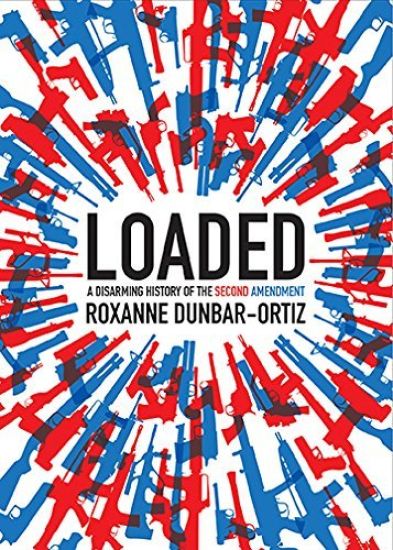
"Roxanne Dunbar-Ortiz's Loaded is like a blast of fresh air. She is no fan of guns or of our absurdly permissive laws surrounding them. But she does not merely take the liberal side of the familiar debate."--Adam Hochschild, The New York Review of Books"If . . . anyone at all really wants to 'get to the root causes of gun violence in America,' they will need to start by coming to terms with even a fraction of what Loaded proposes."—Los Angeles Review of Books"Her analysis, erudite and unrelenting, exposes blind spots not just among conservatives, but, crucially, among liberals as well. . . . As a portrait of the deepest structures of American violence, Loaded is an indispensable book."—The New RepublicLoaded: A Disarming History of the Second Amendment, is a deeply researched—and deeply disturbing—history of guns and gun laws in the United States, from the original colonization of the country to the present. As historian and educator Dunbar-Ortiz explains, in order to understand the current obstacles to gun control, we must understand the history of U. S. guns, from their role in the "settling of America" and the early formation of the new nation, and continuing up to the present. Praise for Loaded:"Dunbar-Ortiz's argument will be disturbing and unfamiliar to most readers, but her evidence is significant and should not be ignored."—Publishers Weekly" . . . gun love is as American as apple pie—and that those guns have often been in the hands of a powerful white majority to subjugate minority natives, slaves, or others who might stand in the way of the broadest definition of Manifest Destiny."—Kirkus Reviews"Trigger warning! This is a superb and subtle book, not an intellectual safe space for confirming your preconceptions—whatever those might be—but rather a deeply necessary provocation."—Christian Parenti, author of Lockdown America: Police and Prisons in the Age of Crisis
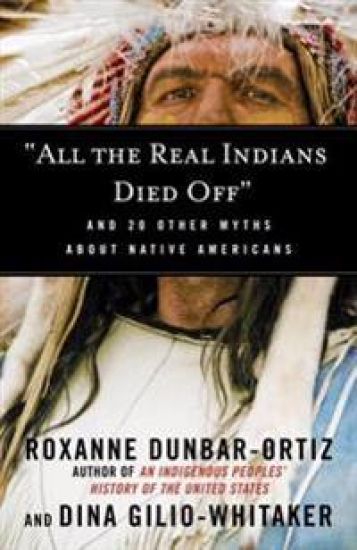
Unpacks the twenty-one most common myths and misconceptions about Native Americans In this enlightening book, scholars and activists Roxanne Dunbar-Ortiz and Dina Gilio-Whitaker tackle a wide range of myths about Native American culture and history that have misinformed generations. Tracing how these ideas evolved, and drawing from history, the authors disrupt long-held and enduring myths such as: "Columbus Discovered America""Thanksgiving Proves the Indians Welcomed Pilgrims""Indians Were Savage and Warlike""Europeans Brought Civilization to Backward Indians""The United States Did Not Have a Policy of Genocide""Sports Mascots Honor Native Americans""Most Indians Are on Government Welfare""Indian Casinos Make Them All Rich""Indians Are Naturally Predisposed to Alcohol" Each chapter deftly shows how these myths are rooted in the fears and prejudice of European settlers and in the larger political agendas of a settler state aimed at acquiring Indigenous land and tied to narratives of erasure and disappearance. Accessibly written and revelatory, "All the Real Indians Died Off" challenges readers to rethink what they have been taught about Native Americans and history.
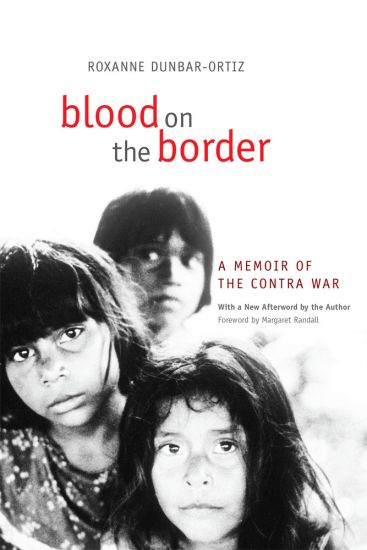
Human rights activist and historian Roxanne Dunbar-Ortiz has been described as ""a force of nature on the page and off."" That force is fully present in Blood on the Border, the third in her acclaimed series of memoirs. Seamlessly blending the personal and the political, Blood on the Border is Dunbar-Ortiz's firsthand account of the decade-long dirty war pursued by the Contras and the United States against the people of Nicaragua. With the 1981 bombing of a Nicaraguan plane in Mexico City - a plane Dunbar-Ortiz herself would have been on if not for a delay - the US-backed Contras (short for los contrarrevolucionarios) launched a major offensive against Nicaragua's Sandinista regime, which the Reagan administration labeled as communist. While her rich political analysis of the US-Nicaraguan relationship bears the mark of a trained historian, Dunbar-Ortiz also writes from her perspective as an intrepid activist who spent months at a time throughout the 1980s in the war-torn country, especially in the remote northeastern region, where the Indigenous Miskitu people were relentlessly assailed and nearly wiped out by CIA-trained Contra mercenaries. She makes painfully clear the connections between what many US Americans today remember only vaguely as the Iran-Contra ""affair"" and ongoing US aggression in the Americas, the Middle East, and around the world - connections made even more explicit in a new afterword written for this edition. A compelling, important, and sobering story on its own, Blood on the Border offers a deeply informed, closely observed, and heartfelt view of history in the making.
2015 Recipient of the American Book Award The first history of the United States told from the perspective of indigenous peoples Today in the United States, there are more than five hundred federally recognized Indigenous nations comprising nearly three million people, descendants of the fifteen million Native people who once inhabited this land. The centuries-long genocidal program of the US settler-colonial regimen has largely been omitted from history. Now, for the first time, acclaimed historian and activist Roxanne Dunbar-Ortiz offers a history of the United States told from the perspective of Indigenous peoples and reveals how Native Americans, for centuries, actively resisted expansion of the US empire. In An Indigenous Peoples' History of the United States, Dunbar-Ortiz adroitly challenges the founding myth of the United States and shows how policy against the Indigenous peoples was colonialist and designed to seize the territories of the original inhabitants, displacing or eliminating them. And as Dunbar-Ortiz reveals, this policy was praised in popular culture, through writers like James Fenimore Cooper and Walt Whitman, and in the highest offices of government and the military. Shockingly, as the genocidal policy reached its zenith under President Andrew Jackson, its ruthlessness was best articulated by US Army general Thomas S. Jesup, who, in 1836, wrote of the Seminoles: "The country can be rid of them only by exterminating them." Spanning more than four hundred years, this classic bottom-up peoples' history radically reframes US history and explodes the silences that have haunted our national narrative.
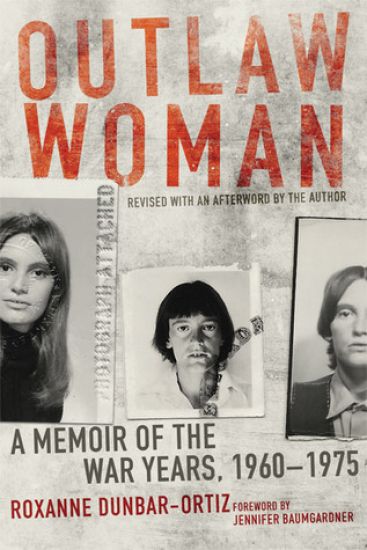
In 1968, Roxanne Dunbar-Ortiz helped found the Women's Liberation Movement, part of what has been called the second wave of feminism in the United States. Along with a small group of dedicated women in Boston, she produced the first women's liberation journal, No More Fun and Games. Dunbar-Ortiz was also an antiwar and anti-racist activist and organizer throughout the 1960s and early 1970s and a fiery, tireless public speaker on issues of patriarchy, capitalism, imperialism, and racism. She worked in Cuba with the Venceremos Brigade and formed associations with other revolutionaries across the spectrum of radical politics, including the Civil Rights Movement, Students for a Democratic Society, the Revolutionary Union, the African National Congress, and the American Indian Movement. Unlike most of those involved in the New Left, Dunbar-Ortiz grew up poor, female, and part-Native American in rural Oklahoma, and she often found herself at odds not only with the ruling class but also with the Left and with the women's movement. Dunbar-Ortiz's odyssey from Oklahoma poverty to the urban New Left gives a working-class, feminist perspective on a time and a movement that forever changed American society. In a new afterword, the author reflects on her fast-paced life fifty years ago, in particular as a movement activist and in relationships with men.
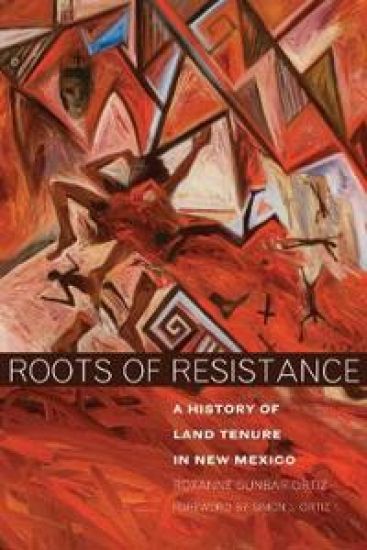
An updated edition of a seminal work on the history of land ownership in the SouthwestIn New Mexico - once a Spanish colony, then part of Mexico - Pueblo Indians and descendants of Spanish- and Mexican-era settlers still think of themselves as distinct peoples, each with a dynamic history. At the core of these persistent cultural identities is each group's historical relationship to the others and to the land, a connection that changed dramatically when the United States wrested control of the region from Mexico in 1848. In Roots of Resistance - now offered in an updated paperback edition - Roxanne Dunbar-Ortiz provides a history of land ownership in northern New Mexico from 1680 to the present. She shows how indigenous and Mexican farming communities adapted and preserved their fundamental democratic social and economic institutions, despite losing control of their land to capitalist entrepreneurs and becoming part of a low-wage labor force. In a new final chapter, Dunbar-Ortiz applies the lessons of this history to recent conflicts in New Mexico over ownership and use of land and control of minerals, timber, and water.
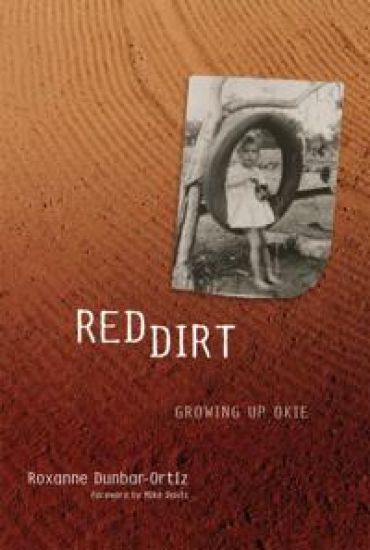
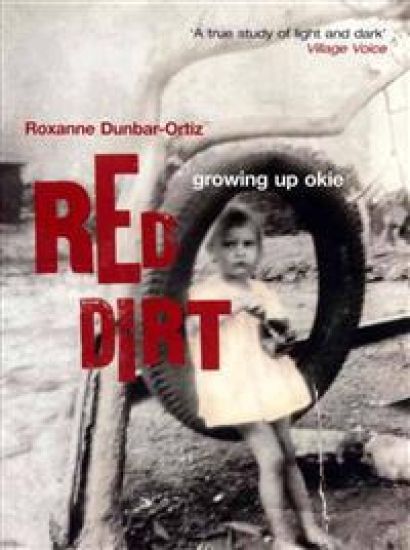
A classic in contemporary Oklahoma literature, Roxanne Dunbar-Ortiz's Red Dirt unearths the joys and ordeals of growing up poor during the 1940s and 1950s. In this exquisite rendering of her childhood in rural Oklahoma, from the Dust Bowl days to the end of the Eisenhower era, the author bears witness to a family and community that still cling to the dream of America as a republic of landowners.