Kirjojen hintavertailu – 12 859 828 kirjaa ja 27 kauppaa
Kirjailija
Roy F. Baumeister
Kirjat ja teokset yhdessä paikassa: 30 kirjaa, julkaisuja vuosilta 1989–2026, suosituimpiin kuuluu Losing Control. Vertaile teosten hintoja ja tarkista saatavuus suomalaisista kirjakaupoista.
Hva er viljestyrke og hvordan fungerer den egentlig? Dette er en utrolig bra - og lett tilgjengelig - gjennomgang av et forsømt felt i den menneskelige psykologi: Hvorfor motarbeider vi oss selv når vi egentlig vet bedre? Roy F. Baumeister og John Tierney kombinerer praktisk kunnskap med det beste fra nyere forskning. A-ha-opplevelsene står i kø når forfatterne gir en ny forståelse av hvordan vi tar beslutninger. Viljestyrke er en meget underholdende bok, full av fascinerende historier om hjernens kompleksitet og utvikling. En glimrende prestasjon på alle nivåer og en bok som må leses av alle som ønsker å trene, få bedre kosthold, organisere tiden, være nøysomme og motstå fristelser.
You are a member of a social world on a planet that is home to about 7 billion people. This social world is filled with paradox, mystery, suspense, and outright absurdity. Explore how social psychology can help you make sense of your own social world with this engaging and accessible book. Roy F. Baumeister and Brad J. Bushman's SOCIAL PSYCHOLOGY AND HUMAN NATURE, International Edition can help you understand one of the most interesting topics of all—the sometimes bizarre and baffling but always fascinating diversity of human behavior, and how and why people act the way they do.
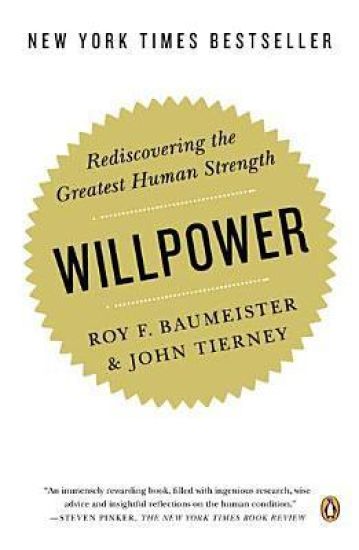
'Immensely rewarding...filled with ingenious research, wise advice and insightful reflections on the human condition' New York Times Book ReviewCan you resist everything except temptation? In a hedonistic age full of distractions, it's hard to possess willpower - or in fact even understand why we should need it. Yet it's actually the most important factor in achieving success and a happy life, shown to be more significant than money, looks, background or intelligence. This book reveals the secrets of self-control. Here, Roy Baumeister, one of the world's most esteemed and influential psychologists, and journalist John Tierney, turn this notion on its head. They show us that willpower is like a muscle that can be strengthened with practice and improved over time. Based on years of psychological research and filled with practical advice, this book will teach you how to gain from self-control without pain, and discover the very real power in willpower. The results are nothing short of life-changing.
One of the world's most esteemed and influential psychologists, Roy F. Baumeister, teams with New York Times science writer John Tierney to reveal the secrets of self-control and how to master it. "Deep and provocative analysis of people's battle with temptation and masterful insights into understanding willpower: why we have it, why we don't, and how to build it. A terrific read." --Ravi Dhar, Yale School of Management, Director of Center for Customer Insights Pioneering research psychologist Roy F. Baumeister collaborates with New York Times science writer John Tierney to revolutionize our understanding of the most coveted human virtue: self-control. Drawing on cutting-edge research and the wisdom of real-life experts, Willpower shares lessons on how to focus our strength, resist temptation, and redirect our lives. It shows readers how to be realistic when setting goals, monitor their progress, and how to keep faith when they falter. By blending practical wisdom with the best of recent research science, Willpower makes it clear that whatever we seek--from happiness to good health to financial security--we won't reach our goals without first learning to harness self-control.
Have men really been engaged in a centuries-old conspiracy to exploit and oppress women? Have the essential differences between men and women really been erased? Have men now become unnecessary? Are they good for anything at all? In Is There Anything Good About Men?, Roy Baumeister offers provocative answers to these and many other questions about the current state of manhood in America. Baumeister argues that relations between men and women are now and have always been more cooperative than antagonistic, that men and women are different in basic ways, and that successful cultures capitalize on these differences to outperform rival cultures. Amongst our ancestors---as with many other species--only the alpha males were able to reproduce, leading them to take more risks and to exhibit more aggressive and protective behaviors than women, whose evolutionary strategies required a different set of behaviors. Whereas women favor and excel at one-to-one intimate relationships, men compete with one another and build larger organizations and social networks from which culture grows. But cultures in turn exploit men by insisting that their role is to achieve and produce, to provide for others, and if necessary to sacrifice themselves. Baumeister shows that while men have greatly benefited from the culture they have created, they have also suffered because of it. Men may dominate the upper echelons of business and politics, but far more men than women die in work-related accidents, are incarcerated, or are killed in battle--facts nearly always left out of current gender debates. Engagingly written, brilliantly argued, and based on evidence from a wide range of disciplines, Is There Anything Good About Men? offers a new and far more balanced view of gender relations.
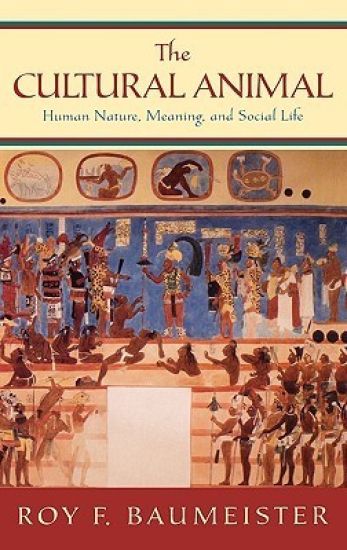
What makes us human? Why do people think, feel, and act as they do? What is the essence of human nature? What is the basic relationship between the individual and society? These questions have fascinated both great thinkers and ordinary humans for centuries. Now, at last, there is a solid basis for answering them, in the form of the accumulated efforts and studies by thousands of psychology researchers. We no longer have to rely on navel-gazing and speculation to understand why people are the way they are - we can instead turn to solid, objective findings. This book, by an eminent social psychologist at the peak of his career, not only summarizes what we know about people - it also offers a coherent, easy-to-understand, through radical, explanation. Turning conventional wisdom on its head, the author argues that culture shaped human evolution. Contrary to theories that depict the individual's relation to society as one of victimization, endless malleability, or just a square peg in a round hole, he proposes that the individual human being is designed by nature to be part of society. Moreover, he argues that we need to briefly set aside the endless study of cultural differences to look at what most cultures have in common - because that holds the key to human nature. Culture is in our genes, although cultural differences may not be. This core theme is further developed by a powerful tour through the main dimensions of human psychology. What do people want? How do people think? How do emotions operate? How do people behave? And how do they interact with each other? The answers are often surprising, and along the way the author explains how human desire, thought, feeling, and action are connected.
Throughout history, unrequited love has inspired ballads, arias, poetry, drama, and literature. Almost always, however, the tale of the star-crossed lovers has been told from the point of view of the heartbroken pursuer. This illuminating new work explores unrequited love from both sides--that of the aspiring and eventually brokenhearted lover, and more unusually, that of the beloved, unwilling rejector. Based on systematically collected first-person accounts, BREAKING HEARTS shows how radically different and often contradictory the two experiences actually are. Blending scientific research with vivid narrative, the book utilizes current psychological theories about relationships, interdependence, attachment, and communication to provide careful analysis of the sometimes amusing and often heartrending stories people tell about their love lives. The central focus is the subjective experience: What it feels like to love someone who does not love you in return, and what is it like to be pursued by someone whose attentions you wish to discourage. Demolishing pat theories about human fulfillment coming from loving or being loved, this valuable counterweight to traditional studies explores the other, darker side of love to show that it is the mutuality of affection that is crucial to happiness. A particularly valuable feature of BREAKING HEARTS is its unprecedented treatment of the rejector's experience. Known only from the unreliable perspective of the would-be lover, the elusive heartbreaker has remained an enigma. Here, perhaps for the first time, rejectors tell what it is like to be loved in vain. They describe their inner turmoil, pervasive uncertainty about how to act, and distressed reluctance to inflict harm. They grapple with the paradox of believing themselves to be morally innocent yet feeling profoundly guilty, and describe powerful feelings of exasperation and helplessness when the admirer refuses to take no for an answer. Contrary to stereotypes, the rejectors describe their experiences more negatively than the heartbroken lovers. For the would-be lover, the encounter was a high-stakes gamble, with possible outcomes ranging from tortured pain and humiliation to ecstatic bliss and fulfillment. To the rejector, it was a no-win proposition that offered only vexation and trouble. Throughout, chapters deal with the separate roller-coaster ordeals of two people--the ups and downs of self-esteem, struggles over guilt and justification, and the systematically discrepant versions of what actually occurred. Lessons people learn from being either willing or unwilling participants in unrequited love are discussed, as are the ways in which they change following such episodes. BREAKING HEARTS presents careful research in an engaging style that will be accessible to all. Social scientists interested in marriage, family issues, emotion, self esteem, guilt, and human coping will find the book illuminating. It will obviously be of interest to anyone who has experienced unrequited love, and is fascinating reading for those seeking new insights into the tragicomic mystery of romance.
Throughout history, unrequited love has inspired ballads, arias, poetry, drama, and literature. Almost always, however, the tale of the star-crossed lovers has been told from the point of view of the heartbroken pursuer. This illuminating new work explores unrequited love from both sides--that of the aspiring and eventually brokenhearted lover, and more unusually, that of the beloved, unwilling rejector. Based on systematically collected first-person accounts, BREAKING HEARTS shows how radically different and often contradictory the two experiences actually are.
Who among us has not at some point asked, ``what is the meaning of life?'' In this extraordinary book, an eminent social scientist looks at the big picture and explores what empirical studies from diverse fields tell us about the human condition. MEANINGS OF LIFE draws together evidence from psychology, history, anthropology, and sociology, integrating copious research findings into a clear and conclusive discussion of how people attempt to make sense of their lives. In a lively and accessible style, emphasizing facts over theories, Baumeister explores why people desire meaning in their lives, how these meanings function, what forms they take, and what happens when life loses meaning. It is the most comprehensive examination of the topic to date.
This volume provides an integrative theory firmly grounded in current psychology of the self, and offers a fresh, compelling account of one of psychology's most enigmatic behavior patterns. Professor Baumeister provides comprehensive coverage of historical and cross-cultural theories and empirical data on masochism and presents recent, original data drawn from a large data set of anonymous masochistic scripts of fantasies and favorite experiences. Drawn from the latest social psychological research and theories, Professor Baumeister returns the emphasis to the original and proto-typical form of masochism -- sexual masochism - - and explains these phenomena as a means of releasing the individual from the burden of self-awareness. It is the first volume to present a psychological theory compatible with the mounting evidence that most masochists are not mentally ill nor does masochism derives from sadism. Instead, Professor Baumeister finds that masochism emerges as an escapist response to the problematic nature of selfhood and he attempts to foster an understanding of sexual masochism that emphasizes both "escape from self" and "construction of meaning" hypotheses. The book is directed at all those interested in the self and identity in paradoxical behavior patterns and in the construction of meaning, presenting specific clinical recommendations.