Kirjojen hintavertailu – 12 903 735 kirjaa ja 27 kauppaa

Kirjailija

Roy Rosenzweig

Kirjat ja teokset yhdessä paikassa: 10 kirjaa, julkaisuja vuosilta 1985–2011, suosituimpiin kuuluu Government and the Arts in Thirties America. Vertaile teosten hintoja ja tarkista saatavuus suomalaisista kirjakaupoista.

10 kirjaa

Kirjojen julkaisuvuodet: 1985–2011.

Clio Wired

Clio Wired

Roy Rosenzweig

Columbia University Press
2011
sidottu
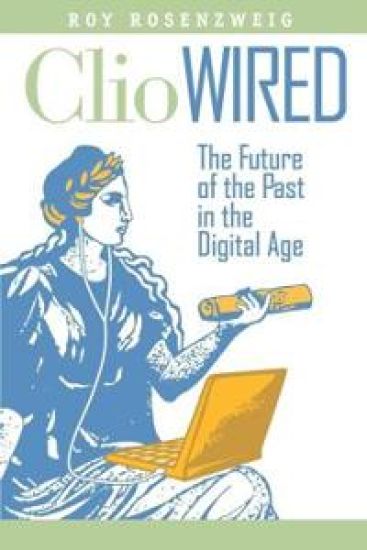
In these pathbreaking essays, Roy Rosenzweig charts the impact of new media on teaching, researching, preserving, presenting, and understanding history. Negotiating between the "cyberenthusiasts" who champion technological breakthroughs and the "digital skeptics" who fear the end of traditional humanistic scholarship, Rosenzweig re-envisions the practices and professional rites of academic historians while analyzing and advocating for the achievements of amateur historians. While he addresses the perils of "doing history" online, Rosenzweig eloquently identifies the promises of digital work, detailing innovative strategies for powerful searches in primary and secondary sources, the increased opportunities for dialogue and debate, and, most of all, the unprecedented access afforded by the Internet. Rosenzweig draws attention to the opening up of the historical record to new voices, the availability of documents and narratives to new audiences, and the attractions of digital technologies for new and diverse practitioners. Though he celebrates digital history's democratizing influences, Rosenzweig also argues that the future of the past in this digital age can only be ensured through the active resistance to efforts by corporations to control access and profit from the Web.
Clio Wired

Clio Wired

Roy Rosenzweig

Columbia University Press
2011
pokkari
In these pathbreaking essays, Roy Rosenzweig charts the impact of new media on teaching, researching, preserving, presenting, and understanding history. Negotiating between the "cyberenthusiasts" who champion technological breakthroughs and the "digital skeptics" who fear the end of traditional humanistic scholarship, Rosenzweig re-envisions the practices and professional rites of academic historians while analyzing and advocating for the achievements of amateur historians. While he addresses the perils of "doing history" online, Rosenzweig eloquently identifies the promises of digital work, detailing innovative strategies for powerful searches in primary and secondary sources, the increased opportunities for dialogue and debate, and, most of all, the unprecedented access afforded by the Internet. Rosenzweig draws attention to the opening up of the historical record to new voices, the availability of documents and narratives to new audiences, and the attractions of digital technologies for new and diverse practitioners. Though he celebrates digital history's democratizing influences, Rosenzweig also argues that the future of the past in this digital age can only be ensured through the active resistance to efforts by corporations to control access and profit from the Web.
Digital History

Digital History

Daniel Cohen; Roy Rosenzweig

University of Pennsylvania Press
2005
pokkari

Halvin toimitettuna 38,20 €

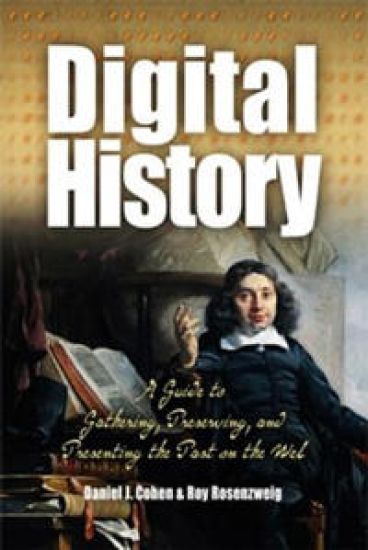
Selected by Choice magazine as an Outstanding Academic Title Digital History: A Guide to Gathering, Preserving, and Presenting the Past on the Web provides for the first time a plainspoken and thorough introduction to the web for historians-teachers and students, archivists and museum curators, professors as well as amateur enthusiasts-who wish to produce online historical work or to build upon and improve the projects they have already started in this important new medium. The book takes the reader step by step through planning a project, understanding the technologies involved and how to choose the appropriate ones, designing a site that is both easy to use and scholarly, digitizing materials in a way that makes them web-friendly while preserving their historical integrity, and reaching and responding to an intended audience effectively. It also explores the repercussions of copyright law and fair use for scholars in a digital age and examines more cutting-edge web techniques involving interactivity, such as sites that use the medium to solicit and collect historical artifacts. Finally, the book provides basic guidance for ensuring that the digital history the reader creates will not disappear in a few years. Throughout, Digital History maintains a realistic sense of the advantages and disadvantages of putting historical documents, interpretations, and discussions online. The authors write in a tone that makes Digital History accessible to those with little knowledge of computers, while including a host of details that more technically savvy readers will find helpful. And although the book focuses particularly on historians, those working in related fields in the humanities and social sciences will also find this to be a useful introduction. Digital History builds upon more than a decade of experience and expertise in creating pioneering and award-winning work by the Center for History and New Media at George Mason University.
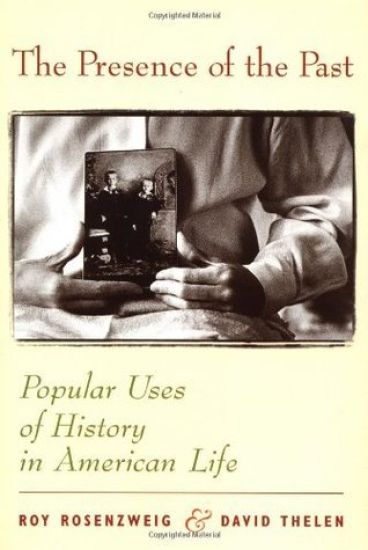
The Presence of the Past

The Presence of the Past

Roy Rosenzweig; David Thelen

Columbia University Press
2000
pokkari
Some people make photo albums, collect antiques, or visit historic battlefields. Others keep diaries, plan annual family gatherings, or stitch together patchwork quilts in a tradition learned from grandparents. Each of us has ways of communing with the past, and our reasons for doing so are as varied as our memories. In a sweeping survey, Roy Rosenzweig and David Thelen asked 1,500 Americans about their connection to the past and how it influences their daily lives and hopes for the future. The result is a surprisingly candid series of conversations and reflections on how the past infuses the present with meaning. Rosenzweig and Thelen found that people assemble their experiences into narratives that allow them to make sense of their personal histories, set priorities, project what might happen next, and try to shape the future. By using these narratives to mark change and create continuity, people chart the courses of their lives. A young woman from Ohio speaks of giving birth to her first child, which caused her to reflect upon her parents and the ways that their example would help her to become a good mother. An African American man from Georgia tells how he and his wife were drawn to each other by their shared experiences and lessons learned from growing up in the South in the 1950s. Others reveal how they personalize historical events, as in the case of a Massachusetts woman who traces much of her guarded attitude toward life to witnessing the assassination of John F. Kennedy on television when she was a child. While the past is omnipresent to Americans, "history" as it is usually defined in textbooks leaves many people cold. Rosenzweig and Thelen found that history as taught in school does not inspire a strong connection to the past. And they reveal how race and ethnicity affects how Americans perceive the past: while most white Americans tend to think of it as something personal, African Americans and American Indians are more likely to think in terms of broadly shared experiences--like slavery, the Civil Rights Movement, and the violation of Indian treaties." Rosenzweig and Thelen's conclusions about the ways people use their personal, family, and national stories have profound implications for anyone involved in researching or presenting history, as well as for all those who struggle to engage with the past in a meaningful way.
The Presence of the Past

The Presence of the Past

Roy Rosenzweig; David Thelen

Columbia University Press
1998
sidottu
Some people make photo albums, collect antiques, or visit historic battlefields. Others keep diaries, plan annual family gatherings, or stitch together patchwork quilts in a tradition learned from grandparents. Each of us has ways of communing with the past, and our reasons for doing so are as varied as our memories. In a sweeping survey, Roy Rosenzweig and David Thelen asked 1,500 Americans about their connection to the past and how it influences their daily lives and hopes for the future. The result is a surprisingly candid series of conversations and reflections on how the past infuses the present with meaning. Rosenzweig and Thelen found that people assemble their experiences into narratives that allow them to make sense of their personal histories, set priorities, project what might happen next, and try to shape the future. By using these narratives to mark change and create continuity, people chart the courses of their lives. A young woman from Ohio speaks of giving birth to her first child, which caused her to reflect upon her parents and the ways that their example would help her to become a good mother. An African American man from Georgia tells how he and his wife were drawn to each other by their shared experiences and lessons learned from growing up in the South in the 1950s. Others reveal how they personalize historical events, as in the case of a Massachusetts woman who traces much of her guarded attitude toward life to witnessing the assassination of John F. Kennedy on television when she was a child. While the past is omnipresent to Americans, "history" as it is usually defined in textbooks leaves many people cold. Rosenzweig and Thelen found that history as taught in school does not inspire a strong connection to the past. And they reveal how race and ethnicity affects how Americans perceive the past: while most white Americans tend to think of it as something personal, African Americans and American Indians are more likely to think in terms of broadly shared experiences--like slavery, the Civil Rights Movement, and the violation of Indian treaties." Rosenzweig and Thelen's conclusions about the ways people use their personal, family, and national stories have profound implications for anyone involved in researching or presenting history, as well as for all those who struggle to engage with the past in a meaningful way.
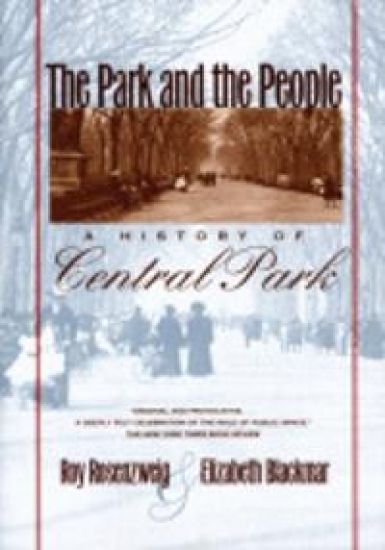
The Park and the People

The Park and the People

Roy Rosenzweig; Elizabeth Blackmar

Cornell University Press
1998
pokkari
This "exemplary social history" (Kirkus Reviews) is the first full-scale account of Central Park ever published. Elizabeth Blackmar and Roy Rosenzweig tell the story of Central Park's people—the merchants and landowners who launched the project; the immigrant and African-American residents who were displaced by the park; the politicians, gentlemen, and artists who disputed its design and operation; the German gardeners, Irish laborers, and Yankee engineers who built it; and the generations of New Yorkers for whom Central Park was their only backyard. In tracing the park's history, Blackmar and Rosenzweig give us the history of New York, and bring to life larger issues about the meaning of the word "public" in a democratic society.
Eight Hours for What We Will

Eight Hours for What We Will

Roy Rosenzweig

Cambridge University Press
1985
pokkari
In the first comprehensive study of American working-class recreation, Professor Rosenzweig takes us to the saloons, the ethnic and church picnics, the parks and playgrounds, the amusement parks, and the movie houses where industrial workers spent their leisure hours. Focusing on the city of Worcester, Massachusetts, he describes the profound changes that popular leisure underwent. Explaining what these pastimes and amusements tell us about the nature of working-class culture and class relations in this era, he demonstrates that in order fully to understand the working class experience it is necessary to explore the realm of leisure. For what workers did in the corner saloon, the neighbourhood park, the fraternal lodge hall, the amusement park, and the nickelodeon had a good deal of bearing on what happened inside the factories, the union halls, and the voting booths of America’s industrial communities.