Kirjojen hintavertailu – 12 859 818 kirjaa ja 27 kauppaa

Kirjailija

Roy T. Cook

Kirjat ja teokset yhdessä paikassa: 6 kirjaa, julkaisuja vuosilta 2009–2014, suosituimpiin kuuluu The Yablo Paradox. Vertaile teosten hintoja ja tarkista saatavuus suomalaisista kirjakaupoista.

Nimi esiintyy myös muodoissa: Roy T Cook

6 kirjaa

Kirjojen julkaisuvuodet: 2009–2014.

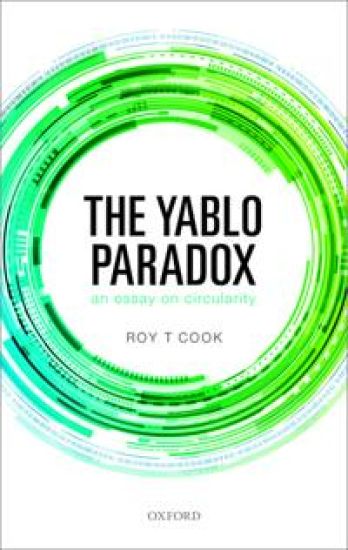
The Yablo Paradox

The Yablo Paradox

Roy T Cook

Oxford University Press
2014
sidottu
Roy T Cook examines the Yablo paradox--a paradoxical, infinite sequence of sentences, each of which entails the falsity of all others later than it in the sequence--with special attention paid to the idea that this paradox provides us with a semantic paradox that involves no circularity. The three main chapters of the book focus, respectively, on three questions that can be (and have been) asked about the Yablo construction. First we have the Characterization Problem, which asks what patterns of sentential reference (circular or not) generate semantic paradoxes. Addressing this problem requires an interesting and fruitful detour through the theory of directed graphs, allowing us to draw interesting connections between philosophical problems and purely mathematical ones. Next is the Circularity Question, which addresses whether or not the Yablo paradox is genuinely non-circular. Answering this question is complicated: although the original formulation of the Yablo paradox is circular, it turns out that it is not circular in any sense that can bear the blame for the paradox. Further, formulations of the paradox using infinitary conjunction provide genuinely non-circular constructions. Finally, Cook turns his attention to the Generalizability Question: can the Yabloesque pattern be used to generate genuinely non-circular variants of other paradoxes, such as epistemic and set-theoretic paradoxes? Cook argues that although there are general constructions-unwindings--that transform circular constructions into Yablo-like sequences, it turns out that these sorts of constructions are not 'well-behaved' when transferred from semantic puzzles to puzzles of other sorts. He concludes with a short discussion of the connections between the Yablo paradox and the Curry paradox.
The Art of Comics

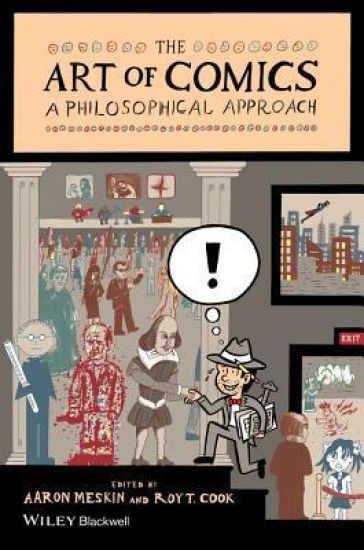
The Art of Comics

Aaron Meskin; Roy T. Cook; Warren Ellis

John Wiley Sons Inc
2014
nidottu
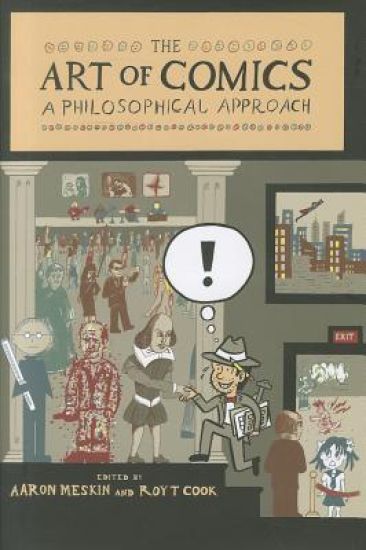
THE ART OF COMICS The Art of Comics: A Philosophical Introduction is the first-ever collection of essays published in English devoted to the philosophical questions raised by the art of comics. The volume, which includes a preface by the renowned comics author Warren Ellis, contains ten cutting-edge essays on a range of philosophical topics raised by comics and graphic novels. These include the definition of comics, the nature of comics genres, the relationship between comics and other arts such as film and literature, the way words and pictures combine in comics, comics authorship, the “language” of comics, and the metaphysics of comics. The book also contains an in-depth introduction by the co-editors which provides an overview of both the book and its subject, as well as a brief history of comics and an overview of extant work on the philosophy of comics. In an area of growing philosophical interest, this volume constitutes a great leap forward in the development of this fast expanding field, and makes a major contribution to the philosophy of art.
Paradoxes

Paradoxes

Roy T. Cook

Polity Press
2013
sidottu
Paradoxes are arguments that lead from apparently true premises, via apparently uncontroversial reasoning, to a false or even contradictory conclusion. Paradoxes threaten our basic understanding of central concepts such as space, time, motion, infinity, truth, knowledge, and belief. In this volume Roy T Cook provides a sophisticated, yet accessible and entertaining, introduction to the study of paradoxes, one that includes a detailed examination of a wide variety of paradoxes. The book is organized around four important types of paradox: the semantic paradoxes involving truth, the set-theoretic paradoxes involving arbitrary collections of objects, the Soritical paradoxes involving vague concepts, and the epistemic paradoxes involving knowledge and belief. In each of these cases, Cook frames the discussion in terms of four different approaches one might take towards solving such paradoxes. Each chapter concludes with a number of exercises that illustrate the philosophical arguments and logical concepts involved in the paradoxes. Paradoxes is the ideal introduction to the topic and will be a valuable resource for scholars and students in a wide variety of disciplines who wish to understand the important role that paradoxes have played, and continue to play, in contemporary philosophy.
Paradoxes

Paradoxes

Roy T. Cook

Polity Press
2013
nidottu
Paradoxes are arguments that lead from apparently true premises, via apparently uncontroversial reasoning, to a false or even contradictory conclusion. Paradoxes threaten our basic understanding of central concepts such as space, time, motion, infinity, truth, knowledge, and belief. In this volume Roy T Cook provides a sophisticated, yet accessible and entertaining, introduction to the study of paradoxes, one that includes a detailed examination of a wide variety of paradoxes. The book is organized around four important types of paradox: the semantic paradoxes involving truth, the set-theoretic paradoxes involving arbitrary collections of objects, the Soritical paradoxes involving vague concepts, and the epistemic paradoxes involving knowledge and belief. In each of these cases, Cook frames the discussion in terms of four different approaches one might take towards solving such paradoxes. Each chapter concludes with a number of exercises that illustrate the philosophical arguments and logical concepts involved in the paradoxes. Paradoxes is the ideal introduction to the topic and will be a valuable resource for scholars and students in a wide variety of disciplines who wish to understand the important role that paradoxes have played, and continue to play, in contemporary philosophy.
The Art of Comics

The Art of Comics

Aaron Meskin; Roy T. Cook; Warren Ellis

Wiley-Blackwell (an imprint of John Wiley Sons Ltd)
2012
sidottu
THE ART OF COMICS The Art of Comics: A Philosophical Introduction is the first-ever collection of essays published in English devoted to the philosophical questions raised by the art of comics. The volume, which includes a preface by the renowned comics author Warren Ellis, contains ten cutting-edge essays on a range of philosophical topics raised by comics and graphic novels. These include the definition of comics, the nature of comics genres, the relationship between comics and other arts such as film and literature, the way words and pictures combine in comics, comics authorship, the “language” of comics, and the metaphysics of comics. The book also contains an in-depth introduction by the co-editors which provides an overview of both the book and its subject, as well as a brief history of comics and an overview of extant work on the philosophy of comics. In an area of growing philosophical interest, this volume constitutes a great leap forward in the development of this fast expanding field, and makes a major contribution to the philosophy of art.
A Dictionary of Philosophical Logic

A Dictionary of Philosophical Logic

Roy T. Cook

Edinburgh University Press
2009
sidottu
This dictionary introduces undergraduate and post-graduate students in philosophy, mathematics, and computer science to the main problems and positions in philosophical logic. Coverage includes not only key figures, positions, terminology, and debates within philosophical logic itself, but issues in related, overlapping disciplines such as set theory and the philosophy of mathematics as well. Entries are extensively cross-referenced, so that each entry can be easily located within the context of wider debates, thereby providing a valuable reference both for tracking the connections between concepts within logic and for examining the manner in which these concepts are applied in other philosophical disciplines.