
Kirjailija
Rubén Rosario Rodríguez
Kirjat ja teokset yhdessä paikassa: 11 kirjaa, julkaisuja vuosilta 2008–2024, suosituimpiin kuuluu Reasonable Doubt. Vertaile teosten hintoja ja tarkista saatavuus suomalaisista kirjakaupoista.
Nimi esiintyy myös muodoissa: Ruben Rosario Rodriguez, Rubén Rosario Rodriguez
11 kirjaa
Kirjojen julkaisuvuodet: 2008–2024.
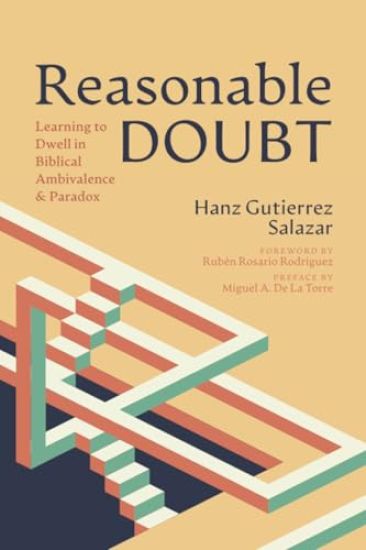
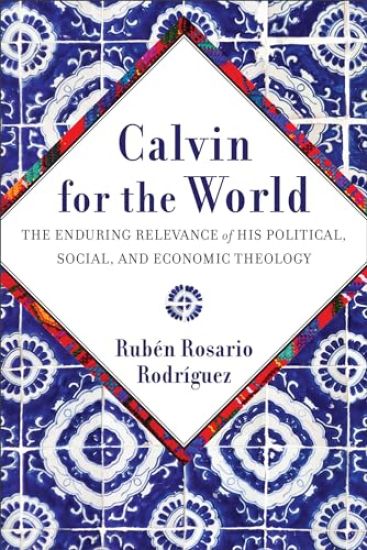
John Calvin was arguably the most influential of the sixteenth-century Reformers. His supporters praise his transformative influence on the ecclesial, political, and economic spheres of modern life, while his detractors paint him as a ruthless proponent of theocracy. These conflicting images suggest there is more to Calvin than meets the eye. In Calvin for the World, Rubén Rosario Rodríguez offers a creative engagement with Calvin's theological and political thought and a critical reclamation of the Reformer's legacy. Rosario Rodríguez presents Calvin's theology in historical context and explores his global impact by examining his views on a broad range of social and cultural issues, including those that pertain to political theology, migration and dislocation, nationalism, social welfare policies, revolution, racism, and religious pluralism. This book shows how Calvin's theological legacy impacted the formation of the modern world, its worldview, and its social institutions and presents Calvin as an engaging interlocutor on contemporary matters of social, political, racial, and economic justice. This book will be ideal for professors and students of theology for use in courses on Calvin, the Reformation, and church history. It will also be of interest to pastors and church leaders.
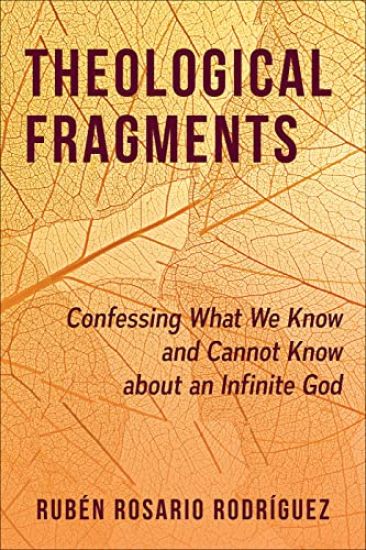
Theological Fragments: Confessing What We Know and Cannot Know about an Infinite God
Rubén Rosario Rodríguez
WESTMINSTER JOHN KNOX PRESS
2023
nidottu
The swelling ranks of religious "nones"--those who do not identify with any particular religious tradition--have demonstrated that traditional Christian apologetics set on delivering a universally accepted, objectively verifiable system that proves the truth and superiority of Christian belief has failed. Turned off by organized Christianity's hypocrisy and politics of intolerance, millennials and Generation Z have rejected such domineering forms of reasoning aimed at winning converts through logical argument. Not only is this misguided missional strategy, argues Rub n Rosario Rodr guez, but it's grounded in bad theology as well. The propositional truth claims imply that if you accept the argument, you must accept the Christian faith too. Instead of this triumphalist understanding of Christian truth, Rosario argues for a broken and contrite Christian theology that can help make sense of a fractured world. Realizing that fragments of truth are often all we have, he points out that the search for the truth of God and the self will most often be found while engaged in the struggle for justice. Theological Fragments is not another set of strategies for how to win back millennials. Rather, it provides a foundational theological vision necessary to the work of inviting the "nones" to hear the gospel afresh.
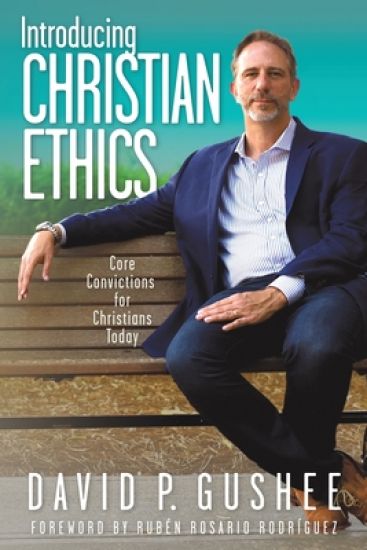
Introducing Christian Ethics
David P Gushee; Rubén Rosario Rodríguez
Front Edge Publishing, LLC
2022
pokkari
"A comprehensive one-stop manual on what it means to live Christianly." Peter Enns, author of The Bible Tells Me SoWhat does it mean to be a Christian in today's turbulent world? After every disillusionment and debate, what convictions survive? Dr. David P. Gushee is an influential voice in American religious life as an ethicist, pastor, and activist. He's advocated on issues ranging from torture and climate change to truth in politics and LGBTQ inclusion. He co-authored the pivotal Kingdom Ethics, a Jesus-based ethics textbook, and has written numerous books and hundreds of opinion pieces on what Christianity has to say about how we should live. Now, in this ambitious new book, Gushee sums up his many years of teaching and experience to provide a definitive, comprehensive vision of the Christian moral life. With twenty-five easy-to-digest chapters, plus audio and video versions that readers can access from links in each chapter, Introducing Christian Ethics offers readers a way to understand how to situate moral reasoning not only in scripture, but also in tradition and human reasoning. It offers a focus on Jesus and the disinherited, and a nuanced rethinking of the kingdom of God and its meaning for Christian ethics. Drawing on Gushee's own work and life story but also a richly diverse set of sources, it covers general principles like virtues, truthfulness, love, and justice. And it discusses issues like creation, patriarchy, white supremacy, abortion, sexuality, marriage, politics, crime, and more. This new book is groundbreaking in its breadth. Written for seminary students, educators, pastors, small groups, and Christians everywhere, this is the first time in his long publishing career that Gushee has offered both audio and video versions along with each copy of the book. The multimedia elements were recorded at the McAfee School of Theology at Mercer University, where Gushee is the Distinguished University Professor of Christian Ethics. The book also includes a complete discussion guide with questions conveniently organized by chapter. Early reviewers around the world are describing Introducing Christian Ethics as an inspiring guide to finding core Christian convictions in a post-evangelical world." Gushee has distilled a lifetime of learning, thinking, and teaching Christian ethics in universities, seminaries, churches, and other settings into a comprehensive yet very readable book," writes Rub n Rosario Rodr guez, Professor of Systematic Theology at Saint Louis University, in the book's Foreword. "Drawing on his own extraordinary journey as a practicing Christian and professional ethicist who has engaged all the major moral dilemmas confronting the Christian faith in the postmodern world, Introducing Christian Ethics serves as both a practical manual for how one ought to live the Christian life and an encyclopedic introduction to the academic discipline of Christian ethics. Throughout the text Gushee's considerable genius manages to interject a pastoral focus without sacrificing intellectual rigor, explore contemporary challenges to Christian faith without disregarding the vast resources of the Christian tradition, and give preference to marginalized and silenced voices ... without losing sight of the fact that Jesus's good news of liberation extends to both the oppressed and their oppressors."
Introducing Christian Ethics
David P Gushee; Rubén Rosario Rodríguez
Front Edge Publishing, LLC
2022
sidottu
"A comprehensive one-stop manual on what it means to live Christianly." Peter Enns, author of The Bible Tells Me SoWhat does it mean to be a Christian in today's turbulent world? After every disillusionment and debate, what convictions survive? Dr. David P. Gushee is an influential voice in American religious life as an ethicist, pastor, and activist. He's advocated on issues ranging from torture and climate change to truth in politics and LGBTQ inclusion. He co-authored the pivotal Kingdom Ethics, a Jesus-based ethics textbook, and has written numerous books and hundreds of opinion pieces on what Christianity has to say about how we should live. Now, in this ambitious new book, Gushee sums up his many years of teaching and experience to provide a definitive, comprehensive vision of the Christian moral life. With twenty-five easy-to-digest chapters, plus audio and video versions that readers can access from links in each chapter, Introducing Christian Ethics offers readers a way to understand how to situate moral reasoning not only in scripture, but also in tradition and human reasoning. It offers a focus on Jesus and the disinherited, and a nuanced rethinking of the kingdom of God and its meaning for Christian ethics. Drawing on Gushee's own work and life story but also a richly diverse set of sources, it covers general principles like virtues, truthfulness, love, and justice. And it discusses issues like creation, patriarchy, white supremacy, abortion, sexuality, marriage, politics, crime, and more. This new book is groundbreaking in its breadth. Written for seminary students, educators, pastors, small groups, and Christians everywhere, this is the first time in his long publishing career that Gushee has offered both audio and video versions along with each copy of the book. The multimedia elements were recorded at the McAfee School of Theology at Mercer University, where Gushee is the Distinguished University Professor of Christian Ethics. The book also includes a complete discussion guide with questions conveniently organized by chapter. Early reviewers around the world are describing Introducing Christian Ethics as an inspiring guide to finding core Christian convictions in a post-evangelical world." Gushee has distilled a lifetime of learning, thinking, and teaching Christian ethics in universities, seminaries, churches, and other settings into a comprehensive yet very readable book," writes Rub n Rosario Rodr guez, Professor of Systematic Theology at Saint Louis University, in the book's Foreword. "Drawing on his own extraordinary journey as a practicing Christian and professional ethicist who has engaged all the major moral dilemmas confronting the Christian faith in the postmodern world, Introducing Christian Ethics serves as both a practical manual for how one ought to live the Christian life and an encyclopedic introduction to the academic discipline of Christian ethics. Throughout the text Gushee's considerable genius manages to interject a pastoral focus without sacrificing intellectual rigor, explore contemporary challenges to Christian faith without disregarding the vast resources of the Christian tradition, and give preference to marginalized and silenced voices ... without losing sight of the fact that Jesus's good news of liberation extends to both the oppressed and their oppressors."
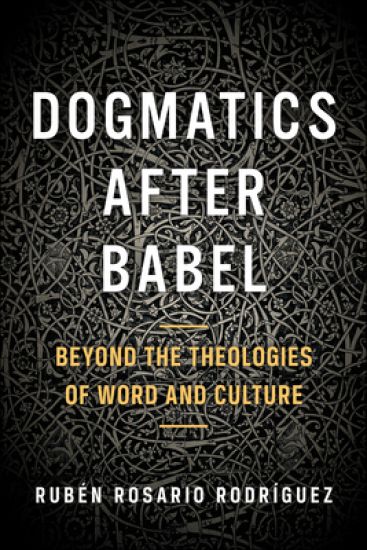
Rubén Rosario RodrÃguez addresses the long-standing division between Christian theologies that take revelation as their starting point and focus and those that take human culture as theirs. After introducing these two theological streams that originate with Karl Barth and Paul Tillich, respectively, Rosario asserts that they both seek to respond to the Enlightenment's critique and rejection of Christianity. In so doing, they have bought into Enlightenment understandings of human reality and the transcendent. Rosario argues that in order to get beyond the impasse between theologies of the Word and culture, we need a different starting point. He discovers that starting point in two sources: (1) through the work of liberation and contextual theologians on the role of the Holy Spirit, and (2) through a comparative analysis of the teachings on the hiddenness of God from the three “Abrahamicâ€? religions â€"Judaism, Christianity, and Islam. Rosario offers a strong argument for why this third theological starting point represents not just a marginal or niche position but a genuine alternative to the two traditional theological streams. His work will shift readers' understanding of the options in theological discourse beyond the false alternatives of theologies of the Word and culture.
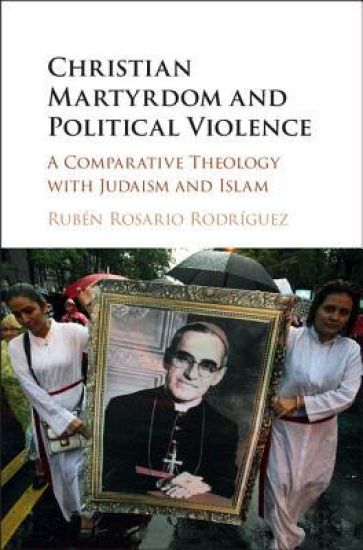
Christian Martyrdom and Political Violence
Rubén Rosario Rodríguez
Cambridge University Press
2017
sidottu
In recent years, martyrdom and political violence have been conflated in the public imagination. Rubén Rosario Rodríguez argues that martyr narratives deserve consideration as resources for resisting political violence in contemporary theological reflection. Underlying the three Abrahamic monotheistic traditions is a shared belief that God requires liberation for the oppressed, justice for the victims and, most demanding of all, love for the political enemy. Christian, Jewish and Muslim martyr narratives that condone political violence - whether terrorist or state-sponsored - are examined alongside each religion's canon, in order to evaluate how central or marginalized these discourses are within their respective traditions. Primarily a work of Christian theology in conversation with Judaism and Islam, this book aims to model religious pluralism and cooperation by retrieving distinctly Christian sources that nurture tolerance and facilitate coexistence, while respecting religious difference.
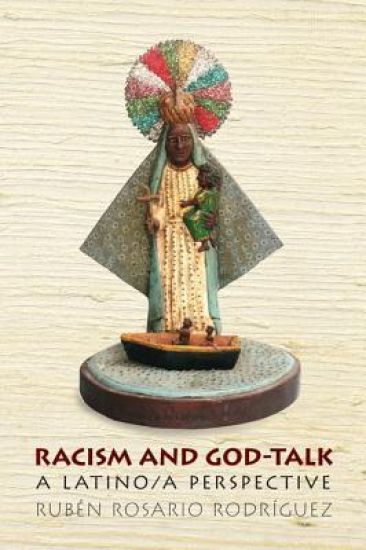
2011 Winner of the Book Awards Contest in the Discipline of Theology Presented by Alpha Sigma Nu The apostle Paul wrote that "All of you are one in Christ Jesus." Given Paul's vision of God's kingdom defined by the breakdown of all distinctions and relationships of domination—no longer Jew or Greek, slave or free, male or female—how do we make sense of ethnic particularity within the church's theological formulations? Racism and God-Talk explores the biblical and religious dimensions of North American racism while highlighting examples of resistance within the Christian religious tradition. Social historians have seldom analyzed the problematic of race from a primarily theological perspective. This volume undertakes a critical examination of explicitly theological and confessional perspectives for understanding and transforming North American racism. Rosario Rodriguez offers insights from Latino/a theology for broader scholarly and social discussions concerning racism, borders, and immigration. The first to analyze race and racism from a Latino/a theological perspective, the volume makes use of a broadened conceptualization of "mestizaje," or mutual cultural exchange, to challenge the church to recognize the effects of racial and ethnic particularity in all theological construction.
2011 Winner of the Book Awards Contest in the Discipline of Theology Presented by Alpha Sigma Nu The apostle Paul wrote that "All of you are one in Christ Jesus." Given Paul's vision of God's kingdom defined by the breakdown of all distinctions and relationships of domination—no longer Jew or Greek, slave or free, male or female—how do we make sense of ethnic particularity within the church's theological formulations? Racism and God-Talk explores the biblical and religious dimensions of North American racism while highlighting examples of resistance within the Christian religious tradition. Social historians have seldom analyzed the problematic of race from a primarily theological perspective. This volume undertakes a critical examination of explicitly theological and confessional perspectives for understanding and transforming North American racism. Rosario Rodriguez offers insights from Latino/a theology for broader scholarly and social discussions concerning racism, borders, and immigration. The first to analyze race and racism from a Latino/a theological perspective, the volume makes use of a broadened conceptualization of "mestizaje," or mutual cultural exchange, to challenge the church to recognize the effects of racial and ethnic particularity in all theological construction.