Kirjojen hintavertailu – 12 872 014 kirjaa ja 27 kauppaa

Kirjailija

Rudolfo Anaya

Kirjat ja teokset yhdessä paikassa: 32 kirjaa, julkaisuja vuosilta 1988–2026, suosituimpiin kuuluu Randy Lopez Goes Home. Vertaile teosten hintoja ja tarkista saatavuus suomalaisista kirjakaupoista.

32 kirjaa

Kirjojen julkaisuvuodet: 1988–2026.

Lord of the Dawn

Lord of the Dawn

Rudolfo Anaya

University of New Mexico Press
2012
nidottu
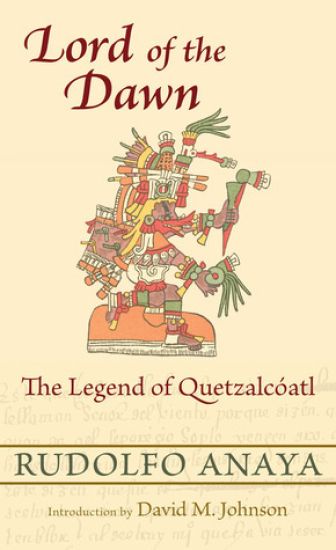
The legend of Quetzalcóatl is the enduring epic myth of Mesoamerica. The gods create the universe, but man must carefully tend to the harmony of the world. Without spiritual attention to harmony, chaos may reign, destroying the universe and civilisation. The ancient Mexicans, like other peoples throughout the world, wrestled with ideas and metaphors by which to know the Godhead and developed their own concepts about their relationship to the universe. Quetzalcóatl came to the Toltecs to teach them art, agriculture, peace, and knowledge. He was a redeemer god, and his story inspires, instructs, and entertains, as do all the great myths of the world. Now available in paperback, Lord of the Dawn is Anaya's exploration of the cosmology and the rich and complex spiritual thought of his Native American ancestors. The story depicts the daily world of man, the struggle between the peacemakers and the warmongers, and the world of the gods and their role in the life of mankind.
Billy the Kid and Other Plays

Billy the Kid and Other Plays

Rudolfo Anaya; Cecilia J. Aragón; Robert Con Davis-Undiano

University of Oklahoma Press
2011
nidottu
While award-winning author Rudolfo Anaya is known primarily as a novelist, his genius is also evident in dramatic works performed regularly in his native New Mexico and throughout the world. Billy the Kid and Other Plays collects seven of these works and offers them together for the first time. Like his novels, many of Anaya's plays are built from the folklore of the Southwest. This volume opens with The Season of La Llorona, in which Anaya fuses the Mexican legend of the dreaded ""crying woman"" with that of La Malinche, mistress and adviser to Hernán Cortés. Southwestern lore also shapes the title play, which provides a Mexican American perspective on the Kid - or Bilito, as he is known inNew Mexico - along with keen insight into the slipperiness of history. The Farolitos of Christmas and Matachines uncover both the sweet and the sinister in stories behind seasonal New Mexican rituals. Other plays here address loss of the old ways - farming, connection to the land, the primacy of family - while showing the power of change. The mystery Who Killed Don José? uses the murder of a wealthy sheep rancher to look at political corruption and modernization. Ay, Compadre! and Angie address aging and death, though with refreshing humor and optimism. Elegant and poetic, intense and funny, these are the plays Anaya considers his best. The author tells how each originated, while Cecilia J. Aragón and Robert Con Davis- Undiano offer critical analysis and performance history. Both Anaya fans and readers new to his work will find this collection a rich trove, as will community theaters and scholars in Chicano literature and drama.
La Llorona

La Llorona

Rudolfo Anaya

University of New Mexico Press
2011
nidottu
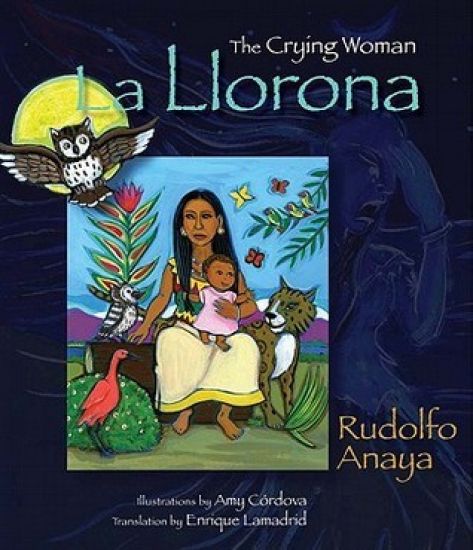
La Llorona, the Crying Woman, is the legendary creature who haunts rivers, lakes, and lonely roads. Said to seek out children who disobey their parents, she has become a ""boogeyman,"" terrorizing the imaginations of New Mexican children and inspiring them to behave. But there are other lessons her tragic history can demonstrate for children. In Rudolfo Anaya's version Maya, a young woman in ancient Mexico, loses her children to Father Time's cunning. This tragic and informative story serves as an accessible message of mortality for children. La Llorona, deftly translated by Enrique Lamadrid, is familiar and newly informative, while Amy Córdova's rich illustrations illuminate the story. The legend as retold by Anaya, a man as integral to southwest tradition as La Llorona herself, is storytelling anchored in a very human experience. His book helps parents explain to children the reality of death and the loss of loved ones.
The Essays

The Essays

Rudolfo Anaya; Robert Con Davis-Undiano

University of Oklahoma Press
2009
sidottu
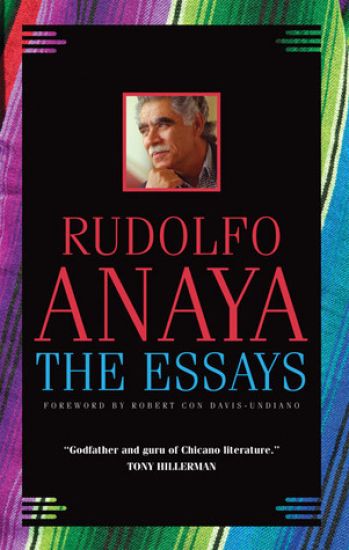
The storyteller's gift is my inheritance,"" writes Rudolfo Anaya in his essay ""Shaman of Words."" Although he is best known for Bless Me, Ultima and other novels, his writing also takes the form of nonfiction, and in these 52 essays he draws on both his heritage as a Mexican American and his gift for storytelling. Besides tackling issues such as censorship, racism, education, and sexual politics, Anaya explores the tragedies and triumphs of his own life. Collected here are Anaya's published essays. Despite his wide acclaim as the founder of Chicano literature, no previous volume has attempted to gather Anaya's nonfiction into one edition. A companion to The Man Who Could Fly and Other Stories, the collection of Anaya's short stories, The Essays is an essential anthology for followers of Anaya and those interested in Chicano literature. Pieces such as ""Requiem for a Lowrider,"" ""La Llorona, El Kookoóee, and Sexuality,"" and ""An American Chicano in King Arthur's Court"" take the reader from the llano of eastern New Mexico, where Anaya grew up, to the barrios of Albuquerque, and from the devastating diving accident that nearly ended his life at sixteen to the career he has made as an author and teacher. The point is not autobiography, although a life story is told, nor is it advocacy, although Anaya argues persuasively for cultural change. Instead, the author provides shrewd commentary on modern America in all its complexity. All the while, he employs the elegant, poetic voice and the interweaving of myth and folklore that inspire his fiction. ""Stories reveal our human nature and thus become powerful tools for insight and revelation,"" writes Anaya. This collection of prose offers abundant new insight and revelation.
Shaman Winter

Shaman Winter

Rudolfo Anaya

University of New Mexico Press
2009
nidottu
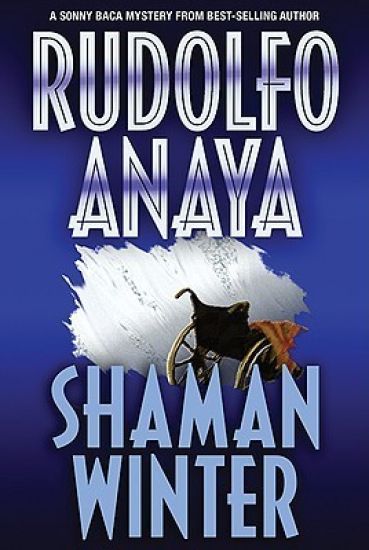
This third installment of Rudolfo Anaya's ""Sonny Baca"" mystery series has the private detective confined to a wheelchair. Brutal battles with his nemesis Raven have taken their toll and Baca is struggling to regain his health. Nights of fitful sleep and intermittent dreams introduce Owl Woman, one of Sonny's ancestors and the sixteenth-century daughter of a shaman. As Sonny sleeps, Raven abducts Owl Woman and soon, one by one, each of Sonny's forebears begin to disappear. Immobilizing Sonny physically was Raven's first goal; now he wants to destroy Sonny's soul by erasing his history.
ChupaCabra and the Roswell UFO

ChupaCabra and the Roswell UFO

Rudolfo Anaya

University of New Mexico Press
2008
sidottu
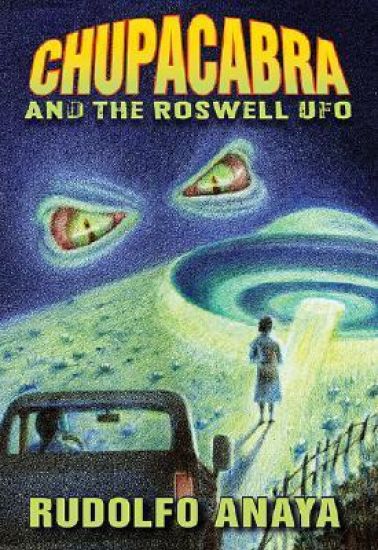
In this second ""ChupaCabra"" mystery, Professor Rosa Medina has just arrived in Santa Fe where she meets Nadine, a mysterious sixteen-year-old who insists that the two of them travel to Roswell, New Mexico. Nadine is convinced that C-Force, a secret government agency, has decoded the DNA of ChupaCabra and an extraterrestrial. If the two genomes are combined, a new and horrific life form will be created. In this fast-paced mystery, Anaya expands the ChupaCabra folklore into a metaphor that deals with the new powers inherent in science. Is ChupaCabra a beast in Latino folktales, used to frighten children, or a lost species being manipulated by C-Force? Rosa's life hangs in the balance as she and her young accomplice try to find a way to stop C-Force before its mad scientists create a monster.
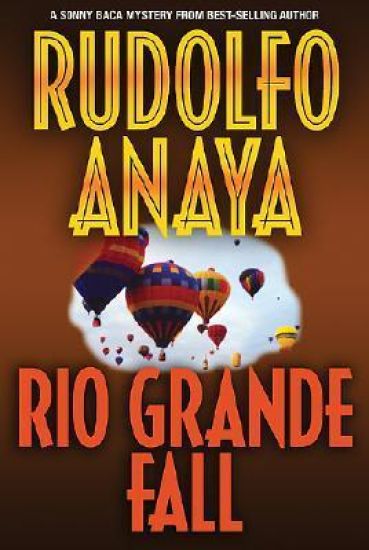
Rio Grande Fall

Rio Grande Fall

Rudolfo Anaya

University of New Mexico Press
2008
nidottu
"When a woman dies after falling from a hot-air balloon at Albuquerque's world-famous balloon fiesta, private investigator Sonny Baca's intuition tells him it's murder. His intuition also tells him that the murder is the work of the Raven, the leader of a violent cult that murdered Sonny's cousin, and a man Sonny thought he'd killed. The murder jeopardizes the millions of tourist dollars connected with the fiesta, but Sonny knows the Raven has more on his mind than simple mayhem. This is a completely entertaining mystery novel, but Anaya actually offers two parallel lands of enchantment. One is temporal New Mexico; the other is Nuevo Mexicano, a land of santos, milagros, spirits, visions, and even brujas (witches). It's a land of old ways, old values, and old wisdom. And it's a land where small farms and multigenerational families are fast being wiped out by modernity."--Booklist
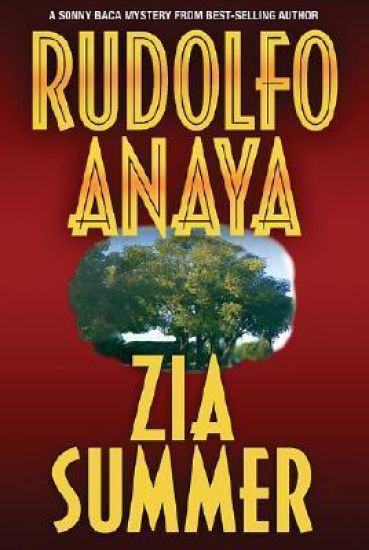
Zia Summer

Zia Summer

Rudolfo Anaya

University of New Mexico Press
2008
nidottu
p>"[Rudolfo Anaya] continues to shine brightest with his trademark alchemy: blending Spanish, Mexican and Indian cultures to evoke the distinctively fecund spiritual terrain of his part of the Southwest. Here Sonny Baca, a 30-year-old fledgling PI, investigates the murder of his . . . cousin [Gloria] who many years before had introduced him to love. Gloria's husband is worried most about the effect of the gruesome death (Gloria's body is found drained of blood, with a zia sun sign carved on her stomach) on his mayoral campaign in Albuquerque. Sonny believes Gloria's spirit calls to him for vengeance and pursues the case throughout New Mexico's South Valley, from the cocktail-party circuit of the arts community and the company of monied business developers to an assemblage of witches in an environmentalist commune in the mountains. . . ."--Publisher's Weekly". . . a compelling thriller. . . . Though satisfying purely as a mystery, the novel sacrifices none of Anaya's trademark spirituality--a connectedness to the earth and a deep-seated respect for the traditions of a people and a culture. . . . Read this multidimensional novel for its rich language and full-bodied characters. Anaya is one of our greatest storytellers, and Zia Summer is muy caliente!"--Booklist
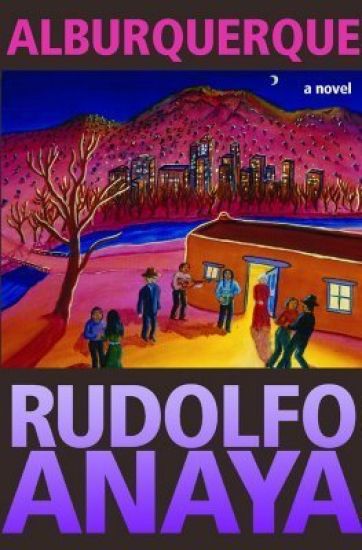
Alburquerque

Alburquerque

Rudolfo Anaya

University of New Mexico Press
2006
nidottu
This book is a winner of PEN Center West Award for Fiction. Abran Gonzalez is a homeboy from the barrio, a young boxer whose world is shattered forever the night he is summoned to his mother's deathbed. He learns he is the son of an unknown Mexican man - a man he is desperately compelled to find. His quest will bring him in contact with many unpleasant characters.
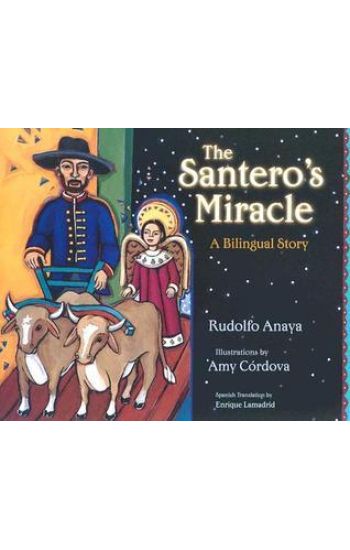
Santero's Miracle

Santero's Miracle

Rudolfo Anaya

University of New Mexico Press
2004
sidottu
With Christmas only days away, it snows so heavily that Jacobo the wood carver and his visiting grandson are afraid the roads will not be cleared in time for the rest of the family to come from the city, and that a sick neighbor will not get the help he needs.
Tortuga

Tortuga

Rudolfo Anaya

University of New Mexico Press
2004
nidottu
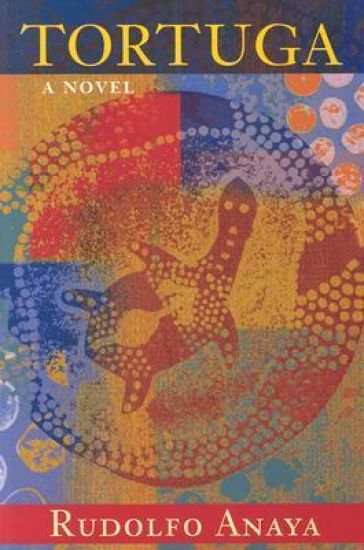
Rudolfo Anaya's personal journey to Tortuga began one desert-hot day when, as an adolescent, he and some friends were swimming in irrigation ditches. He dove in, sustaining an injury that put him in the hospital for an arduous period of time. Tortuga is set in a hospital for crippled children and is based on Anaya's swimming accident. He explores the significance of pain and suffering in a young boy's life and the importance of spiritual recovery as well as medical. Tortuga, or Turtle, is the name of the oddly shaped mountain near the hospital, but ""Tortuga"" also points toward the rigid cast that encases the young hero's body. In celebration of the twenty-five years since the first edition of Tortuga was published, Rudolfo Anaya has provided an Afterword to share his memories of those days in the hospital and how they impacted the remainder of his life.
Heart of Aztlan

Heart of Aztlan

Rudolfo Anaya

University of New Mexico Press
1988
nidottu
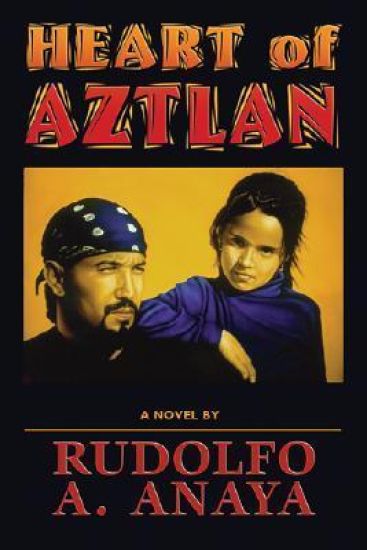
The Albuquerque barrio portrayed in this vivid novel of post-war New Mexico is a place where urban and rural, political and religious realities co-exist, collide and combine. The magic realism for which Naya is well known combines with an emphatic portrayal of the plight of workers dispossessed of their heritage and struggling to survive in an alien culture.