Kirjailija
Rudyard Kipling
Kirjat ja teokset yhdessä paikassa: 2 583 kirjaa, julkaisuja vuosilta 1890–2026, suosituimpiin kuuluu Oxford Reading Tree TreeTops Classics: Level 15: Pack of 6. Vertaile teosten hintoja ja tarkista saatavuus suomalaisista kirjakaupoista.
2 583 kirjaa
Kirjojen julkaisuvuodet: 1890–2026.

Tales from India presents the very best of Kipling's short stories. His vignettes of life in British India give vivid insights into Anglo-India at work and play, and into the character of the Indians themselves. Witty, wry, sometimes cynical, these tales with their brevity and concentration of effect are landmarks in the history of the short story as an art-form. Politics, the Raj, and the life of the common soldier are some of the familiar themes associated with Kipling, but these stories also reflect the more unexpected aspects of Kipling's character and the different influences of the contrasting countries--India, America and England--in which he lived. His progressive portrayal of women, his interest in supernatural and religious experiences, his understanding of the processes of mental and spiritual breakdown, and the curative powers of art, are all revealed in this fascinating perspective of a great writer. About the Author: Rudyard Kipling (1865-1936) was born in Bombay, but educated in England at the United Services College, Westward Ho, Bideford. In 1882 he returned to India, where he worked for Anglo-Indian newspapers. His literary career began with Departmental Ditties (1886), but subsequently he became chiefly known as a writer of short stories. A prolific writer, he achieved fame quickly. Kipling was the poet of the British Empire and its yeoman, the common soldier, whom he glorified in many of his works, in particular Plain Tales from the Hills (1888) and Soldiers Three (1888), collections of short stories with roughly and affectionately drawn soldier portraits. His Barrack Room Ballads (1892) were written for, as much as about, the common soldier. In 1894 appeared his Jungle Book, which became a children's classic all over the world. Kim (1901), the story of Kimball O'Hara and his adventures in the Himalayas, is perhaps his most felicitous work. Other works include The Second Jungle Book (1895), The Seven Seas (1896), Captains Courageous (1897), The Day's Work (1898), Stalky and Co. (1899), Just So Stories (1902), Trafficks and Discoveries (1904), Puck of Pook's Hill (1906), Actions and Reactions (1909), Debits and Credits (1926), Thy Servant a Dog (1930), and Limits and Renewals (1932). During the First World War Kipling wrote some propaganda books. His collected poems appeared in 1933. Kipling was the recipient of many honorary degrees and other awards. In 1926 he received the Gold Medal of the Royal Society of Literature, which only Scott, Meredith, and Hardy had been awarded before him. Rudyard Kipling died on January 18, 1936.


Das Dschungelbuch umfasst im Original sieben Erz hlungen, denen jeweils ein kurzer Liedtext vorangestellt ist und ein etwas l ngerer mit eigener berschrift folgt. Die ersten drei Erz hlungen schildern die Geschichte von Mowgli, w hrend die brigen Erz hlungen meist einzelne Tiere als Hauptdarsteller haben und in keinem Zusammenhang mit den Mowgli-Erz hlungen stehen.
The Phantom Rickshaw: and Other Ghost Stories
Rudyard Kipling
Createspace Independent Publishing Platform
2017
nidottu

Joseph Rudyard Kipling (Bombay, 30 dicembre 1865 - Londra, 18 gennaio 1936) stato uno scrittore e poeta britannico. Fra le sue opere pi note: la raccolta di racconti Il libro della giungla (The Jungle Book, 1894), i romanzi Kim (1901), Capitani coraggiosi (1897), i componimenti in versi Gunga Din (1892), Se (If, 1895) e Il fardello dell'uomo bianco (The White Man's Burden, 1899).


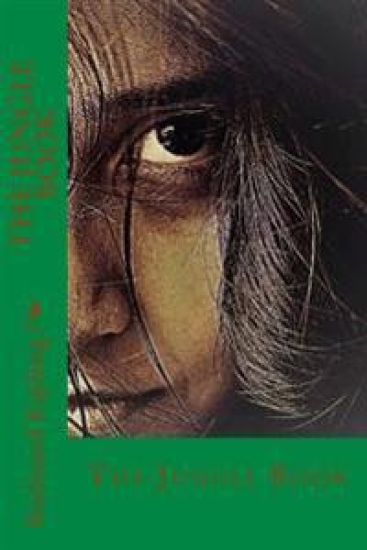

Ein Wolfsrudel zieht den Indianerjungen Mowgli auf, der, herangewachsen, in sein Dorf zur ckkehrt - um schon bald abermals zu einer Zeit der Abenteuer mit seinen Tierfreunden im Dschungel zu verschwinden. Rudyard Kipling, englischer Dichter, wurde am 30. Dezember 1865 in Bombay geboren und starb am 18. Januar 1936 in London. Er verbrachte seine ersten Lebensjahre in Indien, kam dann nach England und unternahm sp ter Reisen in alle Weltteile.

Classics for Your Collection: goo.gl/U80LCr --------- The narrator of the story is a British journalist in 19th Century India - Kipling himself, in all but name. Whilst on a tour of some Indian native states he meets two scruffy adventurers, Daniel Dravot and Peachey Carnehan. Softened by their stories, he agrees to help them in a minor errand, but later he regrets this and informs the authorities about them - preventing them from blackmailing a minor rajah. A few months later the pair appear at his newspaper office in Lahore. They tell him of a plan they have hatched. They declare that after years of trying their hands at all manner of things, they have decided that "India is not big enough for them". They plan to go to Kafiristan and set themselves up as kings. Dravot will pass as a native and, armed with twenty Martini-Henry rifles, they plan to find a king or chief to help him defeat enemies. Once that is done, they will take over for themselves. They ask the narrator for the use of books, encyclopedias and maps of the area - as a favour, because they are fellow Freemasons, and because he spoiled their blackmail scheme. They also show him a contract they have drawn up between themselves which swears loyalty between the pair and total abstinence from women and alcohol. Two years later, on a scorching hot summer night, Carnehan creeps into the narrator's office. He is a broken man, a crippled beggar clad in rags and he tells an amazing story. Dravot and Carnehan succeeded in becoming kings: traversing treacherous mountains, finding the Kafirs, mustering an army, taking over villages, and dreaming of building a unified nation and even an empire. The Kafirs (pagans, not Muslims) were impressed by the rifles and Dravot's lack of fear of their idols, and acclaimed him as a god, the reincarnation or descendant of Alexander the Great. They show a whiter complexion than others of the area ("so hairy and white and fair it was just shaking hands with old friends") implying their ancient lineage to Alexander himself. The Kafirs practised a form of Masonic ritual, and Dravot's reputation was further cemented when he showed knowledge of Masonic secrets that only the oldest priest remembered. Their schemes were dashed, however, when Dravot (against the advice of Carnehan) decided to marry a Kafir girl. Kingship going to his head, he decided he needed a Queen and then royal children. Terrified at marrying a god, the girl bit Dravot when he tried to kiss her during the wedding ceremony. Seeing him bleed, the priests cried that he was "Neither God nor Devil but a man " Most of the Kafirs turned against Dravot and Carnehan. A few of his men remained loyal, but the army defected and the two kings were captured. Dravot, wearing his crown, stood on a rope bridge over a gorge while the Kafirs cut the ropes, and he fell to his death. Carnehan was crucified between two pine trees. When he survived this torture for a whole day, the Kafirs considered it a miracle and let him go. He begged his way back to India. As proof of his tale, Carnehan shows the narrator Dravot's head, still wearing the golden crown, which he swears never to sell. Carnehan leaves carrying the head. The next day the narrator sees him crawling along the road in the noon sun, with his hat off and gone mad. The narrator sends him to the local asylum. When he inquires two days later, he learns that Carnehan has died of sunstroke. No belongings were found with him. Scroll Up and Grab Your Copy

Plain Tales from the Hills: Large Print
Rudyard Kipling
Createspace Independent Publishing Platform
2017
nidottu