Kirjojen hintavertailu – 12 859 824 kirjaa ja 27 kauppaa
Kirjailija
Rudyard Kipling
Kirjat ja teokset yhdessä paikassa: 2 583 kirjaa, julkaisuja vuosilta 1890–2026, suosituimpiin kuuluu Oxford Reading Tree TreeTops Classics: Level 15: Pack of 6. Vertaile teosten hintoja ja tarkista saatavuus suomalaisista kirjakaupoista.
"Mowgli, a young boy, has gotten lost in the jungle. A family of wolves decides to adopt him despite the other animals' reservations because, according to them, man is the most dangerous animal that exists. The boy grows up under the rules of the jungle, until the time comes for him to join his peers.
 A required title in any library, our edition is distinguished by its beautiful illustrations and a classic large format."
Diversity of Creatures, A, by Rudyard Kipling (1917). Fourteen stories, each followed by a poem on the theme of the story. 'As Easy as A. B. C.' is a strange tale of the future, A. D. 2065, when the planet is under the benevolent rule of an A rial Board of Control. The disease of crowds and democracy has ceased, and a small outbreak of democratic agitation makes it necessary to deal with the American district of Illinois through a rial artillery of sound vibrations and withering rays of light. Stalky and Beetle reappear in the 'Honors of War' hazing a priggish cad who is converted from the error of his ways. 'Regulus' is a schoolboy comedy having to do with the teaching of Latin, the connection of classic learning and everyday boy life. There are three psychical stories. The phantom dog who haunts a man is the real dog "Harvey," owned by the woman he subconsciously loves. 'Swept and Garnished' is a grim war story, in which the ghosts of murdered children appear to a complacent German woman making it impossible for her to disbelieve comfortably. 'Mary Postgate' deals with the effect of resentment for the slaughter of the innocents in the European war on one woman in England. She has an unexpected opportunity to be judge and executioner. 'The Edge of the Evening' tells of an encounter with spies who descend from an aeroplane on the lawn of a country house just before dinner. There are stories of the British peasant in real possession of the land whether its nominal ownership is Roman or English. 'The Village that Voted the Earth was Flat' is a comic extravaganza, the revenge of a party of motorists upon the magistrate who fines them unjustly for speeding. One of the group is a producer of opera, one a member of parliament, one a journalist, and all are brilliantly equipped in different ways for the confounding of their enemy.
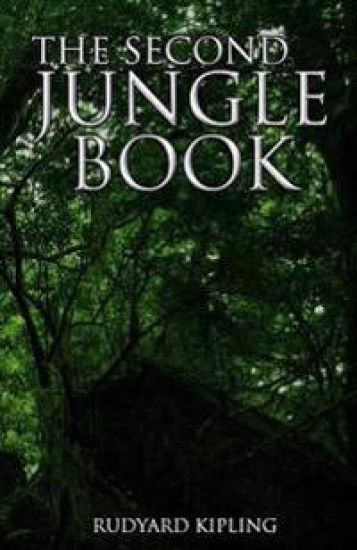
The Second Jungle Book is a sequel to The Jungle Book by Rudyard Kipling. First published in 1895, it features five stories about Mowgli and three unrelated stories, all but one set in India, most of which Kipling wrote while living in Vermont. Contents of The Second Jungle Book Each story is followed by a related poem "How Fear Came": This story takes place before Mowgli fights Shere Khan. During a drought, Mowgli and the animals gather at a shrunken river for a 'water truce', during which Hathi the elephant tells the story of how the first tiger got his stripes. This story can be seen as a forerunner of the Just So Stories. "The Law of the Jungle" (poem) "The Miracle of Purun Bhagat": An influential Indian politician abandons his worldly goods to become an ascetic holy man. Later he must save a village from a landslide with the help of the local animals whom he has befriended. "A Song of Kabir" (poem) "Letting in the Jungle": Mowgli has been driven out of the human village for witchcraft, and the superstitious villagers are preparing to kill his adopted parents Messua and her (unnamed) husband. Mowgli rescues them and then prepares to take revenge. "Mowgli's Song Against People" (poem) "The Undertakers": A mugger crocodile, a jackal and an adjutant stork (erroneously referred to as a crane in the story), three of the most unpleasant characters on the river, spend an afternoon bickering with each other until some Englishmen arrive to settle some unfinished business with the crocodile. "A Ripple Song" (poem) "The King's Ankus": Mowgli discovers a jewelled object beneath the Cold Lairs which he later discards carelessly, not realising that men will kill each other to possess it. Note: the first edition of The Second Jungle Book inadvertently omits the final 500 words of this story, in which Mowgli returns the treasure to its hiding-place to prevent further killings. Although the error was corrected in later printings, it was picked up by some later editions. "The Song of the Little Hunter" (poem) "Quiquern": A teenaged Inuit boy and girl set out across the arctic ice on a desperate hunt for food to save their tribe from starvation, guided by the mysterious animal-spirit Quiquern. However, Quiquern is not what he seems. "Angutivaun Taina" (poem) "Red Dog": Mowgli's wolfpack is threatened by a pack of rampaging dholes. Mowgli asks Kaa the python to help him formulate a plan to defeat them. "Chil's Song" (poem) "The Spring Running": Mowgli, now almost seventeen years old, is growing restless for reasons he cannot understand. On an aimless run through the jungle he stumbles across the village where his adopted mother Messua is now living with her two-year-old son, and is torn between staying with her and returning to the jungle. "The Outsong" (poem)
Joseph Rudyard Kipling (Rudyard Kipling, About this sound listen (help-info); 30 December 1865 - 18 January 1936)was an English journalist, short-story writer, poet, and novelist. Kipling's works of fiction include The Jungle Book (1894), Kim (1901), and many short stories, including "The Man Who Would Be King" (1888). His poems include "Mandalay" (1890), "Gunga Din" (1890), "The Gods of the Copybook Headings" (1919), "The White Man's Burden" (1899), and "If-" (1910). He is regarded as a major innovator in the art of the short story;his children's books are classics of children's literature; and one critic described his work as exhibiting "a versatile and luminous narrative gift". Soldiers Three is a collection of short stories by Rudyard Kipling. The three soldiers of the title are Learoyd, Mulvaney and Ortheris, who had also appeared previously in the collection Plain Tales from the Hills. The current version, dating from 1899 and more fully titled Soldiers Three and other stories, consists of three sections which each had previously received separate publication in 1888; Learoyd, Mulvaney and Ortheris appear only in the first section, which is also titled Soldiers Three. The books reveal a side of the British Tommy in Afghanistan rarely seen in the Twilight of the British Empire. The soldiers comment on their betters, act the fool, but cut straight to the rawness of war in the mid-east as the British began to loosen their Imperial hold... Soldiers Three: A Collection of Stories Setting forth certain passages in the lives and adventures of Privates Terence Mulvaney, Stanley Ortheris, and John Learoyd The Story of the Gadsbys is a story by Rudyard Kipling. It was originally published as no. 2 of the Indian Railway Library in 1888. The Story of the Gadsbys is written in dramatic form, consisting of eight short scenes (listed below). This short pamphlet, of 100 pages, was later collected in book form as the second part of Soldiers Three. In Black and White is a collection of eight short stories by Rudyard Kipling which was first published in a booklet of 108 pages as no. 3 of A H Wheeler & Co.'s Indian Railway Library in 1888. It was subsequently published in a book along with nos 1 and 2, Soldiers Three (1888) and The Story of the Gadsbys, as Soldiers Three (1899). The characters about whom the stories are concerned are native Indians, rather than the British for writing about whom Kipling may be better known; four of the stories are narrated by the Indians, and four by an observant wise English journalist (the persona that Kipling likes to adopt).