Kirjailija
Rudyard Kipling
Kirjat ja teokset yhdessä paikassa: 2 583 kirjaa, julkaisuja vuosilta 1890–2026, suosituimpiin kuuluu Oxford Reading Tree TreeTops Classics: Level 15: Pack of 6. Vertaile teosten hintoja ja tarkista saatavuus suomalaisista kirjakaupoista.
2 583 kirjaa
Kirjojen julkaisuvuodet: 1890–2026.

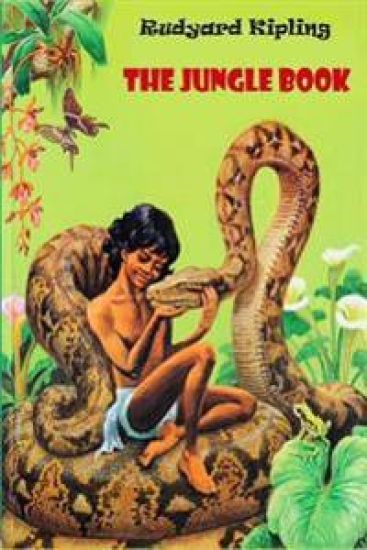
This breathtaking new edition of Rudyard Kipling s celebrated coming-of-age tale illustrated by German illustrator Aljoscha Blau contains the eight stories and verses featuring Mowgli. Published to celebrate what would have been Kipling s 150th birthday, these stories and drawings will fascinate and delight a new generation of readers."
The Jungle Book is the story of Mowgli, a young boy raised by wolves: his escapades and adventures with his dear friends Bagheera the panther and Baloo the bear, his capture by the Monkey-People, his attempt at reintegration into human society, and his ultimate triumph over the lame tiger Shere Khan. Rudyard Kipling's classic story has thrilled generations of children and formed the basis for the unforgettable 1967 Disney movie.
The Jungle Book is the story of Mowgli, a young boy raised by wolves: his escapades and adventures with his dear friends Bagheera the panther and Baloo the bear, his capture by the Monkey-People, his attempt at reintegration into human society, and his ultimate triumph over the lame tiger Shere Khan. Rudyard Kipling's classic story has thrilled generations of children and formed the basis for the unforgettable 1967 Disney movie.
How Shakspere Came to Write the Tempest (annotated)
Rudyard Kipling
Createspace Independent Publishing Platform
2015
nidottu
How Shakespeare Came to Write the Tempest is a classic Shakespeare studies text by Rudyard Kipling. Mr. Kipling's brilliant reconstruction of the genesis of the 'Tempest' may remind us how often that play has excited the creative fancy of its readers. It has given rise to many imitations, adaptations, and sequels. Fletcher copied its storm, its desert island, and its woman who had never seen a man.
Departmental Ditties and Barrack Room Ballads (annotated)
Rudyard Kipling
Createspace Independent Publishing Platform
2015
nidottu
Actions and Reactions: Illustrated
Rudyard Kipling
Createspace Independent Publishing Platform
2015
nidottu
A Fleet in Being (annotated)
Rudyard Kipling
Createspace Independent Publishing Platform
2015
nidottu
A Fleet in Being is a classic sea adventure story by Rudyard Kipling. In naval warfare, a "fleet in being" is a naval force that extends a controlling influence without ever leaving port. Were the fleet to leave port and face the enemy, it might lose in battle and no longer influence the enemy's actions, but while it remains safely in port, the enemy is forced to continually deploy forces to guard against it.

The Phantom Rickshaw and Other Ghost Stories (annotated)
Rudyard Kipling
Createspace Independent Publishing Platform
2015
nidottu
The Phantom Rickshaw and Other Ghost Stories is a classic collection of gripping Rudyard Kipling ghost stories that includes the following titles: The Phantom 'Rickshaw, My Own True Ghost Story, The Strange Ride of Morrowbie Jukes, The Man Who Would Be King, and "The Finest Story in The World" The Phantom 'Rickshaw After an affair with a Mrs. Agnes Keith-Wessington in Simla, the narrator, Jack, repudiates her and eventually becomes engaged to Miss Kitty Mannering. Yet Mrs. Wessington continually reappears in Jack's life, begging him to reconsider, insisting that it was all just a mistake. But Jack wants nothing to do with her and continues to spurn her. Eventually Mrs. Wessington dies, much to Jack's relief. However, some time thereafter he sees her old rickshaw and assumes that someone has bought it. Then, to his astonishment, the rickshaw and the men pulling it pass through a horse, revealing themselves to be phantoms, bearing the departed ghost of Mrs. Wessington. This leads Jack into increasingly erratic behavior which he tries to cover up by concocting increasingly elaborate lies to assuage Kitty's suspicions. Eventually a Dr. Heatherlegh takes him in, supposing the visions to be the result of disease or madness. Despite their efforts, Kitty and her family become increasingly suspicious and eventually call off the engagement. Jack loses hope and begins wandering the city aimlessly, accompanied by the ghost of Mrs. Wessington. My Own True Ghost Story, The narrator, while staying at a d k-bungalow in Katmal, India, hears someone in the next room playing billiards. He assumes that it is a group of doolie-bearers who've just arrived. The next morning he complains, only to learn that there were no coolies in the d k-bungalow the night before. The owner then tells him that ten years ago it was a billiard-hall. An engineer who'd been fond of the billiard hall had died somewhere far from it and they suspected that it was his ghost that occasionally came to visit it. The Strange Ride of Morrowbie Jukes One evening Morrowbie Jukes, an Englishman, is feeling a bit feverish and the barking of the dogs outside his tent is upsetting him. So he mounts his horse in order to pursue them. The horse bolts and they eventually fall into a sandy ravine on the edge of a river. He awakens the next morning to find himself in a village of the living dead, where people who appear to have died of, for instance, cholera, but who revived when their bodies were about to be burned, are imprisoned. He quickly learns that it is impossible to climb out because of the sandy slope. And the river is doubly treacherous with quicksand and a rifleman who will try to pick them off. The Man Who Would Be King The narrator, a journalist, meets two colorful characters, Daniel Dravot and Peachey Carnahan, while on a train. Later they seek him out at his printing press in Lahore, for books or maps of Kafiristan. He then plays witness to their vow to each other to become kings of Kafiristan, a venture which he sees as ill-advised. Two years later Peachey returns and informs the narrator that they indeed reached Kafiristan. While there, were seen as gods and eventually Daniel is made king. They taught the Kafiristanis how to use rifles and military tactics. Eventually Dravot decides to take a Kafiristani woman to wife. In her terror she bites him. Upon seeing him bleed, the priests declare him not to be a god and the Kafiristanis immediately seek their deaths. One clan chief, whom they call "Billy Fish" helps them to escape but eventually they are caught and Daniel is thrown into a gorge to his death. They crucified Peachey but then let him go when he survived. The narrator puts Peachey in an asylum where he dies soon thereafter.

The Second Jungle Book (annotated)
Rudyard Kipling
Createspace Independent Publishing Platform
2015
nidottu
The Second Jungle Book is a sequel to The Jungle Book by Rudyard Kipling. First published in 1895, it features five stories about Mowgli and three unrelated stories, all but one set in India, most of which Kipling wrote while living in Vermont. All of the stories were previously published in magazines in 1894-5, often under different titles. The original book is now worth $3.4 million. The 1994 film The Jungle Book used this book as a source. Contents: Each story is followed by a related poem: "How Fear Came": This story takes place before Mowgli fights Shere Khan. During a drought, Mowgli and the animals gather at a shrunken Wainganga River for a Water Truce" where the display of the blue-colored Peace Rock prevents anyone from hunting at its riverbanks. After Shere Khan was driven away by him for nearly defiling the Peace Rock, Hathi the elephant tells Mowgli the story of how the first tiger got his stripes when fear first came to the jungle. This story can be seen as a forerunner of the Just So Stories. "The Law of the Jungle" (poem) "The Miracle of Purun Bhagat": An influential Indian politician abandons his worldly goods to become an ascetic holy man. Later, he must save a village from a landslide with the help of the local animals whom he has befriended. "A Song of Kabir" (poem) "Letting in the Jungle": Mowgli has been driven out of the human village for witchcraft, and the superstitious villagers are preparing to kill his adopted parents Messua and her unnamed husband. Mowgli rescues them and then prepares to take revenge. "Mowgli's Song Against People" (poem) "The Undertakers": A mugger crocodile, a jackal and an adjutant stork (erroneously referred to as a crane in the story), three of the most unpleasant characters on the river, spend an afternoon bickering with each other until some Englishmen arrive to settle some unfinished business with the crocodile. "A Ripple Song" (poem) "The King's Ankus": Mowgli discovers a jewelled object beneath the Cold Lairs, which he later discards carelessly, not realising that men will kill each other to possess it. Note: the first edition of The Second Jungle Book inadvertently omits the final 500 words of this story, in which Mowgli returns the treasure to its hiding-place to prevent further killings. Although the error was corrected in later printings, it was picked up by some later editions. "The Song of the Little Hunter" (poem) "Quiquern": A teenaged Inuit boy and girl set out across the arctic ice on a desperate hunt for food to save their tribe from starvation, guided by the mysterious animal-spirit Quiquern. However, Quiquern is not what he seems. "Angutivaun Taina" (poem) "Red Dog": Mowgli's wolfpack is threatened by a pack of rampaging dholes. Mowgli asks Kaa the python to help him formulate a plan to defeat them. "Chil's Song" (poem) "The Spring Running": Mowgli, now almost seventeen years old, is growing restless for reasons he cannot understand. On an aimless run through the jungle he stumbles across the village where his adopted mother Messua is now living with her two-year-old son, and is torn between staying with her and returning to the jungle. "The Outsong" (poem)