Kirjojen hintavertailu – 12 859 829 kirjaa ja 27 kauppaa

Kirjailija

Rui Zhang

Kirjat ja teokset yhdessä paikassa: 5 kirjaa, julkaisuja vuosilta 2008–2025, suosituimpiin kuuluu shui dao dai xie zu xue yan jiu shui dao ye dai xie wu ji pu ku de jian li. Vertaile teosten hintoja ja tarkista saatavuus suomalaisista kirjakaupoista.

5 kirjaa

Kirjojen julkaisuvuodet: 2008–2025.

Radio Wave Propagation of Satellite Systems

Radio Wave Propagation of Satellite Systems

Zhenwei Zhao; Leke Lin; Changsheng Lu; Rui Zhang; Kun Liu; Xin Zhang

SPRINGER VERLAG, SINGAPORE
2025
sidottu
This book highlights the fundamental theories and prediction methods of radiowave propagation for the design, building, and operation of contemporary satellite systems. The primary objective of this book is to inquire into whether and how it is possible in a democracy to effectively decrease short-sighted policies. Although the commonplace expression “responsibility to future generations” has become firmly established in public and political vocabulary, its operational meaning and practice are not as well understood and have not yet been systematically evaluated. It still has not been successfully translated into viable ethical and theoretical concepts that can guide public policies and action. How can modes of governance and established priorities compatible with the well-being of future generations be created? This book identifies the conditions, and the obstacles, for such future-oriented governance. To meet the needs of diverse satellite applications, the book covers the main factors that affect radiowave propagation, including the clear-air effects, the hydrometeor effects, the ionospheric effects, the earth's surface reflection, and the local environmental effects. To enhance the prediction of radiowave propagation, the book elaborates on the characteristics of radio meteorological and ionospheric environments. It also summarizes research progress on the prediction methods of radio noise and interference coordination for satellite systems. The fade mitigation techniques and the propagation analysis of satellite system design are discussed. Providing a comprehensive summary of common practices and latest advances, the book is intended for researchers and engineers engaged in the study and practice of satellite systems, radio propagation, and its applications.
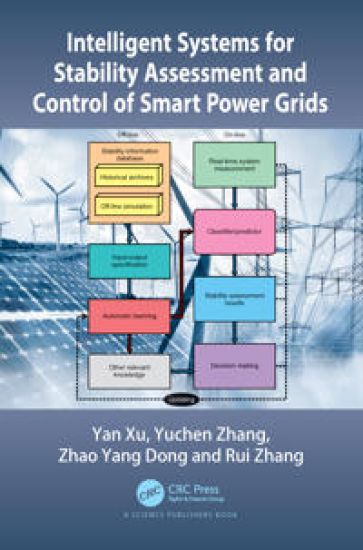
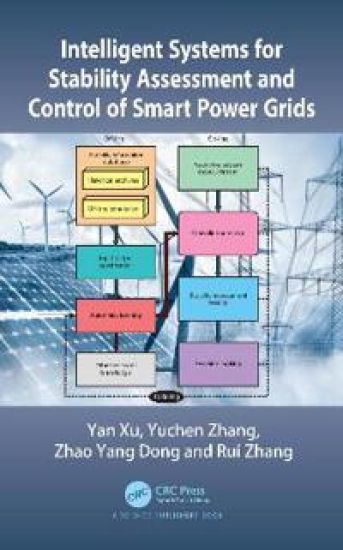
Intelligent Systems for Stability Assessment and Control of Smart Power Grids

Intelligent Systems for Stability Assessment and Control of Smart Power Grids

Yan Xu; Yuchen Zhang; Zhao Yang Dong; Rui Zhang

CRC Press
2022
nidottu
Power systems are evolving towards the Smart Grid paradigm, featured by large-scale integration of renewable energy resources, e.g. wind and solar power, deeper participation of demand side, and enhanced interaction with electric vehicles. While these emerging elements are inherently stochastic in nature, they are creating a challenge to the system’s stability and its control. In this context, conventional analysis tools are becoming less effective, and necessitate the use alternative tools that are able to deal with the high uncertainty and variability in the smart grid. Smart Grid initiatives have facilitated wide-spread deployment of advanced sensing and communication infrastructure, e.g. phasor measurement units at grid level and smart meters at household level, which collect tremendous amount of data in various time and space scales. How to fully utilize the data and extract useful knowledge from them, is of great importance and value to support the advanced stability assessment and control of the smart grid. The intelligent system strategy has been identified as an effective approach to meet the above needs. This book presents the cutting-edge intelligent system techniques and their applications for stability assessment and control of power systems. The major topics covered in this book are: Intelligent system design and algorithms for on-line stability assessment, which aims to use steady-state operating variables to achieve fast stability assessment for credible contingencies. Intelligent system design and algorithms for preventive stability control, which aims at transparent and interpretable decision-making on preventive control actions to manipulate system operating condition against possible contingencies. Intelligent system design and algorithms for real-time stability prediction, which aims to use synchronized measurements to foresee the stability status under an ongoing disturbance. Intelligent system design and algorithms for emergency stability control, which aims at fast decision-making on stability control actions at emergency stage where instability is propagating. Methodologies and algorithms for improving the robustness of intelligent systems against missing-data issues. This book is a reference and guide for researchers, students, and engineers who seek to study and design intelligent systems to resolve stability assessment and control problems in the smart grid age.
Intelligent Systems for Stability Assessment and Control of Smart Power Grids

Intelligent Systems for Stability Assessment and Control of Smart Power Grids

Yan Xu; Yuchen Zhang; Zhao Yang Dong; Rui Zhang

CRC Press
2020
sidottu
Power systems are evolving towards the Smart Grid paradigm, featured by large-scale integration of renewable energy resources, e.g. wind and solar power, deeper participation of demand side, and enhanced interaction with electric vehicles. While these emerging elements are inherently stochastic in nature, they are creating a challenge to the system’s stability and its control. In this context, conventional analysis tools are becoming less effective, and necessitate the use alternative tools that are able to deal with the high uncertainty and variability in the smart grid. Smart Grid initiatives have facilitated wide-spread deployment of advanced sensing and communication infrastructure, e.g. phasor measurement units at grid level and smart meters at household level, which collect tremendous amount of data in various time and space scales. How to fully utilize the data and extract useful knowledge from them, is of great importance and value to support the advanced stability assessment and control of the smart grid. The intelligent system strategy has been identified as an effective approach to meet the above needs. This book presents the cutting-edge intelligent system techniques and their applications for stability assessment and control of power systems. The major topics covered in this book are: Intelligent system design and algorithms for on-line stability assessment, which aims to use steady-state operating variables to achieve fast stability assessment for credible contingencies. Intelligent system design and algorithms for preventive stability control, which aims at transparent and interpretable decision-making on preventive control actions to manipulate system operating condition against possible contingencies. Intelligent system design and algorithms for real-time stability prediction, which aims to use synchronized measurements to foresee the stability status under an ongoing disturbance. Intelligent system design and algorithms for emergency stability control, which aims at fast decision-making on stability control actions at emergency stage where instability is propagating. Methodologies and algorithms for improving the robustness of intelligent systems against missing-data issues. This book is a reference and guide for researchers, students, and engineers who seek to study and design intelligent systems to resolve stability assessment and control problems in the smart grid age.