Kirjojen hintavertailu – 12 859 828 kirjaa ja 27 kauppaa
Kirjailija
Ruslan Yemtsov
Kirjat ja teokset yhdessä paikassa: 3 kirjaa, julkaisuja vuosilta 2005–2018, suosituimpiin kuuluu Income Support for the Poorest. Vertaile teosten hintoja ja tarkista saatavuus suomalaisista kirjakaupoista.
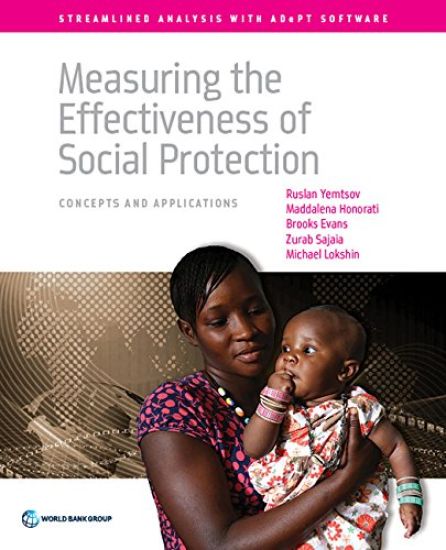
Measuring the Effectiveness of Social Protection provides the conceptual and analytical framework for assessing social protection and labor programs, as well as presenting a guide for individuals seeking to conduct SP performance analysis.
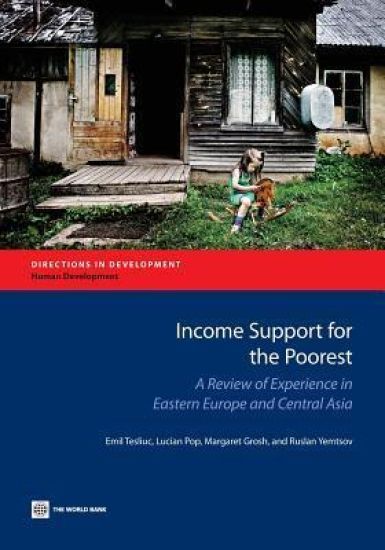
This study reviews the role and workings, with their strengths and weaknesses of last-resort income support (LRIS) programs in Eastern Europe and Central Asia. It draws on a combination of household survey and administrative data for a large group of countries and detailed case studies for a smaller number of countries that span the spectrum of the income range in the region. It thus combines the value of wide, comparable multi-country work with that of in-depth, country-specific probing on key themes. The experiences of LRIS programs in Eastern Europe and Central Asia have demonstrated the technical feasibility of highly efficient poverty-targeted programs in the region. The detailed case studies suggest how programs can improve their coverage, control error and fraud and be implemented effectively in decentralized settings. This experience is pertinent to other regions as well, adding to the know-how for poverty targeting programs in middle and low income countries. Perhaps especially importantly, the book shows that means testing can be accomplished in settings with sizeable informal sectors and at reasonable administrative costs. The study also suggests that currently the role of last resort income support programs within the overall social protection systems of the region is often too small and that their eligibility thresholds should be revised and indexed, so that the programs continue to serve a meaningful swath of the low income households in each country. Moreover the programs can be used as the nexus to weave together a variety of income supports and services for low income households.
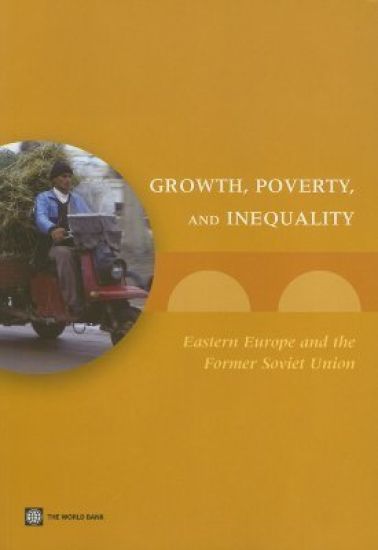
The countries of the Eastern Europe and Central Asia region have made significant progress in reducing poverty in the past five years. More than 40 million people moved out of poverty during 1998-03. Much of this poverty reduction derives from the growth rebound in the CIS countries. But poverty and vulnerability still remain a significant problem. More than 60 million are poor and more than 150 million are vulnerable. Most of the poor are the working poor. Many others face deprivations in terms of access and quality of public services. Regional inequalities both between and within countries are large. The highest levels of absolute poverty are found in the poor countries of Central Asia and the South Caucasus, but most of the region's poor and vulnerable are in middle income countries. Notwithstanding the tremendous heterogeneity among countries in the region, reducing poverty and vulnerability requires an acceleration of shared growth across the region. If this is to be achieved, public policies need to focus on at least three areas common to all countries: fostering job creation and raising productivity, improving public service delivery, and addressing spatial inequalities. Within each of these areas, recommendations need to be tailored to country-specific circumstances.