Kirjojen hintavertailu – 12 903 725 kirjaa ja 27 kauppaa
Kirjailija
Rusmir Mahmutcehajic
Kirjat ja teokset yhdessä paikassa: 9 kirjaa, julkaisuja vuosilta 2000–2014, suosituimpiin kuuluu The Praised and the Virgin. Vertaile teosten hintoja ja tarkista saatavuus suomalaisista kirjakaupoista.
Nimi esiintyy myös muodoissa: Rusmir Mahmutćehajić
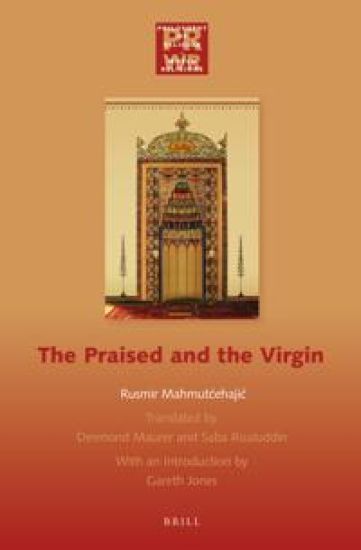
In The Praised and the Virgin, Rusmir Mahmutćehajić provides an extended theologically and philosophically informed meditation on relations between the Muslim and Christian traditions, through the persons of Muhammad (the Praised) and Mary (the Virgin), as complementary bearers of God’s Word. He traces their presence in the extended encounter of the Abrahamic traditions that is Bosnia’s past and present, demonstrating how these traditions inform each other, while simultaneously preserving their difference and uniqueness. He lays fundamental groundwork for a more authentic dialogue, based on identity and difference in history under God, that is also a critique of inhumane ideologies and a modernity that has forsaken God and Man, again as reflected in the historical experiences of the Bosnian people.
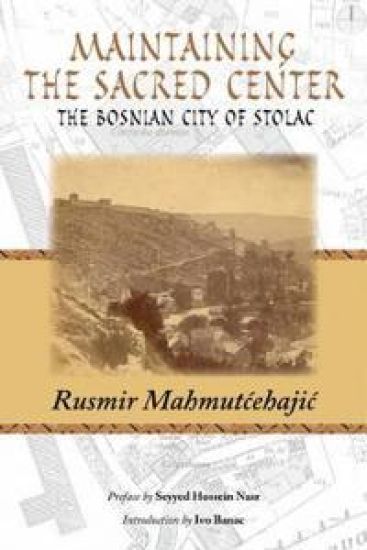
In times past, men and women lived in ordered and meaningful communities whose very structure, architecture, and habits of life were a concrete reflection of the cosmic order. Through the example of his own birthplace, the Bosnian town of Stolac, the author explores the nature of this traditional wisdom that informed the way of life of his ancestors. He also explores the manner in which this wisdom-common to all true religious traditions-came under increasing attack, culminating in the destruction, murder, and expulsion of the 1992-1995 Bosnian war. Finally, he explores the extraordinary efforts that have been made since the war to restore and rebuild the town as a microcosm of the Bosnian culture of tolerance and coexistence.
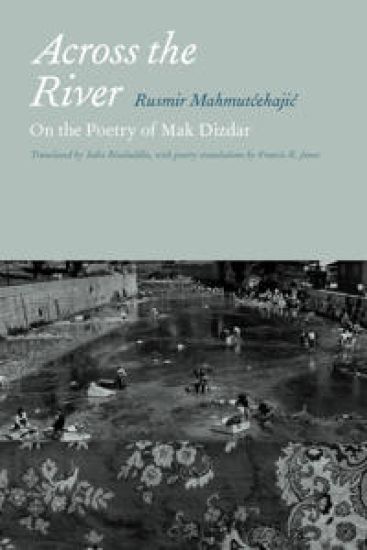
The work of Mehmedalija "Mak" Dizdar (1917-71) is the cornerstone of modern Bosnian literature. During the Second World War he was a member of the anti-fascist Partisans. After the war, he became prominent in Bosnian cultural life and eventually President of the Writers' Union of Bosnia and Herzegovina. His work blends influences from Bosnian Christian culture, Islamic mysticism, and the cultural remains of medieval Bosnia, especially its stone tombstones. This book falls into two parts. The first is an essay on Dizdar's major poetry book Stone Sleeper. It argues that in his poetry Dizdar turns to spiritual regions and resources that had been suppressed during the time of communism. From the very outset, Stone Sleeper was recognized as a liberatrion from the ideological disciplines of communism, nationalism, and scientism. Few, however, were able fully to understand the traditional content of its post-traditional form. In this part, Rusmir Mahmutcehajic introduces readers to the traditional substance of Stone Sleeper, in the context of what he calls "perennial philosophy." From that perspective, prophecy, being the source of perennial wisdom, is set above poetry. In some poetry, however, prophetic wisdom and poetic pronouncement exist inseparably. Stone Sleeper is an example of that mutual co-existence. In the second part, the author traces, in a discussion of Dizdar's mystically influenced poem "Blue River," the perennial questions of how we are to discover or realize the human self in relation to God as Creator.
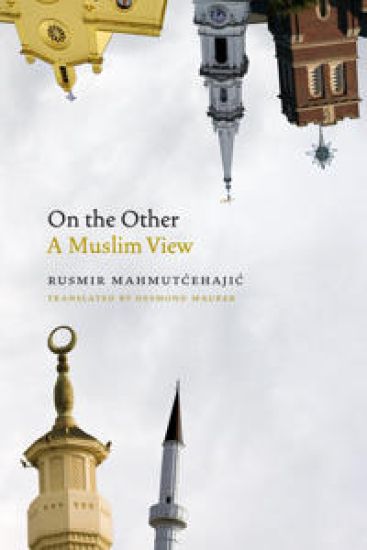
An exceptionally timely book by a leading European exponent of Muslim intellectual tradition, On the Other: A Muslim View is a concise and accessible exploration of the foundations of Islamic thought on human nature, our place in the cosmos, and our proper relationship to the divine, based on peace, knowledge, love, beauty, humility, and respect for and acceptance of others and difference. Applying sound linguistic and historical scholarship and a profound knowledge of the Qur'anic sources, the author analyzes the key Arabic terms to show that Islam is a religion of peace, rather than of irrational submission to some higher instance. Having demonstrated how poor cultural translation of core terms has contributed to a distorted picture of Islam in the West and among some Muslims, the author provides systematic explication of the most important concepts and beliefs of the Muslim tradition, as well as interpretation of the symbolism underlying its most important practices as one of the paths through which God calls us to Himself. In doing so, he tackles directly the claim that the Holy Qur'an enjoins hatred, violence, bigotry, and racism, particularly against the Jews. By clear exposition and contextualization of some of the most controversial and most frequently cited verses, he demonstrates how they have been misunderstood and misapplied, misrepresenting a message of profound respect for the multiple paths to God and the multitude of his prophets and for the variety and radical difference that is constitutive of humanity. The author shows that in reality these misunderstood verses represent a plea for the recognition of and respect for difference, one that is timelier now more than ever. On the Other: A Muslim View provides an excellent introduction to the Muslim intellectual tradition for those who wish to penetrate beyond the stereotypes put forward by ideologists on both sides of the East-West divide, an introduction that reveals the rational, tolerant, and fundamentally peaceful faith of the vast majority of practicing Muslims.
This rare and important contribution to the field of Islamic studies, philosophy, and comparative religion achieves a twofold objective. First, it draws from a broad and authoritative well of sources, especially in the domain of Sufism, or Islamic mysticism. The scholarship is impeccable. Second, it is an in-depth meditation on the relationship between love and knowledge, multiplicity and unity, the example of the Prophet Muhammed viewed as Universal Man, spiritual union, heart and intellect, and other related themes--conveyed in fresh, contemporary language. The book is as much a work of Sufism as it is a book about Sufism. Many of these themes have a universal appeal for students of mysticism; consequently, there are distinct resonances with other traditions, especially within certain schools of Christian mysticism dominated by the language of love. In our day, when the divisions between many Muslims and many Christians have broadened into chasms of suspicion and fear, books such as this one are especially important for the help they can offer in bridging these rifts. The capacity of scholars to understand these two religions, which stem from the same Abrahamic source, is of the utmost significance, and the best approach to better understanding may be through the mystical traditions, which tend to reflect more tolerance and to recognize a potential for seeing unity in a multiplicity of perspectives. This work conveys the beauty at the heart of the Islamic tradition in a language devoid of technical terminology.
The Mosque is an extended meditation on a dimension of Islam unfamiliar to most Western readers. The mosque, Rusmir Mahmut´cehaji´c argues, is not an analogue of the Christian church, not least because in Islam there is no priesthood and no institutionalized hierarchy. Rather, every Muslim is his or her own priest, and most religious obligations are performed in the home. The function of the mosque is thus dispersed throughout society and, indeed, throughout the natural world as well. The Arabic word from which English mosque derives means literally "place of prostration"—the place one performs the daily ritual prayer of submission to God, so as to become a guest at the table God has sent down to manifest himself. That table is also the world's mosque, the world as mosque. Among the many tragic victims of the Bosnian genocide are its mosques; more than a thousand were destroyed. A part of the essential fabric of Bosnian life was changed. With this book, Rusmir Mahmut´cehaji´c seeks to rebuild the spirit and majesty of each mosque that was destroyed, the spiritual grace it lent the Bosnian landscape. "Beautifully composed, elegantly written and constructed, this is a primary text of Islamic spirituality, by one of the most significant Muslim European voices of our age . . . . A book to be returned to again and again."—Adam B. Seligman, Boston University "This work by one of the leading intellectual figures of Bosnia is one of the finest written in the English language on the spiritual significance of the mosque. It speaks the language of universal spirituality and is able to open a door for Western readers to the relationship between the mosque, as understood outwardly, and the inner mosque, which is the heart. The book also reflects in most elegant language the reality of a land where mosques, churches, and synagogues have stood side by side over the centuries, each bearing witness in its own way to the Presence of the One."—Seyyed Hossein Nasr, George Washington University
This book, at the intersections of political sociology, political philosophy, and theology, reads the legacy of Bosnia as both a paradigm and an antiparadigm for the human condition. The adjective Bosnian sums up an acceptance of the diversity of human attitudes toward the world and toward God. Yet the Bosnian tradition of accepting the inevitability of, and thus the right to, differing Christologies among people who speak the same language and share the same history has been reduced to the antiparadigms of confessionalism, ethnicism, and ultimately nationalism, which seeks either to expel or to subordinate to the majority everything that is other.
In 1997, Rusmir Mahmutcehajic, one of Bosnia’s leading public intellectuals, was scheduled to lecture on Bosnia at Stanford University but was unexpectedly denied an entry visa by American authorities. This book, first published in Bosnia in 1998, is an expanded version of that lecture. It is an indictment of the partition of Bosnia, formalized in 1995 by the Dayton Accord. It is also a plea for Bosnia’s communities to reject ethnic segregation and restore mutual trust. For the first time, English-speaking readers can hear this important voice of dissent from within Bosnia-Herzegovina. Mahmutcehajic (pronounced “ma-moot-che-HI-itch”) argues for the history and reality of a Bosnia-Herzegovina based upon a model of “unity in diversity.” He shows that ethnic and religious cultures have coexisted in Bosnia for centuries. Partitioning of Bosnia, therefore, should have been unthinkable except that a multi-ethnic, multi-faith Bosnia stood squarely in the way of Croatian and Serbian leaders determined to enact their own nationalist programs. The decisive moment came when the international community accepted the Serb-Croat argument that ancient ethnic hatreds were endemic to Bosnia. At that point, ethnic segregation became not only acceptable but desirable. With the complicity of Western powers, Serbs and Croats proceeded to carve out ethnically cleansed states. Mahmutcehajic examines the reasons why Western liberal democracies have regarded with sympathy the struggles of Serbia and Croatia for national recognition, while viewing Bosnia’s multicultural society with suspicion. As one of Bosnia's former political leaders in the early peace talks, he describes with authority how the parties were often physically aligned during formal talks, with Bosniak negotiators on one side of the table and everybody else—Serb, Croat, and international representatives—on the other. In the end, justice was subverted and the final solution justified on the basis of an intractable “conflict of civilizations." Mahmutcehajic confronts the religious dimension of the Bosnian dilemma with refreshing honesty. As a Bosniak committed to interreligious dialogue, he calls for more than simple toleration among Serbs, Croats, and Bosnians. He remembers that Judaism, Christianity, and Islam all share the same deity, and it is this common transcendent perspective that should open the door to the acceptance and celebration of religious diversity. Only in this way will Bosnia reclaim its unique civilization. The Denial of Bosnia has dire implications for the future of a Europe searching for a viable post–Cold War order. Will Europe accept ethnic segregation as a solution to the contradictions of ethnic diversity or find a way to protect and build upon this diversity? Bosnia, though currently divided and shaken to its foundations, could become a model for European progress. The greatest danger is for Bosnia to be declared just another ethnoreligious entity, in this case a “Muslim State” ghettoized inside of Europe. If protected and allowed to develop, however, Bosnia too could find a place in the new European order.
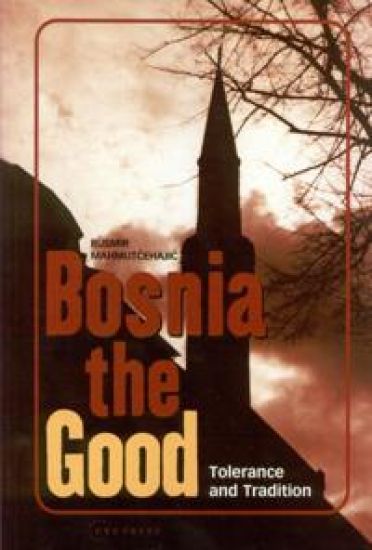
Bosnia the Good is an indictment of the partition of Bosnia, formalized in 1995 by the Dayton Accord. This unequalled volume is a plea from one of Bosnia-Herzegovina's most prominent dissidents appealing for Bosnia's communities to reject ethnic segregation and restore mutual trust. The author argues for the history and reality of a Bosnia-Herzegovina based upon a model of 'unity in diversity'. He shows that ethnic and religious cultures co-existed in Bosnia for centuries and that Croatian and Serbian leaders determined to enact their own nationalist programs are to be blamed for the conflicts that devastated a nation. He points out the decisive moment when the international community accepted the Serb/Croat argument that ancient ethnic hatreds were endemic to Bosnia and that ethnic segregation became not only acceptable but desirable. He examines the reasons why Western liberal democracies have regarded with sympathy the struggles of Serbia and Croatia for national recognition, while viewing Bosnia's multicultural society with suspicion. Bosnia the Good confronts the religious dimension of the Bosnian dilemmas from the perspective of a Bosniak committed to inter-religious dialogue. The author argues that the only way Bosnia will reclaim its unique civilization is more than simple tolerance among Serbs, Croats and Bosnians. They have to recognize that Judaism, Christianity and Islam all share the same deity and it is this common transcendent perspective that should open the door to the acceptance and celebration of religious diversity. Bosnia is at present divided and shaken to its foundations, but the author argues it could become a model for European progress. The greatest danger is for Bosnia to be declared just another ethnoreligious entity, in this case a 'Muslim State' ghettoized inside Europe. If protected and allowed to develop however, the author explains how Bosnia could find a place in a new European order.