
Kirjailija
Russell H. Conwell
Kirjat ja teokset yhdessä paikassa: 183 kirjaa, julkaisuja vuosilta 1992–2026, suosituimpiin kuuluu Acre of Diamonds by Russell H Conwell: How Men and Women May Become Rich. Vertaile teosten hintoja ja tarkista saatavuus suomalaisista kirjakaupoista.
Nimi esiintyy myös muodoissa: Russell H Conwell
183 kirjaa
Kirjojen julkaisuvuodet: 1992–2026.
Every Man His Own University, is many of the old classic books which have been considered important throughout the human history. They are now extremely scarce and very expensive antique. So that this work is never forgotten we republish these books in high quality, using the original text and artwork so that they can be preserved for the present and future generations. This whole book has been reformatted, retyped and designed. These books are not made of scanned copies of their original work and hence the text is clear and readable.


如今,成功的机会与 时代一样多,即使不是更多,因为他们首先是在自己的良心中被发现的。 通过他的事奉和"一切皆有可能"的哲学,康威尔为无数人打开了机遇之门。 英亩的钻石呼应了他的核心信念:我们每个人都被置于地球上,其主要目的是帮助他人。 如今,成功的机会与 时代一样多,即使不是更多,因为他们首先是在自己的良心中被发现的。 通过他的事奉和"一切皆有可能"的哲学,康威尔为无数人打开了机遇之门。 英亩的钻石呼应了他的核心信念:我们每个人都被置于地球上,其主要目的是帮助他人。 如今,成功的机会与 时代一样多,即使不是更多,因为他们首先是在自己的良心中被发现的。 通过他的事奉和"一切皆有可能"的哲学,康威尔为无数人打开了机遇之门。 英亩的钻石呼应了他的核心信念:我们每个人都被置于地球上,其主要目的是帮助他人。

The Secret of leading a successful life is no secret at all. Know where you want to be, set a goal to get there, and act on the goal. Here are three classic short books from a century ago that tap into the basic truth in ways that have inspired generations: "As A Man Thinketh" by James Allen, "Acres of Diamonds" by Russell H. Conwell, and "The Science of Getting Rich" by Wallace D. Wattles. Each in its own way has changed thousands of lives; together, they may change yours.
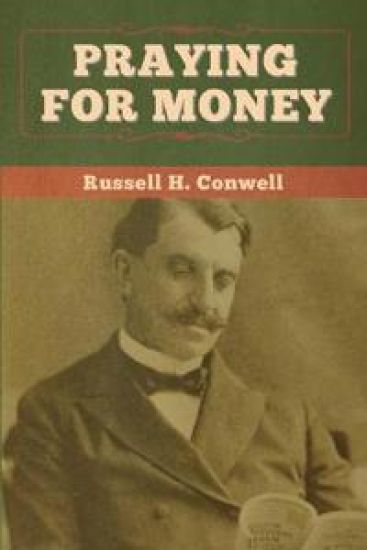
Russell Herman Conwell (February 15, 1843 - December 6, 1925) was an American Baptist minister, orator, philanthropist, lawyer, and writer. He is best remembered as the founder and first president of Temple University in Philadelphia, as the Pastor of The Baptist Temple, and for his inspirational lecture, "Acres of Diamonds". He was born in South Worthington, Massachusetts. The original inspiration for "Acres of Diamonds", his most famous essay, occurred in 1869 when Conwell was traveling in the Middle East. The work began as a speech, "at first given," wrote Conwell in 1913, "before a reunion of my old comrades of the Forty-sixth Massachusetts Regiment, which served in the Civil War and in which I was captain." It was delivered as a lecture on the Chautauqua circuit prior to his becoming pastor of the Grace Baptist Church in Philadelphia in 1882 and was first published in book form in 1890 by the John Y. Huber Company of Philadelphia. Before his death in 1925, Conwell would deliver it over 6,152 times around the world. The central idea of the work is that one need not look elsewhere for opportunity, achievement, or fortune; the resources to achieve all good things are present in one's own community. This theme is developed by an introductory anecdote, credited by Conwell to an Arab guide, about a man who wanted to find diamonds so badly that he sold his property and went off in futile search for them. The new owner of his home discovered that a rich diamond mine was located right there on the property. Conwell elaborates on the theme through examples of success, genius, service, or other virtues involving ordinary Americans contemporary to his audience: "dig in your own backyard " (wikipedia.org)
Russell Herman Conwell (February 15, 1843 - December 6, 1925) was an American Baptist minister, orator, philanthropist, lawyer, and writer. He is best remembered as the founder and first president of Temple University in Philadelphia, as the Pastor of The Baptist Temple, and for his inspirational lecture, "Acres of Diamonds". He was born in South Worthington, Massachusetts. The original inspiration for "Acres of Diamonds", his most famous essay, occurred in 1869 when Conwell was traveling in the Middle East. The work began as a speech, "at first given," wrote Conwell in 1913, "before a reunion of my old comrades of the Forty-sixth Massachusetts Regiment, which served in the Civil War and in which I was captain." It was delivered as a lecture on the Chautauqua circuit prior to his becoming pastor of the Grace Baptist Church in Philadelphia in 1882 and was first published in book form in 1890 by the John Y. Huber Company of Philadelphia. Before his death in 1925, Conwell would deliver it over 6,152 times around the world. The central idea of the work is that one need not look elsewhere for opportunity, achievement, or fortune; the resources to achieve all good things are present in one's own community. This theme is developed by an introductory anecdote, credited by Conwell to an Arab guide, about a man who wanted to find diamonds so badly that he sold his property and went off in futile search for them. The new owner of his home discovered that a rich diamond mine was located right there on the property. Conwell elaborates on the theme through examples of success, genius, service, or other virtues involving ordinary Americans contemporary to his audience: "dig in your own backyard " (wikipedia.org)
Russell Herman Conwell (February 15, 1843 - December 6, 1925) was an American Baptist minister, orator, philanthropist, lawyer, and writer. He is best remembered as the founder and first president of Temple University in Philadelphia, as the Pastor of The Baptist Temple, and for his inspirational lecture, "Acres of Diamonds". He was born in South Worthington, Massachusetts. The original inspiration for "Acres of Diamonds", his most famous essay, occurred in 1869 when Conwell was traveling in the Middle East. The work began as a speech, "at first given," wrote Conwell in 1913, "before a reunion of my old comrades of the Forty-sixth Massachusetts Regiment, which served in the Civil War and in which I was captain." It was delivered as a lecture on the Chautauqua circuit prior to his becoming pastor of the Grace Baptist Church in Philadelphia in 1882 and was first published in book form in 1890 by the John Y. Huber Company of Philadelphia. Before his death in 1925, Conwell would deliver it over 6,152 times around the world. The central idea of the work is that one need not look elsewhere for opportunity, achievement, or fortune; the resources to achieve all good things are present in one's own community. This theme is developed by an introductory anecdote, credited by Conwell to an Arab guide, about a man who wanted to find diamonds so badly that he sold his property and went off in futile search for them. The new owner of his home discovered that a rich diamond mine was located right there on the property. Conwell elaborates on the theme through examples of success, genius, service, or other virtues involving ordinary Americans contemporary to his audience: "dig in your own backyard " (wikipedia.org)
Russell Herman Conwell (February 15, 1843 - December 6, 1925) was an American Baptist minister, orator, philanthropist, lawyer, and writer. He is best remembered as the founder and first president of Temple University in Philadelphia, as the Pastor of The Baptist Temple, and for his inspirational lecture, "Acres of Diamonds". He was born in South Worthington, Massachusetts. The original inspiration for "Acres of Diamonds", his most famous essay, occurred in 1869 when Conwell was traveling in the Middle East. The work began as a speech, "at first given," wrote Conwell in 1913, "before a reunion of my old comrades of the Forty-sixth Massachusetts Regiment, which served in the Civil War and in which I was captain." It was delivered as a lecture on the Chautauqua circuit prior to his becoming pastor of the Grace Baptist Church in Philadelphia in 1882 and was first published in book form in 1890 by the John Y. Huber Company of Philadelphia. Before his death in 1925, Conwell would deliver it over 6,152 times around the world. The central idea of the work is that one need not look elsewhere for opportunity, achievement, or fortune; the resources to achieve all good things are present in one's own community. This theme is developed by an introductory anecdote, credited by Conwell to an Arab guide, about a man who wanted to find diamonds so badly that he sold his property and went off in futile search for them. The new owner of his home discovered that a rich diamond mine was located right there on the property. Conwell elaborates on the theme through examples of success, genius, service, or other virtues involving ordinary Americans contemporary to his audience: "dig in your own backyard " (wikipedia.org)
Russell Herman Conwell (February 15, 1843 - December 6, 1925) was an American Baptist minister, orator, philanthropist, lawyer, and writer. He is best remembered as the founder and first president of Temple University in Philadelphia, Pennsylvania, as the Pastor of The Baptist Temple, and for his inspirational lecture Acres of Diamonds." Acres of Diamonds" originated as a speech which Conwell delivered over 6,000 times around the world. It was first published in 1890 by the John Y. Huber Company of Philadelphia. The central idea of the work is that one need not look elsewhere for opportunity, achievement, or fortune--the resources to achieve all good things are present in one's own community. This theme is developed by an introductory anecdote, told to Conwell by an Arab guide, about a man who wanted to find diamonds so badly that he sold his property and went off in futile search for them; the new owner of his home discovered that a rich diamond mine was located right there on the property. Conwell elaborates on the theme through examples of success, genius, service, or other virtues involving ordinary Americans contemporary to his audience: "dig in your own back-yard " (wikipedia.org)
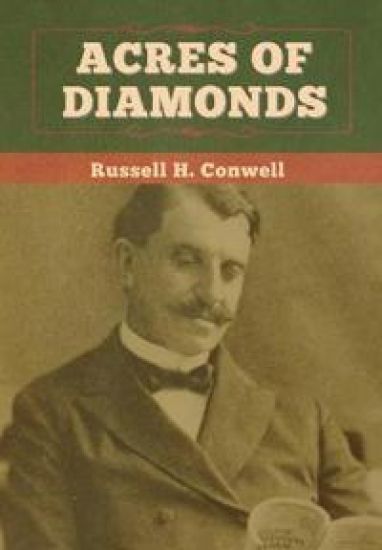
Russell Herman Conwell (February 15, 1843 - December 6, 1925) was an American Baptist minister, orator, philanthropist, lawyer, and writer. He is best remembered as the founder and first president of Temple University in Philadelphia, Pennsylvania, as the Pastor of The Baptist Temple, and for his inspirational lecture Acres of Diamonds." Acres of Diamonds" originated as a speech which Conwell delivered over 6,000 times around the world. It was first published in 1890 by the John Y. Huber Company of Philadelphia. The central idea of the work is that one need not look elsewhere for opportunity, achievement, or fortune--the resources to achieve all good things are present in one's own community. This theme is developed by an introductory anecdote, told to Conwell by an Arab guide, about a man who wanted to find diamonds so badly that he sold his property and went off in futile search for them; the new owner of his home discovered that a rich diamond mine was located right there on the property. Conwell elaborates on the theme through examples of success, genius, service, or other virtues involving ordinary Americans contemporary to his audience: "dig in your own back-yard " (wikipedia.org)

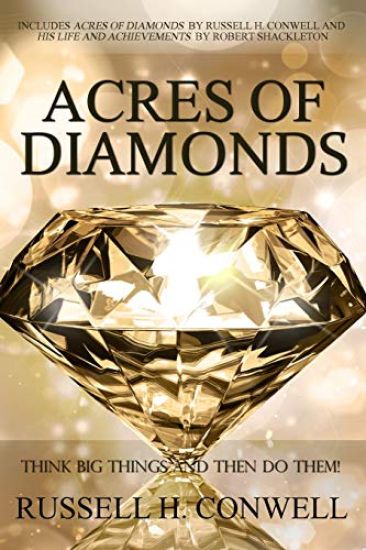
Includes Conwell's 'Acres of Diamonds' and Robert Shackleton's 'His Life and Achievements'. 'Acres of Diamonds' is a lecture that Russell Conwell, founder of Temple University, delivered more than 6,000 times across the country. Through this lecture, Conwell debunks the idea that it is noble to be poor, an idea that far too many Christians share. He illustrates that it is our duty as Christians to use our gifts to honestly earn riches, because you can do more good with riches than without. Conwell successfully illustrates the difference between the popular expression 'money is the root of all evil' and the complete Biblical passage which states 'the love of money is the root of all evil'. The love of money is idolatry, but money itself is neither good nor evil. It is simply a tool which may be used for either good or evil. In these pages we learn the virtues of earning money through honest, hard work. We learn to look for opportunities to serve others in our own back yard by simply finding a need and filling it. If you wish to be great, begin with who you are right now, where you are right now. Follow these principles, and you will uncover your own acres of diamonds. Larry Hehn, Author of 'Get the Prize: Nine Keys for a Life of Victory'.
The Life, Speeches and Public Services of Gen. James A. Garfield of Ohio
Mark Hopkins; Russell H. Conwell
Hansebooks
2020
nidottu
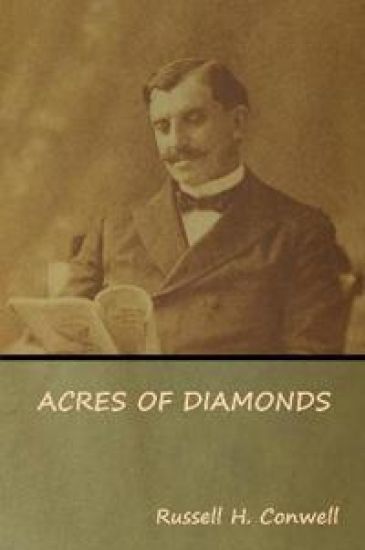
Russell Conwell, in full Russell Herman Conwell, (born February 15, 1843, South Worthington, Massachusetts, U. S.--died December 6, 1925, Philadelphia, Pennsylvania), American lawyer, author, clergyman, and educator whose lecture "Acres of Diamonds," which expressed his formula for success, brought him fame and wealth on the Chautauqua circuit. In 1862 Conwell began law study at Yale but left a few weeks later to raise a company for service in the American Civil War, in which he was awarded the rank of captain. Admitted to the bar in 1865 (after graduating from Albany Law School, Albany, New York), he practiced law in Minneapolis and Boston. In 1867 he was editor in chief of the Minneapolis Daily Chronicle, and he was co-owner of the Somerville (Massachusetts) Journal. Conwell was ordained a minister in 1881 and in 1882 was called to Grace Baptist Church in Philadelphia, a small congregation struggling with debt. The church prospered under his leadership, moving eventually to the much larger Baptist Temple. Conwell founded Temple University in 1884 as a series of night study courses for ministerial students; the school received a college charter in 1888 and became a university in 1907, with Conwell as its first president (from 1887). Conwell delivered his lecture "Acres of Diamonds" no fewer than 6,000 times. The theme of the lecture was that opportunity lurks in everyone's backyard. Everyone, Conwell believed, can and ought to get rich and then use that money for the good of others. "Keep clean, fight hard, pick your openings judiciously, and have your eyes forever fixed on the heights toward which you are headed" was his simple formula for success and the central emphasis of his preaching. (britannica.com)
Russell Conwell, in full Russell Herman Conwell, (born February 15, 1843, South Worthington, Massachusetts, U. S.--died December 6, 1925, Philadelphia, Pennsylvania), American lawyer, author, clergyman, and educator whose lecture "Acres of Diamonds," which expressed his formula for success, brought him fame and wealth on the Chautauqua circuit. In 1862 Conwell began law study at Yale but left a few weeks later to raise a company for service in the American Civil War, in which he was awarded the rank of captain. Admitted to the bar in 1865 (after graduating from Albany Law School, Albany, New York), he practiced law in Minneapolis and Boston. In 1867 he was editor in chief of the Minneapolis Daily Chronicle, and he was co-owner of the Somerville (Massachusetts) Journal. Conwell was ordained a minister in 1881 and in 1882 was called to Grace Baptist Church in Philadelphia, a small congregation struggling with debt. The church prospered under his leadership, moving eventually to the much larger Baptist Temple. Conwell founded Temple University in 1884 as a series of night study courses for ministerial students; the school received a college charter in 1888 and became a university in 1907, with Conwell as its first president (from 1887). Conwell delivered his lecture "Acres of Diamonds" no fewer than 6,000 times. The theme of the lecture was that opportunity lurks in everyone's backyard. Everyone, Conwell believed, can and ought to get rich and then use that money for the good of others. "Keep clean, fight hard, pick your openings judiciously, and have your eyes forever fixed on the heights toward which you are headed" was his simple formula for success and the central emphasis of his preaching. (britannica.com)
Although the story "Acres of Diamonds" is now world famous, it is only a part of the original lecture Conwell delivered. Here is the full-text of Acres of Diamonds, an Unabridged Edition to include the Original Illustrations, with an Appreciation by John Wanamaker, and an Introduction by the author.