
Kirjojen hintavertailu – 12 859 818 kirjaa ja 27 kauppaa

Kirjailija

Russell Hurlburt

Kirjat ja teokset yhdessä paikassa: 2 kirjaa, julkaisuja vuosilta 2011–2016, suosituimpiin kuuluu A Passion for Specificity. Vertaile teosten hintoja ja tarkista saatavuus suomalaisista kirjakaupoista.

2 kirjaa

Kirjojen julkaisuvuodet: 2011–2016.

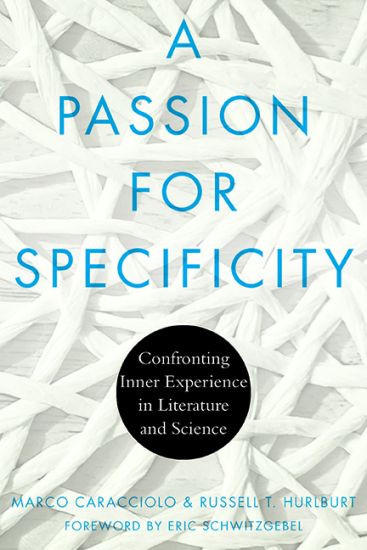
A Passion for Specificity

A Passion for Specificity

Marco Caracciolo; Russell Hurlburt

Ohio State University Press
2016
pokkari
In an analytical yet increasingly intimate conversation, A Passion for Specificity: Confronting Inner Experience in Literature and Science investigates the differences between experience as conveyed in literature and experience as apprehended through scientific method. Can experiences be shared? How much do language and metaphor shape experiential reports? Where is the dividing line between a humanistic and a scientific approach to experience? In a series of exchanges, Marco Caracciolo and Russell Hurlburt demonstrate that those are necessarily personal issues, and they don't flinch--they relentlessly examine whether Caracciolo's presuppositions distort his understanding of reading experiences and whether Hurlburt's attachment to the method he invented causes him to take an overly narrow view of experience. Delving ever more personally, they aim Hurlburt's experience sampling methods--beeping people to discover what was in their stream of inner experience at the moment immediately before the beep--at Caracciolo's own experiences, an exercise that puts Caracciolo's presuppositions to the test and leads him to discover things about experience (his own and literature's) that he had thought impossible. A Passion for Specificity, with its personal revelations, unexpected twists, and confrontational style, reads like an epistolary novel, but it is a serious exploration of ideas at the heart of literature and science. It is a thoughtful attempt at advancing the emerging "cognitive humanities," clarifying a number of core issues in the cross-pollination of literature, psychology, philosophy, and consciousness science.
Describing Inner Experience?

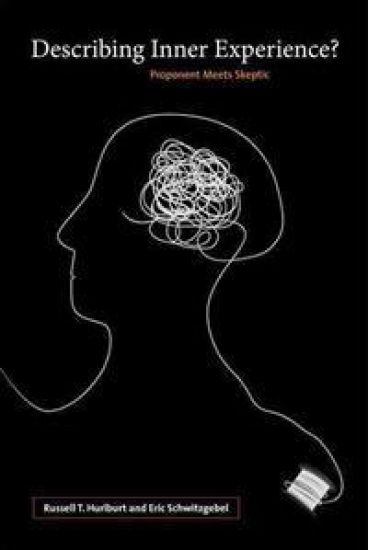
Describing Inner Experience?

Russell Hurlburt; Eric Schwitzgebel

MIT Press
2011
pokkari
A psychologist and a philosopher with opposing viewpoints discuss the extent to which it is possible to report accurately on our own conscious experience, considering both the reliability of introspection in general and the particular self-reported inner experiences of "Melanie," a subject interviewed using the Descriptive Experience Sampling method. Can conscious experience be described accurately? Can we give reliable accounts of our sensory experiences and pains, our inner speech and imagery, our felt emotions? The question is central not only to our humanistic understanding of who we are but also to the burgeoning scientific field of consciousness studies. The two authors of Describing Inner Experience disagree on the answer: Russell Hurlburt, a psychologist, argues that improved methods of introspective reporting make accurate accounts of inner experience possible; Eric Schwitzgebel, a philosopher, believes that any introspective reporting is inevitably prone to error. In this book the two discuss to what extent it is possible to describe our inner experience accurately. Hurlburt and Schwitzgebel recruited a subject, "Melanie," to report on her conscious experience using Hurlburt's Descriptive Experience Sampling method (in which the subject is cued by random beeps to describe her conscious experience). The heart of the book is Melanie's accounts, Hurlburt and Schwitzgebel's interviews with her, and their subsequent discussions while studying the transcripts of the interviews. In this way the authors' dispute about the general reliability of introspective reporting is steadily tempered by specific debates about the extent to which Melanie's particular reports are believable. Transcripts and audio files of the interviews will be available on the MIT Press website. Describing Inner Experience? is not so much a debate as it is a collaboration, with each author seeking to refine his position and to replace partisanship with balanced critical judgment. The result is an illumination of major issues in the study of consciousness-from two sides at once.