Kirjojen hintavertailu – 12 859 828 kirjaa ja 27 kauppaa

Kirjailija

Russell J. Dalton

Kirjat ja teokset yhdessä paikassa: 15 kirjaa, julkaisuja vuosilta 1981–2026, suosituimpiin kuuluu Political Realignment. Vertaile teosten hintoja ja tarkista saatavuus suomalaisista kirjakaupoista.

15 kirjaa

Kirjojen julkaisuvuodet: 1981–2026.

Political Realignment

Political Realignment

Russell J. Dalton

Oxford University Press
2018
sidottu

Halvin toimitettuna 59,60 €

The process of electoral change is accelerating in contemporary democracies, and this book explains why. The emergence of Green parties in the 1980s and recent far right parties, Brexit and Trump's 2016 victory are parts of this overall process. Political Realignment tracks the evolution of citizen and elite opinions on economic and cultural issues from the 1970s to the 2010s-and the impact of these changes on electoral politics and public policy. Citizen positions on these cleavages have realigned over time, producing a similar realignment in the structure of the party systems to represent these demands. Economic issues remain important, now joined by divisions on cultural issues as a backlash to modernization. Assembling an unprecedented time series of empirical evidence, this study explains the new forces of elector change in both Europe and the United States.

Political Parties and Democratic Linkage

Political Parties and Democratic Linkage

Russell J. Dalton; David M. Farrell; Ian McAllister

Oxford University Press
2013
nidottu

Halvin toimitettuna 49,70 €

Is the party over? Parties are the central institutions of representative democracy, but critics increasingly claim that parties are failing to perform their democratic functions. This book assembles unprecedented cross-national evidence to assess how parties link the individual citizen to the formation of governments and then to government policies. Using the Comparative Study of Electoral Systems and other recent cross-national data, the authors examine the workings of this party linkage process across established and new democracies. Political parties still dominate the electoral process in shaping the discourse of campaigns, the selection of candidates, and mobilizing citizens to vote. Equally striking, parties link citizen preferences to the choice of representatives, with strong congruence between voter and party Left/Right positions. These preferences are then translated in the formation of coalition governments and their policies. The authors argue that the critics of parties have overlooked the ability of political parties to adapt to changing conditions in order to perform their crucial linkage functions. As the context of politics and societies have changed, so too have political parties. Political Parties and Democratic Linkage argues that the process of party government is alive and well in most contemporary democracies.
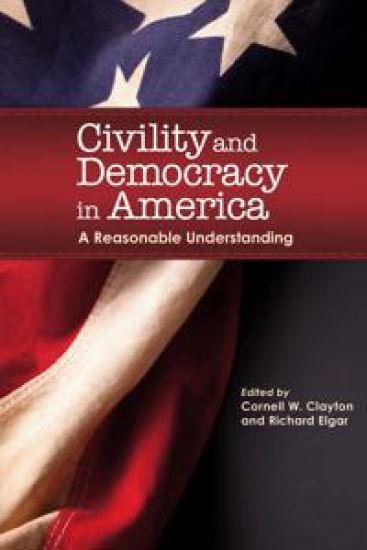
Civility and Democracy in America

Civility and Democracy in America

Peter Bhatia; Paul Boyer; Cheryl Oestreicher; Thomas Christiano; Joshua Cohen; Russell J. Dalton; Edward A. Feiner; Theodore L. Glasser

Washington State University Press
2012
pokkari
A true democracy sanctions the challenge of deeply held values and accepted societal standards, but in the United States today, some members of the political arena have abandoned respectful communication. Instead, contentious political discourse stalls Congress and, at times, erupts into violence. Negative personal attacks and outrageous character assassinations replace reasoned arguments and intelligent debate. Yet incivility has existed in various forms throughout American history, often preceding positive change. In March 2011, Washington State University hosted one of four major conferences held across the country. The purpose was to initiate discussion about the role of civility in American democracy. Leading scholars from a variety of disciplines participated, concentrating on five distinctive perspectives: history, religion, philosophy, art and architecture, and media. Comprised of 23 papers presented at the conference, Civility and Democracy in America offers insight from these seasoned experts.
Political Parties and Democratic Linkage

Political Parties and Democratic Linkage

Russell J. Dalton; David M. Farrell; Ian McAllister

Oxford University Press
2011
sidottu
Is the party over? Parties are the central institutions of representative democracy, but critics increasingly claim that parties are failing to perform their democratic functions. This book assembles unprecedented cross-national evidence to assess how parties link the individual citizen to the formation of governments and then to government policies. Using the Comparative Study of Electoral Systems and other recent cross-national data, the authors examine the workings of this party linkage process across established and new democracies. Political parties still dominate the electoral process in shaping the discourse of campaigns, the selection of candidates, and mobilizing citizens to vote. Equally striking, parties link citizen preferences to the choice of representatives, with strong congruence between voter and party Left/Right positions. These preferences are then translated in the formation of coalition governments and their policies. The authors argue that the critics of parties have overlooked the ability of political parties to adapt to changing conditions in order to perform their crucial linkage functions. As the context of politics and societies have changed, so too have political parties. Political Parties and Democratic Linkage argues that the process of party government is alive and well in most contemporary democracies.
The Green Rainbow

The Green Rainbow

Russell J. Dalton

Yale University Press
1994
sidottu
What is behind the greening of European politics, and what is the future of the green movement? This book examines environmental interest groups at the vanguard of the green movement in Western Europe—from Greenpeace and Friends of the Earth to national bird societies and conservation groups—in order to answer these questions. Russell J. Dalton chronicles the evolution of environmental interest groups from their first mobilization wave in the late 1800s to the present. Drawing on interviews with leaders of nearly seventy major environmental groups in ten countries, he challenges the conventional view of the environmental movement. Dalton argues that environmental leaders are not the political radicals portrayed by their opponents but are advocates of reform. He also finds that green groups are active and varied participants in the policy process. As the green movement has developed, environmental interest groups have helped to define its goals and identity. The environmental movement, says Dalton, has become an advocate for a new green agenda that is reforming the policy priorities of advanced industrial democracies. Dalton uses his investigation into the green movement to shed light on social movements and social theory. By comparing conservation and ecology groups, he finds that an organization's values strongly influence its political behavior. He concludes that social movements are driven by their ideological views and political identity and that these shape their choice of political goals, their potential for action, and their pattern of behavior.
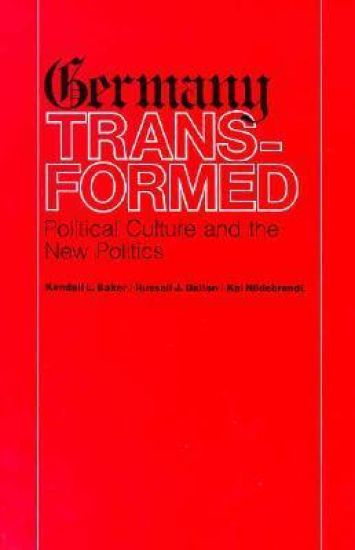
Germany Transformed

Germany Transformed

Kendall L. Baker; Russell J. Dalton; Kai Hildebrandt

Harvard University Press
1981
sidottu
A new Germany has come of age, as democratic, sophisticated, affluent, and modern as any other western nation. This remarkable transition in little more than a generation is the central theme of Germany Transformed. Here all the old stereotypes and conclusions are challenged and new research is marshalled to provide a model for an advanced democratic republic. Kendall Baker, Russell Dalton, and Kai Hildebrandt, working with massive national election returns from 1953 onward, explain the Old Politics of the postwar period, which was based on the “economic miracle” and the security needs of West Germany, and the shift in the past decade to the New Politics, which emphasizes affluence, leisure, the quality of life, and international accommodation. But more than elections are examined. Rather, the authors delineate the transvaluation of the German civic culture as democracy became embedded in the nation’s institutions, political ways, party structures, and citizen interest in governance. By the 1970s the quiescent German of Prussia, the Empire, and the 1930s had become the active and aware democratic westerner. This is among the most important books about West Germany written since the late 1950s, when the nation, devastated by war and rebuilding its economy and political life, was still struggling with the possibilities of democracy. It is a political history, recounted in enormous detail and with methodological precision, that will change perceptions about Germany and align them with realities. Germany is now an integrated part of a democratic western community of nations, and an understanding of its true condition not only illuminates better the staunch European identity but also is bound to have an impact on American policy.
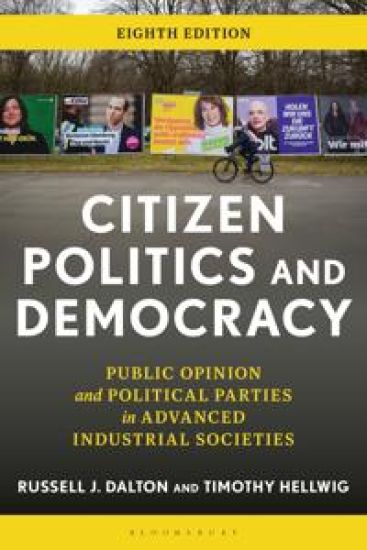
Citizen Politics and Democracy

Citizen Politics and Democracy

Russell J. Dalton; Timothy Hellwig

BLOOMSBURY PUBLISHING PLC
2026
nidottu
Since its first edition in 1988, Citizen Politics has provided a concise examination of citizens’ political behavior and politicians’ responses in advanced industrial democracies. It communicates findings from state-of-the-art research on parties, public opinion, and voters in a way that is at once accessible and comprehensive. It argues that ordinary people do, in fact, have what it takes to meet the demands of their roles as citizens in representative democracies. Informed by evidence from cross-national public opinion surveys, past editions of the book offered a tone of moderation—or perhaps guarded optimism—that leans against the more extreme, attention-grabbing approach of the 24-hour news cycle. The eighth edition will continue in this vein. The text will focus on opinion, voter choice, and political representation by comparing recent elections in the UK, France, Germany, and the United States. This four-nation comparison strikes the right balance between depth and breadth and does so in the space of 300 pages. The basic chapter structure will continue, with updated results from several new elections in each of the four core nations, new surveys, and new literature. This is essential to capture student and instructor interest. This new edition will focus more on the contemporary challenges facing democracies and their citizens. The attack at the U. S. Capitol on January 6, 2021, brought to the fore how much democratic stability requires the consent of the governed and respect for established rules and norms by citizens and elites. This and other events have pushed researchers to revisit foundational questions about the role of the citizen in a democracy. One innovation is that the new edition will focus more on how citizens’ participation, values, opinions, and assessments contribute to how democracy does (or does not) work. Thus, we will rebrand the eighth edition as Citizen Politics and Democracy, to emphasize both continuity and change in mass politics.
Citizen Politics and Democracy

Citizen Politics and Democracy

Russell J. Dalton; Timothy Hellwig

BLOOMSBURY PUBLISHING PLC
2026
sidottu
Since its first edition in 1988, Citizen Politics has provided a concise examination of citizens’ political behavior and politicians’ responses in advanced industrial democracies. It communicates findings from state-of-the-art research on parties, public opinion, and voters in a way that is at once accessible and comprehensive. It argues that ordinary people do, in fact, have what it takes to meet the demands of their roles as citizens in representative democracies. Informed by evidence from cross-national public opinion surveys, past editions of the book offered a tone of moderation—or perhaps guarded optimism—that leans against the more extreme, attention-grabbing approach of the 24-hour news cycle. The eighth edition will continue in this vein. The text will focus on opinion, voter choice, and political representation by comparing recent elections in the UK, France, Germany, and the United States. This four-nation comparison strikes the right balance between depth and breadth and does so in the space of 300 pages. The basic chapter structure will continue, with updated results from several new elections in each of the four core nations, new surveys, and new literature. This is essential to capture student and instructor interest. This new edition will focus more on the contemporary challenges facing democracies and their citizens. The attack at the U. S. Capitol on January 6, 2021, brought to the fore how much democratic stability requires the consent of the governed and respect for established rules and norms by citizens and elites. This and other events have pushed researchers to revisit foundational questions about the role of the citizen in a democracy. One innovation is that the new edition will focus more on how citizens’ participation, values, opinions, and assessments contribute to how democracy does (or does not) work. Thus, we will rebrand the eighth edition as Citizen Politics and Democracy, to emphasize both continuity and change in mass politics.
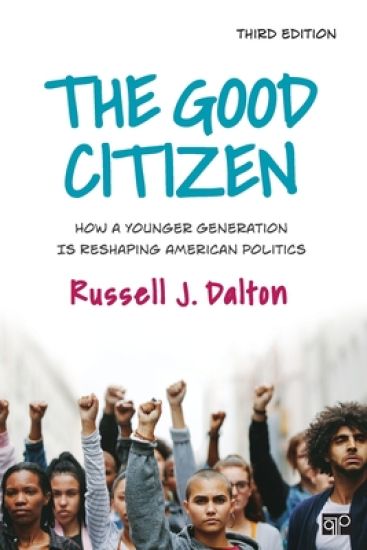
The Good Citizen

The Good Citizen

Russell J. Dalton

SAGE PUBLICATIONS INC
2025
nidottu
There has been a growing chorus of political analysts with doomsday predictions of an American public that is uncivil, disengaged, and alienated. And it's only getting worse with a younger generation of Americans who do not see the value in voting. The good news is that the bad news is wrong. In this Third Edition of The Good Citizen, Russell Dalton uses current national public opinion surveys, including new evidence from 2018 Pew Center survey data, to show how Americans are changing their views on what good citizenship means. It's not about recreating the halcyon politics of a generation ago, but recognition that new patterns of citizenship call for new processes and new institutions that reflect the values of the contemporary American public. Trends in participation, tolerance, and policy priorities reflect a younger generation that is more engaged, more tolerant, and more supportive of social justice. The Good Citizen shows how a younger generation is creating new norms of citizenship that are leading to a renaissance of democratic participation. An important comparative chapter in the book showcases cross-national comparisons that further demonstrate the vitality of American democracy.
The Participation Gap

The Participation Gap

Russell J. Dalton

Oxford University Press
2017
sidottu

Halvin toimitettuna 81,40 €

The dilemma of democracy arises from two contrasting trends. More people in the established democracies are participating in civil society activity, contacting government officials, protesting, and using online activism and other creative forms of participation. At the same time, the importance of social status as an influence on political activity is increasing. The democratic principle of the equality of voice is eroding. The politically rich are getting richer-and the politically needy have less voice. This book assembles an unprecedented set of international public opinion surveys to identify the individual, institutional, and political factors that produce these trends. New forms of activity place greater demands on participants, raising the importance of social status skills and resources. Civil society activity further widens the participation gap. New norms of citizenship shift how people participate. And generational change and new online forms of activism accentuate this process. Effective and representative government requires a participatory citizenry and equal voice, and participation trends are undermining these outcomes. The Participation Gap both documents the growing participation gap in contemporary democracies and suggests ways that we can better achieve their theoretical ideal of a participatory citizenry and equal voice.
Electoral Change in Advanced Industrial Democracies

Electoral Change in Advanced Industrial Democracies

Russell J. Dalton; Scott E. Flanagan

Princeton University Press
2017
sidottu
In this study of the breakdown of traditional party loyalties and voting patterns, prominent comparativists and country specialists examine the changes now occurring in the political systems of advanced industrial democracies. Originally published in 1985. The Princeton Legacy Library uses the latest print-on-demand technology to again make available previously out-of-print books from the distinguished backlist of Princeton University Press. These editions preserve the original texts of these important books while presenting them in durable paperback and hardcover editions. The goal of the Princeton Legacy Library is to vastly increase access to the rich scholarly heritage found in the thousands of books published by Princeton University Press since its founding in 1905.
Electoral Change in Advanced Industrial Democracies

Electoral Change in Advanced Industrial Democracies

Russell J. Dalton; Scott E. Flanagan

Princeton University Press
2017
pokkari
In this study of the breakdown of traditional party loyalties and voting patterns, prominent comparativists and country specialists examine the changes now occurring in the political systems of advanced industrial democracies. Originally published in 1985. The Princeton Legacy Library uses the latest print-on-demand technology to again make available previously out-of-print books from the distinguished backlist of Princeton University Press. These editions preserve the original texts of these important books while presenting them in durable paperback and hardcover editions. The goal of the Princeton Legacy Library is to vastly increase access to the rich scholarly heritage found in the thousands of books published by Princeton University Press since its founding in 1905.
The Apartisan American

The Apartisan American

Russell J. Dalton

CQ Press
2012
nidottu
Party identification is often considered the most important concept in modern electoral research—yet Americans' party ties have eroded. Today, independents comprise the largest portion of voters, outnumbering either Democrats or Republicans. This provocative book sheds new light on the dealignment trend with the emergence of an independent voter Dalton is calling the Apartisan American. Utilizing 60 years of electoral surveys, Dalton's friendly and concise narrative shows students just who these apartisans are and how they're introducing new volatility into electoral politics, changing the calculus of electoral decision making, and altering the behavior of political parties. Dalton also shows the same dealignment trend happening in other established democracies. Understanding these apartisans is key to understanding the 2012 election as well as party and electoral politics into the future.
Democratic Challenges, Democratic Choices

Democratic Challenges, Democratic Choices

Russell J. Dalton

Oxford University Press
2007
nidottu
Most democratic citizens today are distrustful of politicians, political parties, and political institutions. Where once democracies expected an allegiant public, citizens now question the very pillars of representative democracy. Democratic Challenges, Democratic Choices documents the erosion of political support in virtually all advanced industrial democracies. Assembling an unprecedented array of cross-national public opinion data, this study traces the current challenges to democracy primary to changing citizen values and rising expectations. These critical citizens are concentrated among the young, the better educated, and the politically sophisticated. At the same time, the evidence debunks claims that such trends are a function of scandals, poor performance, and other government failures. Changing public are born from the successful social modernization of these nations. A creedal passion for democracy is sweeping across the Western democracies, and people now expect more of their governments. This study concludes by examining the consequences of these changing images of government. The author finds that these expectations are making governing more difficult, but also fueling demands for political reform. The choices that democracies make in response to these challenges may lead to a further expansion of the democratic process and a new relationship between citizens and their government