Kirjojen hintavertailu – 12 903 725 kirjaa ja 27 kauppaa

Kirjailija

Russell Re Manning

Kirjat ja teokset yhdessä paikassa: 5 kirjaa, julkaisuja vuosilta 2013–2026, suosituimpiin kuuluu Paul Tillich. Vertaile teosten hintoja ja tarkista saatavuus suomalaisista kirjakaupoista.

5 kirjaa

Kirjojen julkaisuvuodet: 2013–2026.

Paul Tillich

Paul Tillich

Russell Re Manning

Routledge
2026
sidottu
Paul Tillich:Theologian of Culture provides an accessible account of the nature and development of Tillich’s thought. Written by a leading scholar and biographer of Tillich, this book presents a new interpretation of Tillich as first and foremost a theologian of culture. Concerned with Tillich’s overall project as a systematic whole, this book reconstructs Tillich as critical excavator of the religious substance within all cultural forms, including his own religious tradition, Protestant Christianity. Engaging contemporary research and newly published primary texts, this book presents and defends Tillich as a truly great theologian of his time, whose thought resonates today as a powerful challenge to engrained theological orthodoxies. The book begins by giving an account of the philosophical and theological foundations of Tillich’s approach, in particular his engagement with Schelling and the theology of crisis of the early twentieth century. Russell Re Manning then turns to two neglected yet crucial aspects of Tillich’s system: his philosophy of science and his interpretation of history. Out of these elements emerge Tillich’s distinctive position and the conceptual tools of his theology of culture. The book shows how Tillich developed these ideas in dialogue with the prominent philosophical and theological tendencies of his day, including the idealism-renaissance of the early twentieth century, phenomenology, existentialism, and dialectical theology. Like all Great Theologians, Tillich’s thought defies easy categorisation and stands in creative tension with the intellectual currents of his time. With Tillich, the book moves through the theology of culture in the areas of science, art, and metaphysics; the areas of politics and ethics; and finally the areas of explicit religion both outside and inside the churches. It concludes with an evaluation of Tillich’s radical orthodoxy and of his legacy for contemporary theology.

Paul Tillich

Paul Tillich

Russell Re Manning

Routledge
2023
nidottu
Paul Tillich:Theologian of Culture provides an accessible account of the nature and development of Tillich’s thought. Written by a leading scholar and biographer of Tillich, this book presents a new interpretation of Tillich as first and foremost a theologian of culture. Concerned with Tillich’s overall project as a systematic whole, this book reconstructs Tillich as critical excavator of the religious substance within all cultural forms, including his own religious tradition, Protestant Christianity. Engaging contemporary research and newly published primary texts, this book presents and defends Tillich as a truly great theologian of his time, whose thought resonates today as a powerful challenge to engrained theological orthodoxies. The book begins by giving an account of the philosophical and theological foundations of Tillich’s approach, in particular his engagement with Schelling and the theology of crisis of the early twentieth century. Russell Re Manning then turns to two neglected yet crucial aspects of Tillich’s system: his philosophy of science and his interpretation of history. Out of these elements emerge Tillich’s distinctive position and the conceptual tools of his theology of culture. The book shows how Tillich developed these ideas in dialogue with the prominent philosophical and theological tendencies of his day, including the idealism-renaissance of the early twentieth century, phenomenology, existentialism, and dialectical theology. Like all Great Theologians, Tillich’s thought defies easy categorisation and stands in creative tension with the intellectual currents of his time. With Tillich, the book moves through the theology of culture in the areas of science, art, and metaphysics; the areas of politics and ethics; and finally the areas of explicit religion both outside and inside the churches. It concludes with an evaluation of Tillich’s radical orthodoxy and of his legacy for contemporary theology.

Science and Religion in the Twenty-First Century

Science and Religion in the Twenty-First Century

Russell Re Manning; Michael Byrne

SCM Press
2013
sidottu
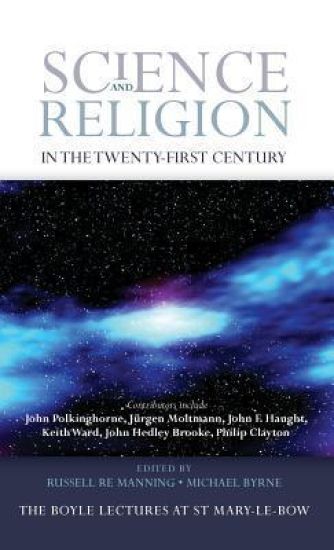
Despite the upsurge in public interest in science-and-religion provoked by the so-called “new atheist” attacks on religion, there has been surprisingly little publically accessible informed discussion of the central issues at stake in contemporary work at the interface of science and religion. This book fills this gap by providing a snapshot of what is really at stake in contemporary interactions and debates between scientists and theologians. What the collection shows, above all, is the vibrant complexity of discussions in science-and-religion. Old models of conflict between the two disciplines no longer hold; but neither do the alternative comprehensive models of independence, dialogue or integration. What emerges instead is a complex set of relations between science and religion in the twenty-first century. Contributors include Keith Ward, Jurgen Moltmann, John Hedley Brooke, Celia Deane-Drummond and John Polkinghorne.
Science and Religion in the Twenty-First Century

Science and Religion in the Twenty-First Century

Russell Re Manning; Michael Byrne

SCM Press
2013
nidottu
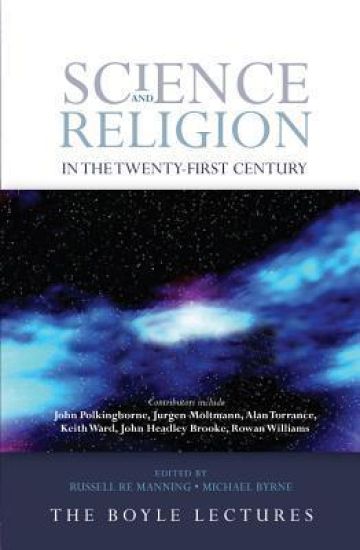
Despite the upsurge in public interest in science-and-religion provoked by the so-called “new atheist” attacks on religion, there has been surprisingly little publically accessible informed discussion of the central issues at stake in contemporary work at the interface of science and religion. This book fills this gap by providing a snapshot of what is really at stake in contemporary interactions and debates between scientists and theologians. What the collection shows, above all, is the vibrant complexity of discussions in science-and-religion. Old models of conflict between the two disciplines no longer hold; but neither do the alternative comprehensive models of independence, dialogue or integration. What emerges instead is a complex set of relations between science and religion in the twenty-first century. Contributors include Keith Ward, Jurgen Moltmann, John Hedley Brooke, Celia Deane-Drummond and John Polkinghorne.