Kirjojen hintavertailu – 12 859 829 kirjaa ja 27 kauppaa

Kirjailija

Russell Smith

Kirjat ja teokset yhdessä paikassa: 25 kirjaa, julkaisuja vuosilta 1998–2027, suosituimpiin kuuluu Splashdown. Vertaile teosten hintoja ja tarkista saatavuus suomalaisista kirjakaupoista.

25 kirjaa

Kirjojen julkaisuvuodet: 1998–2027.

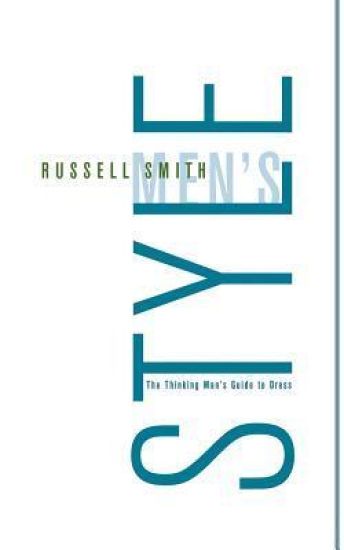
Men's Style: The Thinking Man's Guide to Dress

Men's Style: The Thinking Man's Guide to Dress

Russell Smith

St. Martin's Griffin
2007
nidottu
Guys don't wear wolf pelts anymore, but not much else has changed in the world of men's clothes: the right suit, or tie, or shirt, or shoes still projects mystery, erotic potential, and power. And to negotiate these hurdles with style and confidence, Men's Style is indispensable---a valuable source of practical advice for how to dress in a world of conflicting fashion imperatives, and a witty guide to the history, trends, codes, and conventions of men's attire. In chapters and amusing sidebars on shoes, suits, shirts and ties, formal and casual wear, underwear and swimsuits, cufflinks and watches, coats, hats, and scarves, Russell Smith steers a confident course between the twin hazards of blandness and vulgarity to articulate a philosophy of dress that can take you anywhere. Here you'll find the rules for looking the part at the office, a formal function, or the hippest party---and learn when you can toss those rules aside. And you'll find level answers to all of your questions. What color suit should a man buy first? Should socks match the belt, pants, or shoes? What tuxedos are always in, and which aren't ever? And what's required of ambiguous social situations like "dress casual" and "black-tie optional"? The answers are here, in a book that's full of trivia, history, and guidance---finally, the perfect guide for brothers, fathers, sons, and selves.
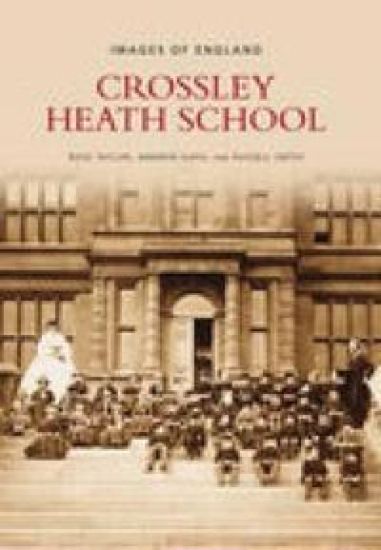
Crossley Heath School

Crossley Heath School

Rose Taylor; Russell Smith

The History Press Ltd
2006
nidottu
The story of the Crossley Heath School is ongoing and is one of significant acedemic success, which is fitting because the school is the product of the amalgamation of two rival establishments, Heath Grammar School and Crossley and Porter Grammar School, both which provided a fine education for the young people of Halifax. Heath was founded in 1597 by the vicar of Halifax to provide a free, classical education for boys. The Crossley Orphan Home was the 1864 creation of the altruistic Crossley family and subsequently became a mixed grammar school. The two schools merged in 1985 to become the Crossley Heath School. The illustrations in this book were drawn from an enormous fund of largely unpublished archive material and it is hoped that the reader will recieve a brief insight into the histories of the former schools and the modern success story of Crossley Heath. It is worthy of its roots and by virtue of the weight of its history is one of the oldest institutions in Halifax. Gaudeamus igitur - let us indeed rejoice. Crossley Heath is a school to be proud of.
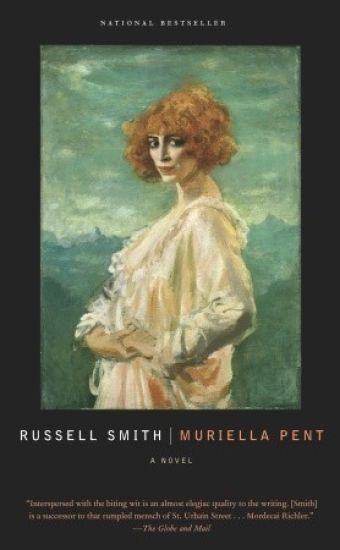
Muriella Pent

Muriella Pent

Russell Smith

Anchor Canada
2005
nidottu
Russell Smith's highly praised new novel features some typically caustic satire, alongside a deep and melancholy awareness of the force of desire in our lives. The combination of wit and perception in Muriella Pent -- and its brilliant dialogue, beautiful descriptive prose, assured handling of racial politics, and exact observation of modern types -- underlines Russell Smith's claim to be one of Canada's subtlest, sharpest writers. The book begins with a poem by Marcus Royston (from his "Island Eclogues") and a fundraising message from Muriella Pent; then, in the first scene, still before chapter one, these two very different writers have a revealing post-coital conversation. The combination of texts and action, the pointed and moving dialogue, and the ineradicable presence of sex tell us a lot about how Muriella Pentwill go on: it's precise and original even before really beginning. In the first two chapters the principal characters are introduced more fully. Marcus Royston, a successful poet twenty years ago, is now jaded, boozy, and slightly seedy, and finding himself increasingly superannuated on the Caribbean island of St. Andrew's. Muriella Pent, in the Arts and Crafts oasis of Stilwoode Park in Toronto, is widowed, free, sometimes unhappy, and perhaps a little uncontrolled. Phone conversations introduce us to her younger friend Julia Sternberg and to Brian Sillwell, a student who volunteers alongside Muriella on the very PC City Arts Board Action Council (Literature Committee). At this committee's invitation, with a little quiet help from Canada's ministry of External Affairs, Marcus comes to Toronto on a literary residency, to live in a basement apartment in Muriella's large house. From his arrival he is a disruptive presence: he instantly flirts with his hostess (and most everyone else), drinks too much, and is constitutionally unable to use the buzzword-heavy language of victimhood, appropriation, and community spoken in the Toronto arts world. As he tells the shocked literature committee, alternative journalists, a meeting of librarians and Muriella's genteel book club alike: identity politics isn't everything, art isn't activism, and a novel shouldn't be read to uncover the author's social "message." "It is not about providing positive influence, or solving the problems of poverty. It's about the things, all dark things that..." He drained his cup. "All the dark things that motivate us." He stared straight in the eyes of the beautiful young girl and said, "Sex. It's about sex. Largely. And corruption and decadence. And all the terrible, terrible things we think." Muriella, Brian, and Julia -- that "beautiful young girl" -- are unsettled, and inspired. Perhaps the disastrous and chaotic party held in his honour at Muriella's house best illustrates the disruptive effect Marcus has on the lives around him, when the explosive power of desire crosses boundaries of age, gender and race. But Marcus is not simply a maverick: he is honest, pained, doubly in exile from a home he is ambivalent about, in sight of old age, and genuinely moved by his connection to Muriella and Julia. The novel's collage of diary entries, e-mails, letters and newspaper articles gives us unusual insight into the characters' needs and weaknesses as they are profoundly affected by crashing into each other. With Marcus and Muriella's involvement, Brian and Julia develop from wary adolescents into people capable of meaningful action; it is Muriella herself, however, who seems to change the most. But Muriella Pent works on a wider canvas; for all its psychological acuity it is profoundly, perhaps even primarily, a novel of place. Toronto is a vivid presence, from the roti shops on St. Clair West to historic sites like Fort York, from its earnest, grasping artists to the cosseted, pseudonymous enclave of Stilwoode Park. As satire and social observation, as an exploration of what art should be and do, as a study of sex as a prime mover in the messy triumphs of our lives, Muriella Pentis unmatched.

Crime in the Digital Age

Crime in the Digital Age

Russell Smith

Transaction Publishers
1998
nidottu
Willie Sutton, a notorious American bank robber of fifty years ago, was once asked why he persisted in robbing banks. "Because that's where the money is," he is said to have replied. The theory that crime follows opportunity has become established wisdom in criminology; opportunity reduction has become one of the fundamental principles of crime prevention." The enormous benefits of telecommunications are not without cost." It could be argued that this quotation from Crime in the Digital Age, is a dramatic understatement. Grabosky and Smith advise us that the criminal opportunities which accompany these newest technological changes include: illegal interception of telecommunications; electronic vandalism and terrorism; theft of telecommunications services; telecommunications piracy; transmission of pornographic and other offensive material; telemarketing fraud; electronic funds transfer crime; electronic money laundering; and finally, telecommunications in furtherance of other criminal conspiracies. However, although digitization has facilitated a great deal of criminal activity, the authors suggest that technology also provides the means to prevent and detect such crimes. Moreover, the varied nature of these crimes defies a single policy solution. Grabosky and Smith take us through this electronic minefield and discuss the issues facing Australia as well as the international community and law enforcement agencies.