Kirjojen hintavertailu – 12 903 725 kirjaa ja 27 kauppaa
Kirjailija
Russell T. McCutcheon
Kirjat ja teokset yhdessä paikassa: 37 kirjaa, julkaisuja vuosilta 1997–2026, suosituimpiin kuuluu Manufacturing Religion. Vertaile teosten hintoja ja tarkista saatavuus suomalaisista kirjakaupoista.
Failure and Nerve in the Academic Study of Religion presents a provocative critique of the unwillingness of modern scholars to publically distinguish research into comparative religion from confessional studies written within denominationally-affiliated institutions. The book offers the 19th Century founders of the study of religion as a bracing corrective to contemporary timidity. The issue was analysed and documented by Wiebe a quarter of a century ago. Here, marking Wiebe's work, a wide range of contributors reassess the methodology and ambition of contemporary religious research. The book argues that conceptualizing religion as part of the world of human action and experience is the first requirement of the study of religion.
Writing Religion: The Case for the Critical Study of Religions is a collection of outstanding essays on wide-ranging aspects of religious studies by well-known scholars, delivered as part of the University of Alabama’s annual Aronov Lectures. In 2002, the University of Alabama’s Department of Religious Studies established the annual Aronov Lecture Series to showcase the works of nationally recognized scholars of religion capable of reflecting on issues of wide relevance to scholars from across the humanities and social sciences. Writing Religion: The Case for the Critical Study of Religions is an edited collection of essays that highlights critical contributions from the first ten Aronov lecturers. Section one of the volume, “Writing Discourses,” features essays by Jonathan Z. Smith, Bruce Lincoln, and Ann Pellegrini that illustrate how critical study enables the analysis of discourses in society and history. Section two, “Riting Social Formations,” includes pieces by Arjun Appadurai, Judith Plaskow, and Nathan Katz that reference both the power of rites to construct society and the act of riting as a form of disciplining that both prescribes and proscribes. The writings of Tomoko Masuzawa, Amy-Jill Levine, Aaron W. Hughes, and Martin S. Jaffee appear in section three, “Righting the Discipline.” They emphasize the correction of movements within the academic study of religion. Steven W. Ramey frames the collection with a thoughtful introduction that explores the genesis, development, and diversity of critical analysis in the study of religion. An afterword by Russell McCutcheon reflects on the critical study of religion at the University of Alabama and rounds out this superb collection. The mission of the Department of Religious Studies is to “avoid every tendency toward confusing the study of religion with the practice of religion.” Instruction about—rather than in—religion is foundational to the department’s larger goal of producing knowledge of the world and its many practices and systems of beliefs. Infused with this spirit, these fascinating essays, which read like good conversations with learned friends, offer significant examples of each scholar’s work. Writing Religion will be of value to graduate students, advanced undergraduates, and scholars interested in the study of religion from a critical perspective.
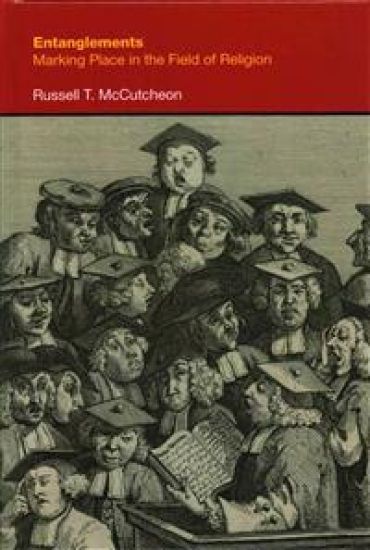
Entanglements attempts to argue against those who claim that scholarship on the category religion is only of secondary interest, in that it fails to do primary research on real religions. The volume collects eighteen responses, written across twenty years, that each exemplify the inevitably situated, give-and-take nature of all academic debate. These essays call into question the often used distinction between primary and secondary sources, between description and analysis. Published here in their original form, each contribution is accompanied by new, substantive introduction describing the context of each response and explaining how each shows something still at stake in the academic study of religion--whether its the rhetoric used to authorize competing scholarly claims or the difficulty involved in suspending our commonsense view of the world long enough to study the means by which we have come to see it that way. An ethnography of scholarly practice written mainly for earlier career readers--whether undergraduate or graduate students or even tenure-track faculty--Entanglements tackles the notion that some scholarship is more pristine, and thus more valuable, than others, thereby modeling for scholars earlier in their careers some of the obstacles and arguments that may face them should their research interests be judged unorthodox.
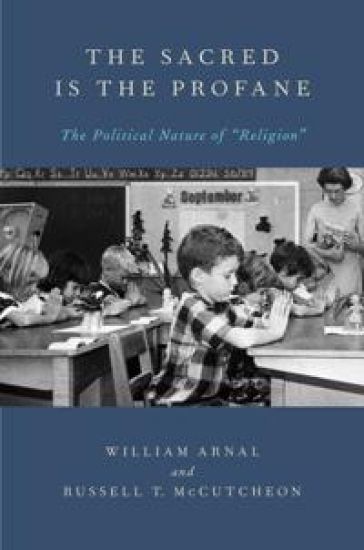
The Sacred is the Profane collects nine essays written over several years by William Arnal and Russell McCutcheon, specialists in two very different areas of the field (one, a scholar of Christian origins and the other working on the history of the modern study of religion). They share a convergent perspective: not simply that both the category and concept "religion" is a construct, something that we cannot assume to be "natural" or universal, but also that the ability to think and act "religiously" is, quite specifically, a modern, political category in its origins and effects, the mere by-product of modern secularism. These collected essays, substantially rewritten for this volume, advance current scholarly debates on secularism-debates which, the authors argue, insufficiently theorize the sacred/secular, church/state, and private/public binaries by presupposing religion (often under the guise of such terms as "religiosity," "faith," or "spirituality") to historically precede the nation-state. The essays return, again and again, to the question of what "religion"--word and concept--accomplishes, now, for those who employ it, whether at the popular, political, or scholarly level. The focus here for two writers from seemingly different fields is on the efficacy, costs, and the tactical work carried out by dividing the world between religious and political, church and state, sacred and profane. As the essays make clear, this is no simple matter. Part of the reason for the incoherence and at the same time the stubborn persistence of both the word and idea of "religion" is precisely its multi-faceted nature, its plurality, its amenability to multiple and often self-contradictory uses. Offering an argument that builds as they are read, these papers explore these uses, including the work done by positing a human orientation to "religion," the political investment in both the idea of religion and the academic study of religion, and the ways in which the field of religious studies works to shape, and stumbles against, its animating conception.
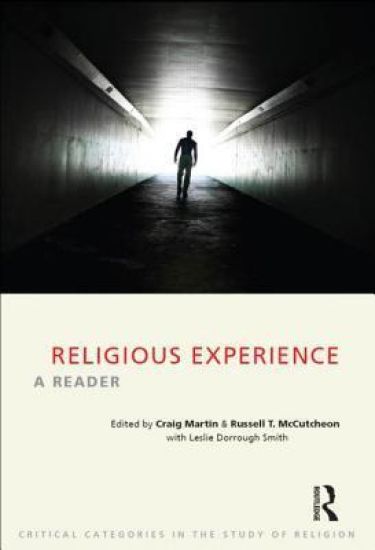
Many regard religious experience as the essence of religion, arguing that narratives might be created and rituals invented but that these are always secondary to the original experience itself. However, the concept of "experience" has come under increasing fire from a range of critics and theorists. This Reader presents writings from both those who assume the existence and possible universality of religious experience and those who question the very rhetoric of "experience". Bringing together both classic and contemporary writings, the Reader showcases differing disciplinary approaches to the study of religious experience: philosophy, literary and cultural theory, history, psychology, anthropology; feminist theory; as well as writings from within religious studies. The essays are structured into pairs, with each essay separately introduced with information on its historical and intellectual context. The ultimate aim of the Reader is to enable students to explore religious experience as rhetoric created to authorize social identities. The book will be an invaluable introduction to the key ideas and approaches for students of Religion, as well as Sociology and Anthropology. CONTRIBUTORS: Robert Desjarlais, Diana Eck, William James, Craig Martin, Russell T. McCutcheon, Wayne Proudfoot, Robert Sharf, Ann Taves, Charles Taylor, Joachim Wach, Joan Wallach Scott, Raymond Williams
Failure and Nerve in the Academic Study of Religion presents a provocative critique of the unwillingness of modern scholars to publically distinguish research into comparative religion from confessional studies written within denominationally-affiliated institutions. The book offers the 19th Century founders of the study of religion as a bracing corrective to contemporary timidity. The issue was analysed and documented by Wiebe a quarter of a century ago. Here, marking Wiebe's work, a wide range of contributors reassess the methodology and ambition of contemporary religious research. The book argues that conceptualizing religion as part of the world of human action and experience is the first requirement of the study of religion.
The study of religion encompasses ordinary human social practice and is not limited to the extraordinary or divine. 'Introducing Religion' brings together leading international scholars in the field of religious studies to examine religion as integral to everyday social practice. The book establishes a theoretical framework for the study of religion to analyse prayer, ritual, science, morality and politics in relation to the world's major religions. It will be of interest to students of theory and method in religious studies seeking a clear introduction to the multifaceted nature of religion.
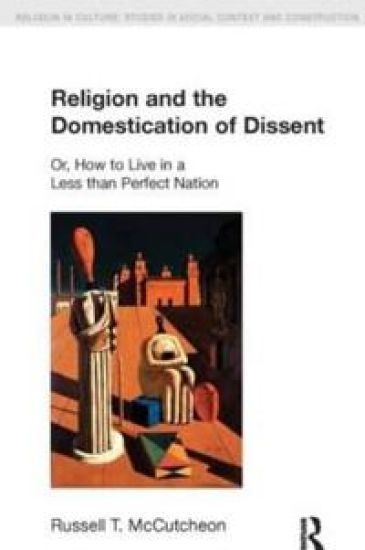
Since the events of 9/11 the representation of Islam has increasingly come adrift from its actuality. Scholars and pundits have effectively demonised a whole faith by wilfully apportioning blame and by ignoring the differences within the Islamic movement. 'Religion and the Domestication of Dissent' examines how the classifications we use to name and negotiate our social worlds - notably 'religion' - are implicitly political. The study ranges widely from contemporary film and art to the War on Terror and will be invaluable to readers interested in the politics behind the portrayal of dissenting religious groups.
In this new book, author Russell McCutcheon offers a powerful critique of traditional scholarship on religion, focusing on multiple interrelated targets. Most prominent among these are the History of Religions as a discipline; Mircea Eliade, one of the founders of the modern discipline; recent scholarship on Eliade's life and politics; contemporary textbooks on world religions; and the oft-repeated bromide that "religion" is a sui generis phenomenon. McCutcheon skillfully analyzes the ideological basis for and service of the sui generis argument, demonstrating that it has been used to constitute the field's object of study in a form that is ahistoric, apolitical, fetishized, and sacrosanct. As such, he charges, it has helped to create departments, jobs, and publication outlets for those who are comfortable with such a suspect construction, while establishing a disciplinary ethos of astounding theoretical naivete and a body of scholarship to match. Surveying the textbooks available for introductory courses in comparative religion, the author finds that they uniformly adopt the sui generis line and all that comes with it. As a result, he argues, they are not just uncritical (which helps keep them popular among the audiences for which they are intended, but badly disserve), but actively inhibit the emergence of critical perspectives and capacities. And on the geo-political scale, he contends, the study of religion as an ahistorical category participates in a larger system of political domination and economic and cultural imperialism.
The Discipline of Religion is a lively critical journey through religious studies today, looking at its recent growth as an academic discipline, and its contemporary political and social meanings. Focusing on the differences between religious belief and academic religious discourse, Russell T. McCutcheon argues that the invention of religion as a discipline blurs the distinction between criticism and doctrine in its assertion of the relevance of faith as a credible object of study. In the leap from disciplinary criticism to avowal of actual cosmic and moral meaning, schools of religious studies extend their powers far beyond universities and into the everyday lives of those outside, managing and curtailing specific types of speech and dissent.
A lively critique of the study of religion in the modern academy, one that makes the scholar of religion a cultural critic rather than a caretaker of a religious tradition or a guru dispensing timeless wisdom.
Thirty classic and contemporary readings - from such writers as Kant, Hume, Schleiermacher, and Otto, to Ninian Smart, Mircea Eliade, Karen McCarthy-Brown, and Wendy Doniger.
In this book, Russell McCutcheon offers a powerful critique of traditional religious scholarship, focusing on a number of interrelated targets. Most prominent among these are: History of Religions as a discipline; Mircea Eliade, the founder of the discipline; contemporary textbooks on world religions; and the oft-repeated bromide that `religion' is a sui generis phenomenon. He skilfully analyses the ideological basis for and service of the sui generis argument, demonstrating that it has been used to constitute the field's object of study in a form that is ahistoric, apolitical, fetishized, and sacrosanct.