Kirjojen hintavertailu – 12 859 828 kirjaa ja 27 kauppaa

Kirjailija

Russell W. Glenn

Kirjat ja teokset yhdessä paikassa: 22 kirjaa, julkaisuja vuosilta 2000–2025, suosituimpiin kuuluu Brutal Catalyst. Vertaile teosten hintoja ja tarkista saatavuus suomalaisista kirjakaupoista.

Nimi esiintyy myös muodoissa: Russell W Glenn

22 kirjaa

Kirjojen julkaisuvuodet: 2000–2025.

Rethinking Western Approaches to Counterinsurgency
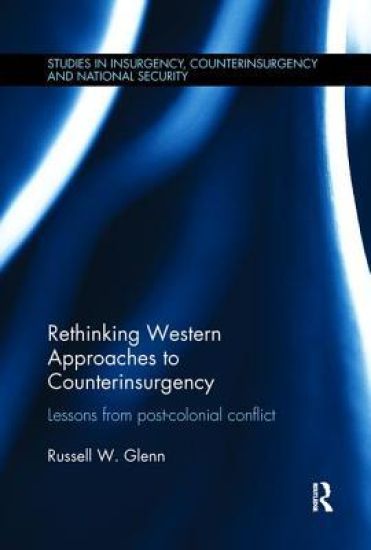
This book critically examines the Western approach to counter-insurgency in the post-colonial era and offers a series of recommendations to address current shortfalls. The author argues that current approaches to countering insurgency rely too heavily on conflicts from the post-World War II years of waning colonialism. Campaigns conducted over half a century ago – Malaya, Aden, and Kenya among them – remain primary sources on which the United States, British, Australian, and other militaries build their guidance for dealing with insurgent threats, this though both the character of those threats and the conflict environment are significantly different than was the case in those earlier years. This book addresses the resulting inconsistencies by offering insights, analysis, and recommendations drawn from campaigns more applicable to counter-insurgency today. Eight post-colonial conflicts; to include Northern Ireland, Sierra Leone, Colombia and Iraq; provide the basis for analysis. All are examples in which counterinsurgents attained or continue to demonstrate considerable progress when taking on enterprises better known for disaster and disappointment. Recommendations resulting from these analyses challenge entrenched beliefs to serve as the impetus for essential change. Rethinking Western Approaches to Counterinsurgency will be of much interest to students of counter-insurgencies, military and strategic studies, security studies and IR in general.

Rethinking Western Approaches to Counterinsurgency
This book critically examines the Western approach to counter-insurgency in the post-colonial era and offers a series of recommendations to address current shortfalls. The author argues that current approaches to countering insurgency rely too heavily on conflicts from the post-World War II years of waning colonialism. Campaigns conducted over half a century ago – Malaya, Aden, and Kenya among them – remain primary sources on which the United States, British, Australian, and other militaries build their guidance for dealing with insurgent threats, this though both the character of those threats and the conflict environment are significantly different than was the case in those earlier years. This book addresses the resulting inconsistencies by offering insights, analysis, and recommendations drawn from campaigns more applicable to counter-insurgency today. Eight post-colonial conflicts; to include Northern Ireland, Sierra Leone, Colombia and Iraq; provide the basis for analysis. All are examples in which counterinsurgents attained or continue to demonstrate considerable progress when taking on enterprises better known for disaster and disappointment. Recommendations resulting from these analyses challenge entrenched beliefs to serve as the impetus for essential change. Rethinking Western Approaches to Counterinsurgency will be of much interest to students of counter-insurgencies, military and strategic studies, security studies and IR in general.

Band of Brothers or Dysfunctional Family? A Military Perspective on Coalition Challenges During Stability Operations
During stability operations, coalitions must incorporate participation by government agencies other than the military, the indigenous government, and its population more than is expected during conventional combat operations. This book investigates challenges confronting coalitions today and considers potential solutions that include questioning the conception of what constitutes a coalition in today's world.
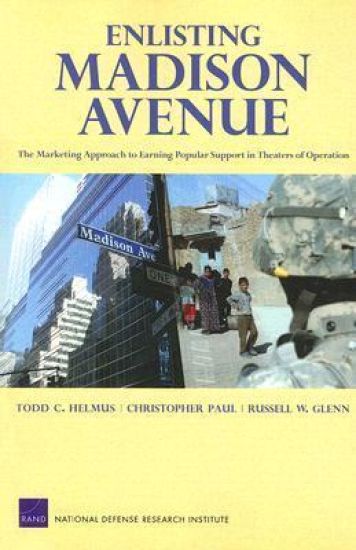
Enlisting Madison Avenue

Enlisting Madison Avenue

Todd C Helmus; Christopher Paul; Russell W Glenn

RAND
2007
pokkari
Enlisting Madison Avenue extracts lessons from business practices and adapts them to U. S. military efforts in a unique approach to shaping the attitudes and behavior of local populations in a theater of operations. Foremost among these lessons are the concepts of branding, customer satisfaction, and segmentation of the target audience, all of which serve to maximize the impact and improve the outcome of U. S. shaping efforts.
People Make the City, Executive Summary
Today's strategic environment implies an obligation to preserve innocent life when possible and to rebuild that which war destroys. Urban areas are the keys to nations; people make nations just, as Thucydides wrote, men make cities. This study aims to reveal lessons that will better enable military and civilian alike to meet national policy objectives by more effectively conducting urban combat and restoration.
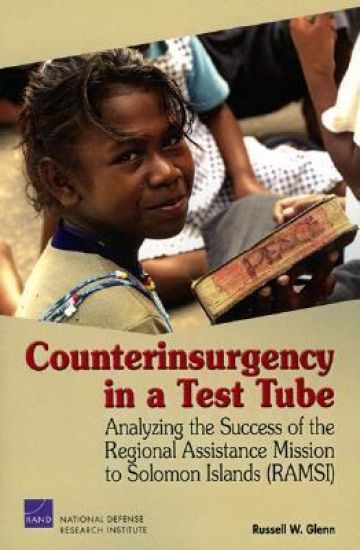
Counterinsurgency in a Test Tube
The Regional Assistance Mission to Solomon Islands (RAMSI), which began on July 24, 2003, has been a remarkable success, in part because the consistency of its message, the strength of its leadership, and its uncommon support for, rather than overt control of, the Solomon Islands government and policing capability. This study reviews RAMSI operations through the lens of a broader application to current and future counter insurgency efforts.
Steeling the Mind

Steeling the Mind

Todd C. Helmus; Russell W. Glenn

RAND
2005
pokkari
Describes the known precipitants of combat stress reaction, its battlefield treatment, and the preventive steps commanders can take to limit its extent and severity. Combat stress casualties can severely reduce unit strength, and these types of losses may be accentuated during operations in cities. Commanders and NCOs need to have the skills to treat and prevent stress casualties and understand their implications for urban operations. The authors review the known precipitants of combat stress reaction, its battlefield treatment, and the preventive steps commanders can take to limit its extent and severity.
Preparing for the Proven Inevitable
A joint urban training strategy is developed to help the military community prepare for future actions in densely populated, built-up areas. The study identifies training requirements; examines current and pending training capabilities; identifies the gaps between requirements and capabilities; defines modules; assesses how well the modules meet the requirements; and outlines the steps to create the strategy.
Urban Battle Command in the 21st Century

Urban Battle Command in the 21st Century

Russell W. Glenn; Gina Kingston

RAND
2005
pokkari
Describes the operational challenges posed by the urban environment and proposes several recommendations to surmount them. In every operation, the functions of command, control, intelligence, surveillance, and reconnaissance (ISR), and communications are all fundamental to success. But in cities, the dense population, many manmade structures, and other challenges act to severely impede these functions in several ways. This monograph contemplates the nature of those challenges and proposes several recommendations to surmount them in both the short and longer terms.
Urban Combat Service Support Operations

Urban Combat Service Support Operations

Russell W. Glenn; Steven L. Hartman; Scott Gerwehr

RAND
2003
pokkari
Gives an overview of the formidable tasks facing US Army combat service support (CSS) in urban operations and recommends ways for the CSS community to prepare itself to meet them. The inevitability of US armed forces future involvement in urban contingencies worldwide demands that those responsible for arming, manning, sustaining, and otherwise supporting these operations prepare for the challenges inherent in such undertakings. This report gives an overview of these formidable tasks and recommends ways for the US Army combat service support (CSS) community to prepare itself to meet them.
Training the 21st Century Police Officer

Training the 21st Century Police Officer

John Christian; Matthew Lewis; Scott Gerwehr; Russell W. Glenn; Barbara R. Pantich; Dionne Barnes-Proby; Elizabeth Williams; David Brannan

RAND
2003
pokkari
This study recommends that the LAPD adopts a concept of police professionalism that incorporates corporateness, responsibility and expertise to guide the its training, to include training: the use of force; search and seizure; arrest procedures; community policing; and diversity awareness.
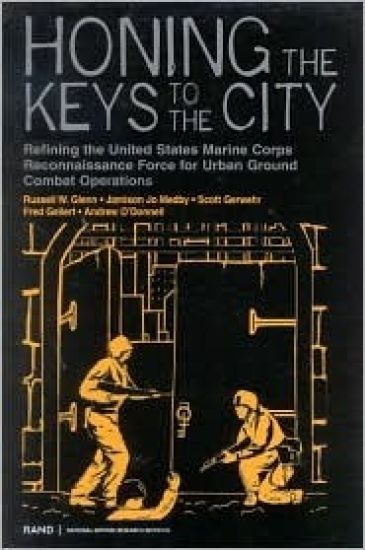
Honing the Keys to the City

Honing the Keys to the City

Russell W. Glenn

RAND
2003
pokkari
Current U. S. forces have little experience with urban warfare. This report identifies shortfalls in urban combat ground reconnaissance and assists in the creation of urban reconnaissance tactics, techniques, and procedures for the Marine Corps. The authors discuss four challenges: the constant adaptation demanded by the environment, the complexity of ground reconnaissance, the demands of urban operations on military personnel, and the demands of these operations on equipment and technology. The analysts' purpose is to narrow the gap between these challenges and the solutions immediately at hand.
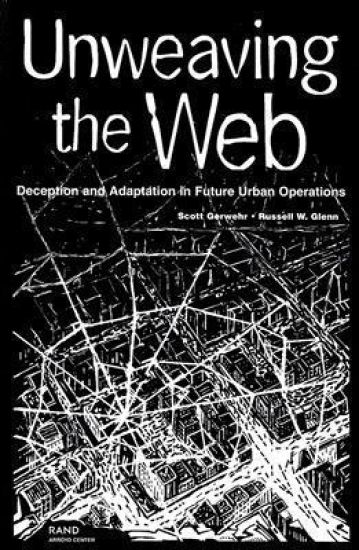
Unweaving the Web

Unweaving the Web

Scott Gerwehr; Russell W. Glenn

RAND
2003
pokkari
Deception is a powerful yet understudied instrument of war. Using the extensive literature on deception in the animal kingdom, where ruses of near-infinite variety are applied to offence, defence, and intelligence gathering, the authors delve into the theory of deception to reveal new avenues of experimentation. These pathways may lead to new technologies or training techniques and provoke a new look at deception doctrine applicable at every level of war.
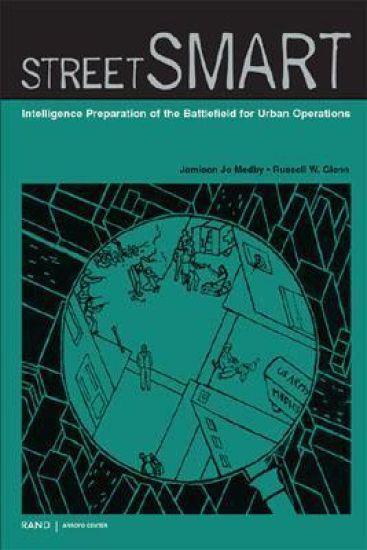
Street Smart

Street Smart

Jamison Jo Medby; Russell W. Glenn

RAND
2002
pokkari
Intelligence preparation of the battlefield (IPB), the Army's traditional methodology for finding and analyzing relevant information for its operations, is not effective for tackling the operational and intelligence challenges of urban operations. The authors suggest new ways to categorize the complex terrain, infrastructure, and populations of urban environments and incorporate this information into Army planning and decisionmaking processes.