Kirjojen hintavertailu – 12 903 725 kirjaa ja 27 kauppaa

Kirjailija

Rusty Morrison

Kirjat ja teokset yhdessä paikassa: 5 kirjaa, julkaisuja vuosilta 2004–2024, suosituimpiin kuuluu Writing the Self-Elegy. Vertaile teosten hintoja ja tarkista saatavuus suomalaisista kirjakaupoista.

5 kirjaa

Kirjojen julkaisuvuodet: 2004–2024.

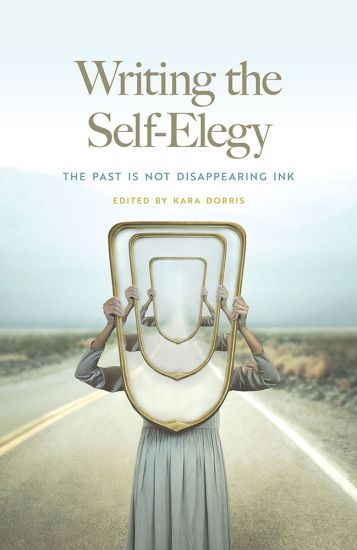
Writing the Self-Elegy

Writing the Self-Elegy

Teresa Leo; Jennifer McCauley; John Chavez; Kasey Jueds; Catherine Kyle; Adam Crittenden; Rigoberto Gonzalez; Kyle McCord; Jane Wong; Naomi Ortiz; Denise Leto; Carol Berg; Kristy Bowen; Floydd Michael Elliot; Jehanne Dubrow; Carl Phillips; Bruce Bond; Kevin Prufer; Rusty Morrison; Sheila Black; Lauren Berry; Anne Kaier; TC Tolbert; Raymond Luczak; Stephanie Heit; Juliet Cook; Tanaya Winder

SOUTHERN ILLINOIS UNIVERSITY PRESS
2023
nidottu
An innovative roadmap to facing our past and present selves Honest, aching, and intimate, self-elegies are unique poems focusing on loss rather than death, mourning versions of the self that are forgotten or that never existed. Within their lyrical frame, multiple selves can coexist—wise and nai¨ve, angry and resigned—along with multiple timelines, each possible path stemming from one small choice that both creates new selves and negates potential selves. Giving voice to pain while complicating personal truths, self-elegies are an ideal poetic form for our time, compelling us to question our close-minded certainties, heal divides, and rethink our relation to others. In Writing the Self-Elegy, poet Kara Dorris introduces us to this prismatic tradition and its potential to forge new worlds. The self-elegies she includes in this anthology mix autobiography and poetics, blending craft with race, gender, sexuality, ability and disability, and place—all of the private and public elements that build individual and social identity. These poems reflect our complicated present while connecting us to our past, acting as lenses for understanding, and defining the self while facilitating reinvention. The twenty-eight poets included in this volume each practice self-elegy differently, realizing the full range of the form. In addition to a short essay that encapsulates the core value of the genre and its structural power, each poet’s contribution concludes with writing prompts that will be an inspiration inside the classroom and out. This is an anthology readers will keep close and share, exemplifying a style of writing that is as playful as it is interrogative and that restores the self in its confrontation with grief.
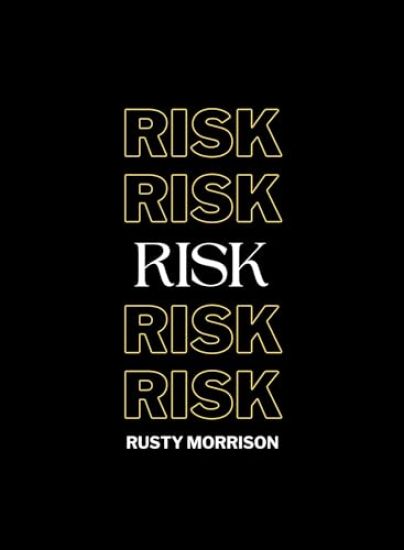
Risk

Risk

Rusty Morrison

Black Ocean
2024
pokkari
From the co-publisher of acclaimed poetry press Omnidawn, Risk engages directly with limitations, both those that structure the literal form of the poems and literary form and those that are both unavoidable and self-inflicted. In Risk, award-winning poet Rusty Morrison uses a constraining form of seven-syllable segments with breaks between to explore questions of limitation. In these poems, she is not just writing about constraints, but living inside and seeing how to manage them. In this way, the speaker of these poems actively experiences limitations as event, not aftermath. Drawing on the idea of philosopher and critic Hélène Cixous who writes that "the border makes up the homeland, it prohibits and gives passage in the same stroke," in Risk Morrison aims where the border and framings she uses offer understanding and where boundaries should be pushed against and passed beyond, as frightening as that might be.
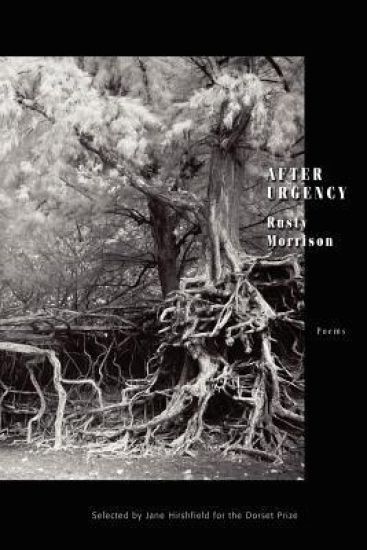
After Urgency

After Urgency

Rusty Morrison

Tupelo Press
2012
nidottu
Poetry. Winner of the Dorset Prize, selected by Jane Hirshfield. The aftermath of death leaves many of us dumbstruck--turned inward and inarticulate. Having lost both parents, poet Rusty Morrison attempts to find in that shocked silence a language scored by the intimacy of that aloneness with death. Each poem-series in this book of multi-part sequences evolves a new form, stretching every sentence past expectation so as to disrupt the truisms of grief and find affinities in the shifting flux that death discloses. Readers are offered what the poet experienced in the writing process, not relief but a heightened intensity. Beyond elegy, Morrison's new work embodies the volatility of death in life, which mourning allows us to experience." The question underlying AFTER URGENCY is how to go on--a question that presses even when we can do nothing else--and each poem in this collection posits a hard-wrestled, multiplying answer of gorgeous continuance. Rusty Morrison instantiates idea and feeling in ways unlike any other poet now writing. The intelligence and aliveness here are omnidirectional. Inhabiting extremity with speech's own vision and musics, Morrison's image-assertions are uncanny in their inter-mixing of inner and outer, of precision and threshold-awareness. This is a hallmark book of grief and life."--Jane Hirshfield"What contract does lyric language make with the world? From out of this series of elegies for her parents, Rusty Morrison derives the contract's first tenet: 'Essential in the verbal performance of any statement / is its mortality.' From the poet's poignant reckoning with her own concomitant mortality a Keatsian full-throatedness emerges, but what makes Morrison a post-modern is the way she pairs lyric's mimesis of interiority with philosophy's relentless self-scrutiny, 'demand ing] of composition that its contrivance come apart.' The resulting poems revise the basic terms of mourning and the generic tropes of elegy. 'Not "death" as the word it was, ' she writes, 'but an opening where the whole history of ideas might pass through, undetected.' This openness to ideas underwrites Morrison's refusal to be satisfied with metaphor, simile, and personification, fundamental tools of the Romantic lyric. 'Is the visible all reproduction' she asks, and, in the wake of this question, cites figuration's failure to render visible anything more than the poet's own fancy: 'Visiting again the hawthorn, which I will not / embed with the more vivid, the charmed life, ' she writes ruefully, 'this will be my model for every pact / I make with emptiness.' 'Released from the guilt of order and arrangement, ' AFTER URGENCY transforms the private ritual of mourning into its own form of ethics, a practice as old as Antigone, and as tragic."--Brian Teare"AFTER URGENCY is a wonder of nuanced meditations. It is tempting just to fill up the rest of this paragraph with a few of Morrison's many--very many--exquisite observations of sights and emotions: 'On the back of late day, a clabbered shine'; 'A sky low enough for an ant to walk across'; 'I stop several times--a form of branching / Which is also a form of being severed.' But space should be spared to stress the astonishing originality of the book as an elegy ('I say "Father," the view roughens in reply. / I say "Mother," and the sandy shoal underfoot tosses and flows, school of startled minnows'). Nearly numb as they descend one by one down the ladder of the page into an abyss of silence, the lines are nonetheless continuously arresting in their delicate analyses of grief, its inflections and inexhaustible dimensions, its scald and duration, the way it triggers and owns perceptions: 'Heard the earth inventing gravel': 'crickets / scratch against sunset's bronze.' If there is a phenomenology of grief, Morrison is its furthest explorer--even, its master."--Cal Bedient
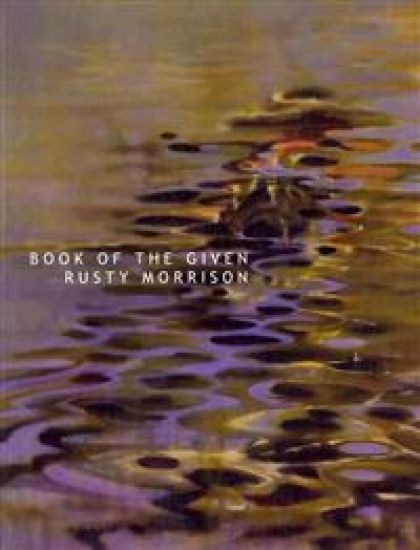
Book of the Given

Book of the Given

Rusty Morrison

Noemi Press
2011
nidottu
In this rigorously crafted collection, Rusty Morrison observes the fraught and alluring givens of eroticism, the authority of the script we think we are following and the demands of generosity where "expectation must be abandoned." The script, in this case, is by George Bataille. His passages, fractured and dispersed, are assembled into a text that speaks to us as a lover, not a philosopher, might, that intimately and that audaciously, with all the punning, sparring, avowals and reversals we expect from erotic charge.
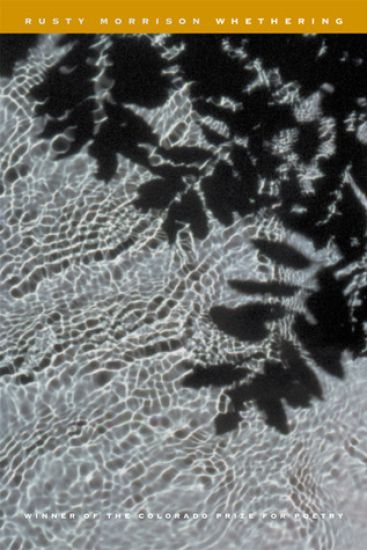
Whethering

Whethering

Rusty Morrison

Center for Literary Publishing
2004
nidottu
Rusty Morrison's 2004 Colorado prize for Poetry winning collection, lays claim to readers senses and minds with alert, gorgeous meditations.