Kirjojen hintavertailu – 12 903 725 kirjaa ja 27 kauppaa

Kirjailija

Ruta Vanagaite

Kirjat ja teokset yhdessä paikassa: 5 kirjaa, julkaisuja vuosilta 2019–2026, suosituimpiin kuuluu Our People. Vertaile teosten hintoja ja tarkista saatavuus suomalaisista kirjakaupoista.

5 kirjaa

Kirjojen julkaisuvuodet: 2019–2026.

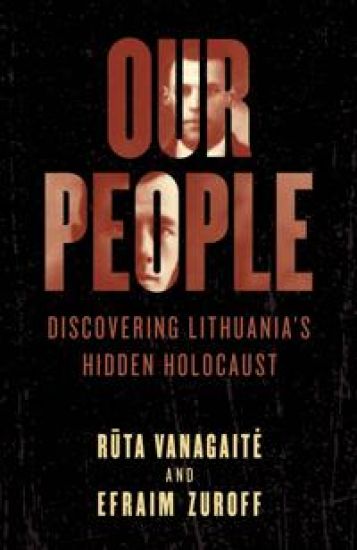
Our People

Our People

Ruta Vanagaite; Efraim Zuroff

BLOOMSBURY PUBLISHING PLC
2026
nidottu
A famous Nazi hunter and a descendent of Nazi collaborators team up on a journey to uncover Lithuania’s Holocaust secrets. This remarkable book traces the quest for the truth about the Holocaust in Lithuania by two ostensible enemies: Ruta a descendant of the perpetrators, Efraim a descendant of the victims. Ruta Vanagaite, a successful Lithuanian writer, was motivated by her recent discoveries that some of her relatives had played a role in the mass murder of Jews and that Lithuanian officials had tried to hide the complicity of local collaborators. Efraim Zuroff, a noted Israeli Nazi hunter, had both professional and personal motivations. He had worked for years to bring Lithuanian war criminals to justice and to compel local authorities to tell the truth about the Holocaust in their country. The facts that his maternal grandparents were born in Lithuania and that he was named for a great-uncle who was murdered with his family in Vilnius with the active help of Lithuanians made his search personal as well. Our People exposes the significant role in implementing the Final Solution played by local political leaders and the prewar Lithuanian administration that remained in place during the Nazi occupation. It also tackles the sensitive issue of the motivation of thousands of ordinary Lithuanians who were complicit in the murder of their Jewish neighbors. At the heart of the book, these are the issues that Ruta and Efraim discuss, debate, and analyze as they crisscross the country to visit dozens of Holocaust mass murder sites in Lithuania and neighboring Belarus. This book follows them on their remarkable journey as they search for neglected graves, interview eyewitnesses, and uncover hints of the rich life that had existed in hundreds of Jewish communities throughout Lithuania.
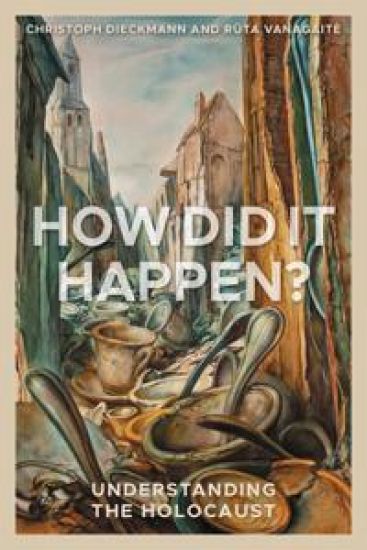
How Did It Happen?

How Did It Happen?

Christoph Dieckmann; Ruta Vanagaite

BLOOMSBURY PUBLISHING PLC
2023
nidottu
In this compelling book, Lithuanian author Ruta Vanagaite holds an extended conversation with noted historian Christoph Dieckmann. His exploration of the causes and consequences of the Holocaust in Lithuania provides the first overview for general readers that considers the perspectives of all the central groups involved—Jews, Lithuanians, and Germans. Drawing on a rich array of sources in all the key languages—Yiddish, Ivrit, Lithuanian, and German—Dieckmann considers not only the Berlin-based orientation of the German perpetrators but also the space where the Shoah took place—Lithuanian society with its Jewish minority under German occupation. He contends that this “space” of mass crimes is always linked with warfare and occupation. The Holocaust was unprecedented, but he makes a powerful case it cannot be isolated from the other mass crimes that took place at the same time in the same space against thousands of Soviet prisoners of war and forced refugees from the Soviet territories. Dieckmann shows that the Holocaust could not have unfolded throughout German-dominated Europe without the conditional cooperation of non-Germans in each occupied country. Existing antisemitism was radicalized from the 1930s onward, turning Jews, under the enormous stress of unrelenting warfare and often instable conditions of occupation, into what were perceived as deadly enemies. The Holocaust, its history and memory, can only be understood through this broader context. The authors’ searching exchanges illuminate the most profound questions we have as we struggle to understand the Holocaust.
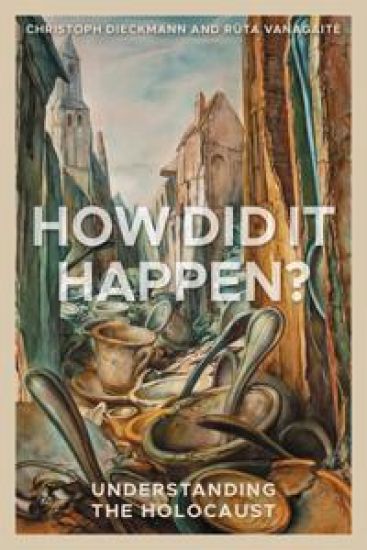
How Did It Happen?

How Did It Happen?

Christoph Dieckmann; Ruta Vanagaite

Rowman Littlefield
2021
sidottu
In this compelling book, Lithuanian author Ruta Vanagaite holds an extended conversation with noted historian Christoph Dieckmann. His exploration of the causes and consequences of the Holocaust in Lithuania provides the first overview for general readers that considers the perspectives of all the central groups involved—Jews, Lithuanians, and Germans. Drawing on a rich array of sources in all the key languages—Yiddish, Ivrit, Lithuanian, and German—Dieckmann considers not only the Berlin-based orientation of the German perpetrators but also the space where the Shoah took place—Lithuanian society with its Jewish minority under German occupation. He contends that this “space” of mass crimes is always linked with warfare and occupation. The Holocaust was unprecedented, but he makes a powerful case it cannot be isolated from the other mass crimes that took place at the same time in the same space against thousands of Soviet prisoners of war and forced refugees from the Soviet territories. Dieckmann shows that the Holocaust could not have unfolded throughout German-dominated Europe without the conditional cooperation of non-Germans in each occupied country. Existing antisemitism was radicalized from the 1930s onward, turning Jews, under the enormous stress of unrelenting warfare and often instable conditions of occupation, into what were perceived as deadly enemies. The Holocaust, its history and memory, can only be understood through this broader context. The authors’ searching exchanges illuminate the most profound questions we have as we struggle to understand the Holocaust.
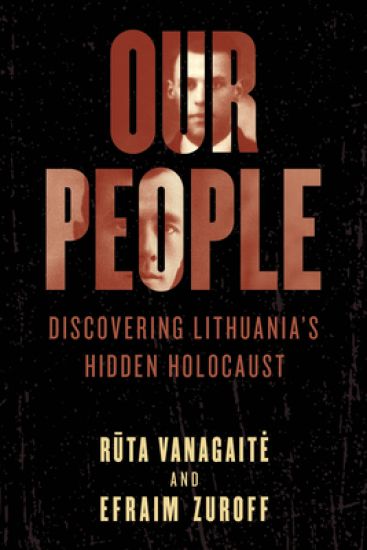
Our People

Our People

Ruta Vanagaite; Efraim Zuroff

Rowman Littlefield
2020
sidottu
This remarkable book traces the quest for the truth about the Holocaust in Lithuania by two ostensible enemies: Ruta a descendant of the perpetrators, Efraim a descendant of the victims. Ruta Vanagaite, a best-selling Lithuanian writer, was motivated by her recent discoveries that some of her relatives had played a role in the mass murder of Jews and that Lithuanian officials had tried to hide the complicity of local collaborators. Efraim Zuroff, a noted Israeli Nazi-hunter, had both professional and personal motivations. He had worked for years to bring Lithuanian war criminals to justice and to compel local authorities to tell the truth about the Holocaust in their country. The fact that his maternal grandparents were born in Lithuania and that he was named for a great-uncle who was murdered with his family in Vilnius with the active help of Lithuanians made his search personal as well. Journey with an Enemy exposes the significant role played by local political leaders and the prewar Lithuanian administration that remained in place during the Nazi occupation in implementing the Nazis’ Final Solution. It also tackles the sensitive issue of the motivation of thousands of ordinary Lithuanians in the murder of their Jewish neighbors. At the heart of the book, these are the issues that Ruta and Efraim discuss, debate, and analyze as they crisscross the country to visit dozens of Holocaust mass murder sites in Lithuania and neighboring Belarus. During the journey, they searched for neglected graves, interviewed eyewitnesses, and looked for traces of the rich Jewish life that had existed in hundreds of Jewish communities throughout Lithuania. This compelling book recounts their harrowing journey.
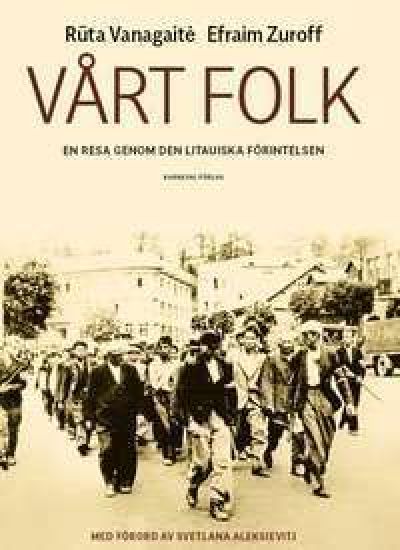
Vårt folk : en resa genom den litauiska förintelsen

Vårt folk : en resa genom den litauiska förintelsen

Ruta Vanagaite; Efraim Zuroff

Karneval förlag
2019
sidottu
Vårt folk - en resa genom den litauiska förintelsen är resultatet av ett samarbete mellan ett till synes mycket omaka par: En världsberömd och fruktad, ­judisk nazist­jägare, vars släkting mördades i Litauen ­under Förintelsen, och en välkänd litauisk författare och journalist, vars släktingar deltog i judeför­följelserna. Tillsammans bestämmer sig paret för att på plats i Litauen utforska det mörka kapitel i landets historia som utspe­lade sig under den nazityska ockupationen 1941-1944. Förintelsen i Litauen utmärkte sig på flera sätt. I inget annat land (med en större judisk befolkning) i det av Hitler ockuperade Europa utrotades en så stor andel av de judiska invånarna. Av de 220000 judar som fanns före kriget dödades 96 procent. Endast 8000 överlevde. Den inhemska befolkningens deltagande i Förintelsen var unikt i sin omfattning, då omkring 20000 litauer medverkade i någon form. Därtill tog litauerna aktiv del i judeutrotningen även i Vitryssland. Landet har inte på allvar gjort upp med sitt förflutna. Krigsförbrytare hyllas än idag som hjältar och gator och torg är uppkallade efter personer som deltog i mördandet. OM FÖRFATTARNARuta Vanagaite är litauisk journalist och författare. Efraim ­Zuroff, född i USA med släktband till Litauen, är israelisk historiker och föreståndare för Simon Wie­sen­­thal-centret i Jerusalem. FÖRFATTARNA OM BOKENEfraim Zuroff: För ert eget bästa, för era barns skull, måste ni se ärligt på det förflutna. Ju förr ni gör det, desto snabbare kommer Litauens enorma sår att läka. Ruta Vanagaite: Om Frankrike erkän­de sin skuld först efter 50 år kommer Litauen att behöva lika lång tid. Efraim Zuroff: Nej, Litauen behöver 90 år, eftersom ert brott var större och er ­förmåga att ta itu med dem mindre. Fransmännen samlade sina judar och skickade dem utomlands för att dödas där. De ­dödade dem inte. I Litauen var det litauerna själva som dödade judarna. Ert folk. Ruta Vanagaite: Vårt folk, våra stackare. Efraim Zuroff: Ni kan gråta till Domedagen, men faktum kvarstår. Ni måste möta sanningen. Ni, inte jag. Vet du varför litauerna hatar mig? För att de vet att jag har rätt. Ruta Vanagaite: Så låt mig se om ni har rätt eller ej. Låt mig se sanningen. Vi gör det tillsammans. Låt oss resa runt i Litauen och lyssna på människor som minns. En resa med fienden! Bensinkostnaden ­delar vi på. Dessutom hoppas jag att vi inte kommer att gräla hela tiden och att resan inte blir en mardröm. Efraim Zuroff: Bra. Låt det bli en resa med fienden men utan bråk. UT SVETLANA ALEKSIJEVITJS FÖRORDFramför oss har vi en bok som borde ha skrivits på 1990-talet, när vi var mer öppna för sanningen, men den har kommit först nu. Bättre sent än aldrig. Det är en hemsk bok. Men att säga att en bok om Förintelsen är hemsk säger ingenting. I det lilla Litauen finns det 227 platser gropar, diken där judar sköts. Vid några av dem har man satt upp skyltar men på andra ställen har marken redan övertagits av privata jordägare. Man sköt 200000 judar. Nästan alla judar i landet! Detta ville man glömma, såväl krigsgenerationen som nu deras barnbarn: av mördarna var fler litauer än tyskar. Tyskarna var hundratals, litauerna tusentals. Varifrån kommer de fina möblerna och guldföremålen i byarna? frågar författarinnan. Överallt spår av ett brott. En hel del vittnen som hon fann berättar viskande. Varför viskar ni? Dom dödar mig. Vem kommer att döda dig? Litauerna. Man hotar Ruta Vanagaite också. Många hatar henne: släktingar, vänner, politiker ... Alla vill vara offer, ingen vill vara bödel. Folk tycker mer om myter än om sanningen. Ni kommer att gråta över den här boken. Men man måste tänka också. Begrunda hur snabbt människan upphör att vara mänsklig, hur lite människa det finns i människan, hur lätt det är att sopa bort den tunna kulturfernissan. Jag vet inte hur man ska rädda människan. Ruta Vanagaite har en förtvivlad önskan om att göra det ...