Kirjojen hintavertailu – 12 859 819 kirjaa ja 27 kauppaa

Kirjailija

Ruth Artmonsky

Kirjat ja teokset yhdessä paikassa: 25 kirjaa, julkaisuja vuosilta 2011–2025, suosituimpiin kuuluu Modern Design in 1930s Britain. Vertaile teosten hintoja ja tarkista saatavuus suomalaisista kirjakaupoista.

25 kirjaa

Kirjojen julkaisuvuodet: 2011–2025.

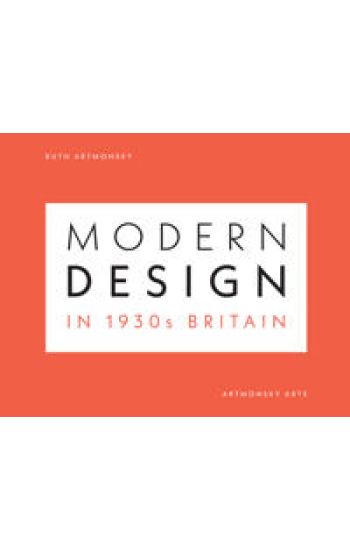
Modern Design in 1930s Britain

Modern Design in 1930s Britain

Ruth Artmonsky

ARTMONSKY ARTS
2025
nidottu
The '30s would not seem the most propitious time for design, with companies recovering from the depression in the first few years, and preparing for war in the last few. Yet it was in the 1930s that, in Britain, the government gave full acknowledgement to the contribution design could make to the economy of the country by setting up the Gorrell Committee from which would eventually morph the Council of Industrial Design; the Royal Society of Arts established its Royal Designer of Industry awards; and the designers themselves gathered together to form the Society of Industrial Artists to be their professional body. Then came the influx of persecuted designers from Europe seeking a haven, galvanising British designers for a while towards the ‘modern’ - the simple, the unadorned, the ‘fit for purpose’ - the British eventually accepting only a compromise stand, a ‘conservative modernism’.

Fitzrovia, 1900-1950

Fitzrovia, 1900-1950

Ruth Artmonsky

ARTMONSKY ARTS
2025
nidottu
Fitzrovia is a notional area not to be found on any official document and, indeed, was not so called until the 1940s, named by a habitue at the Fitzroy Tavern, the journalist-cum-member of parliament, Tom Driberg. It was, for some half century, a haven for artists. This was partly due to the cheap accommodation it offered, along with cheap cafes and food shops, many run by French and German refugees, several of generous nature when it came to impoverished artists. But even more significant was the siting of the Slade School of Fine Art, just across Tottenham Court Road, in Gower Street. Founded in 1871, it offered a more liberal education than that provided by the Royal Academy Schools. Although many artists of the period lived and worked independently in Fitzrovia, others clustered round charismatic personalities - Walter Sickert in Fitzroy Street, Roger Fry in his Omega Workshops in Fitzroy Square, Wyndham Lewis with his Vorticist plotters at the Restaurant de la Tour Eiffel in Percy Street; and, into the 1930s when some artists became activist, establishing the Artists International Association in Charlotte Street. Many of these artists would be able to get their supplies at George Romney &Co. and Windsor & Newton in Rathbone Place and Percy Street. And then there were the imbibers, Nina Hammett and Augustus John frequenting the various taverns of Rathbone Place and Charlotte Street, centering on the Fitzroy. Fitzrovia was awash!
The Studio Ltd.

The Studio Ltd.

Ruth Artmonsky

ARTMONSKY ARTS
2024
nidottu
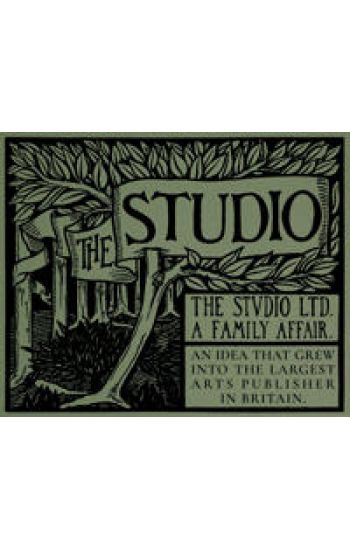
In the late decades of the 19th century a textile manufacturer sent his teenage son to Leeds to develop the business. Little did Mr. Holme senior know what that move would lead to. The young man, Charles Holme, happened to attend a lecture given by a business man just returned from the Far East. In very little time the inspired youth was travelling across Far Eastern countries developing his own business. On his travels he came to the conclusion that countries didn't get along together because of the barrier of language. He thought that if they could be exposed to each others cultures visually all would be peace and light. It was that notion that led Charles Holme on his retirement from trading, without any relevant training or experience, to become a publisher, his business entitled The Studio Ltd., its first publication, The Studio. For over 50 years, involving three generations, The Studio Ltd. grew to be Britain's biggest publisher of magazines and books on art and design in the first half of the 20th century. Its story is told here.
The Unsung Leader of the Field

The Unsung Leader of the Field

Ruth Artmonsky

ARTMONSKY ARTS
2024
nidottu
The London Press Exchange (LPE), founded in 1892, grew out of an agency set up by two young reporters in London to supply news items to provincial papers. It was to grow to become the biggest and most profitable advertising agency in Britain. Yet it never was to attract the publicity as did lesser fry as Crawford’s or Colman, Prentis, Varley. It’s policy was actually declared to be one of reticence, which is not what advertising is all about. Yet some of the characters it conceived were to become household familiars as Mr. Therm for the gas industry and ‘the little man’ for Double Diamond. And in carrying out the first major readership survey in Britain, under the aegis of Mark Abrams, LPE kick-started market research here, The Market Research Society being founded in its offices. This tribute is to establish LPE as ‘leader of the field’.
Printing People

Printing People

Ruth Artmonsky

ARTMONSKY ARTS
2023
nidottu
The inter-war years saw a revival of interest in print, not merely as a technical means of reproduction but aesthetically as a medium for communicating meaning. The private press movement burgeoned, intent on moving printing towards being an art form. But at a more earthy level came the Monotype Corporation from America with its technical sophistication, and, after WWI, its publicist Beatrice Warde, a missionary nationwide for printers to become proud creative professionals. And along side all this came a flurry of 'little' journals, specifically setting out to better the aesthetic standards of printing, whilst the main printing journal - the Penrose Annual - was shifting its focus from technical matters to graphic design. Although a few such names as Stanley Morrison, are well-recorded, as key players in all this activity, there were many enthusiasts who devoted their working lives to raising printing standards, now long forgotten; in Printing People now to be given their time in the limelight.
Commercial Art

Commercial Art

Ruth Artmonsky

ARTMONSKY ARTS
2023
nidottu
"Anyone reading this who aspires to chronicle a segment of 20th-century Western design must have Artmonsky‘s modest but essential library of books. And while you are ordering, thank her for this invaluable detour from the fields of psychology and statistics." — Printmag Commercial Art, with different titles over the years, claimed to be the only British monthly magazine covering design until the Council of Industrial Design began to publish Design in 1949. For most of its existence it was published by The Studio Ltd. whose founding family, the Holmes, were to be actively involved, from grandfather to grandsons. The Studio Ltd were already publishing art and design related magazines (The Studio from 1893 and The Studio Decorative Yearbook from 1906), when it decided to plunge into the vulgarity of ‘commercial’ art, buying up an existing magazine with that title in 1926. Most of the rest of the 1920s and into the ‘30s it concentrated on the graphic arts, but increasing in the late ‘30s its focus shifted to industrial design. The shift was acknowledged by title changes, first to Commercial Art & Industry and to Art & Industry. In 1957, with death duty problems, the family were forced to sell to The Hulton Press. Although the Press made a brave effort to update the look and content of the magazine, with the arrival of Design and the turmoil of Fleet Street at the time, the magazine became unviable and was closed in 1959. Commercial Art recounts its history of nearly 40 years and its mirroring of British design over that period.
Becoming a Designer

Becoming a Designer

Ruth Artmonsky

ARTMONSKY ARTS
2022
nidottu
Designers come in all shapes and sizes and apply their talents to an enormous range of things, from books to refrigerators to clothes to stage scenery. Can such a motley crew be grouped together under one head; and do their diverse passions have common roots? Becoming a Designer traces the early development of talent in a range of designers to explore the possibility that a unique combination of personality characteristics along with a visualising sensitivity makes design success predictable from an early age.
A Pioneering Printer

A Pioneering Printer

Ruth Artmonsky

ARTMONSKY ARTS
2022
nidottu
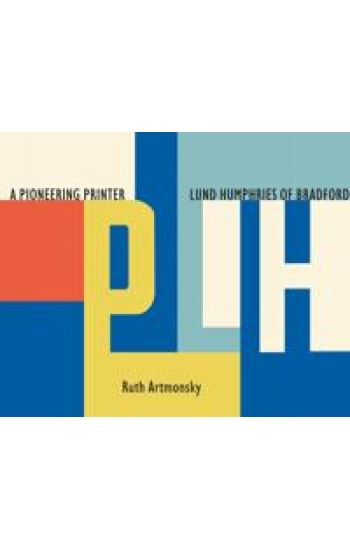
Lund Humphries, today, is known for publishing books on contemporary art and artists; few know that its roots are in a jobbing printers in Bradford. But Bradford, at the turn of the century, was no provincial backwater, but a city at the centre of the world’s wool industry and Percy Lund Humphries was not merely a jobbing printer serving the local industry, but a progressive firm with ambitions well beyond the boundaries of Yorkshire. In its time it was to publish The Penrose Annual, an essential read for those interested in printing and the graphic arts and Typographica, the most avant garde journal on typography; it mounted extraordinary exhibitions in its grand London office in Bedford Square it carried type for languages across the world, crucial for the governments need for language textbooks for those serving overseas in WWII; and much more. A Pioneering Printer, Lund Humphries of Bradford tells its remarkable story.
Kauffer’s Covers

Kauffer’s Covers

Ruth Artmonsky; Brian Webb

ARTMONSKY ARTS
2021
nidottu
Edward McKnight Kauffer, although an American, is considered one of the most important graphic designers in Britain in the first half of the 20th century. He had come to Europe to develop a career as a painter, but stranded in England with the onset of WW1, he decided to stay. In need of an income he tried his hand as a graphic designer and was lucky enough to get commissions from Frank Pickof London Transport. He became its most prolific poster designer. Although best known as a designer of advertisements and posters — a neglected but not at all insignificant part of his output — both when he was in England and after he returned to America in 1939, was his designing book jackets. One of the first artists to work in this media he produced challenging modernist designs which stood out from others, particularly when compared with the realistic often romanticised images then current in the States. This book is the first on this aspect of his work, including illustrations of some 250 jackets and an account of the publishers who commissioned them.
Trading Textiles

Trading Textiles

Ruth Artmonsky

ARTMONSKY ARTS
2021
nidottu
The focus of the plethora of books on British textiles has largely been on their design and designers; relatively little has been written on the marketing of the products. Trading Textiles whilst making reference to the many avenues and methods for selling fibres and fabrics focussed on press advertising whereby manufacturers not only showed off a product, a brand, but intentionally or unintentionally provided potential buyers with an image of the company itself. Although, eventually, as with so many industries in the 20th century, companies that originally built their reputation on one line — a particular fibre or textile or stage of production — conglomerates came to offer comprehensive ranges. Trading Textiles compares the different styles of advertising of firms driven by design, those science based, those focussed on furnishings, and others relating to fashion. Covering mid-20th century textile advertising the book not only illustrates what was happening in graphic design generally but the changing character of the textile industry itself.
Sellers of Dreams

Sellers of Dreams

Ruth Artmonsky

Artmonsky Arts
2020
nidottu
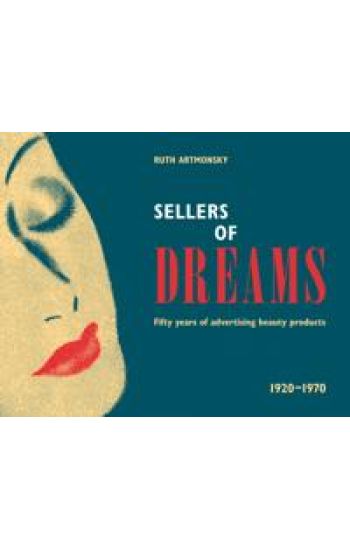
From the latter part of the 19th century there was a fever of experiment resulting in the development of what were to become brand-named beauty products. Some manufacturers were generally interested in producing ‘healthy’ products that could beautify without harming; others were chancers climbing on the band wagon. Most beauty product manufacturers started with one or two specialised products - for the hair or nails or skin - but eventually all involved in the beauty industry seemed to be selling everything - from lipsticks to false eye lashes; minnows in the industry were swallowed up by whales. Advertising for beauty products moved with social trends - from flapper girl to Carnaby Street Twiggy lookalikes. Gullible consumers were offered solutions to achieving their dreams - to look forever young, to attract attention, to land Mr. or Mrs. Right. Sellers of Dreams charts the advertiser’s skills in promising dreams would come true.
Crusaders of Art and Design 1920-1970

Crusaders of Art and Design 1920-1970

Ruth Artmonsky

Artmonsky Arts
2020
nidottu
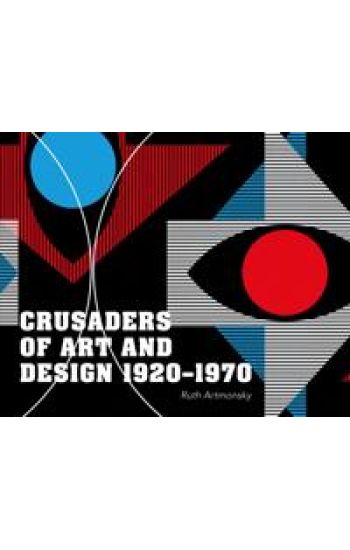
Crusaders for art and design were men and women who were prepared to give their energy, talents, and oftimes money, to encourage young artists and designers to adventure in their chosen fields and generally to raise the status of the ‘fine’ and ‘applied’ arts and their creators. Many of these crusaders have largely been forgotten, such as John Gloag, who was here, there, and everywhere in support of the cause. Other Crusaders are remembered but for other reasons, such as Pevsner, the surveyor of British architectural heritage who for some years had been seen as the guru of industrial design. Gordon Russell, celebrated as the Cotswold furniture designer is altogether less known as a Director of the Council of Industrial Design. Whilst in the ‘fine’ arts Anton Zwemmer, whose Covent Garden shop is now a hairdressers, has largely been erased from memory as when he had been the king bee of a beehive frequented by artists and designers alike coming to find out the latest cultural news from the Continent to be gleaned from his magazines and books. Crusaders of Art and Design aims to restore a number of reputations by recording their contributions to the cause.
Heal's Posters

Heal's Posters

Ruth Artmonsky

Artmonsky Arts
2020
nidottu
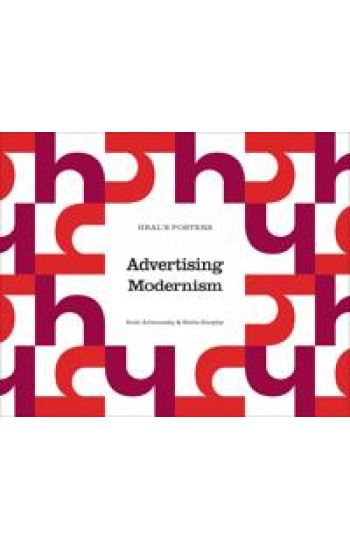
A survey by Nicklaus Pevsner in the 1930s estimated that some 80-90% of manufactured goods in England were shoddy and poorly designed. When it came to furniture only a handful of manufacturers would have escaped such condemnation. Prime among these was Heals of Tottenham Court Road - manufacturer, retailer, and, with its top floor Mansard Gallery, the Mecca for Home Counties cognoscenti of 'modernism'. Most furniture manufacturers advertised their wares in the press but Heal's was a rare exception in the industry in its use of posters. Heal's posters not only relay the saga of a pioneering enterprise but provide a shorthand history of what was happening in the design and retailing of furniture and furnishings in Britain in the 20th century.
Wrapping It Up

Wrapping It Up

Ruth Artmonsky; Stella Harpley

Artmonsky Arts
2019
nidottu
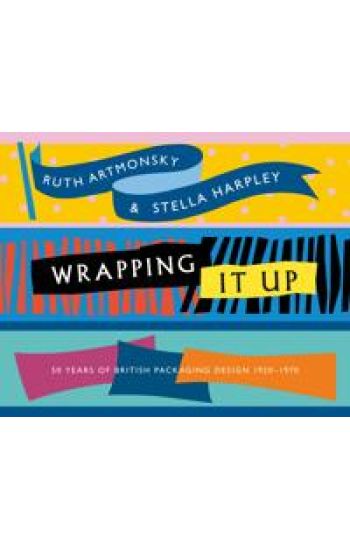
Packaging is something of a hot topic at the moment, but in our eagerness to get rid of as much of it as possible we need to be careful not to throw the baby out with the bath water. Wrapping It Up gives an account of the usefulness of packaging to all involved - manufacturer, wholesaler, retailer and consumer - beyond its commercial value as a marketing and advertising tool. Homage is paid to the many graphic artists and designers - whether employed by manufacturer or retailer, by a design studio or an advertising agency - whose ingenuity was so successfully applied to the problem of how to protect goods in transit and in storage as well as having them attract attention. A visit to a super-market or a daily check in kitchen cupboards will never be quite the same.
Holidaying

Holidaying

Ruth Artmonsky

Artmonsky Arts
2019
nidottu
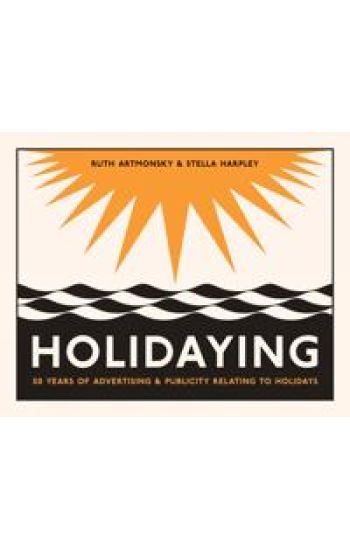
Holidaying was something only the wealthy could afford, well into the 19th century, visiting spas or taking the Grand Tour. With the coming of the railways whole factories, streets, even towns began to down tools for an annual break; with entrepreneurs like Thomas Cook, some even venturing across the Channel. The arrival of the combustion engine further democratised travel enabling some to holiday independently, others in organised charabancs and coach parties. By the end of WWII with the coming of cheap flights Marbella and Majorca began to replace the British resorts. Providing holidays became a highly competitive business between resorts and tour operators and this necessitated advertising. Holidaying is an account of this, richly illustrated to show the changes in fads and fashions when holidaying reached a mass market.
The First Golden Age of British Advertising

The First Golden Age of British Advertising

Ruth Artmonsky

Artmonsky Arts
2018
nidottu
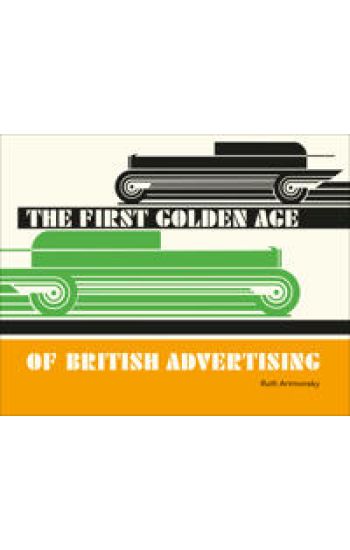
The 'golden age' of advertising is usually seen to be the last decades of the 20th century, centred on Fitzrovia, vast in quantity, swamping the plethora of magazines and newspapers appearing (and disappearing) at that time, and making optimal use of the novelty of commercial television. But the true 'golden age' of British advertising was in the decades immediately after the First World War, when zealous entrepreneurs banded together in local clubs and in national bodies to take the activity from the back room of jobbing printers or from being sketched on the back of envelopes on ego-driven managers' desks to becoming a valid profession. It was in the inter-war years that Titans in the field, such as William Crawford and Charles Higham, not only built their own empires and taught the government how to publicise itself, but even morphed the concept of advertising and publicity from something rather shady and disreputable to having a moral status of being a crucial arm of the nation's economy and an educator of the masses. This book tells the story of some of these early agencies and the contribution they made.
Austin Cooper, Master of the Poster

Austin Cooper, Master of the Poster

Ruth Artmonsky

Artmonsky Arts
2018
nidottu
Austin Cooper was by chance of birth a Canadian but built his career as a commercial artist in London. Art-educated in Wales and Scotland, he became, in the inter-war years, one of the most highly-respected poster artist in the United Kingdom - one of L. N. E. R's 'elite' five, his name comparable to that of McKnight Kauffer for work for London Transport, and a contributor to Post Office posters for some ten years. He was to become the Principal of the distinguished Reimann School for its short life in London just prior to WWII. He then virtually disappeared from the commercial art world, leading a reclusive life in a frustrated attempt to build a belated career as a 'fine' artist. His 'Making a Poster' book is as valid in its advice now as when it was written in 1938.
From Palaces to Pre-fabs

From Palaces to Pre-fabs

Ruth Artmonsky; Stella Harpley

Artmonsky Arts
2017
nidottu
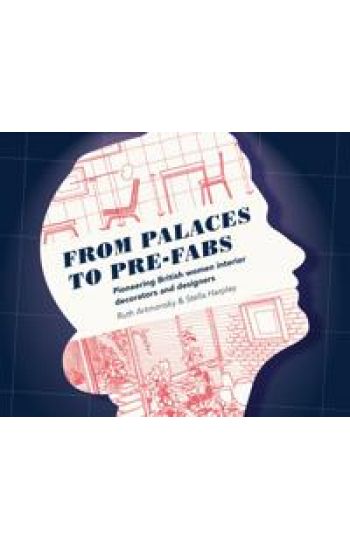
Although how we furnished our homes in the latter part of the 20th century was largely influenced by two men - Terence Conran of Habitat and Ingvar Kamprad of IKEA - a number of women attempted, in their various ways, to influence our taste when it came to how we lived. Early on were the Victorian/Edwardian women, often associated with the Suffragette movement who both designed and sold furniture. These were followed, after WWI, by others also breaking social rank - the society hostesses - totally untrained but full of confidence, and having their own 'interiors' admired, saw a way of supplementing their incomes by imposing their tastes on others. Meanwhile a few women were proselytising their concerns for well-crafted and designed products, through retail outlets from small financially precarious shops, to running part of the prestigious store, Heals. Wartime threw up an altogether more professional group - the 'doers' - those empowered to 'do it themselves' . Additionally there were a handful of professional furniture designers and another small groups looking to the design needs of the masses rather than the comfortably off. From Palaces to Pre-fabs sets out to restore the reputation of such women working in what was the largely male-dominated world of interior design.
Powering the Home

Powering the Home

Ruth Artmonsky; Stella Harpley

Artmonsky Arts
2017
nidottu
The mid-20th century brought about an advertising renaissance in the western world. Technology boomed. Standards of living increased, innovation abounded, and 'luxury' consumer products such as TVs, fridges and gas heating became readily available to the public. In order to sell them, ads needed to be as quirky and appealing as the new commodities themselves. This compact yet comprehensive book, written by an experienced design historian, explores the hand-in-hand development of advertisement and the many household amenities that we take for granted today. This book began its life as an offshoot of another, also written by Ruth Artmonsky, but focusing on the advertising of furniture. Her research led her to discover the expansive genre of domestic appliance advertising - not relevant to her book, but more than interesting enough to merit a new text in its own right. Adverts that caught Ruth's eye include "an advertisement for a gas iron, and a rare one of a man admitting he might be able to do the laundry when the house purchased a washing machine." Discover all this and more in Powering the Home.
Tuppence Plain, Penny Coloured

Tuppence Plain, Penny Coloured

Ruth Artmonsky

Artmonsky Arts
2016
nidottu
Twopence Plain, Penny Coloured charts the way furniture has been sold to the British public for some 50 years - from the 1920s to the 1960s - from days when furniture was still being piled on the pavement in front of a workshop in the East End of London, to the heady days of experiencing a whole new life-style by a visit to Conran's. It covers the ever more splendid buildings in which manufacturers made and sold their wares, each competing with the others in terms of acreage covered and grandeur of facades; the special exhibitions in which the latest designs were put on show; the use of catalogues and leaflets - from single sheets to compendiums of hundreds of pages; and the use of press and hoarding advertising. The title 'Twopence Plain, Penny Coloured' is taken from a lecture at the Royal Society of Arts and refers to the constant battle, over the period covered by the book, between well-designed and well-constructed largely unadorned furniture made from good quality materials - consequently expensive - and mass-manufactured, frequently 'period' ornamented furniture, cheaply veneered and cheap to buy.