Kirjojen hintavertailu – 12 903 725 kirjaa ja 27 kauppaa
Kirjailija
Ruth Bader Ginsburg
Kirjat ja teokset yhdessä paikassa: 18 kirjaa, julkaisuja vuosilta 2009–2023, suosituimpiin kuuluu Commissioner of Internal Revenue V. Moritz (Charles E.) U.S. Supreme Court Transcript of Record with Supporting Pleadings. Vertaile teosten hintoja ja tarkista saatavuus suomalaisista kirjakaupoista.
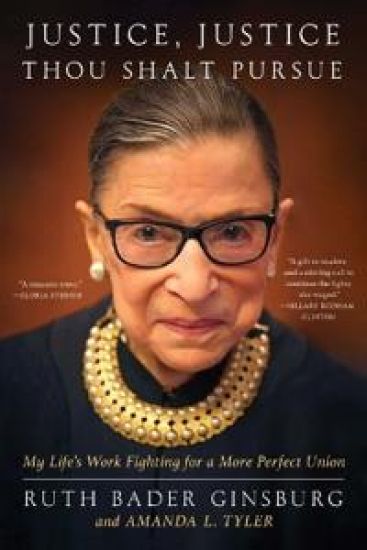
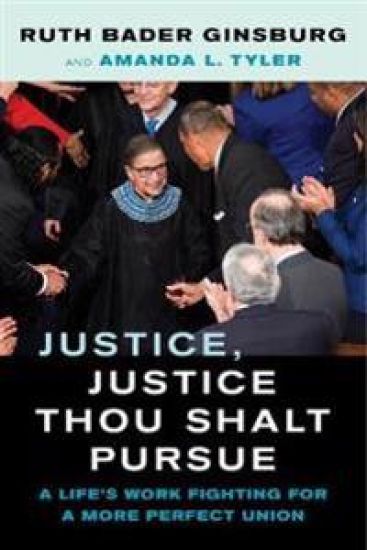
Ruth Bader Ginsburg’s final book offers an intimate look at her extraordinary life and details her lifelong pursuit for gender equality and a “more perfect Union.” In the fall of 2019, Justice Ruth Bader Ginsburg visited the University of California, Berkeley School of Law to honor her friend, the late Herma Hill Kay, with whom Ginsburg had coauthored the very first casebook on sex-based discrimination in 1974. During Justice Ginsburg’s visit, she shared her life story with Amanda L. Tyler, a Berkeley Law professor and former Ginsburg law clerk. Their intimate conversation is recorded here in Justice, Justice Thou Shalt Pursue, along with previously unpublished materials that detail Ginsburg’s long career. These include notable briefs and oral arguments, Ginsburg’s last speeches, and her favorite opinions that she wrote as a Supreme Court Justice (many in dissent), along with the statements that she read from the bench in those important cases. Each document was carefully chosen by Ginsburg and Tyler to tell the litigation strategy at the heart of Ginsburg’s unwavering commitment to achieve “a more perfect Union.” Ruth Bader Ginsburg was an advocate and jurist for gender equality, ensuring that the United States Constitution leaves no person behind and allows every individual to achieve their full human potential. Her work transformed not just the American legal landscape, but American society. As revealed in these pages, Ginsburg dismantled long-entrenched systems of discrimination based on outdated stereotypes by showing how such laws hold back both genders. With her death, the country lost a hero whose incredible life and legacy made the United States a society in which “We the People,” for whom the Constitution is written, includes everyone.
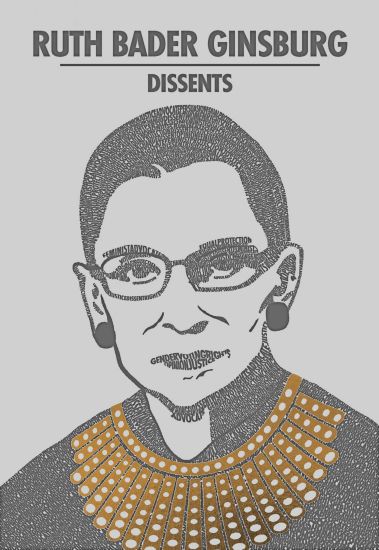
A collection of key dissenting and majority opinions from U. S. Supreme Court justice Ruth Bader Ginsburg. During her 27 years as an associate justice on the U. S. Supreme Court, Ruth Bader Ginsburg became well known for her strongly worded dissenting opinions against the decisions of the conservative majority. Ginsburg was a fierce supporter of women's rights whose personal experiences helped shape her into a feminist icon who employed logical, well-presented arguments to show that gender discrimination was harmful to all members of society. Ruth Bader Ginsburg Dissents includes majority and dissenting opinions that Ginsburg drafted during her time on the U. S. Supreme Court, along with briefs from her career before she was appointed to the court in 1993.
A valuable resource for students, teachers, and citizens looking to better understand US Constitutional history With Liberty and Justice for All?: The Constitution in the Classroom is designed to help teachers and students generate analysis and debate in our nation's classrooms about an aspect of US history that has produced intense disagreements about rights and wrongs: constitutional history. For more than two centuries, Americans have argued about what the US Constitution permits or requires (or not), and what values and ideals it enshrines (or not)--indeed, who is to be included (or not) in the very definition of "We the People." This book provides abundant resources to explore key moments of debate about the Constitution and its meaning, focusing on fundamental questions of citizenship and rights. It analyzes American history through the use and misuse of the Constitution over time, from early disputes about liberty and slavery to more recent quarrels over equality and dignity. With a foreword by Ruth Bader Ginsburg, this book's succinct and probing essays by prize-winning historians--including Linda Greenhouse, Mary Sarah Bilder, Annette Gordon-Reed, Eric Foner, Sam Erman, Julie Suk, Laura Kalman, and Melissa Murray--provide the core of the book. Their topics encompass woman suffrage, school desegregation, Japanese internment, McCarthyism, all dramatic turning points in American history. Carefully selected and annotated primary sources and focused discussion questions provide teachers with the tools to bring constitutional history into the classroom with ease. As this book amply demonstrates, United States history is constitutional history. A companion website provides additional resources for teachers.
This collection of biographies of brave and brilliant Jewish female role models--selected in collaboration with Ruth Bader Ginsburg and including an introduction written by the iconic Supreme Court justice herself-- provides young people with a roster of inspirational role models, all of whom are Jewish women, who will appeal not only to young people but to people of all ages, and all faiths. The fascinating lives detailed in this collection--more than thirty exemplary female role models--were chosen by Ruth Bader Ginsburg, or RBG, as she was lovingly known to her many admirers. Working with her friend, journalist Nadine Epstein, RBG selected these trailblazers, all of whom are women and Jewish, who chose not to settle for the rules and beliefs of their time. They did not accept what the world told them they should be. Like RBG, they dreamed big, worked hard, and forged their own paths to become who they deserved to be. Future generations will benefit from each and every one of the courageous actions and triumphs of the women profiled here. Real Wonder Women, the passion project of Justice Ginsburg in the last year of her life, will inspire readers to think about who they want to become and to make it happen, just like RBG.
The authoritative biography of Henrietta Szold, founder of Hadassah, introduces a new generation to a remarkable leader who fought for women’s rights and the poor. Born in Baltimore in 1860, Henrietta Szold was driven from a young age by the mission captured in the concept of tikkun olam, “repair of the world.” Herself the child of immigrants, she established a night school, open to all faiths, to teach English to Russian Jews in her hometown. She became the first woman to study at the Jewish Theological Seminary, and was the first editor for the Jewish Publication Society. In 1912 she founded Hadassah, the international women’s organization dedicated to humanitarian work and community building. A passionate Zionist, Szold was troubled by the Jewish–Arab conflict in Palestine, to which she sought a peaceful and equitable solution for all. Noted Israeli historian Dvora Hacohen captures the dramatic life of this remarkable woman. Long before anyone had heard of intersectionality, Szold maintained that her many political commitments were inseparable. She fought relentlessly for women’s place in Judaism and for health and educational networks in Mandate Palestine. As a global citizen, she championed American pacifism. Hacohen also offers a penetrating look into Szold’s personal world, revealing for the first time the psychogenic blindness that afflicted her as the result of a harrowing breakup with a famous Talmudic scholar. Based on letters and personal diaries, many previously unpublished, as well as thousands of archival documents scattered across three continents, To Repair a Broken World provides a wide-ranging portrait of a woman who devoted herself to helping the disadvantaged and building a future free of need.
The first wave of trailblazing female law professors and the stage they set for American democracy. When it comes to breaking down barriers for women in the workplace, Ruth Bader Ginsburg’s name speaks volumes for itself—but, as she clarifies in the foreword to this long-awaited book, there are too many trailblazing names we do not know. Herma Hill Kay, former Dean of UC Berkeley School of Law and Ginsburg’s closest professional colleague, wrote Paving the Way to tell the stories of the first fourteen female law professors at ABA- and AALS-accredited law schools in the United States. Kay, who became the fifteenth such professor, labored over the stories of these women in order to provide an essential history of their path for the more than 2,000 women working as law professors today and all of their feminist colleagues. Because Herma Hill Kay, who died in 2017, was able to obtain so much first-hand information about the fourteen women who preceded her, Paving the Way is filled with details, quiet and loud, of each of their lives and careers from their own perspectives. Kay wraps each story in rich historical context, lest we forget the extraordinarily difficult times in which these women lived. Paving the Way is not just a collection of individual stories of remarkable women but also a well-crafted interweaving of law and society during a historical period when women’s voices were often not heard and sometimes actively muted. The final chapter connects these first fourteen women to the “second wave” of women law professors who achieved tenure-track appointments in the 1960s and 1970s, carrying on the torch and analogous challenges. This is a decidedly feminist project, one that Justice Ruth Bader Ginsburg advocated for tirelessly and admired publicly in the years before her death.
Ruth Bader Ginsburg's last book is a curation of her own legacy, tracing the long history of her work for gender equality and a “more perfect Union.” In the fall of 2019, Justice Ruth Bader Ginsburg visited the University of California, Berkeley School of Law to deliver the first annual Herma Hill Kay Memorial Lecture in honor of her friend, the late Herma Hill Kay, with whom Ginsburg had coauthored the very first casebook on sex-based discrimination in 1974. Justice, Justice Thou Shalt Pursue is the result of a period of collaboration between Ginsburg and Amanda L. Tyler, a Berkeley Law professor and former Ginsburg law clerk. During Justice Ginsburg's visit to Berkeley, she told her life story in conversation with Tyler. In this collection, the two bring together that conversation and other materials—many previously unpublished—that share details from Justice Ginsburg's family life and long career. These include notable briefs and oral arguments, some of Ginsburg's last speeches, and her favorite opinions that she wrote as a Supreme Court Justice (many in dissent), along with the statements that she read from the bench in those important cases. Each document was chosen by Ginsburg and Tyler to tell the story of the litigation strategy and optimistic vision that were at the heart of Ginsburg's unwavering commitment to the achievement of "a more perfect Union." In a decades-long career, Ruth Bader Ginsburg was an advocate and jurist for gender equality and for ensuring that the United States Constitution leaves no person behind. Her work transformed not just the American legal landscape, but American society more generally. Ginsburg labored tirelessly to promote a Constitution that is ever more inclusive and that allows every individual to achieve their full human potential. As revealed in these pages, in the area of gender rights, Ginsburg dismantled long-entrenched systems of discrimination based on outdated stereotypes by showing how such laws hold back both genders. And as also shown in the materials brought together here, Justice Ginsburg had a special ability to appreciate how the decisions of the high court impact the lived experiences of everyday Americans. The passing of Justice Ruth Bader Ginsburg in September 2020 as this book was heading into production was met with a public outpouring of grief. With her death, the country lost a hero and national treasure whose incredible life and legacy made the United States a more just society and one in which “We the People,” for whom the Constitution is written, includes everyone.
Colonists, Citizens, Constitutions highlights documents that tell the story of American constitutionalism from the founding era through the turn of the twentieth century. Accompanying a major exhibition at the New-York Historical Society and the Museum of the American Revolution, the book features federal and state constitutional materials - including a rare, privately owned copy of the original 1787 US constitution - that offer essential windows onto the history of the United States. Remarkably numerous and impressively diverse, constitutions enabled Americans to create revolutionary governments of, by, and for the people. Weaving both well-known and less familiar documents into a compelling narrative, the accessible text reveals how Americans have exercised their constitutional powers to shape their communities and why democracy remains an ongoing process, one in which citizens must constantly strive to create 'more perfect' unions among themselves.
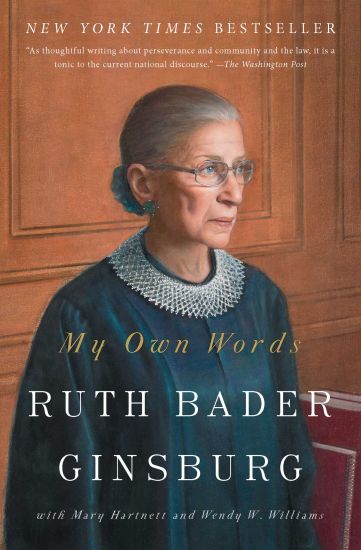
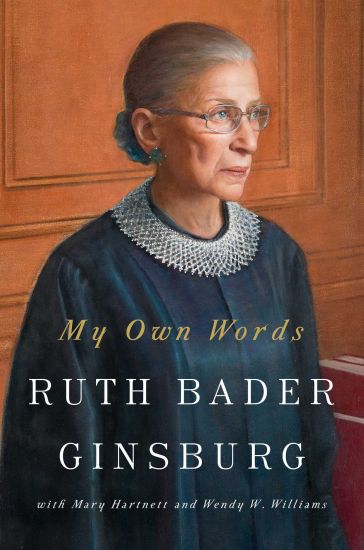
The New York Times bestselling book from Supreme Court Justice Ruth Bader Ginsburg—“a comprehensive look inside her brilliantly analytical, entertainingly wry mind, revealing the fascinating life of one of our generation's most influential voices in both law and public opinion” (Harper’s Bazaar). My Own Words “showcases Ruth Ginsburg’s astonishing intellectual range” (The New Republic). In this collection Justice Ginsburg discusses gender equality, the workings of the Supreme Court, being Jewish, law and lawyers in opera, and the value of looking beyond US shores when interpreting the US Constitution. Throughout her life Justice Ginsburg has been (and continues to be) a prolific writer and public speaker. This book’s sampling is selected by Justice Ginsburg and her authorized biographers Mary Hartnett and Wendy W. Williams, who introduce each chapter and provide biographical context and quotes gleaned from hundreds of interviews they have conducted. Witty, engaging, serious, and playful, My Own Words is a fascinating glimpse into the life of one of America’s most influential women and “a tonic to the current national discourse” (The Washington Post).
The New York Times bestselling book from Supreme Court Justice Ruth Bader Ginsburg--"a comprehensive look inside her brilliantly analytical, entertainingly wry mind, revealing the fascinating life of one of our generation's most influential voices in both law and public opinion" (Harper's Bazaar). My Own Words "showcases Ruth Ginsburg's astonishing intellectual range" (The New Republic). In this collection Justice Ginsburg discusses gender equality, the workings of the Supreme Court, being Jewish, law and lawyers in opera, and the value of looking beyond US shores when interpreting the US Constitution. Throughout her life Justice Ginsburg has been (and continues to be) a prolific writer and public speaker. This book's sampling is selected by Justice Ginsburg and her authorized biographers Mary Hartnett and Wendy W. Williams, who introduce each chapter and provide biographical context and quotes gleaned from hundreds of interviews they have conducted. Witty, engaging, serious, and playful, My Own Words is a fascinating glimpse into the life of one of America's most influential women and "a tonic to the current national discourse" (The Washington Post).
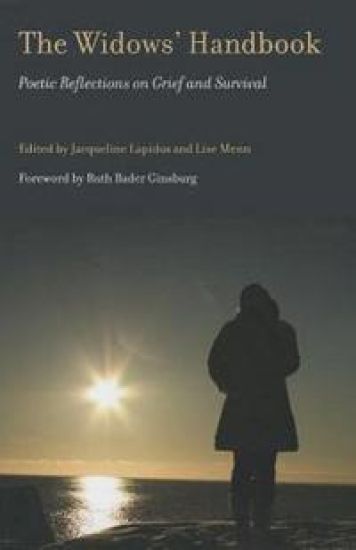
The Widows’ Handbook is the first anthology of poems by contemporary widows, many of whom have written their way out of solitude and despair, distilling their strongest feelings into poetry or memoir. This stirring collection celebrates the strategies widows learn and the resources they muster to deal with people, living space, possessions, social life, and especially themselves, once shock has turned to the realization that nothing will ever be the same. As Supreme Court Justice Ruth Bader Ginsburg says in her foreword, losing one’s partner is “a loss like no other.”,The Widows’ Handbook is a collection of poetry from 87 American women of all ages, legally married or not, straight and gay, whose partners or spouses have died. Some of the poets are already published widely—including more than a dozen prizewinners, four Pushcart nominees, and two regional poets laureate. Others are not as well known, and some appear in print for the first time here. With courage and wry humor, these women encounter insidious depression, poignant memories, bureaucratic nonsense, unfamiliar hardware, well-intentioned but thoughtless remarks, demanding work, spiritual revelation, and unexpected lust, navigating new relationships in the uncertain legacy of sexual liberation. They write frankly about being paralyzed and about going forward. Their poems are honest, beautiful, and accessible. Only poetry can speak such difficult truths and incite such intense empathy. While both men and women understand the bewilderment, solitude, and change of status thrust upon the widowed, women suffer a particular social demotion and isolation. Anyone who has lost a loved one or is involved in helping the bereaved will be able to relate to the experiences conveyed in The Widows’ Handbook.
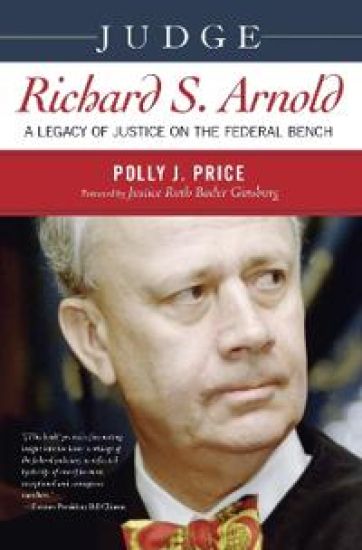
In 1994, President Bill Clinton called federal appellate court Judge and fellow Arkansan Richard Sheppard Arnold "the most brilliant man on the federal bench." But for concerns about Arnold's poor health, Clinton would have nominated him to fill the vacancy on the Supreme Court left by the retirement of Justice Harry A. Blackmun. Indeed, when the Blackmun position on the court opened up, Arnold received the endorsement of more than 100 federal judges—almost 20 percent of the entire federal judiciary. Clinton's concerns turned out to be well founded, for ten years later Judge Arnold succumbed to the lymphoma that he had battled for almost three decades. At his death, eight Supreme Court Justices published tributes to his fairness, judicial restraint, and eloquent and influential judicial opinions. Who was Richard Arnold, and why did so many colleagues across the political spectrum hold him in such high esteem? In this carefully researched, insightful biography, law professor Polly J. Price, who served as Judge Arnold's law clerk, has created a compelling portrait of a man who, like Judge Learned Hand of an earlier era, is widely believed to be one of the best judges never to serve on the Supreme Court. Through internal court documents, interviews with judges and law clerks, and Arnold's diaries, Professor Price traces Arnold's life, career, and political transformation from an elite Southerner with deep misgivings about Brown v. Board of Education to a modern champion of civil rights. Her analysis of Arnold's leadership in civil rights, especially on First Amendment issues, the death penalty, and claims of individuals against government wrongdoing, tells us much about changes in both southern and national society during his tenure from 1978 to 2004. An important example of Arnold's many contributions was his progressive resolution of desegregation in Little Rock, Arkansas, long infamous for the Central High School crisis of the 1950s. Arnold's work brought closer to an end more than fifty years of federal court supervision of the Little Rock schools. This book also features excerpts from Arnold's diary of his clerkship with Supreme Court Justice William Brennan in 1960. Arnold's diary provides unique insight into this pivotal year of the Warren Court. As much a history of federal courts in recent decades as it is the life story of one of its best-known judges, this first biography of Judge Richard S. Arnold is a sensitively written, objective account of a man of outstanding intelligence, talent, and integrity.