Kirjojen hintavertailu – 12 859 819 kirjaa ja 27 kauppaa

Kirjailija

Ruth Finnegan

Kirjat ja teokset yhdessä paikassa: 80 kirjaa, julkaisuja vuosilta 1991–2025, suosituimpiin kuuluu Pearl of the Seas: A fairytale prequel to 'The Black Inked Pearl'. Vertaile teosten hintoja ja tarkista saatavuus suomalaisista kirjakaupoista.

80 kirjaa

Kirjojen julkaisuvuodet: 1991–2025.
Literacy and Orality

Literacy and Orality

Ruth Finnegan

Lulu Press Inc
2014
nidottu
An enlarged and updated edition of Ruth Finnegan's authoritative and fully evidenced classic., dedicated to the great Africanist scholar and lifelong friend of the Somali people ' Goosh' Andrzejewski.
Why Do We Quote?

Why Do We Quote?

Ruth Finnegan

Open Book Publishers
2011
sidottu
Quoting is all around us. But do we really know what it means? How do people actually quote today, and how did our present systems come about? This book brings together a down-to-earth account of contemporary quoting with an examination of the comparative and historical background that lies behind it and the characteristic way that quoting links past and present, the far and the near. Drawing from anthropology, cultural history, folklore, cultural studies, sociolinguistics, literary studies and the ethnography of speaking, Ruth Finnegan's fascinating study sets our present conventions into cross culturaland historical perspective. She traces the curious history of quotation marks, examines the long tradition of quotation collections with their remarkable cycling across the centuries, and explores the uses of quotation in literary, visual and oral traditions. The book tracks the changing defi nitions and control of quoting over the millennia and in doing so throws new light on ideas such as 'imitation', 'allusion', 'authorship', 'originality' and 'plagiarism'.
Why Do We Quote?

Why Do We Quote?

Ruth Finnegan

Open Book Publishers
2011
pokkari
Quoting is all around us. But do we really know what it means? How do people actually quote today, and how did our present systems come about? This book brings together a down-to-earth account of contemporary quoting with an examination of the comparative and historical background that lies behind it and the characteristic way that quoting links past and present, the far and the near. Drawing from anthropology, cultural history, folklore, cultural studies, sociolinguistics, literary studies and the ethnography of speaking, Ruth Finnegan 's fascinating study sets our present conventions into crosscultural and historical perspective. She traces the curious history of quotation marks, examines the long tradition of quotation collections with their remarkable recycling across the centuries, and explores the uses of quotation in literary, visual and oral traditions. The book tracks the changing defi nitions and control of quoting over the millennia and in doing so throws new light on ideas such as imitation, allusion, authorship, originality and plagiarism .
The Oral and Beyond

The Oral and Beyond

Ruth Finnegan

James Currey
2007
sidottu
Renowned as the scholar who has made a whole generation of Africanists realise the singular importance of oral literature, Ruth Finnegan asks whether Africa can still be considered 'the oral continent'. Africa has long been known as the oral continent, at once the home of oral literature, orature and orality, the oral background to the postcolonial literatures of today, and the inspirer of the voiced traditions of the diaspora. But does this image of Africa and orality still stand up to scrutiny? In this new synthesis of her earlier and most recent work Ruth Finnegan illustrates the continuing interest of African verbal arts and performances and reflects on the related development of 'orality' studies through the decades since the 1960s. Her provocative conclusion is that it is time to abandon the long-entrenched image of Africa as 'the oral continent' and to adopt a more critical comparative perspective on 'the oral'. RUTH FINNEGAN, FBA is Visiting Research Professor and Emeritus Professor in the Faculty of Social Sciences at the Open University and is the author of the classic study Oral Literature in Africa North America: University of Chicago Press; South Africa: University of KwaZulu-Natal Press
The Hidden Musicians

The Hidden Musicians

Ruth Finnegan

Wesleyan University Press
2007
nidottu
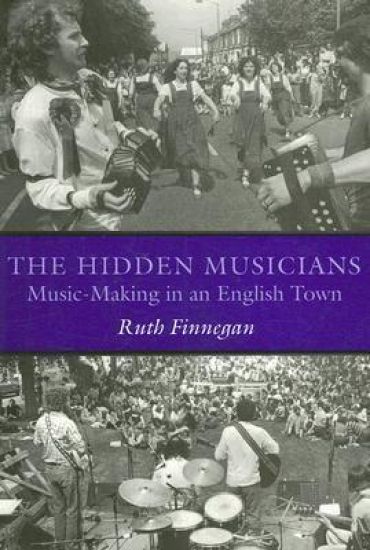
A landmark in the study of music and culture, this acclaimed volume documents the remarkable scope of amateur music-making in the English town of Milton Keynes. It presents in vivid detail the contrasting yet overlapping worlds of classical orchestras, church choirs, brass bands, amateur operatic societies, and amateur bands playing jazz, rock, folk, and country. Notable for its contribution to wider theoretical debates and its influential challenge to long-held assumptions about music and how to study it, the book focuses on the practices rather than the texts or theory of music, rejecting the idea that only selected musical traditions, "great names," or professional musicians are worth studying. This opens the door to the invisible work put in by thousands of local people of diverse backgrounds, and how the pathways creatively trodden by amateur musicians have something to tell us about both urban living and what it is to be human. Now with a new preface by the author, this long-awaited reissue of The Hidden Musicians will bring its insights and innovations to a new generation of students and scholars.
Tales of the City

Tales of the City

Ruth Finnegan

Cambridge University Press
1998
pokkari
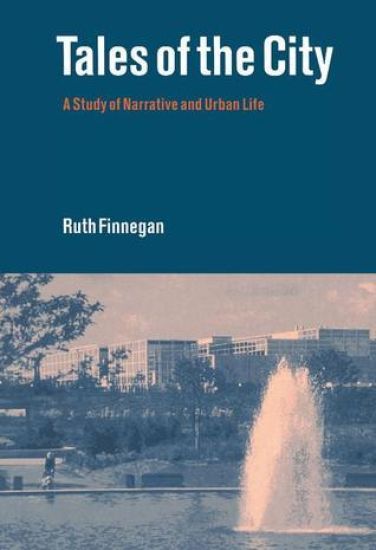
How do we picture urban life and formulate our experience of it? Tales of the City brings together the academics’ abstract tales with the vivid stories about a particular city, Milton Keynes, and the often moving self-narrations of its residents. It explores the role of story-telling processes for the creative constructing of experience, with particular attention to personal narrations. The story that is now emerging, told by many individual actor narrators, is of the city as a natural setting for human life, in stark contrast to the pessimistic anti-urban tales of many academic narrators. Drawing on narrative studies, cultural and linguistic anthropology and social theory, Professor Finnegan skilfully examines the narrative conventions and cultural implications of our multiple tales of the city, and relates them to profound mythic themes about urban life, community, and to the creative role of the active, reflecting individual.
Tales of the City

Tales of the City

Ruth Finnegan

Cambridge University Press
1998
sidottu
How do we picture urban life and formulate our experience of it? Tales of the City, first published in 1998, brings together the academics' abstract tales with the vivid stories about a particular city, Milton Keynes, and the often moving self-narrations of its residents. It explores the role of story-telling processes for the creative constructing of experience, with particular attention to personal narrations. The story that is now emerging, told by many individual actor narrators, is of the city as a natural setting for human life, in stark contrast to the pessimistic anti-urban tales of many academic narrators. Drawing on narrative studies, cultural and linguistic anthropology and social theory, Professor Finnegan skilfully examines the narrative conventions and cultural implications of our multiple tales of the city, and relates them to profound mythic themes about urban life, community, and to the creative role of the active, reflecting individual.
Oral Traditions and the Verbal Arts
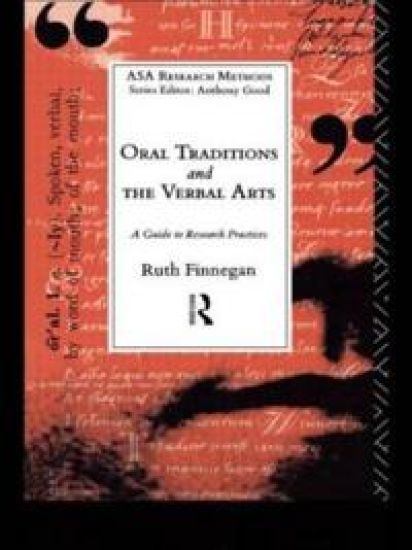
The study of oral traditions and verbal arts leads into an area of human culture to which anthropologists are increasingly turning their attention. Oral Traditions and the Verbal Arts provides up-to-date guidance on how to approach the study of oral form and their performances, treating both the practicalities of fieldwork and the methods by which oral texts and performances can be observed, collected or analysed. It also relates to those current controversies about the nature of performance and of 'text'. Designed as a practical and systematic introduction to the processes and problems of researching in this area, this is an invaluable guide for students, and lecturers of anthropology and cultural studies and also for general readers who are interested in enjoying oral literature for its own sake.