Kirjojen hintavertailu – 12 859 829 kirjaa ja 27 kauppaa

Kirjailija

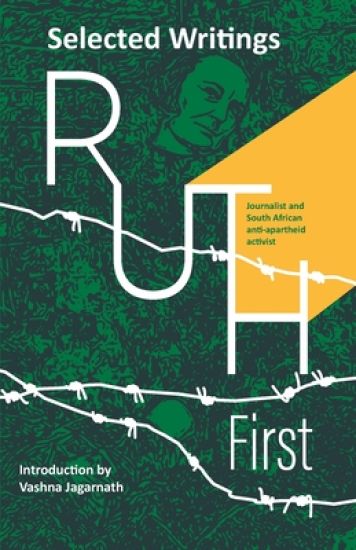
Ruth First

Kirjat ja teokset yhdessä paikassa: 5 kirjaa, julkaisuja vuosilta 1990–2026, suosituimpiin kuuluu The Barrel of a Gun. Vertaile teosten hintoja ja tarkista saatavuus suomalaisista kirjakaupoista.

5 kirjaa

Kirjojen julkaisuvuodet: 1990–2026.

The Barrel of a Gun

The Barrel of a Gun

Ruth First

Verso Books
2026
nidottu
Political prisoner and anti-apartheid activist Ruth First addressing one of the most notorious and complicated phenomena in postcolonial Africa—the coup d’état If Frantz Fanon had not died of cancer in 1961 at the age of thirty-six, what might a sequel to The Wretched of the Earth look like? What political issues of the postcolony might it confront? And what theories of postcolonial state power might it develop? Ruth First’s The Barrel of a Gun provides one possible answer to these speculative questions. The Barrel of a Gun is the first book First wrote while in exile, and it marks a departure from her prison memoir. It is several things at once: an academic analysis of postcolonial power dynamics in Africa; a political history of Africa during the 1960s; and a document of her life and political views at the time.
117 Days

117 Days

Ruth First

Virago Press Ltd
2010
nidottu
'Her life and her death remain a beacon to all who love liberty' NELSON MANDELAAn unforgettable account of defiance against political terror by one of South Africa's pioneering anti-apartheid activists.'In prison you see only the moves of the enemy. Prison is the hardest place to fight a battle.'117 Days is Ruth First's personal account of her detention under the iniquitous '90-day' law of 1963. There was no warrant, no charge and no trial - only suspicion. This sparsely written and unique record tells of her experiences of solitary confinement, constant interrogation and instantaneous re-arrest on release - lightened by humorous portraits of governors, matrons, wardresses and interrogators, seen as the tools of the police state. This is the story of the war of nerves that ensued between First and her Special Branch captors-a work that remains a classic portrait of oppression and the dignity of the human spirit.
117 Days: An Account of Confinement and Interrogation Under the South African 90-Day Detention Law
An unforgettable account of defiance against political terror by one of South Africa's pioneering anti-apartheid activists An invaluable testimonial of the excesses of the apartheid system, 117 Days presents the harrowing chronicle of journalist Ruth First's isolation and abuse at the hands of South African interrogators after her arrest in 1963. Upon her arrest, she was detained in solitary confinement under South Africa's notorious ninety-day detention law. This is the story of the war of nerves that ensued between First and her Special Branch captors-a work that remains a classic portrait of oppression and the dignity of the human spirit. For more than seventy years, Penguin has been the leading publisher of classic literature in the English-speaking world. With more than 1,700 titles, Penguin Classics represents a global bookshelf of the best works throughout history and across genres and disciplines. Readers trust the series to provide authoritative texts enhanced by introductions and notes by distinguished scholars and contemporary authors, as well as up-to-date translations by award-winning translators.
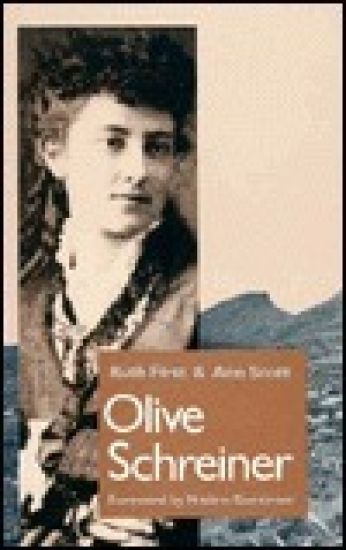
Olive Schreiner

Olive Schreiner

Ruth First; Ann Scott

Rutgers University Press
1990
nidottu
Originally published in 1980 and long out of print, this fine work illuminates Schreiner's life and major writings through a portrayal of her "conscious struggles for self-definition" as a novelist, feminist and political activist. Born in 1855 to English missionaries working in Africa, hers was a lonely, self-educated childhood. She worked as a governess during the late 1870s, and when she sailed to England for medical training in 1881, had with her the manuscripts of three novels, including The Story of an African Farm, her best known. She was quickly taken up by London's intellectual circles; Havelock Ellis and Eleanor Marx were among her closest friends. On her return to Africa, Schreiner supported the Boer cause and took what she herself called an "almost painfully intense interest" in empire-builder Cecil Rhodes, although she quickly became disillusioned with both. Abhorring treatment of blacks as an "engine of labour," she became an outspoken advocate for black citizenship; and her Women and Labour published in 1911 reflected a lifetime of thought on "the Woman Question" and became a crucial work for early-20th-century feminists. The authors write insightfully of the split sense of self in a woman who made such an impact yet felt her life a failure.