
Kirjailija
Ruth Hill
Kirjat ja teokset yhdessä paikassa: 12 kirjaa, julkaisuja vuosilta 2009–2026, suosituimpiin kuuluu Robert E. Lee. Vertaile teosten hintoja ja tarkista saatavuus suomalaisista kirjakaupoista.
12 kirjaa
Kirjojen julkaisuvuodet: 2009–2026.
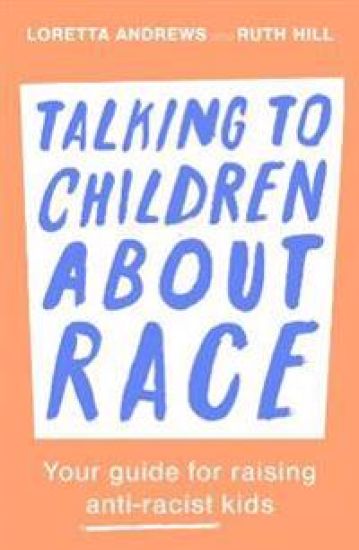
"It's easier to build strong children than repair broken men and women. This book provides an incredible opportunity for parents and guardians to start important conversations early on." – Guvna B, rapper, author and broadcaster "Books like this are essential, the more children are comfortable talking about race the less barriers there will be between us.". - Naomi and Natalie from Everydayracism Do you want to raise anti-racist children? Do you long to learn but are too scared of saying or doing the wrong thing? Then Talking to Children about Race is for you. But before we start talking to our children, we must start chatting honestly with one another. Broadcaster Loretta Andrews and the educator Ruth Hill had been friends for years before the shocking death of George Floyd made it impossible not to dig deeper into the topic of race and how to explain racism to their children. Drawing on the very real conversations that ensued, this book invites you into the dialogue to better equip you to bring up anti-racist children. With warmth and approachability, the authors provide a history of race and explore white privilege, unconscious bias and systematic racism. They offer practical tips, ideas and activities to help you to educate, empower and raise anti-racist children today. "Loretta and Ruth have given us a treasure: a non-judgemental, open-hearted manual on ways to tackle the subject of race with our little ones." - Sarah Clarke (Disastersofathirtysomething): "What I love the most is that you are part of change – a lasting change tribe. Ruth and Loretta have not only used their platform but their honest voices in sharing their experiences and research to be the conversation opener for children and families on anti-racism." - Dina Maktabi, Founded of Kensington Mums www.kensingtonmums.co.uk "This is an incredibly helpful and well-written guide that I will go back to time and time again throughout raising my son!" – Emma Borquaye, author and founder of Girl Got Faith "I really wanted to skim through this book, picking out little nuggets of wisdom, but paragraph after paragraph, chapter after chapter, I was engrossed!!" - Nana-Adwoa Mbeutcha, Co-Founder of Black Mums Upfront
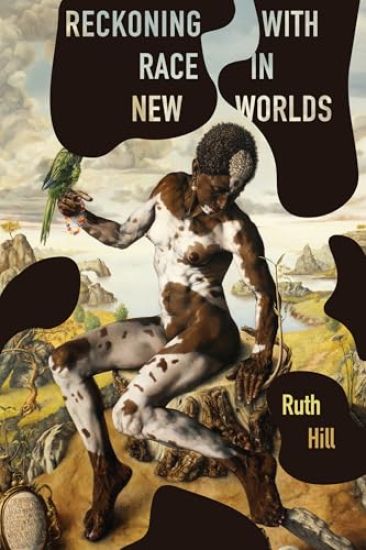
How Spanish and Portuguese colonialism shaped our conception of whiteness A landmark treatment of a pivotal historical question, Reckoning with Race in New Worlds reveals how the empires of Spain and Portugal debated and came to determine who was white and who was not during their colonial era. How did free people with partial Native American, Asian, or African lineage either become or cease to be blancos or brancos—white people? Ruth Hill explains how, in unexpected ways, science and religion joined forces in the early modern era to shape the concepts of purity, mixture, and degeneration that would decide these questions. Fixing the thresholds of whiteness—degrees of blood, generations spent in a foreign environment—instigated centuries-long controversies with enormous consequences. By putting into dialogue archival sources as well as extensive engagement with secondary literature, paintings, and maps, Reckoning with Race in New Worlds crafts a history of human diversity in the colonial era, with profound implications for our understandings of the natural and social sciences and of our racial present.
How Spanish and Portuguese colonialism shaped our conception of whiteness A landmark treatment of a pivotal historical question, Reckoning with Race in New Worlds reveals how the empires of Spain and Portugal debated and came to determine who was white and who was not during their colonial era. How did free people with partial Native American, Asian, or African lineage either become or cease to be blancos or brancos—white people? Ruth Hill explains how, in unexpected ways, science and religion joined forces in the early modern era to shape the concepts of purity, mixture, and degeneration that would decide these questions. Fixing the thresholds of whiteness—degrees of blood, generations spent in a foreign environment—instigated centuries-long controversies with enormous consequences. By putting into dialogue archival sources as well as extensive engagement with secondary literature, paintings, and maps, Reckoning with Race in New Worlds crafts a history of human diversity in the colonial era, with profound implications for our understandings of the natural and social sciences and of our racial present.
Mapping Diversity in Latin America
Bárbara I. Abadía-Rexach; Gonzalo Aguiar; Marta Elena Casaus Arzú; Amber Brian; Patricia Arroyo Calderón; Ignacio López-Calvo; Ariel Camejo; Marcel Velázquez Castro; Mónica Díaz; Christian Elguer; Tracy Devine Guzmán; Ruth Hill; Ariana Huberman; Stephanie Kirk; Agustin Lao-Montes; Mariselle Meléndez; Bahia Munem; Carlos Alberto Valderrama Renteria; Iván Fernando Rodrigo Mendizábal; Jorge Daniel Vásquez
VANDERBILT UNIVERSITY PRESS
2025
nidottu
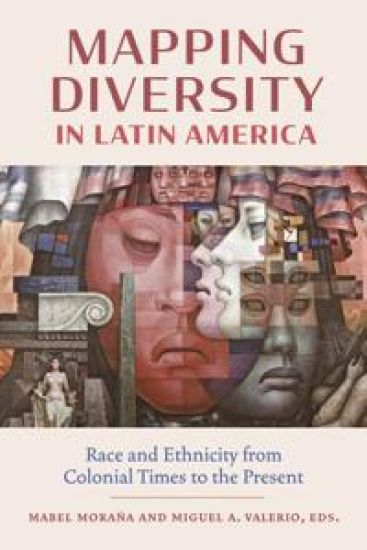
Mapping Diversity in Latin America offers ample critical coverage of recent approaches to the historical study of race and ethnicity in Latin America since the arrival of Spanish and Portuguese colonizers to the present. Bringing together the work of leading scholars, this volume presents readers with a thorough and updated examination of the formation and evolution of ideas surrounding race and ethnicity, social movements, and political processes in Latin America that provides multiple routes for future research on the topic. The book’s nineteen chapters establish the basis for a productive comparative analysis of racial developments in the whole continent to allow for a combination of diachronic and synchronic study of regional processes. Both the scope of the book and the historical and geocultural coverage on these topics are unique in the field of Latin American Studies. Taking an interdisciplinary approach to understanding issues of collective identity, otherness, alterity, and the like, Mapping Diversity in Latin America sheds light on histories that have been traditionally overlooked in texts on race in Latin America, such as the rich history of diasporic Asian, Syrian Lebanese, and Jewish communities, and the more recent emergence of Latinx populations in the United States. The book includes a critical examination of fundamental concepts such as mestizaje, mulataje, creolization, negritud, and blanquitud, as well as critical and theoretical approaches to the study of these issues in postcolonial societies.
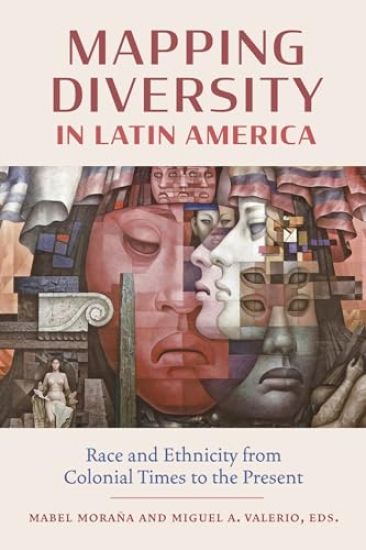
Mapping Diversity in Latin America
Bárbara I. Abadía-Rexach; Gonzalo Aguiar; Marta Elena Casaus Arzú; Amber Brian; Patricia Arroyo Calderón; Ignacio López-Calvo; Ariel Camejo; Marcel Velázquez Castro; Mónica Díaz; Christian Elguer; Tracy Devine Guzmán; Ruth Hill; Ariana Huberman; Stephanie Kirk; Agustin Lao-Montes; Mariselle Meléndez; Bahia Munem; Carlos Alberto Valderrama Renteria; Iván Fernando Rodrigo Mendizábal; Jorge Daniel Vásquez
VANDERBILT UNIVERSITY PRESS
2025
sidottu
Mapping Diversity in Latin America offers ample critical coverage of recent approaches to the historical study of race and ethnicity in Latin America since the arrival of Spanish and Portuguese colonizers to the present. Bringing together the work of leading scholars, this volume presents readers with a thorough and updated examination of the formation and evolution of ideas surrounding race and ethnicity, social movements, and political processes in Latin America that provides multiple routes for future research on the topic. The book’s nineteen chapters establish the basis for a productive comparative analysis of racial developments in the whole continent to allow for a combination of diachronic and synchronic study of regional processes. Both the scope of the book and the historical and geocultural coverage on these topics are unique in the field of Latin American Studies. Taking an interdisciplinary approach to understanding issues of collective identity, otherness, alterity, and the like, Mapping Diversity in Latin America sheds light on histories that have been traditionally overlooked in texts on race in Latin America, such as the rich history of diasporic Asian, Syrian Lebanese, and Jewish communities, and the more recent emergence of Latinx populations in the United States. The book includes a critical examination of fundamental concepts such as mestizaje, mulataje, creolization, negritud, and blanquitud, as well as critical and theoretical approaches to the study of these issues in postcolonial societies.

Robert E. Lee: A Story and a Play, a classical and rare book that has been considered essential throughout human history, so that this work is never forgotten, we at Alpha Editions have made efforts in its preservation by republishing this book in a modern format for present and future generations. This whole book has been reformatted, retyped and designed. These books are not made of scanned copies of their original work and hence the text is clear and readable.

Hierarchy, Commerce, and Fraud in Bourbon Spanish America
Ruth Hill
Vanderbilt University Press
2021
nidottu
Using El lazarillo de ciegos caminantes (the "Guide for Blind Rovers" by Alonso Carrio de Lavandera, the best known work of the era) as a jumping off point for a sprawling discussion of 18th-century Spanish America, Ruth Hill argues for a richer, more nuanced understanding of the relationship between Spain and its western colonies. Armed with primary sources including literature, maps, census data, letters, and diaries, Hill reveals a rich world of intrigue and artifice, where identity is surprisingly fluid and always in question. More importantly, Hill crafts a complex argument for reassessing our understanding of race and class distinctions at the time, with enormous implications for how we view conceptions of race and class today.

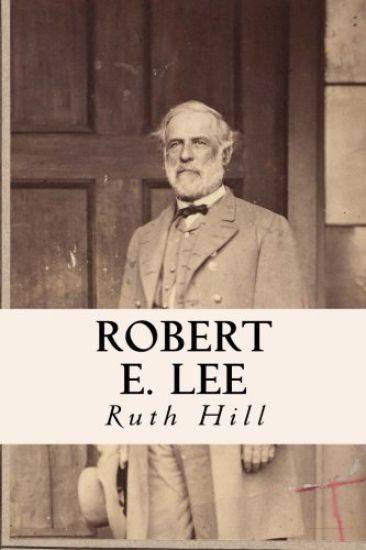
Robert E. Lee, by Ruth Hill, is a classic American Civil War biography of the great Confederate general. Once upon a time in beautiful Virginia there lived a little boy named Robert Edward Lee. It was in the days before the Civil War when, if we may believe all we hear, all the women were charming, and all the men were gentlemen. Robert Edward Lee (January 19, 1807 - October 12, 1870) was an American and Confederate soldier, best known as a commander of the Confederate States Army. He commanded the Army of Northern Virginia in the American Civil War from 1862 until his surrender in 1865. A son of Revolutionary War officer Henry "Light Horse Harry" Lee III, Lee was a top graduate of the United States Military Academy and an exceptional officer and military engineer in the United States Army for 32 years. During this time, he served throughout the United States, distinguished himself during the Mexican-American War, and served as Superintendent of the United States Military Academy. When Virginia declared its secession from the Union in April 1861, Robert E. Lee chose to follow his home state, despite his desire for the country to remain intact and an offer of a senior Union command. During the first year of the Civil War, Lee served as a senior military adviser to Confederate President Jefferson Davis. Once he took command of the main field army in 1862 he soon emerged as a shrewd tactician and battlefield commander, winning most of his battles, all against far superior Union armies. Robert E. Lee's strategic foresight was more questionable, and both of his major offensives into Union territory ended in defeat. Lee's aggressive tactics, which resulted in high casualties at a time when the Confederacy had a shortage of manpower, have come under criticism in recent years. Lee surrendered his entire army to Ulysses S. Grant at Appomattox Court House on April 9, 1865. By this time, Robert E. Lee had assumed supreme command of the remaining Southern armies; other Confederate forces swiftly capitulated after his surrender. Lee rejected the proposal of a sustained insurgency against the Union and called for reconciliation between the two sides. In 1865, after the war, Lee was paroled and signed an oath of allegiance, asking to have his citizenship of the United States restored. Lee's application was misplaced; as a result, he did not receive a pardon and his citizenship was not restored. In 1865, Robert E. Lee became president of Washington College (later Washington and Lee University) in Lexington, Virginia; in that position, he supported reconciliation between North and South. Robert E. Lee accepted "the extinction of slavery" provided for by the Thirteenth Amendment, but publicly opposed racial equality and granting African Americans the right to vote and other political rights Lee died in 1870. In 1975, the U. S. Congress posthumously restored Lee's citizenship effective June 13, 1865. Robert E. Lee opposed the construction of public memorials to Confederate rebellion on the grounds that they would prevent the healing of wounds inflicted during the war. Nevertheless, after his death, Lee became an icon used by promoters of "Lost Cause" mythology, who sought to romanticize the Confederate cause and strengthen white supremacy in the South. 9] Historian Eric Foner writes that at the end of his life, "Lee had become the embodiment of the Southern cause. A generation later, he was a national hero. The 1890s and early 20th century witnessed the consolidation of white supremacy in the post-Reconstruction South and widespread acceptance in the North of Southern racial attitudes." Later in the 20th century, particularly following the civil rights movement, historians reassessed Robert E. Lee; his reputation fell based on his failure to support rights for freedmen after the war, and even his strategic choices as a military leader fell under scrutiny.