Kirjojen hintavertailu – 12 859 819 kirjaa ja 27 kauppaa

Kirjailija

Ruth Milkman

Kirjat ja teokset yhdessä paikassa: 8 kirjaa, julkaisuja vuosilta 1987–2020, suosituimpiin kuuluu On Gender, Labor, and Inequality. Vertaile teosten hintoja ja tarkista saatavuus suomalaisista kirjakaupoista.

8 kirjaa

Kirjojen julkaisuvuodet: 1987–2020.

Immigrant Labor and the New Precariat

Immigrant Labor and the New Precariat

Ruth Milkman

Polity Press
2020
nidottu
Immigration has been a contentious issue for decades, but in the twenty-first century it has moved to center stage, propelled by an immigrant threat narrative that blames foreign-born workers, and especially the undocumented, for the collapsing living standards of American workers. According to that narrative, if immigration were summarily curtailed, border security established, and ""illegal aliens"" removed, the American Dream would be restored. In this book, Ruth Milkman demonstrates that immigration is not the cause of economic precarity and growing inequality, as Trump and other promoters of the immigrant threat narrative claim. Rather, the influx of low-wage immigrants since the 1970s was a consequence of concerted employer efforts to weaken labor unions, along with neoliberal policies fostering outsourcing, deregulation, and skyrocketing inequality. These dynamics have remained largely invisible to the public. The justifiable anger of US-born workers whose jobs have been eliminated or degraded has been tragically misdirected, with even some liberal voices recently advocating immigration restriction. This provocative book argues that progressives should instead challenge right-wing populism, redirecting workers' anger toward employers and political elites, demanding upgraded jobs for foreign-born and US-born workers alike, along with public policies to reduce inequality.
Immigrant Labor and the New Precariat

Immigrant Labor and the New Precariat

Ruth Milkman

Polity Press
2020
sidottu
Immigration has been a contentious issue for decades, but in the twenty-first century it has moved to center stage, propelled by an immigrant threat narrative that blames foreign-born workers, and especially the undocumented, for the collapsing living standards of American workers. According to that narrative, if immigration were summarily curtailed, border security established, and ""illegal aliens"" removed, the American Dream would be restored. In this book, Ruth Milkman demonstrates that immigration is not the cause of economic precarity and growing inequality, as Trump and other promoters of the immigrant threat narrative claim. Rather, the influx of low-wage immigrants since the 1970s was a consequence of concerted employer efforts to weaken labor unions, along with neoliberal policies fostering outsourcing, deregulation, and skyrocketing inequality. These dynamics have remained largely invisible to the public. The justifiable anger of US-born workers whose jobs have been eliminated or degraded has been tragically misdirected, with even some liberal voices recently advocating immigration restriction. This provocative book argues that progressives should instead challenge right-wing populism, redirecting workers' anger toward employers and political elites, demanding upgraded jobs for foreign-born and US-born workers alike, along with public policies to reduce inequality.
On Gender, Labor, and Inequality

On Gender, Labor, and Inequality

Ruth Milkman

University of Illinois Press
2016
sidottu
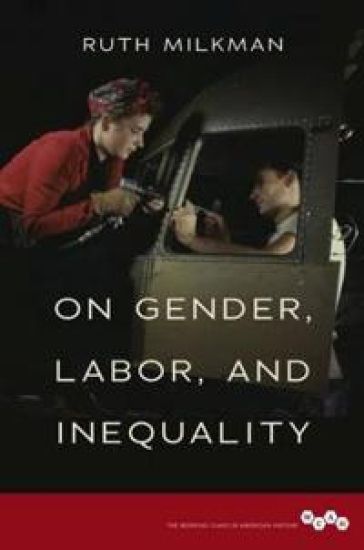
Ruth Milkman's groundbreaking research in women's labor history has contributed important perspectives on work and unionism in the United States. On Gender, Labor, and Inequality presents four decades of Milkman's essential writings, tracing the parallel evolutions of her ideas and the field she helped define. Milkman's introduction frames a career-spanning scholarly project: her interrogation of historical and contemporary intersections of class and gender inequalities in the workplace, and the efforts to challenge those inequalities. Early chapters focus on her pioneering work on women's labor during the Great Depression and the World War II years. In the book's second half, Milkman turns to the past fifty years, a period that saw a dramatic decline in gender inequality even as growing class imbalances created greater-than-ever class disparity among women. She concludes with a previously unpublished essay comparing the impact of the Great Depression and the Great Recession on women workers. A first-of-its-kind collection, On Gender, Labor, and Inequality is an indispensable text by one of the world's top scholars of gender, equality, and work.
On Gender, Labor, and Inequality

On Gender, Labor, and Inequality

Ruth Milkman

University of Illinois Press
2016
nidottu
Ruth Milkman's groundbreaking research in women's labor history has contributed important perspectives on work and unionism in the United States. On Gender, Labor, and Inequality presents four decades of Milkman's essential writings, tracing the parallel evolutions of her ideas and the field she helped define. Milkman's introduction frames a career-spanning scholarly project: her interrogation of historical and contemporary intersections of class and gender inequalities in the workplace, and the efforts to challenge those inequalities. Early chapters focus on her pioneering work on women's labor during the Great Depression and the World War II years. In the book's second half, Milkman turns to the past fifty years, a period that saw a dramatic decline in gender inequality even as growing class imbalances created greater-than-ever class disparity among women. She concludes with a previously unpublished essay comparing the impact of the Great Depression and the Great Recession on women workers. A first-of-its-kind collection, On Gender, Labor, and Inequality is an indispensable text by one of the world's top scholars of gender, equality, and work.
Unfinished Business

Unfinished Business

Ruth Milkman; Eileen Appelbaum

ILR Press
2013
pokkari
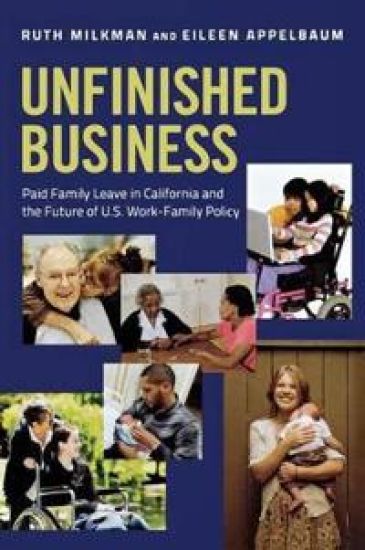
Unfinished Business documents the history and impact of California's paid family leave program, the first of its kind in the United States, which began in 2004. Drawing on original data from fieldwork and surveys of employers, workers, and the larger California adult population, Ruth Milkman and Eileen Appelbaum analyze in detail the effect of the state's landmark paid family leave on employers and workers. They also explore the implications of California's decade-long experience with paid family leave for the nation, which is engaged in ongoing debate about work-family policies. Unfinished Business exposes the process by which California workers and their allies built a coalition to win passage of paid family leave in the state legislature, and lays out the lessons for advocates in other states and localities, as well as the nation. Because paid leave enjoys extensive popular support across the political spectrum, campaigns for such laws have an excellent chance of success if some basic preconditions are met. Do paid family leave and similar programs impose significant costs and burdens on employers? Business interests argue that they do and routinely oppose any and all legislative initiatives in this area. Once the program took effect in California, this book shows, large majorities of employers themselves reported that its impact on productivity, profitability, and performance was negligible or positive. Milkman and Appelbaum demonstrate that the California program is well managed and easy to access, but that awareness of its existence remains limited. Moreover, those who need the program's benefits most urgently—low-wage workers, young workers, immigrants, and disadvantaged minorities—are least likely to know about it. As a result, the long-standing pattern of inequality in access to paid leave has remained largely intact.
Unfinished Business

Unfinished Business

Ruth Milkman; Eileen Appelbaum

ILR Press
2013
sidottu
Unfinished Business documents the history and impact of California's paid family leave program, the first of its kind in the United States, which began in 2004. Drawing on original data from fieldwork and surveys of employers, workers, and the larger California adult population, Ruth Milkman and Eileen Appelbaum analyze in detail the effect of the state's landmark paid family leave on employers and workers. They also explore the implications of California's decade-long experience with paid family leave for the nation, which is engaged in ongoing debate about work-family policies. Unfinished Business exposes the process by which California workers and their allies built a coalition to win passage of paid family leave in the state legislature, and lays out the lessons for advocates in other states and localities, as well as the nation. Because paid leave enjoys extensive popular support across the political spectrum, campaigns for such laws have an excellent chance of success if some basic preconditions are met. Do paid family leave and similar programs impose significant costs and burdens on employers? Business interests argue that they do and routinely oppose any and all legislative initiatives in this area. Once the program took effect in California, this book shows, large majorities of employers themselves reported that its impact on productivity, profitability, and performance was negligible or positive. Milkman and Appelbaum demonstrate that the California program is well managed and easy to access, but that awareness of its existence remains limited. Moreover, those who need the program's benefits most urgently—low-wage workers, young workers, immigrants, and disadvantaged minorities—are least likely to know about it. As a result, the long-standing pattern of inequality in access to paid leave has remained largely intact.
Farewell to the Factory

Farewell to the Factory

Ruth Milkman

University of California Press
1997
pokkari
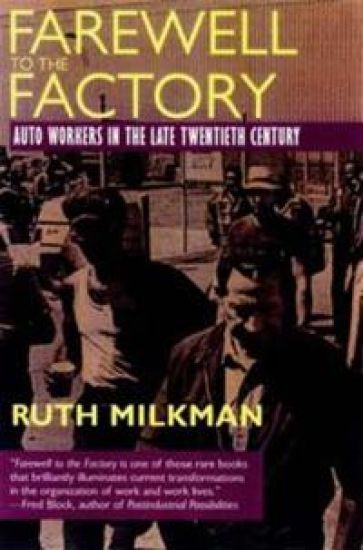
This study exposes the human side of the decline of the U. S. auto industry, tracing the experiences of two key groups of General Motors workers: those who took a cash buyout and left the factory, and those who remained and felt the effects of new technology and other workplace changes. Milkman's extensive interviews and surveys of workers from the Linden, New Jersey, GM plant reveal their profound hatred for the factory regime - a longstanding discontent made worse by the decline of the auto workers' union in the 1980s. One of the leading social historians of the auto industry, Ruth Milkman moves between changes in the wider industry and those in the Linden plant, bringing both a workers' perspective and a historical perspective to the study. Milkman finds that, contrary to the assumption in much of the literature on deindustrialization, the Linden buyout-takers express no nostalgia for the high-paying manufacturing jobs they left behind. Given the chance to make a new start in the late 1980s, they were eager to leave the plant with its authoritarian, prison-like conditions, and few have any regrets about their decision five years later. Despite the fact that the factory was retooled for robotics and that the management hoped to introduce a new participatory system of industrial relations, workers who remained express much less satisfaction with their lives and jobs. Milkman is adamant about allowing the workers to speak for themselves, and their hopes, frustrations, and insights add fresh and powerful perspectives to a debate that is often carried out over the heads of those whose lives are most affected by changes in the industry.
Gender at Work

Gender at Work

Ruth Milkman

University of Illinois Press
1987
nidottu
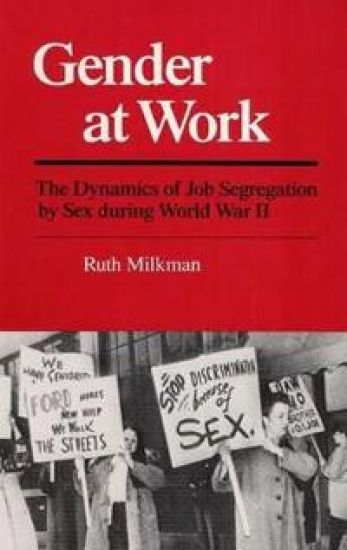
Winner of the Joan Kelly Memorial Prize in Women's History, the American Historical Association, 1987. Winner of the SOCIALIST REVIEW Book Award Women's entry into so-called men's work during World War II sparked conflicts at the time and when men returned at war's end. Ruth Milkman delves into the issues in play and the prewar origins of traditional patterns of gender segregation in the workplace. Ranging from the dynamics on the shop floor to hiring patterns, Milkman pays particular attention to automobile and electrical manufacturing. She analyzes a number of persistent questions, including management's decision to re-embrace gender segregation after the war; women's lack of protest; the failure of unions to protect women; and how related employer strategies helped control labor by maintaining women's place as workers paid less than men.