
Kirjojen hintavertailu – 12 859 818 kirjaa ja 27 kauppaa

Kirjailija

Ryan Nicholas Danker

Kirjat ja teokset yhdessä paikassa: 3 kirjaa, julkaisuja vuosilta 2016–2020, suosituimpiin kuuluu Charles Wesley in America. Vertaile teosten hintoja ja tarkista saatavuus suomalaisista kirjakaupoista.

3 kirjaa

Kirjojen julkaisuvuodet: 2016–2020.

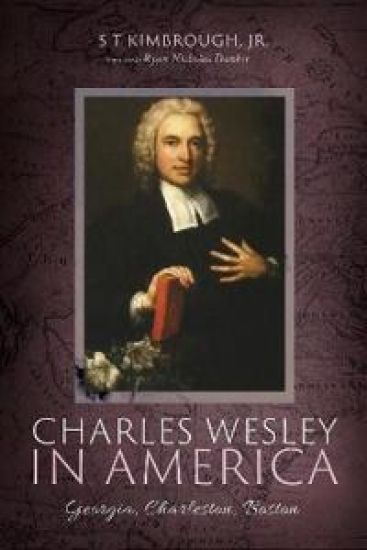
Charles Wesley in America

Charles Wesley in America

S T Kimbrough; Ryan Nicholas Danker

Pickwick Publications
2020
sidottu
This is the first comprehensive treatment of Charles Wesley's sojourn in the American colonies from March to October 1736. He went to the Colony of Georgia as a missionary of the Church of England, as Colonel Oglethorpe's personal aid, and secretary of Indian Affairs. His stay in Georgia was filled with discord and conflict. This volume provides the first explanation of why Wesley remained silent in a dispute with two women who had accused him and Oglethorpe of moral impropriety. One of Wesley's shorthand passages deciphered here discloses the reason he refused to be publicly exonerated. The volume also provides a view of a newly ordained Anglican priest struggling with the responsibilities of his office. Yet one discovers why this very young priest was treated with such open arms by the Anglican clergy of Boston, even being invited to preach in one of the important New England Anglican churches immediately upon arrival. In some of Wesley's own poetry one encounters his strong negative attitudes toward the Revolutionary War, the colonies' desire to break its ties with England, and toward the British military leadership that lost the war. In Charles's stay in America, the seeds were sown for a lifetime of opposition to slavery. A rare letter exchange with two former slaves whom he befriended in Bristol provides fascinating insight into their eagerness to learn to read and write and about the Christian faith.
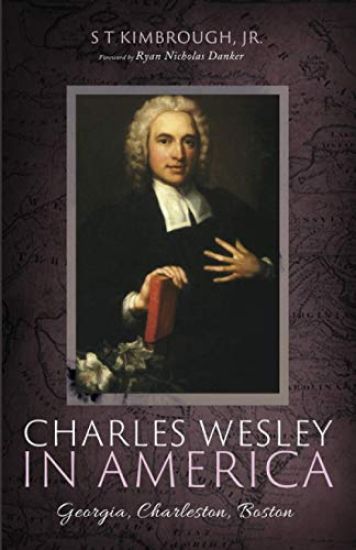
Charles Wesley in America

Charles Wesley in America

S T Kimbrough; Ryan Nicholas Danker

Pickwick Publications
2020
pokkari
This is the first comprehensive treatment of Charles Wesley's sojourn in the American colonies from March to October 1736. He went to the Colony of Georgia as a missionary of the Church of England, as Colonel Oglethorpe's personal aid, and secretary of Indian Affairs. His stay in Georgia was filled with discord and conflict. This volume provides the first explanation of why Wesley remained silent in a dispute with two women who had accused him and Oglethorpe of moral impropriety. One of Wesley's shorthand passages deciphered here discloses the reason he refused to be publicly exonerated. The volume also provides a view of a newly ordained Anglican priest struggling with the responsibilities of his office. Yet one discovers why this very young priest was treated with such open arms by the Anglican clergy of Boston, even being invited to preach in one of the important New England Anglican churches immediately upon arrival. In some of Wesley's own poetry one encounters his strong negative attitudes toward the Revolutionary War, the colonies' desire to break its ties with England, and toward the British military leadership that lost the war. In Charles's stay in America, the seeds were sown for a lifetime of opposition to slavery. A rare letter exchange with two former slaves whom he befriended in Bristol provides fascinating insight into their eagerness to learn to read and write and about the Christian faith.
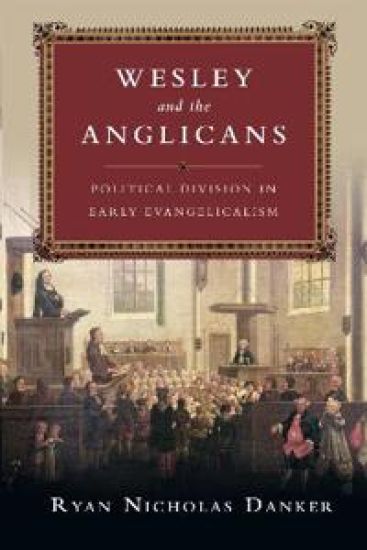
Wesley and the Anglicans – Political Division in Early Evangelicalism
Why did the Wesleyan Methodists and the Anglican evangelicals divide during the middle of the eighteenth century? Many would argue that the division between them was based narrowly on theological matters, especially predestination and perfection. Ryan Danker suggests, however, that politics was a major factor throughout, driving the Wesleyan Methodists and Anglican evangelicals apart. Methodism was perceived to be linked with the radical and seditious politics of the Cromwellian period. This was a charged claim in a post-Restoration England. Likewise Danker explores the political force of resurgent Tory influence under George III, which exerted more pressure on evangelicals to prove their loyalty to the Establishment. These political realities made it hard for evangelicals in the Church of England to cooperate with Wesley and meant that all their theological debates were politically inflected. Rich in detail, here is a book for all who seek deeper insight into a critical juncture in the development of evangelicalism and early Methodism.