Kirjojen hintavertailu – 12 903 725 kirjaa ja 27 kauppaa
Kirjailija
Ryan T. Anderson
Kirjat ja teokset yhdessä paikassa: 9 kirjaa, julkaisuja vuosilta 2017–2025, suosituimpiin kuuluu When Harry Became Sally: Responding to the Transgender Moment. Vertaile teosten hintoja ja tarkista saatavuus suomalaisista kirjakaupoista.
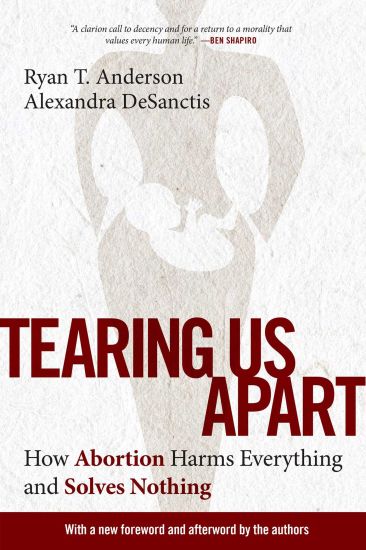
With a new foreword and afterword by the authors "A clarion call to decency and for a return to a morality that values every human life." -Ben Shapiro Now that the Supreme Court has overturned Roe v. Wade and returned abortion law to the democratic process, a powerful new book reframes the coming debate: Our fifty-year experiment with unlimited abortion has harmed everyone--even its most passionate proponents. Women, men, families, the law, politics, medicine, the media--and, of course, children (born and unborn)--have all been brutalized by the culture of death fostered by Roe v. Wade. Abortion hollows out marriage and the family. It undermines the rule of law and corrupts our political system. It turns healers into executioners and "women's health" into a euphemism for extermination. Ryan T. Anderson, a compelling and reasoned voice in our most contentious cultural debates, and the pro-life journalist Alexandra DeSanctis expose the false promises of the abortion movement and explain why it has made everything worse. Five decades after Roe, everyone has an opinion about abortion. But after reading Tearing Us Apart, no one will think about it in the same way.
The political philosopher Ryan T. Anderson, bestselling author of When Harry Became Sally: Responding to the Transgender Moment, teams up with the pro-life journalist Alexandra DeSanctis to expose the catastrophic failure--social, political, legal, and personal--of legalized abortion. Hope in the Ruins of Roe Now that the Supreme Court has overturned Roe v. Wade and returned abortion law to the democratic process, a powerful new book reframes the coming debate: Our fifty-year experiment with unlimited abortion has harmed everyone--even its most passionate proponents. Women, men, families, the law, politics, medicine, the media--and, of course, children (born and unborn)--have all been brutalized by the culture of death fostered by Roe v. Wade. Abortion hollows out marriage and the family. It undermines the rule of law and corrupts our political system. It turns healers into executioners and "women's health" into a euphemism for extermination. Ryan T. Anderson, a compelling and reasoned voice in our most contentious cultural debates, and the pro-life journalist Alexandra DeSanctis expose the false promises of the abortion movement and explain why it has made everything worse. Five decades after Roe, everyone has an opinion about abortion. But after reading Tearing Us Apart, no one will think about it in the same way.
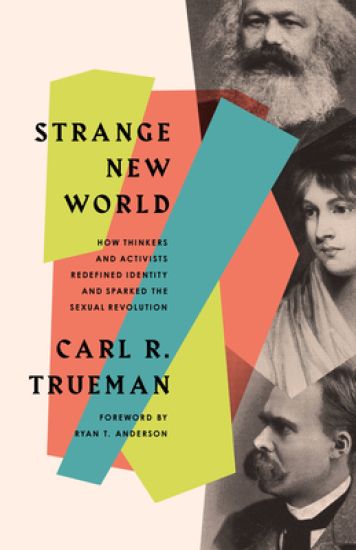
From Philosophy to Technology, Tracing the Origin of Identity Politics How did the world arrive at its current, disorienting state of identity politics, and how should the church respond? Historian Carl R. Trueman shows how influences ranging from traditional institutions to technology and pornography moved modern culture toward an era of “expressive individualism.” Investigating philosophies from the Romantics, Nietzsche, Marx, Wilde, Freud, and the New Left, he outlines the history of Western thought to the distinctly sexual direction of present-day identity politics and explains the modern implications of these ideas on religion, free speech, and personal identity. For fans of Trueman’s The Rise and Triumph of the Modern Self, Strange New World offers a more concise presentation and application of some of the most critical topics of our day. Individuals and groups can work through the book together with the Strange New World Study Guide and Strange New World Video Study, sold separately. Cultural Analysis from a Christian Perspective: Explores the history of the sexual revolution and its influence today A Concise Version of The Rise and Triumph of the Modern Self: Offers an approachable presentation of the points in Trueman’s popular book A Great Resource for Individual and Small-Group Study: Each chapter ends with thought-provoking application questions Part of the Strange New World Suite: Can be used with the Strange New World Video Study and Strange New World Study Guide
Until very recently, no society had seen marriage as anything other than a conjugal partnership: a male–female union. What Is Marriage? identifies and defends the reasons for this historic consensus and shows why redefining civil marriage as something other than the conjugal union of husband and wife is a mistake. Originally published in the Harvard Journal of Law and Public Policy, this book’s core argument quickly became the year’s most widely read essay on the most prominent scholarly network in the social sciences. Since then, it has been cited and debated by scholars and activists throughout the world as the most formidable defense of the tradition ever written. Now revamped, expanded, and vastly enhanced, What Is Marriage? stands poised to meet its moment as few books of this generation have. Sherif Girgis, Ryan T. Anderson, and Robert P. George offer a devastating critique of the idea that equality requires redefining marriage. They show why both sides must first answer the question of what marriage really is. They defend the principle that marriage, as a comprehensive union of mind and body ordered to family life, unites a man and a woman as husband and wife, and they document the social value of applying this principle in law. Most compellingly, they show that those who embrace same-sex civil marriage leave no firm ground—none—for not recognizing every relationship describable in polite English, including polyamorous sexual unions, and that enshrining their view would further erode the norms of marriage, and hence the common good. Finally, What Is Marriage? decisively answers common objections: that the historic view is rooted in bigotry, like laws forbidding interracial marriage; that it is callous to people’s needs; that it can’t show the harm of recognizing same-sex couplings or the point of recognizing infertile ones; and that it treats a mere “social construct” as if it were natural or an unreasoned religious view as if it were rational.
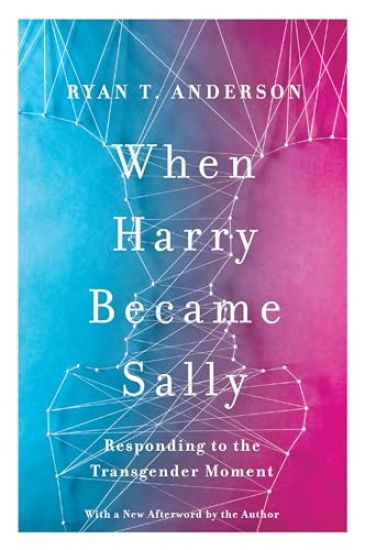
Can a boy be “trapped” in a girl’s body? Can modern medicine “reassign” sex? Is our sex “assigned” to us in the first place? What is the most loving response to a person experiencing a conflicted sense of gender? What should our law say on matters of “gender identity”? When Harry Became Sally provides thoughtful answers to questions arising from our transgender moment. Drawing on the best insights from biology, psychology, and philosophy, Ryan Anderson offers a nuanced view of human embodiment, a balanced approach to public policy on gender identity, and a sober assessment of the human costs of getting human nature wrong. This book exposes the contrast between the media’s sunny depiction of gender fluidity and the often sad reality of living with gender dysphoria. It gives a voice to people who tried to “transition” by changing their bodies, and found themselves no better off. Especially troubling are the stories told by adults who were encouraged to transition as children but later regretted subjecting themselves to those drastic procedures. As Anderson shows, the most beneficial therapies focus on helping people accept themselves and live in harmony with their bodies. This understanding is vital for parents with children in schools where counselors may steer a child toward transitioning behind their backs. Everyone has something at stake in the controversies over transgender ideology, when misguided “antidiscrimination” policies allow biological men into women’s restrooms and penalize Americans who hold to the truth about human nature. Anderson offers a strategy for pushing back with principle and prudence, compassion and grace.
Can a boy be "trapped" in a girl's body? Can modern medicine "reassign" sex? Is our sex "assigned" to us in the first place? What is the most loving response to a person experiencing a conflicted sense of gender? What should our law say on matters of "gender identity"? When Harry Became Sally provides thoughtful answers to questions arising from our transgender moment. Drawing on the best insights from biology, psychology, and philosophy, Ryan Anderson offers a nuanced view of human embodiment, a balanced approach to public policy on gender identity, and a sober assessment of the human costs of getting human nature wrong. This book exposes the contrast between the media's sunny depiction of gender fluidity and the often sad reality of living with gender dysphoria. It gives a voice to people who tried to "transition" by changing their bodies, and found themselves no better off. Especially troubling are the stories told by adults who were encouraged to transition as children but later regretted subjecting themselves to those drastic procedures. As Anderson shows, the most beneficial therapies focus on helping people accept themselves and live in harmony with their bodies. This understanding is vital for parents with children in schools where counselors may steer a child toward transitioning behind their backs. Everyone has something at stake in the controversies over transgender ideology, when misguided "antidiscrimination" policies allow biological men into women's restrooms and penalize Americans who hold to the truth about human nature. Anderson offers a strategy for pushing back with principle and prudence, compassion and grace.
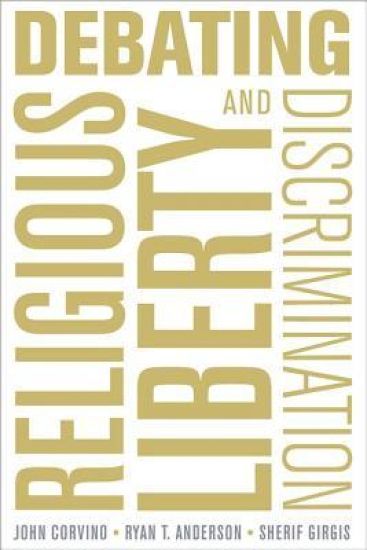
Virtually everyone supports religious liberty, and virtually everyone opposes discrimination. But how do we handle the hard questions that arise when exercises of religious liberty seem to discriminate unjustly? How do we promote the common good while respecting conscience in a diverse society? This point-counterpoint book brings together leading voices in the culture wars to debate such questions: John Corvino, a longtime LGBT-rights advocate, opposite Ryan T. Anderson and Sherif Girgis, prominent young social conservatives. Many such questions have arisen in response to same-sex marriage: How should we treat county clerks who do not wish to authorize such marriages, for example; or bakers, florists, and photographers who do not wish to provide same-sex wedding services? But the conflicts extend well beyond the LGBT rights arena. How should we treat hospitals, schools, and adoption agencies that can't in conscience follow antidiscrimination laws, healthcare mandates, and other regulations? Should corporations ever get exemptions? Should public officials? Should we keep controversial laws like the Religious Freedom Restoration Act, or pass new ones like the First Amendment Defense Act? Should the law give religion and conscience special protection at all, and if so, why? What counts as discrimination, and when is it unjust? What kinds of material and dignitary harms should the law try to fight-and what is dignitary harm, anyway? Beyond the law, how should we treat religious beliefs and practices we find mistaken or even oppressive? Should we tolerate them or actively discourage them? In point-counterpoint format, Corvino, Anderson and Girgis explore these questions and more. Although their differences run deep, they tackle them with civility, clarity, and flair. Their debate is an essential contribution to contemporary discussions about why religious liberty matters and what respecting it requires.
Virtually everyone supports religious liberty, and virtually everyone opposes discrimination. But how do we handle the hard questions that arise when exercises of religious liberty seem to discriminate unjustly? How do we promote the common good while respecting conscience in a diverse society? This point-counterpoint book brings together leading voices in the culture wars to debate such questions: John Corvino, a longtime LGBT-rights advocate, opposite Ryan T. Anderson and Sherif Girgis, prominent young social conservatives. Many such questions have arisen in response to same-sex marriage: How should we treat county clerks who do not wish to authorize such marriages, for example; or bakers, florists, and photographers who do not wish to provide same-sex wedding services? But the conflicts extend well beyond the LGBT rights arena. How should we treat hospitals, schools, and adoption agencies that can't in conscience follow antidiscrimination laws, healthcare mandates, and other regulations? Should corporations ever get exemptions? Should public officials? Should we keep controversial laws like the Religious Freedom Restoration Act, or pass new ones like the First Amendment Defense Act? Should the law give religion and conscience special protection at all, and if so, why? What counts as discrimination, and when is it unjust? What kinds of material and dignitary harms should the law try to fightand what is dignitary harm, anyway? Beyond the law, how should we treat religious beliefs and practices we find mistaken or even oppressive? Should we tolerate them or actively discourage them? In point-counterpoint format, Corvino, Anderson and Girgis explore these questions and more. Although their differences run deep, they tackle them with civility, clarity, and flair. Their debate is an essential contribution to contemporary discussions about why religious liberty matters and what respecting it requires.