
Kirjojen hintavertailu – 12 903 724 kirjaa ja 27 kauppaa

Kirjailija

S. Brian Willson

Kirjat ja teokset yhdessä paikassa: 2 kirjaa, julkaisuja vuosilta 2018–2020, suosituimpiin kuuluu Don't Thank Me for My Service. Vertaile teosten hintoja ja tarkista saatavuus suomalaisista kirjakaupoista.

2 kirjaa

Kirjojen julkaisuvuodet: 2018–2020.

No More War

No More War

Dan Kovalik; S. Brian Willson

Skyhorse Publishing
2020
sidottu
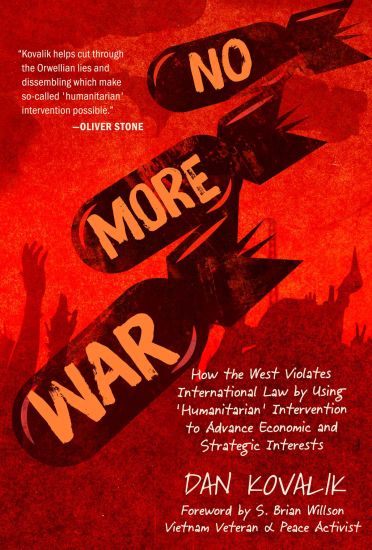
"Kovalik helps cut through the Orwellian lies and dissembling which make so-called 'humanitarian' intervention possible." —Oliver Stone War is the fount of all the worst human rights violations-including genocide-and not its cure. This undeniable truth, which the framers of the UN Charter understood so well, is lost in today’s obsession with the oxymoron known as “humanitarian" intervention. No More War: How the West Violates International Law by Using 'Humanitarian' Intervention to Advance Economic and Strategic Interests sets out to reclaim the original intent of the Charter founders to end the scourge of war on the heels of the devastation wrought by WWII. The book begins with a short history of the West’s development as built upon the mass plunder of the Global South, genocide and slavery, and challenges the prevailing notion that the West is uniquely poised to enforce human rights through force. This book also goes through recent “humanitarian" interventions carried out by the Western powers against poorer nations (e.g., in the DRC, Congo, and Iraq) and shows how these have only created greater human rights problems – including genocide – than they purported to stop or prevent. No More War reminds the reader of the key lessons of Nuremberg – that war is the primary scourge of the world, the root of all the evils which international law seeks to prevent and eradicate, and which must be prevented. The reader is then taken through the UN Charter and other human rights instruments and their emphasis on the prevention of aggressive war.

Don't Thank Me for My Service

Don't Thank Me for My Service

S. Brian Willson

Clarity Press
2018
nidottu
In Don't Thank Me for My Service, the author recounts his tour of duty in Viet Nam, which provided a toxic shock and awakened him to the extent to which he and generations of American citizens had thoughtlessly succumbed to the relentless barrage of lies and propaganda that infest US culture—from the military and political parties to religious institutions, academic and educational institutions, sports, fraternal and professional associations, the scientific community, the economic system, and even entertainment—that seek to rationalize the US' otherwise inexplicable and morally repulsive behaviour around the world and at home. Indeed US American history reveals a unifying theme: prosperity for a few through expansion at any cost, to preserve the exceptional American Way of Life (AWOL). This has been structurally guided and facilitated by the nation's founding documents, including the US Constitution. From the beginning, the US was envisaged as a White male supremacist state serving to protect and advance the interests of private and commercial property, and this course has never been reversed, though the 1960s witnessed multiple aligned social movements. The US-waged war in Viet Nam is one of hundreds of examples in a long pattern of brutal exploitation. A quick review of the empirical record reveals close to 600 overt military interventions by the US into dozens of countries since 1798, almost 400 since the end of World War II alone, and thousands of covert interventions since 1947. This history overwhelms any rhetoric about the United States as a beacon of freedom and democracy, committed to promoting domestic and global equal justice under law. Such interventions have assured de facto subsidies for US American interests, regulated global markets on US terms, and provided access to cheap or free labour and to raw materials. Millions of people around the globe have been murdered with virtual impunity as a result of US interventions in a pattern that illustrates what Noam Chomsky calls the Fifth Freedom—the freedom to rob and exploit. This freedom is ultimately protected with use of force when a country or movement seeks to protect or advance the domestic needs and desires of its members or citizens for political freedom or economic wellbeing. This book provides an invaluable tool for today's activists, who may be similarly shocked into wakefulness—whether by war, economic dispossession, or loss of the freedom to dissent.