Kirjojen hintavertailu – 12 903 725 kirjaa ja 27 kauppaa

Kirjailija

S. C. M. Paine

Kirjat ja teokset yhdessä paikassa: 9 kirjaa, julkaisuja vuosilta 2002–2024, suosituimpiin kuuluu Modern China. Vertaile teosten hintoja ja tarkista saatavuus suomalaisista kirjakaupoista.

9 kirjaa

Kirjojen julkaisuvuodet: 2002–2024.

Principles of Maritime Power

Principles of Maritime Power

Bruce A. Elleman; S. C. M. Paine

BLOOMSBURY PUBLISHING PLC
2024
nidottu
Maritime powers dominate the planet, from the British empire of the 19th century, to the American post-World War II domination of global affairs. To a large degree their control of the globe is based on control of the seas. This book seeks to examine the strengths and weaknesses of maritime power, including specific chapters on mutiny, blockades, coalitions, piracy, expeditionary warfare, commerce raiding, and soft power operations, but with larger discussion of such sea power characteristics as sea control, sea denial, and the competition between land powers and sea powers. The conclusions will discuss how many other countries, including Russia during the Cold War and the PRC today, have or are seeking to use sea power to claim regional and then eventually global hegemony.

Principles of Maritime Power

Principles of Maritime Power

Bruce A. Elleman; S. C. M. Paine

BLOOMSBURY PUBLISHING PLC
2022
sidottu
Maritime powers dominate the planet, from the British empire of the 19th century, to the American post-World War II domination of global affairs. To a large degree their control of the globe is based on control of the seas. This book seeks to examine the strengths and weaknesses of maritime power, including specific chapters on mutiny, blockades, coalitions, expeditionary warfare, piracy, commerce raiding, and soft power operations, but with larger discussion of such sea power characteristics as sea control, sea denial, and the competition between land powers and sea powers. The conclusions will discuss how many other countries, including Russia during the Cold War and the PRC today, have or are seeking to use sea power to claim regional and then eventually global hegemony.
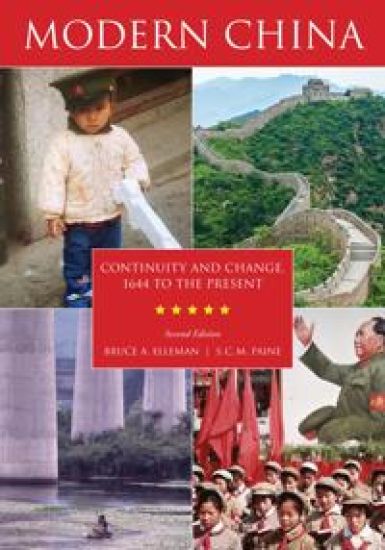
Modern China

Modern China

Bruce A. Elleman; S. C. M. Paine

Rowman Littlefield
2019
sidottu
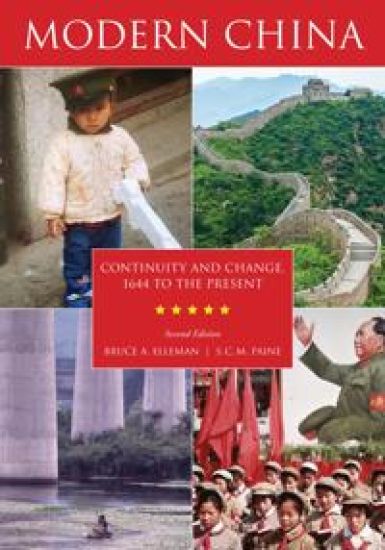
Now in a fully updated edition, this accessible text provides a balanced history of modern China in a global context. Through years of living and research in China, Taiwan, Japan, and Russia, the authors are deeply qualified to understand China’s internal dynamics as well as its foreign relations over centuries. Arguing that modern Chinese history cannot be understood without a deep appreciation of the outside factors that have influenced the country, the authors focus on China’s near neighbors, especially Japan and Russia. They also emphasize the tragic role of almost endless warfare throughout Chinese history. Providing a unique comparative approach, the authors bridge the cultural divide separating Chinese history from Western readers trying to understand it. Specifically geared to the teaching requirements of the semester system, the book is divided into four parts and a total of twenty-eight chapters, corresponding either to two chapters per week in a fourteen-week semester or one chapter per week in a two-semester course.
Modern China

Modern China

Bruce A. Elleman; S. C. M. Paine

Rowman Littlefield
2019
nidottu
Now in a fully updated edition, this accessible text provides a balanced history of modern China in a global context. Through years of living and research in China, Taiwan, Japan, and Russia, the authors are deeply qualified to understand China’s internal dynamics as well as its foreign relations over centuries. Arguing that modern Chinese history cannot be understood without a deep appreciation of the outside factors that have influenced the country, the authors focus on China’s near neighbors, especially Japan and Russia. They also emphasize the tragic role of almost endless warfare throughout Chinese history. Providing a unique comparative approach, the authors bridge the cultural divide separating Chinese history from Western readers trying to understand it. Specifically geared to the teaching requirements of the semester system, the book is divided into four parts and a total of twenty-eight chapters, corresponding either to two chapters per week in a fourteen-week semester or one chapter per week in a two-semester course.
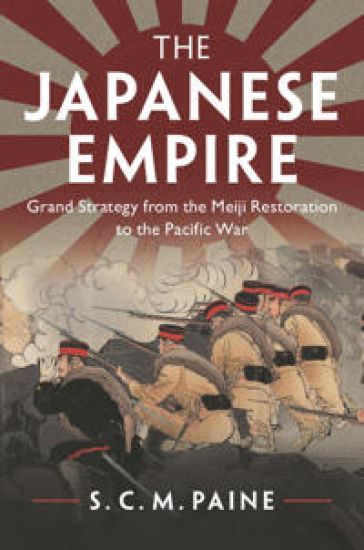
The Japanese Empire

The Japanese Empire

S. C. M. Paine

Cambridge University Press
2017
pokkari

Halvin toimitettuna 30,60 €

The Japanese experience of war from the late-nineteenth to the mid-twentieth century presents a stunning example of the meteoric rise and shattering fall of a great power. As Japan modernized and became the one non-European great power, its leaders concluded that an empire on the Asian mainland required the containment of Russia. Japan won the First Sino-Japanese War (1894–5) and the Russo-Japanese War (1904–5) but became overextended in the Second Sino-Japanese War (1931–45), which escalated, with profound consequences, into World War II. A combination of incomplete institution building, an increasingly lethal international environment, a skewed balance between civil and military authority, and a misunderstanding of geopolitics explains these divergent outcomes. This analytical survey examines themes including the development of Japanese institutions, diversity of opinion within the government, domestic politics, Japanese foreign policy and China's anti-Japanese responses. It is an essential guide for those interested in history, politics and international relations.
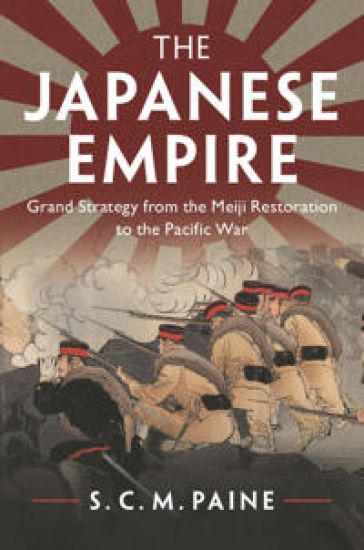
The Japanese Empire

The Japanese Empire

S. C. M. Paine

Cambridge University Press
2017
sidottu
The Japanese experience of war from the late-nineteenth to the mid-twentieth century presents a stunning example of the meteoric rise and shattering fall of a great power. As Japan modernized and became the one non-European great power, its leaders concluded that an empire on the Asian mainland required the containment of Russia. Japan won the First Sino-Japanese War (1894–5) and the Russo-Japanese War (1904–5) but became overextended in the Second Sino-Japanese War (1931–45), which escalated, with profound consequences, into World War II. A combination of incomplete institution building, an increasingly lethal international environment, a skewed balance between civil and military authority, and a misunderstanding of geopolitics explains these divergent outcomes. This analytical survey examines themes including the development of Japanese institutions, diversity of opinion within the government, domestic politics, Japanese foreign policy and China's anti-Japanese responses. It is an essential guide for those interested in history, politics and international relations.
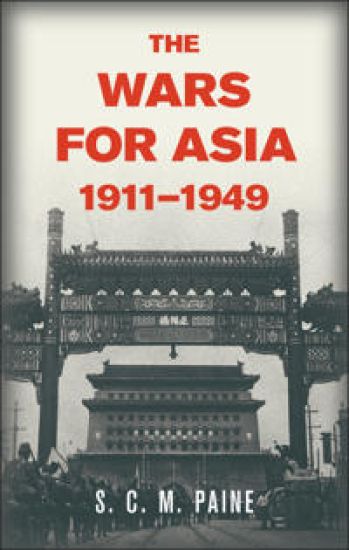
The Wars for Asia, 1911–1949

The Wars for Asia, 1911–1949

S. C. M. Paine

Cambridge University Press
2014
pokkari

Halvin toimitettuna 34,00 €

The Wars for Asia, 1911–1949 shows that the Western treatment of World War II, the Second Sino-Japanese War and the Chinese Civil War as separate events misrepresents their overlapping connections and causes. The Chinese Civil War precipitated a long regional war between China and Japan that went global in 1941 when the Chinese found themselves fighting a civil war within a regional war within an overarching global war. The global war that consumed Western attentions resulted from Japan's peripheral strategy to cut foreign aid to China by attacking Pearl Harbour and Western interests throughout the Pacific in 1941. S. C. M. Paine emphasizes the fears and ambitions of Japan, China and Russia, and the pivotal decisions that set them on a collision course in the 1920s and 1930s. The resulting wars together yielded a viscerally anti-Japanese and unified Communist China, the still-angry rising power of the early twenty-first century.
The Sino-Japanese War of 1894–1895

The Sino-Japanese War of 1894–1895

S. C. M. Paine

Cambridge University Press
2005
pokkari
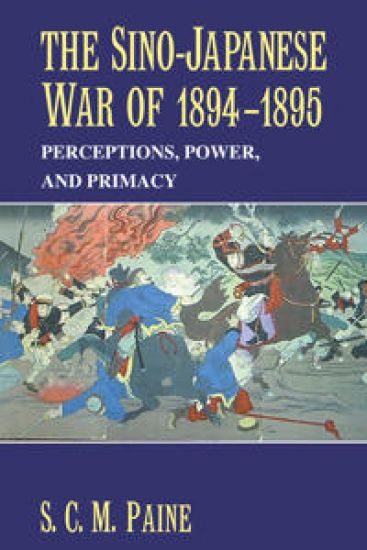
The Sino-Japanese War of 1894–1895 is a seminal event in world history, yet it has been virtually ignored in Western literature. In the East, the focus of Chinese foreign policy has been to undo its results whereas the focus of Japanese foreign policy has been to confirm them. Japan supplanted China as the dominant regional power, disrupting the traditional power balance and fracturing the previous international harmony within the Confucian world, leaving enduring territorial and political fault lines that have embroiled China, Japan, Korea, Russia, and Taiwan ever since. The book examines the war through the eyes of the journalists who filed reports from China, Japan, Russia, Europe, and the United States showing how the war changed outside perceptions of the relative power of China and Japan and the consequences of these changed perceptions, namely, the scramble for concessions in China and Japan's emergence as a great power.
The Sino-Japanese War of 1894–1895

The Sino-Japanese War of 1894–1895

S. C. M. Paine

Cambridge University Press
2002
sidottu
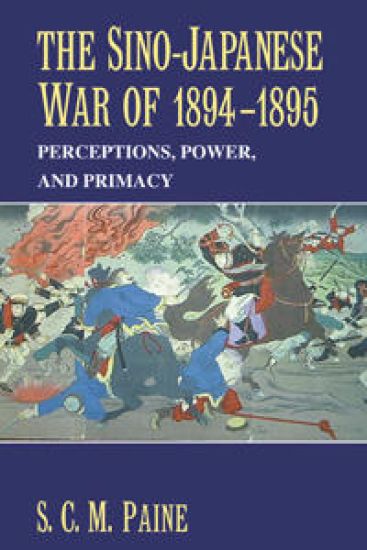
The Sino-Japanese War of 1894–1895 is a seminal event in world history, yet it has been virtually ignored in Western literature. In the East, the focus of Chinese foreign policy has been to undo its results whereas the focus of Japanese foreign policy has been to confirm them. Japan supplanted China as the dominant regional power, disrupting the traditional power balance and fracturing the previous international harmony within the Confucian world, leaving enduring territorial and political fault lines that have embroiled China, Japan, Korea, Russia, and Taiwan ever since. The book examines the war through the eyes of the journalists who filed reports from China, Japan, Russia, Europe, and the United States showing how the war changed outside perceptions of the relative power of China and Japan and the consequences of these changed perceptions, namely, the scramble for concessions in China and Japan's emergence as a great power.