Kirjojen hintavertailu – 12 903 725 kirjaa ja 27 kauppaa

Kirjailija

S. Craig Watkins

Kirjat ja teokset yhdessä paikassa: 10 kirjaa, julkaisuja vuosilta 1998–2021, suosituimpiin kuuluu Young People’s Transitions into Creative Work. Vertaile teosten hintoja ja tarkista saatavuus suomalaisista kirjakaupoista.

Nimi esiintyy myös muodoissa: S Craig Watkins

10 kirjaa

Kirjojen julkaisuvuodet: 1998–2021.

Young People’s Transitions into Creative Work

Young People’s Transitions into Creative Work

Julian Sefton-Green; S Craig Watkins; Ben Kirshner

Routledge
2021
nidottu
Exploring how formal and informal education initiatives and training systems in the US, UK and Australia seek to achieve a socially diverse workforce, this insightful book offers a series of detailed case studies to reveal the initiative and ingenuity shown by today’s young people as they navigate entry into creative fields of work. Young People’s Journeys into Creative Work acknowledges the new and diverse challenges faced by today's youth as they look to enter employment. Chapters trace the rise of indie work, aspirational labour, economic precarity, and the disruptive effects of digital technologies, to illustrate the oinventive ways in which youth from varied socio-economic and cultural backgrounds enter into work in film, games production, music, and the visual arts. From hip-hop to new media arts, the text explores how opportunities for creative work have multiplied in recent years as digital technologies open new markets, new scenes, and new opportunities for entrepreneurs and innovation. This book will be of great interest to researchers, academics and postgraduate students in the fields of youth studies, careers guidance, media studies, vocational education and sociology of education.
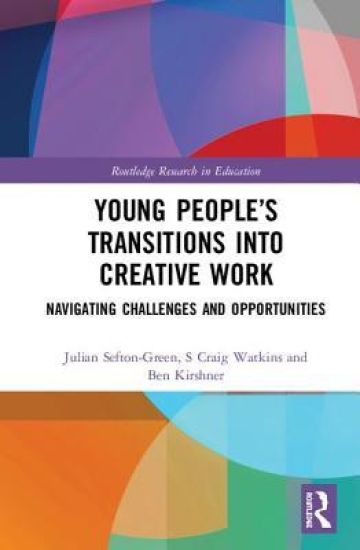
Young People’s Transitions into Creative Work

Young People’s Transitions into Creative Work

Julian Sefton-Green; S Craig Watkins; Ben Kirshner

Routledge
2019
sidottu
Exploring how formal and informal education initiatives and training systems in the US, UK and Australia seek to achieve a socially diverse workforce, this insightful book offers a series of detailed case studies to reveal the initiative and ingenuity shown by today’s young people as they navigate entry into creative fields of work. Young People’s Journeys into Creative Work acknowledges the new and diverse challenges faced by today's youth as they look to enter employment. Chapters trace the rise of indie work, aspirational labour, economic precarity, and the disruptive effects of digital technologies, to illustrate the oinventive ways in which youth from varied socio-economic and cultural backgrounds enter into work in film, games production, music, and the visual arts. From hip-hop to new media arts, the text explores how opportunities for creative work have multiplied in recent years as digital technologies open new markets, new scenes, and new opportunities for entrepreneurs and innovation. This book will be of great interest to researchers, academics and postgraduate students in the fields of youth studies, careers guidance, media studies, vocational education and sociology of education.
Don't Knock the Hustle

Don't Knock the Hustle

S. Craig Watkins

Beacon Press
2020
nidottu
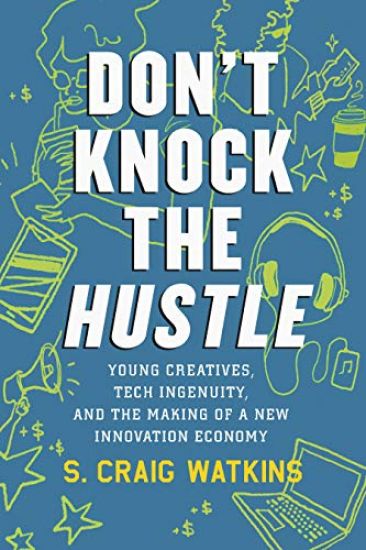
Offers a timely analysis of the sheer ingenuity and persistence of young people who cobble together the resources they need to pursue the lives and careers they want. Young adults are coming of age at a time when work is temporary, underpaid, incommensurate with their education, or downright unsatisfying. Despite these challenges, media scholar S. Craig Watkins argues that this moment of precarity is rife with opportunities for innovation, and that young adults are leading the charge in turning that into an inventive and surprisingly sustainable future. As a result, society is expanding its understanding of who we think of as innovators and what qualifies as innovation, while wealth is spreading beyond traditional corridors of powerful tech companies, venture capitalism, and well-endowed universities. Drawing on over ten years of interviews and data, Watkins reveals the radical ways in which this community of ambitious young creatives is transforming businesses from the outside in. Diverse perspectives that are often ignored or silenced by major corporations are garnering public attention as women and people of color are redefining industries across the globe--all from their computer screens. We meet people like Prince Harvey, a New York-based hip-hop artist who recorded his album entirely on an Apple showroom laptop; screenwriter, producer, and actor Issa Rae, who first used YouTube and Kickstarter to develop the web series that became her hit HBO show Insecure; the Empowerment Plan, a nonprofit organization created by product design student Veronika Scott in Detroit; and start-up companies like Qeyno Group in San Francisco and Juegos Rancheros in Austin that help make tech more accessible to people of color. Forward-thinking and dynamic, Don't Knock the Hustle shows the diversity and complexity of a generation on the rise. UNIQUE APPROACH TO UNDERSTANDING MILLENNIALS that looks beyond stereotypes about their relationships with tech and labor, based on two years of MacArthur Grant-funded research. DIVERSE AUDIENCE APPEAL that will reach millennials, educators, people seeking to hire millennials, and scholars of technology, media, and labor.
The Digital Edge

The Digital Edge

S. Craig Watkins; Alexander Cho

New York University Press
2018
sidottu
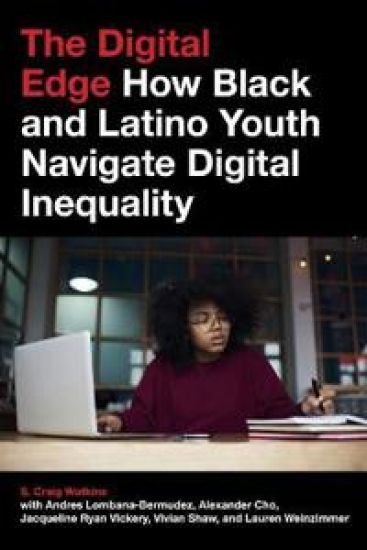
How black and Latino youth learn, create, and collaborate online The Digital Edge examines how the digital and social-media lives of low-income youth, especially youth of color, have evolved amidst rapid social and technological change. While notions of the digital divide between the "technology rich" and the "technology poor" have largely focused on access to new media technologies, the contours of the digital divide have grown increasingly complex. Analyzing data from a year-long ethnographic study at Freeway High School, the authors investigate how the digital media ecologies and practices of black and Latino youth have adapted as a result of the wider diffusion of the internet all around us--in homes, at school, and in the palm of our hands. Their eager adoption of different technologies forge new possibilities for learning and creating that recognize the collective power of youth: peer networks, inventive uses of technology, and impassioned interests that are remaking the digital world. Relying on nearly three hundred in-depth interviews with students, teachers, and parents, and hundreds of hours of observation in technology classes and after school programs, The Digital Edge carefully documents some of the emergent challenges for creating a more equitable digital and educational future. Focusing on the complex interactions between race, class, gender, geography and social inequality, the book explores the educational perils and possibilities of the expansion of digital media into the lives and learning environments of low-income youth. Ultimately, the book addresses how schools can support the ability of students to develop the social, technological, and educational skills required to navigate twenty-first century life.
The Digital Edge

The Digital Edge

S. Craig Watkins; Alexander Cho

New York University Press
2018
pokkari
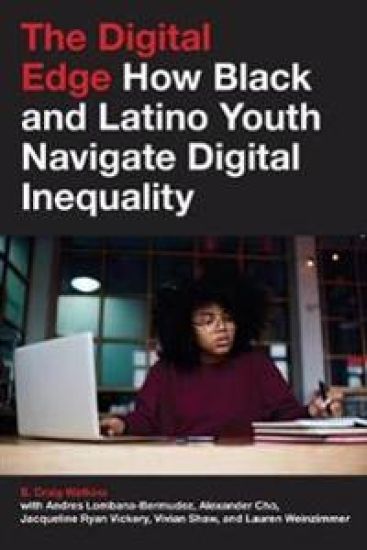
How black and Latino youth learn, create, and collaborate online The Digital Edge examines how the digital and social-media lives of low-income youth, especially youth of color, have evolved amidst rapid social and technological change. While notions of the digital divide between the "technology rich" and the "technology poor" have largely focused on access to new media technologies, the contours of the digital divide have grown increasingly complex. Analyzing data from a year-long ethnographic study at Freeway High School, the authors investigate how the digital media ecologies and practices of black and Latino youth have adapted as a result of the wider diffusion of the internet all around us--in homes, at school, and in the palm of our hands. Their eager adoption of different technologies forge new possibilities for learning and creating that recognize the collective power of youth: peer networks, inventive uses of technology, and impassioned interests that are remaking the digital world. Relying on nearly three hundred in-depth interviews with students, teachers, and parents, and hundreds of hours of observation in technology classes and after school programs, The Digital Edge carefully documents some of the emergent challenges for creating a more equitable digital and educational future. Focusing on the complex interactions between race, class, gender, geography and social inequality, the book explores the educational perils and possibilities of the expansion of digital media into the lives and learning environments of low-income youth. Ultimately, the book addresses how schools can support the ability of students to develop the social, technological, and educational skills required to navigate twenty-first century life.
Worried About the Wrong Things

Worried About the Wrong Things

Jacqueline Ryan Vickery; S. Craig Watkins

MIT Press
2018
pokkari
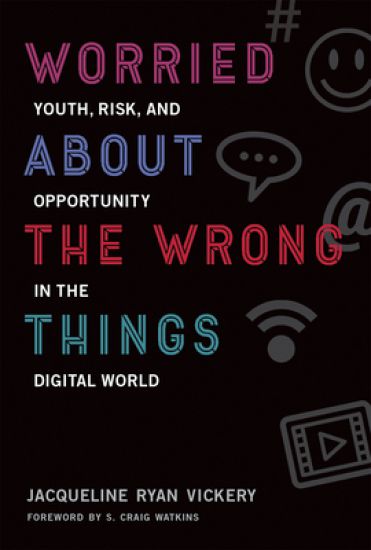
Why media panics about online dangers overlook another urgent concern: creating equitable online opportunities for marginalized youth. It's a familiar narrative in both real life and fiction, from news reports to television storylines: a young person is bullied online, or targeted by an online predator, or exposed to sexually explicit content. The consequences are bleak; the young person is shunned, suicidal, psychologically ruined. In this book, Jacqueline Ryan Vickery argues that there are other urgent concerns about young people's online experiences besides porn, predators, and peers. We need to turn our attention to inequitable opportunities for participation in a digital culture. Technical and material obstacles prevent low-income and other marginalized young people from the positive, community-building, and creative experiences that are possible online. Vickery explains that cautionary tales about online risk have shaped the way we think about technology and youth. She analyzes the discourses of risk in popular culture, journalism, and policy, and finds that harm-driven expectations, based on a privileged perception of risk, enact control over technology. Opportunity-driven expectations, on the other hand, based on evidence and lived experience, produce discourses that acknowledge the practices and agency of young people rather than seeing them as passive victims who need to be protected. Vickery first addresses how the discourses of risk regulate and control technology, then turns to the online practices of youth at a low-income, minority-majority Texas high school. She considers the participation gap and the need for schools to teach digital literacies, privacy, and different online learning ecologies. Finally, she shows that opportunity-driven expectations can guide young people's online experiences in ways that balance protection and agency.
Hip Hop Matters

Hip Hop Matters

S. Craig Watkins

Beacon Press
2006
pokkari
Avoiding the easy definitions and caricatures that tend to celebrate or condemn the "hip hop generation," "Hip Hop Matters" focuses on fierce and far-reaching battles being waged in politics, pop culture, and academe to assert control over the movement. At stake, Watkins argues, is the impact hip hop has on the lives of the young people who live and breathe the culture. He presents incisive analysis of the corporate takeover of hip hop and the rampant misogyny that undermines the movement's progressive claims. Ultimately, we see how hip hop struggles reverberate in the larger world: global media consolidation; racial and demographic flux; generational cleavages; the reinvention of the pop music industry; and the ongoing struggle to enrich the lives of ordinary youth.
Representing

Representing

S. Craig Watkins

University of Chicago Press
1999
nidottu
In this text, S. Craig Watkins examines two of the important developments in the recent history of black cinema - the ascendancy of Spike Lee and the proliferation of "ghettocentric films". The work explores a distinct contradiction in American society - at the same time that black youth have become the targets of a fierce racial backlash, their popular expressive cultures have become highly visible and commercially viable.
Representing

Representing

S. Craig Watkins

University of Chicago Press
1998
sidottu
This is an examination of two episodes in the recent history of black film - the ascendancy of Spike Lee and the proliferation of "hood" films such as "Boyz N the Hood" and "Menace II Society". This text argues that black youth have become targets of a fierce racial backlash against crime, drugs, affirmative action and rap music. It sets out to explain the increased visibility and commercial viability of African-American filmmaking, showing that the black film wave was driven by several factors - the transformation of the popular film industry; a reinvigorated independent filmmaking niche; the cross-marketing of music, video and film; a burgeoning of hip hop consumer culture; and historically specific struggles over the meanings and representation of "blackness" in America. The book contends that despite the social and economic marginalization of black youth, they have gained unprecedented access to the popular media and have been remarkably resilient in cultivating practices which influence not only black popular culture, but the broader US popular culture scene.