Kirjojen hintavertailu – 12 903 724 kirjaa ja 27 kauppaa

Kirjailija

S. K. Jain

Kirjat ja teokset yhdessä paikassa: 17 kirjaa, julkaisuja vuosilta 1959–2025, suosituimpiin kuuluu Properties of Aquifer Material obtained from Burhi Gandak Basin. Vertaile teosten hintoja ja tarkista saatavuus suomalaisista kirjakaupoista.

Nimi esiintyy myös muodoissa: S K Jain, S.K. Jain

17 kirjaa

Kirjojen julkaisuvuodet: 1959–2025.

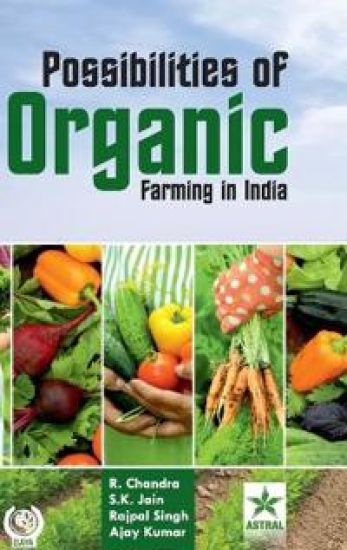
Possibilities of Organic Farming in India (Edition1st)

Possibilities of Organic Farming in India (Edition1st)

R Chandra; S K Jain

Astral International Pvt Ltd
2023
sidottu
Book is to provide an overview of the potential role and challenges of organic farming in this global perspective, as seen from different perspectives such as sustainability, food security and fair trade. Initially, the book provides an overall status of global trends in agriculture followed by discussions of possibilities sustainability, globalization and the relative new concepts of 'ecological justice'.
Advances in Ring Theory

Advances in Ring Theory

S.K. Jain; Rizvi S. Tariq

Springer-Verlag New York Inc.
2012
nidottu
This volume is an outcomeof invited lecturesdelivered at the Ring Theory Section of the 23rd Ohio State-DenisonConferencein May 1996. It also contains articles by some invited mathematicianswho could not attend the conference. These peer-refereedarticles showcasethe latest developmentsand trends in classicalRing Theory, highlighting the cro- fertilization of new techniquesand ideaswith the existing ones. Providing a wide variety of methodologies,this volume should be valuable both to graduatestudentsas well as to specialistsin Ring Theory. We would like to thank our colleagueswho investeda lot of their time to make the conferencea great success. In particular, our thanks go to ProfessorsTom Dowling, Dan Sanders,SurinderSehgal,Ron Solomonand Sergio R. L6pez-Permouthfor their help. The financial support for the Conference,provided by the Departmentof Mathematics,The Ohio State University, and MathematicsResearchInstitute, Columbus, is gratefully acknowleged. Many thanksgo to Dean Violet I. Meek for her commitment to the promotion of researchby her continuousencouragement of such efforts and for providing financial support from the Lima campusof The Ohio StateUniversity. We havereceivedimmensecooperationfrom all the refereeswho, meticulouslyand in a very short time, provided us with their reports in spite of their busy schedules. We expressour sincerethanks to all of them. Finally, we thank Ms. Cindy White for her excellent job in typing parts of this volume. We are pleasedto dedicatethis volume to ProfessorBruno J. Miiller on the occasionof his retirementfor his many contributionsto the Theory of Rings and Modules. As this volume was going to presswe have learned that ProfessorCarl Faith is retiring this year.
Cyclic Modules and the Structure of Rings

Cyclic Modules and the Structure of Rings

S.K. Jain; Ashish K. Srivastava; Askar A. Tuganbaev

Oxford University Press
2012
sidottu
This unique and comprehensive volume provides an up-to-date account of the literature on the subject of determining the structure of rings over which cyclic modules or proper cyclic modules have a finiteness condition or a homological property. The finiteness conditions and homological properties are closely interrelated in the sense that either hypothesis induces the other in some form. This is the first book to bring all of this important material on the subject together. Over the last 25 years or more numerous mathematicians have investigated rings whose factor rings or factor modules have a finiteness condition or a homological property. They made important contributions leading to new directions and questions, which are listed at the end of each chapter for the benefit of future researchers. There is a wealth of material on the topic which is combined in this book, it contains more than 200 references and is not claimed to be exhaustive. This book will appeal to graduate students, researchers, and professionals in algebra with a knowledge of basic noncommutative ring theory, as well as module theory and homological algebra, equivalent to a one-year graduate course in the theory of rings and modules.
Basic Abstract Algebra

Basic Abstract Algebra

P. B. Bhattacharya; S. K. Jain; S. R. Nagpaul

Cambridge University Press
1994
pokkari
This book represents a complete course in abstract algebra, providing instructors with flexibility in the selection of topics to be taught in individual classes. All the topics presented are discussed in a direct and detailed manner. Throughout the text, complete proofs have been given for all theorems without glossing over significant details or leaving important theorems as exercises. The book contains many examples fully worked out and a variety of problems for practice and challenge. Solutions to the odd-numbered problems are provided at the end of the book. This new edition contains an introduction to lattices, a new chapter on tensor products and a discussion of the new (1993) approach to the celebrated Lasker–Noether theorem. In addition, there are over 100 new problems and examples, particularly aimed at relating abstract concepts to concrete situations.
Basic Abstract Algebra

Basic Abstract Algebra

P. B. Bhattacharya; S. K. Jain; S. R. Nagpaul

Cambridge University Press
1994
sidottu
This book represents a complete course in abstract algebra, providing instructors with flexibility in the selection of topics to be taught in individual classes. All the topics presented are discussed in a direct and detailed manner. Throughout the text, complete proofs have been given for all theorems without glossing over significant details or leaving important theorems as exercises. The book contains many examples fully worked out and a variety of problems for practice and challenge. Solutions to the odd-numbered problems are provided at the end of the book. This new edition contains an introduction to lattices, a new chapter on tensor products and a discussion of the new (1993) approach to the celebrated Lasker–Noether theorem. In addition, there are over 100 new problems and examples, particularly aimed at relating abstract concepts to concrete situations.
Cytogenetics of Rye (Secale Spp.)
Rye first appeared rather late in the history of human civilization. The oldest archaeological records of rye date from the Hallstatt period in Silesia, Thuringia and Westfalia and from the Lacene period. After the pioneering work of N. 1. V AVILOV on the origin of cultivated plants three broad classes came in recognition: wild, weedy and cultivated rye. As a crop, rye is most winterhardy of all cereals so that in Northern Europe its cultivation reaches beyond the Arctic circle in Finland. While Soviet Russia contributes most to the total world production, in Finland, Poland, Germany, Sweden, Netherlands and Belgium also its rank is high among grain crops. It is striking to note that for the past many years, research on practical agronomical and breeding problems has been quite active in these countries and current­ ly attempts to improve rye are being made on modern lines. Some of the main problems in this field concern with the development of hybrid varieties, improvement of autotetraploid fertility, use of best pollina­ tion procedures to obtain highly self-fertile lines and the transfer of rye characters to wheat as such or in the form of amphiploid Triticales. In Russia, however, the Michurinist agrobiologists are primarily engaged in the study of interspecific conversions, branched ear types and nutritional methods of improving varieties, and perhaps this is one reason of only little having been known about rye genetics.

Male Sterility in Flowering Plants
or fruit production as a consequence of the lack of optimum pollination conditions (CLARK and FRYER, 1920; ARMSTRONG and WHITE, 1935; VALLEAU, 1918; KVAALE, 1927; and many others). In order to mini­ mize the influence of poor pollen producers, systematic planning of a field planting or an orchard might be necessary. Above all, the im­ portant reason for its wide popularity is its potential use in the com­ mercial production of hybrid seed. A male-sterile plant is an effective female for a crossing program and its employment renders the labori­ ous procedure of emasculation superfluous. ]ONES and EMSWELLER (1937) and STEPHENS (1937) were probably the first to outline a scheme of its application in onion and sorghum respectively. However certain specific problems have limited the practicability and hence some of them will be mentioned in a later seetion (Section VIII). Lately several attempts have been made to obtain some chemie al method for the artificial induction of male sterility. However, for a successful approach to the induction problem a thorough understan­ ding of various pathways that bring about pollen abortion in naturally occurring cases, would be of great value. It may be hoped that data from these induction experiments alongwith the available biochemi­ cal analyses would lead to the emergence and elucidation of useful information of both theoretical and practical interest.