Kirjojen hintavertailu – 12 903 724 kirjaa ja 27 kauppaa
Kirjailija
S K Mishra
Kirjat ja teokset yhdessä paikassa: 6 kirjaa, julkaisuja vuosilta 2003–2024, suosituimpiin kuuluu THE ETERNAL TRIANGLE. Vertaile teosten hintoja ja tarkista saatavuus suomalaisista kirjakaupoista.
Nimi esiintyy myös muodoissa: S. K. Mishra, S.K. Mishra
Pandit Deendayal Upadhyaya was an Indian politician, a profound philosopher, organiser par excellence, proponent of Integral humanism ideology and leader of the political party Bharatiya Jana Sangh (BJS), the forerunner of Bharatiya Janata Party (BJP). The ideals and values that Pandit Deendayal Upadhyaya propagated and practised, which led to the growth of the Bharatiya Jana Sangh and later to the birth of the BJP, have been well-laid out in this book. Being thoroughly in sync with the ways of the RSS, he dedicated his life to serve the nation through the Sangh. This book not only traces his journey as one of the primary leaders who instilled the sense of nationality in the country, but also as one who condemned exploitation by the state. This book is an attempt to make his contributions accessible to the readers for their understanding of his personality and principles.
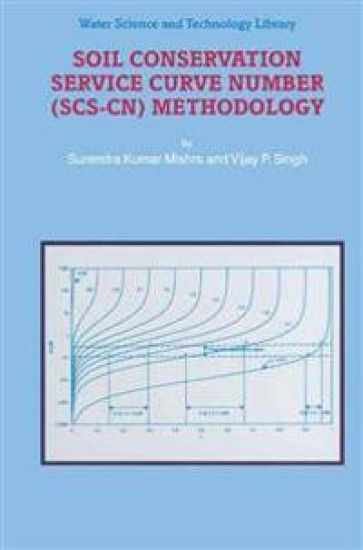
The Soil Conservation Service (SCS) curve number (CN) method is one of the most popular methods for computing the runoff volume from a rainstorm. It is popular because it is simple, easy to understand and apply, and stable, and accounts for most of the runoff producing watershed characteristics, such as soil type, land use, hydrologic condition, and antecedent moisture condition. The SCS-CN method was originally developed for its use on small agricultural watersheds and has since been extended and applied to rural, forest and urban watersheds. Since the inception of the method, it has been applied to a wide range of environments. In recent years, the method has received much attention in the hydrologic literature. The SCS-CN method was first published in 1956 in Section-4 of the National Engineering Handbook of Soil Conservation Service (now called the Natural Resources Conservation Service), U. S. Department of Agriculture. The publication has since been revised several times. However, the contents of the methodology have been nonetheless more or less the same. Being an agency methodology, the method has not passed through the process of a peer review and is, in general, accepted in the form it exists. Despite several limitations of the method and even questionable credibility at times, it has been in continuous use for the simple reason that it works fairly well at the field level.
The Soil Conservation Service (SCS) curve number (CN) method is one of the most popular methods for computing the runoff volume from a rainstorm. It is popular because it is simple, easy to understand and apply, and stable, and accounts for most of the runoff producing watershed characteristics, such as soil type, land use, hydrologic condition, and antecedent moisture condition. The SCS-CN method was originally developed for its use on small agricultural watersheds and has since been extended and applied to rural, forest and urban watersheds. Since the inception of the method, it has been applied to a wide range of environments. In recent years, the method has received much attention in the hydrologic literature. The SCS-CN method was first published in 1956 in Section-4 of the National Engineering Handbook of Soil Conservation Service (now called the Natural Resources Conservation Service), U. S. Department of Agriculture. The publication has since been revised several times. However, the contents of the methodology have been nonetheless more or less the same. Being an agency methodology, the method has not passed through the process of a peer review and is, in general, accepted in the form it exists. Despite several limitations of the method and even questionable credibility at times, it has been in continuous use for the simple reason that it works fairly well at the field level.