Kirjojen hintavertailu – 12 903 724 kirjaa ja 27 kauppaa
Kirjailija
S. K. Srivastava
Kirjat ja teokset yhdessä paikassa: 6 kirjaa, julkaisuja vuosilta 1998–2026, suosituimpiin kuuluu Comprehensive Data Structures and Algorithms in Python. Vertaile teosten hintoja ja tarkista saatavuus suomalaisista kirjakaupoista.
Data Structures and Algorithms are important subjects in any university curriculum for the computer science stream. It provides a great tool in the hands of software engineers and plays a significant role in software design and development. It is also becoming a must-have skill for many competitions and job interviews in the software industry. This book covers the topics useful for students and also for software developers working in the industry. The concepts are explained in a step-wise manner and illustrated with numerous figures, text, examples and immediate code samples, which helps in better understanding of data structures and algorithms with their implementation. There are exercises at the end of the chapters that enable students to explore more and build a better foundation of the subject. The book has more than 500 illustrations, code samples, and problems. Solutions for exercises are also available with the programs. Students can use it for self-learning, and developers can use it for providing efficient solutions for their day-to-day development problems. After completion of this book, students will have a good understanding of Data Structures and Algorithms concepts and implementation. Software engineers will be able to provide better solutions with appropriate data structures and efficient algorithms. WHAT YOU WILL LEARN ● Fundamentals of data structures and algorithms. ● Algorithms analysis. ● A variety of data structures and algorithms useful for software design and development. ● How to efficiently use different data structures and algorithms. ● When and where to use appropriate data structures and algorithms. ● Data structures and algorithms concepts with implementation. ● Approach to solve problems using the right data structures and algorithms. WHO THIS BOOK IS FOR Students who want to self-study data structures and algorithms for their university curriculum subject and to enter software industry. It is also useful for software engineers who want to learn it to solve day to day problems with better software design and writing efficient code.
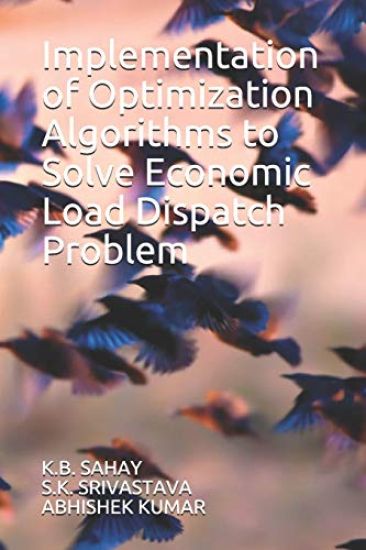
Optimization problems are real world problems we encounter in many areas such as mathematics, engineering, science, business, and economics, e.g. in product and process design, production, traffic control, scheduling and even strategic planning. Optimization is a discipline of dealing with those kinds of problems where one has to minimize or maximize one or more objectives that are functions of some integer or real variables without exploiting the given constraints. For decades' scientists are researching to emerge out with modified and faster techniques. In this book, history of Optimization as well as various optimization techniques like genetic algorithm, ant colony optimization, pattern search, particle swarm optimization, Artificial Bee Colony, Simulated Annealing & Hybrid Optimization techniques have been discussed for solving various optimization problems. Due to the various optimization techniques, available nowadays the solution of every complex problems can be done in acceptable times. The results confirm superior performance of the proposed algorithms in solving many real-world problems. Therefore, Optimization is a mathematical tool to find the maximum or minimum of a function in some feasible region. There is no any industry which is not involved in the solution of optimization problems. In the operational planning of power system, Economic load dispatch (ELD) is a common task which concern with the optimization problems. The objective of ELD problem is to schedule the output of the connected units of the plant so as to fulfil the load demand at minimum operating cost while satisfying all operational constraints. Here, Genetic Algorithm & Simulated Annealing have been implemented to solve ELD problem for IEEE 5, 6, 14 bus system, Standard 15- & 20-Unit thermal generating system. Economic load dispatch problem is one of the most important ones in the power system operation and planning. The main objective of the economic load dispatch problem is to determine optimal combination of power output of all generating units so as to meet the required particular load demand at minimum cost of generation while satisfying the system constraints such as equality and non-equality constraint. The two major factors to be considered while dispatching power to generating units are the cost of generation and the quantity of power supplied. The relation between the cost of generation and the power is approximated by a quadratic polynomial equation and is solved by mathematical programming techniques. In past year numbers of techniques have been utilized to solving the economic load dispatch problem, some of these techniques are the conventional optimization techniques and some are based on the intelligent technique. The objective of this book is to study different naturally inspired intelligent optimization techniques & also to solve economic load dispatch (ELD) problem by considering equality and inequality constraints to satisfy the consumers demand. In this book standard IEEE 5, 6, 14 bus system, standard 15 & 20-unit thermal generating system have been considered for ELD operation. Here Genetic Algorithm & Simulated Annealing algorithm have been implemented to solve ELD problem. The main objective of the book work is summarized as follows. Study of different naturally inspired intelligent optimization techniques & history of optimization. Finding the solution of ELD problem, so minimization of the total fuel cost by satisfying the power system constraints. Using the GA and SA techniques to find out the optimal solution for the ELD problem. Investigate the effectiveness of these methods for ELD problem with losses. Compare the results obtained from these two methods, i.e. Genetic Algorithm (GA) and Simulated Annealing (SA). This book has been arranged in six chapters. Lt. Kishan Bhushan SahayProf. S. K. SrivastavaAbhishek Kumar
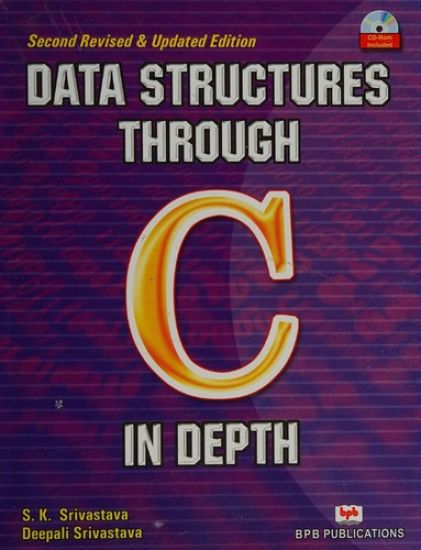
This book is written in a simple manner and is very easy to understand. It describes the theory with examples step by step. It contains the description of writing tehse steps in programs in very easy and understanble manner.
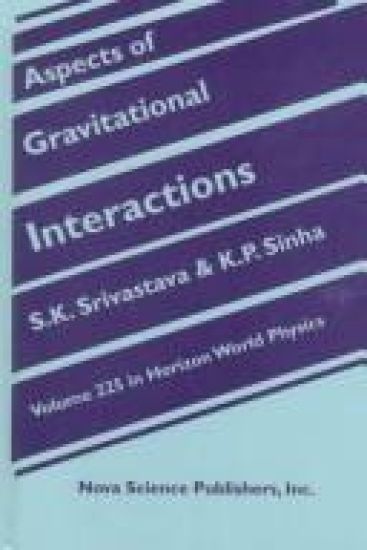
The twentieth century has brought enormous changes in the physicist's understanding of the fundamental nature of the physical world. These changes were ushered in the century's first decade, with the advent of relativity and quantum theory. With advancing knowledge, the mystery surrounding the ultimate nature of the physical world has deepened, not lessened, and the search for the Holy Grail of a 'Grand Unified Theory' or 'Theory of Everything' continues. This book reveals, in considerable detail, the concepts that have arisen as a result of that search -- the 'state of art'.