

Kirjailija
S M Barrett
Kirjat ja teokset yhdessä paikassa: 6 kirjaa, julkaisuja vuosilta 1996–2022, suosituimpiin kuuluu Geronimo. Vertaile teosten hintoja ja tarkista saatavuus suomalaisista kirjakaupoista.
Nimi esiintyy myös muodoissa: S. M. Barrett
6 kirjaa
Kirjojen julkaisuvuodet: 1996–2022.

This is a reproduction of the original artefact. Generally these books are created from careful scans of the original. This allows us to preserve the book accurately and present it in the way the author intended. Since the original versions are generally quite old, there may occasionally be certain imperfections within these reproductions. We're happy to make these classics available again for future generations to enjoy
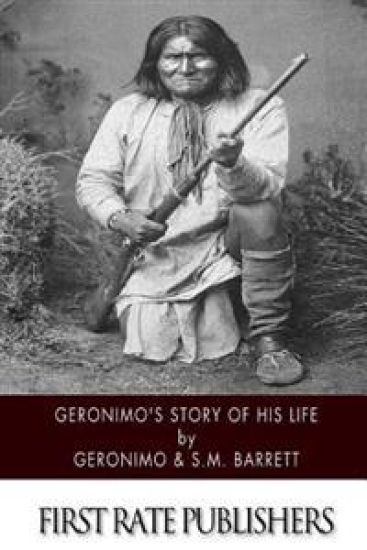
Geronimo's Story of His Life
S. M. Barrett; Geronimo
Createspace Independent Publishing Platform
2015
nidottu
Halvin toimitettuna 12,60 €
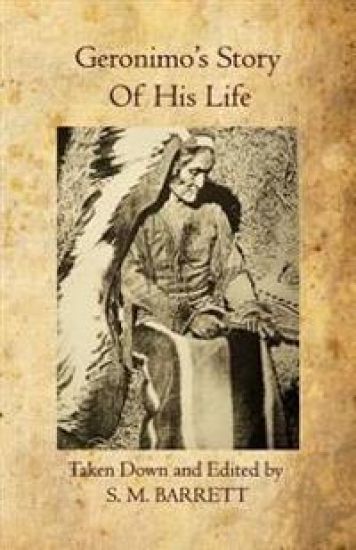
Geronimo's Story of His Life
S. M. Barrett
Createspace Independent Publishing Platform
2011
nidottu
Halvin toimitettuna 23,50 €
Thank you for checking out this book by Theophania Publishing. We appreciate your business and look forward to serving you soon. We have thousands of titles available, and we invite you to search for us by name, contact us via our website, or download our most recent catalogues. While Geronimo said he was never a chief, he was a military leader. As a Chiricahua Apache, this meant he was one of many people with special spiritual insights and abilities known to Apache people as "Power". Among these were the ability to walk without leaving tracks; the abilities now known as telekinesis and telepathy; and the ability to survive gunshot. Geronimo was wounded numerous times by both bullets and buckshot, but survived. Apache men chose to follow him of their own free will, and offered first-hand eyewitness testimony regarding his many "powers". They declared that this was the main reason why so many chose to follow him: they thought he was favored or protected by "Usen", the Apache high-god. Geronimo's "powers" were considered to be so great that he personally painted the faces of the warriors who followed him to reflect their protective effect. Though outnumbered, Geronimo fought against both Mexican and United States troops and became famous for his daring exploits and numerous escapes from capture up to 1886. At the end of his military career, he led a small band of 36 men, women, and children. They evaded thousands of Mexican and American troops for over a year, making him the most famous Native American of the time and earning him the title of the "worst Indian who ever lived" among white settlers. His band was one of the last major forces of independent Native American warriors who refused to acknowledge the United States occupation of the American West. In February 1909, Geronimo was thrown from his horse while riding home, and had to lie in the cold all night before a friend found him extremely ill. He died of pneumonia on February 17, 1909, as a prisoner of the United States at Fort Sill, Oklahoma. On his deathbed, he confessed to his nephew that he regretted his decision to surrender.
Gesenius' Hebrew Grammar
A E Cowley; S M Barrett; Wilhelm Gesenius
Dover Publications Inc.
2006
nidottu
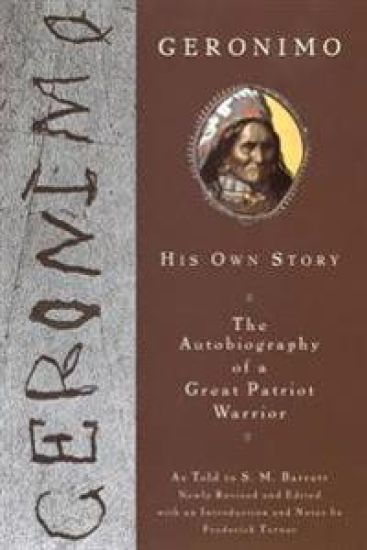
This book contains one of the most extraordinary and invaluable documents in the annals of Native American history - the authentic testament of a remarkable "war shaman" who for several years held off both Mexico and the United States in fierce defense of Apache lands. During 1905 and 1906, Geronimo, the legendary Apache warrior and honorary war chief, dictated his story through a native interpreter to S. M. Barrett, then superintendent of schools in Lawton, Oklahoma. As Geronimo was by then a prisoner of war, Barrett had made appeals all the way up the chain of command to President Teddy Roosevelt for persmission to record the words of the "Indian outlaw." Geronimo came to each interview knowing exactly what he wanted to cover, beginning with his telling of the Apache creation story. When, at the end of the first session, Barrett posed a question, the only answer he received was a pronouncement - "Write what I have spoken."