Kirjojen hintavertailu – 12 903 724 kirjaa ja 27 kauppaa
Kirjailija
S. M. Feroze
Kirjat ja teokset yhdessä paikassa: 8 kirjaa, julkaisuja vuosilta 2011–2022, suosituimpiin kuuluu Sustainable Development of Rice Farming in India. Vertaile teosten hintoja ja tarkista saatavuus suomalaisista kirjakaupoista.
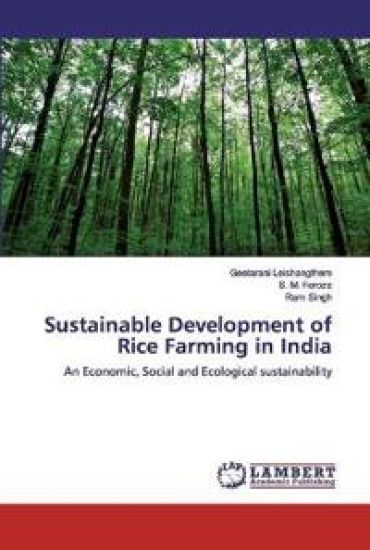
Sustainable agriculture is regarded as the successful management of resources for agriculture to satisfy the changing human needs while maintaining or enhancing the quality of environment and conserving natural resources. It integrates three main goals i.e., environmental health, economic profitability, and social equity. Rice has supported a greater number of people as it is the staple food of the North Eastern Region of India. Nearly half of the global population is dependent on rice. Asia remains the main center of production and consumption of rice. This book explores the factors which have contributed to the sustainability of rice production over the eight or nine thousand years for which rice has been produced and examine the economic, social and ecological sustainability of rice farming at district as well as farm level. Sustainability is the maintenance or improvement of production levels and protection of natural resources, within the context of economic viability, social acceptability and ecologically adaptable.
In recent years, microfinance in India has emerged as the most suitable and practical alternative to conventional banking in reaching the hitherto unreached poor population. Microfinance enables the poor people to be thrifty and helps them in availing the credit and other financial services for improving their income and living standards. The Self-help Group (SHG)-Bank Linkage Programme was formally launched in 1992 as a flagship programme by National Bank for Agriculture and Rural Development (NABARD) and aptly supported by the Reserve Bank of India (RBI) through its policy support. The programme envisages organisation of the rural poor into SHGs for building their capacities to manage their own finances and then negotiate bank credit on commercial terms. The poor are encouraged to voluntarily come together to save small amounts regularly and extend micro loans among themselves. Once the group attains required maturity of handling larger resources, the bank credit follows. This book explains the concepts associated with microfinance, traces its progress and performance and examines the role of government agencies in its promotion. It also highlights the role of microfinance in the economic empowerment of women and as a tool of financial inclusion. A case study of microfinance in Haryana (a relatively developed state of North India) also forms part of the book.