
Kirjojen hintavertailu – 12 903 724 kirjaa ja 27 kauppaa

Kirjailija

S.M. Shiva Nagendra

Kirjat ja teokset yhdessä paikassa: 2 kirjaa, julkaisuja vuosilta 2006–2010, suosituimpiin kuuluu Artificial Neural Networks in Vehicular Pollution Modelling. Vertaile teosten hintoja ja tarkista saatavuus suomalaisista kirjakaupoista.

2 kirjaa

Kirjojen julkaisuvuodet: 2006–2010.

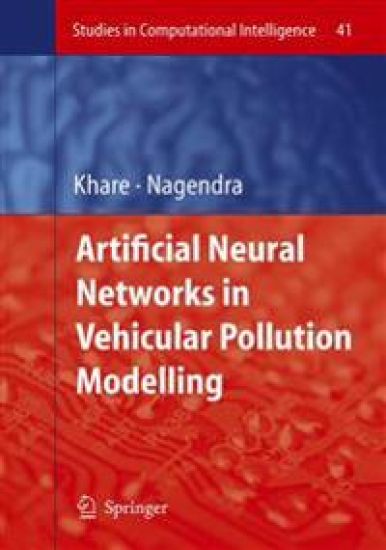
Artificial Neural Networks in Vehicular Pollution Modelling

Artificial Neural Networks in Vehicular Pollution Modelling

Mukesh Khare; S.M. Shiva Nagendra

Springer-Verlag Berlin and Heidelberg GmbH Co. K
2010
nidottu
Artificial neural networks (ANNs), which are parallel computational models, comprising of interconnected adaptive processing units (neurons) have the capability to predict accurately the dispersive behavior of vehicular pollutants under complex environmental conditions. This book aims at describing step-by-step procedure for formulation and development of ANN based VP models considering meteorological and traffic parameters. The model predictions are compared with existing line source deterministic/statistical based models to establish the efficacy of the ANN technique in explaining frequent dispersion complexities in urban areas. The book is very useful for hardcore professionals and researchers working in problems associated with urban air pollution management and control.
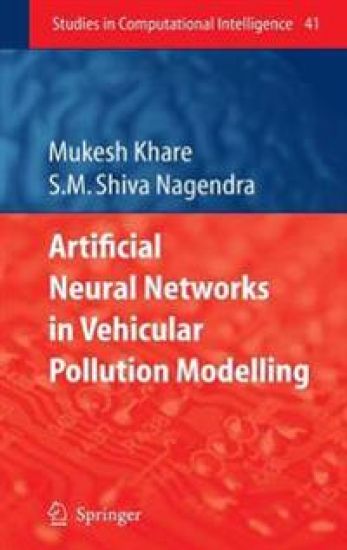
Artificial Neural Networks in Vehicular Pollution Modelling

Artificial Neural Networks in Vehicular Pollution Modelling

Mukesh Khare; S.M. Shiva Nagendra

Springer-Verlag Berlin and Heidelberg GmbH Co. K
2006
sidottu
Artificial neural networks (ANNs), which are parallel computational models, comprising of interconnected adaptive processing units (neurons) have the capability to predict accurately the dispersive behavior of vehicular pollutants under complex environmental conditions. This book aims at describing step-by-step procedure for formulation and development of ANN based VP models considering meteorological and traffic parameters. The model predictions are compared with existing line source deterministic/statistical based models to establish the efficacy of the ANN technique in explaining frequent dispersion complexities in urban areas. The book is very useful for hardcore professionals and researchers working in problems associated with urban air pollution management and control.