Kirjojen hintavertailu – 12 903 725 kirjaa ja 27 kauppaa

Kirjailija

S. Paul Kapur

Kirjat ja teokset yhdessä paikassa: 5 kirjaa, julkaisuja vuosilta 2007–2016, suosituimpiin kuuluu Dangerous Deterrent. Vertaile teosten hintoja ja tarkista saatavuus suomalaisista kirjakaupoista.

5 kirjaa

Kirjojen julkaisuvuodet: 2007–2016.

Jihad as Grand Strategy

Jihad as Grand Strategy

S. Paul Kapur

Oxford University Press Inc
2016
sidottu
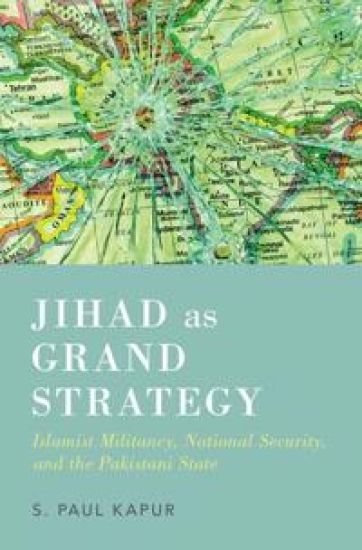
Islamist militants based in Pakistan have played a major role in terrorism around the world and pose a significant threat to regional and international security. Although the Pakistan-militant connection has received widespread attention only in recent years, it is not a new phenomenon. Pakistan has, since its inception in the wake of World War II, used Islamist militants to wage jihad in order to compensate for severe political and material weakness. This use of militancy has become so important that it is now a central component of Pakistani grand strategy; supporting jihad is one of the principal means by which the Pakistani state seeks to produce security for itself. Contrary to conventional wisdom, the strategy has not been wholly disastrous. It has achieved important domestic and international successes, enabling Pakistan to confront stronger adversaries and shape its strategic environment without the costs and risks of direct combat, and to help promote internal cohesion to compensate for its weak domestic political foundations. Recently, however, these successes of Pakistan's militant strategy have given way to serious problems. The militant organizations that Pakistan nurtured over the decades are increasingly exceeding its control; continued support for jihad diverts scarce resources from pressing domestic projects, impeding the country's internal development; and the militant campaign's repeated provocations have led India to adopt a more aggressive conventional military posture. As Paul Kapur shows in Jihad as Grand Strategy, these developments significantly undermine Pakistani interests, threatening to leave it less politically cohesive and externally secure than it was before. Thus, despite its past benefits, the strategy has outlived its utility, and Pakistan will have to abandon it in order to avoid catastrophe. This will require not simply a change of policy, but a thoroughgoing reconceptualization of the Pakistani state.
India, Pakistan, and the Bomb

India, Pakistan, and the Bomb

Sumit Ganguly; S. Paul Kapur

Columbia University Press
2012
pokkari
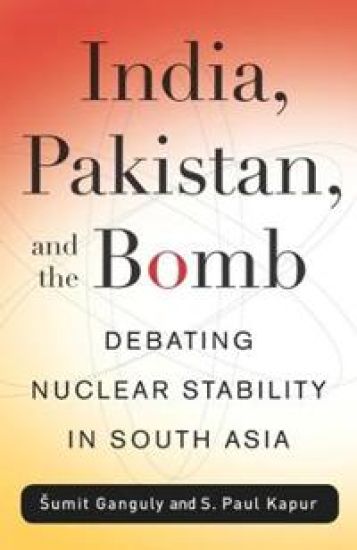
In May 1998, India and Pakistan put to rest years of speculation as to whether they possessed nuclear technology and openly tested their weapons. Some believed nuclearization would stabilize South Asia; others prophesized disaster. Authors of two of the most comprehensive books on South Asia's new nuclear era, Sumit Ganguly and S. Paul Kapur, offer competing theories on the transformation of the region and what these patterns mean for the world's next proliferators. Ganguly begins with an outcome-based approach emphasizing the results of militarized conflict. In his opinion, nuclear weapons have prevented Indo-Pakistani disputes from blossoming into full-scale war. Kapur counters with a process-based approach stressing the specific pathways that lead to conflict and escalation. From his perspective, nuclear weapons have fueled a violent cycle of Pakistani provocation and Indian response, giving rise to a number of crises that might easily have spun into chaos. Kapur thus believes nuclear weapons have been a destabilizing force in South Asia and could similarly affect other parts of the world. With these two major interpretations, Ganguly and Kapur tackle all sides of an urgent issue that has profound regional and global consequences. Sure to spark discussion and debate, India, Pakistan, and the Bomb thoroughly maps the potential impact of nuclear proliferation.
India, Pakistan, and the Bomb

India, Pakistan, and the Bomb

Sumit Ganguly; S. Paul Kapur

Columbia University Press
2010
sidottu
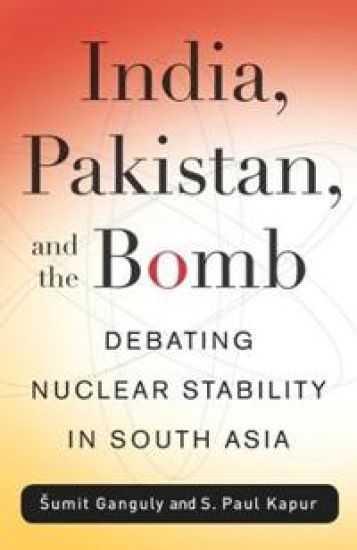
In May 1998, India and Pakistan put to rest years of speculation as to whether they possessed nuclear technology and openly tested their weapons. Some believed nuclearization would stabilize South Asia; others prophesized disaster. Authors of two of the most comprehensive books on South Asia's new nuclear era, Sumit Ganguly and S. Paul Kapur, offer competing theories on the transformation of the region and what these patterns mean for the world's next proliferators. Ganguly begins with an outcome-based approach emphasizing the results of militarized conflict. In his opinion, nuclear weapons have prevented Indo-Pakistani disputes from blossoming into full-scale war. Kapur counters with a process-based approach stressing the specific pathways that lead to conflict and escalation. From his perspective, nuclear weapons have fueled a violent cycle of Pakistani provocation and Indian response, giving rise to a number of crises that might easily have spun into chaos. Kapur thus believes nuclear weapons have been a destabilizing force in South Asia and could similarly affect other parts of the world. With these two major interpretations, Ganguly and Kapur tackle all sides of an urgent issue that has profound regional and global consequences. Sure to spark discussion and debate, India, Pakistan, and the Bomb thoroughly maps the potential impact of nuclear proliferation.
Dangerous Deterrent

Dangerous Deterrent

S. Paul Kapur

Stanford University Press
2007
pokkari
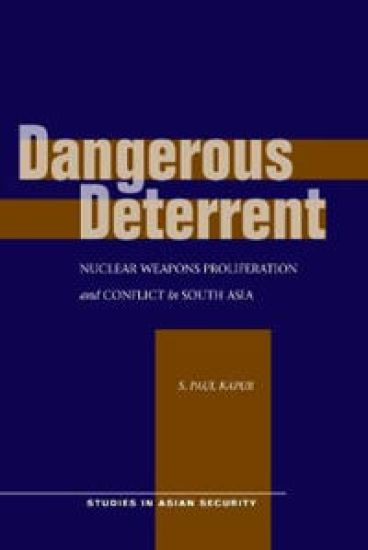
Does the proliferation of nuclear weapons cause ongoing conflicts to diminish or to intensify? The spread of nuclear weapons to South Asia offers an opportunity to investigate this crucial question. Optimistic scholars argue that by threatening to raise the cost of war astronomically, nuclear weapons make armed conflict in South Asia extremely unlikely. Pessimistic scholars maintain that nuclear weapons make the subcontinent war-prone, because of technological, political, and organizational problems. This book argues that nuclear weapons have destabilized the subcontinent, principally because of their interaction with India and Pakistan's territorial preferences and relative military capabilities. These findings challenge both optimistic and pessimistic conventional wisdom and have implications beyond South Asia.
Dangerous Deterrent

Dangerous Deterrent

S. Paul Kapur

Stanford University Press
2007
sidottu
Does the proliferation of nuclear weapons cause ongoing conflicts to diminish or to intensify? The spread of nuclear weapons to South Asia offers an opportunity to investigate this crucial question. Optimistic scholars argue that by threatening to raise the cost of war astronomically, nuclear weapons make armed conflict in South Asia extremely unlikely. Pessimistic scholars maintain that nuclear weapons make the subcontinent war-prone, because of technological, political, and organizational problems. This book argues that nuclear weapons have destabilized the subcontinent, principally because of their interaction with India and Pakistan's territorial preferences and relative military capabilities. These findings challenge both optimistic and pessimistic conventional wisdom and have implications beyond South Asia.