Kirjojen hintavertailu – 12 859 819 kirjaa ja 27 kauppaa

Kirjailija

S. Sayyid

Kirjat ja teokset yhdessä paikassa: 8 kirjaa, julkaisuja vuosilta 2005–2024, suosituimpiin kuuluu A Postcolonial People. Vertaile teosten hintoja ja tarkista saatavuus suomalaisista kirjakaupoista.

8 kirjaa

Kirjojen julkaisuvuodet: 2005–2024.

Islamism as Philosophy

Islamism as Philosophy

S. Sayyid

Bloomsbury Academic
2024
sidottu
Islamism as Philosophy explores some of the philosophical assumptions that frame the way in which the rise of Muslim political identity throughout the planet presents challenges which are not only cultural and geopolitical but also conceptual. In a series of reflections, this book teases out some of the complexities of the emergence of Muslim political identities, complexities which are often covered up by the latest screaming headline. The book argues that a world in which a quarter of the population seems increasingly conscious of its "Muslimness" cannot be peaceful, harmonious or just without careful attention being paid to the Muslim question. Islamism as Philosophy's argues that an increasing consciousness of the Muslim is neither superficial nor transitory and as such requires rigorous and serious consideration. If the Muslim Awakening is a wave of world historical import akin to the emergence of nationalism in the 19th and 20th century, then the choices that present themselves are either to try and roll back the tide or learn to surf.
Recalling the Caliphate

Recalling the Caliphate

S. Sayyid

C HURST CO PUBLISHERS LTD
2022
nidottu
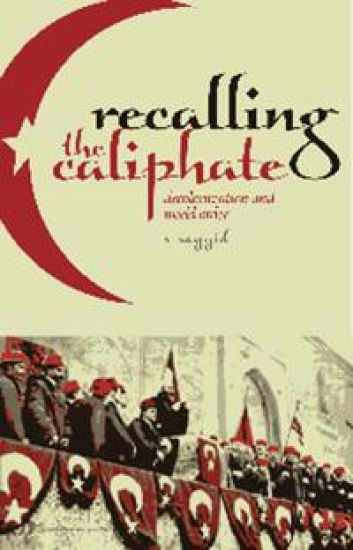
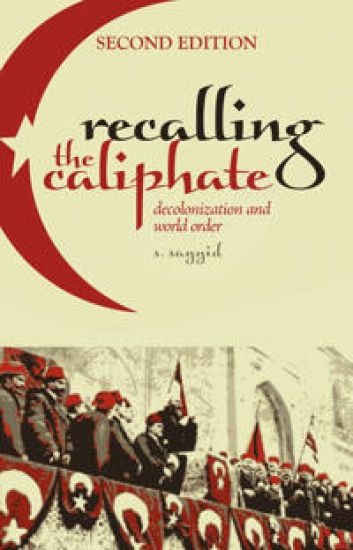
As late as the last quarter of the twentieth century there were expectations that Islam's political and cultural influence would dissipate as the advance of westernization brought modernization and secularization in its wake. Not only has Islam failed to follow the trajectory pursued by variants of Christianity, namely confinement to the private sphere and depoliticisation, but it has also forcefully re-asserted itself as mobilizations in its name challenge the global order in a series of geopolitical, cultural and philosophical struggles. The continuing (if not growing) relevance of Islam suggests that global history cannot simply be presented as a scaled up version of that of the West. Quests for Muslim autonomy present themselves in several forms - local and global, extremist and moderate, conservative and revisionist - in the light of which the recycling of conventional narratives about Islam becomes increasingly problematic. Not only are these accounts inadequate for understanding Muslim experiences, but by relying on them many Western governments pursue policies that are counter-productive and ultimately hazardous for Muslims and non-Muslims alike. "Recalling the Caliphate" engages critically with the interaction between Islam and the political in context of a post colonial world that continues to resist profound decolonization. In the first part of this book Sayyid focuses on how demands for Muslim autonomy are debated in terms such as democracy, cultural relativism, secularism and liberalism. Each chapter analyzes the displacements and evasions by which the decolonization of the Muslim world continues to be deflected and deferred, while the latter part of the book builds on this critique, exploring and attempts to accelerate the decolonization of the Muslim Ummah.
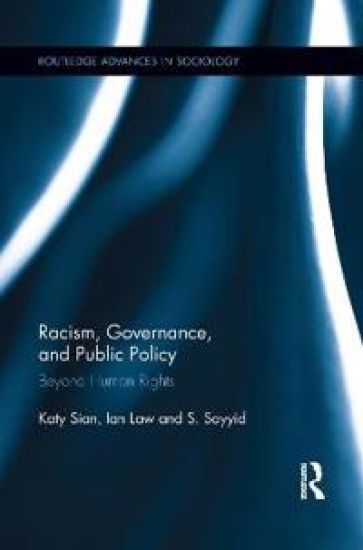
Racism, Governance, and Public Policy

Racism, Governance, and Public Policy

Katy Sian; Ian Law; S. Sayyid

Routledge
2015
nidottu
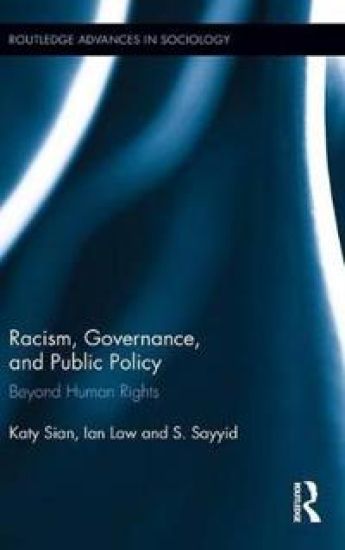
This book presents a new framing of policy debates on the question of racism through a discursive critique of contemporary issues and contexts, drawing on a program of new European research carried out between 2010 and 2013, with a central focus on the UK. This includes analysis of the discursive construction of Muslims in three contexts: the workplace, education and the media. Informed by a fundamental critique of both the "post-racial" and the limitations of human rights strategies, it identifies the ongoing significance of contemporary raciality in governance strategies and develops a new radical agenda for addressing these processes, advocating strategies of "racism reduction."
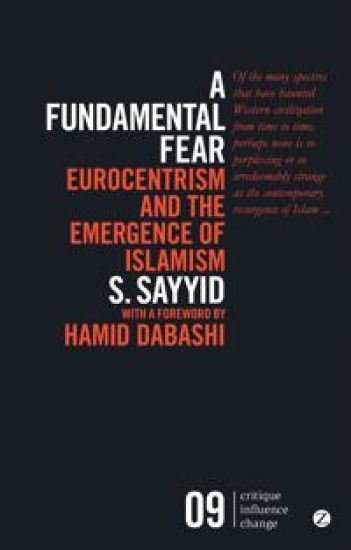
A Fundamental Fear

A Fundamental Fear

S. Sayyid

Zed Books Ltd
2015
nidottu
The fear and anxiety aroused by Islamism is not a myth, nor is it simply a consequence of terrorism or fundamentalism. Writing in 1997, before 9/11 and before the austerity that has bred a new generation of far right groups across Europe and the US, S. Sayyid warned of a spectre haunting Western civilization. This groundbreaking book, banned by the Malaysian government, is both an analysis of the conditions that have made ‘Islamic fundamentalism’ possible and a provocative account of the ways in which Muslim identities have come to play an increasingly political role throughout the world. This is a pioneering, provocative and intricately crafted study, which shows the challenge of Islamism is not only geopolitical or even cultural but also epistemological.
Recalling the Caliphate

Recalling the Caliphate

S. Sayyid

C Hurst Co Publishers Ltd
2014
nidottu
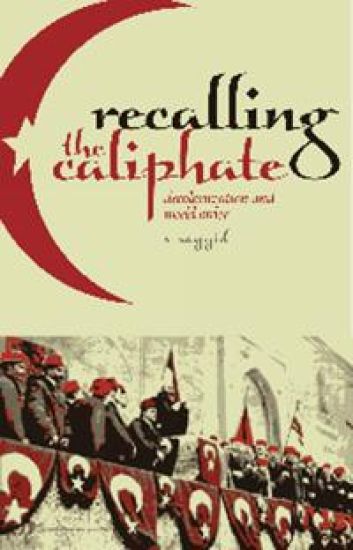
As late as the last quarter of the twentieth century there were expectations that Islam's political and cultural influence would dissipate as the advance of westernization brought modernization and secularization in its wake. Not only has Islam failed to follow the trajectory pursued by variants of Christianity, namely confinement to the private sphere and depoliticisation, but it has also forcefully re-asserted itself as mobilizations in its name challenge the global order in a series of geopolitical, cultural and philosophical struggles. The continuing (if not growing) relevance of Islam suggests that global history cannot simply be presented as a scaled up version of that of the West. Quests for Muslim autonomy present themselves in several forms - local and global, extremist and moderate, conservative and revisionist - in the light of which the recycling of conventional narratives about Islam becomes increasingly problematic. Not only are these accounts inadequate for understanding Muslim experiences, but by relying on them many Western governments pursue policies that are counter-productive and ultimately hazardous for Muslims and non-Muslims alike. "Recalling the Caliphate" engages critically with the interaction between Islam and the political in context of a post colonial world that continues to resist profound decolonization. In the first part of this book Sayyid focuses on how demands for Muslim autonomy are debated in terms such as democracy, cultural relativism, secularism and liberalism. Each chapter analyzes the displacements and evasions by which the decolonization of the Muslim world continues to be deflected and deferred, while the latter part of the book builds on this critique, exploring and attempts to accelerate the decolonization of the Muslim Ummah.
Recalling the Caliphate

Recalling the Caliphate

S. Sayyid

C Hurst Co Publishers Ltd
2014
sidottu
As late as the last quarter of the twentieth century there were expectations that Islam's political and cultural influence would dissipate as the advance of westernization brought modernization and secularization in its wake. Not only has Islam failed to follow the trajectory pursued by variants of Christianity, namely confinement to the private sphere and depoliticisation, but it has also forcefully re-asserted itself as mobilizations in its name challenge the global order in a series of geopolitical, cultural and philosophical struggles. The continuing (if not growing) relevance of Islam suggests that global history cannot simply be presented as a scaled up version of that of the West. Quests for Muslim autonomy present themselves in several forms - local and global, extremist and moderate, conservative and revisionist - in the light of which the recycling of conventional narratives about Islam becomes increasingly problematic. Not only are these accounts inadequate for understanding Muslim experiences, but by relying on them many Western governments pursue policies that are counter-productive and ultimately hazardous for Muslims and non-Muslims alike. "Recalling the Caliphate" engages critically with the interaction between Islam and the political in context of a post colonial world that continues to resist profound decolonization. In the first part of this book Sayyid focuses on how demands for Muslim autonomy are debated in terms such as democracy, cultural relativism, secularism and liberalism. Each chapter analyzes the displacements and evasions by which the decolonization of the Muslim world continues to be deflected and deferred, while the latter part of the book builds on this critique, exploring and attempts to accelerate the decolonization of the Muslim Ummah.
Racism, Governance, and Public Policy

Racism, Governance, and Public Policy

Katy Sian; Ian Law; S. Sayyid

Routledge
2013
sidottu
This book presents a new framing of policy debates on the question of racism through a discursive critique of contemporary issues and contexts, drawing on a program of new European research carried out between 2010 and 2013, with a central focus on the UK. This includes analysis of the discursive construction of Muslims in three contexts: the workplace, education and the media. Informed by a fundamental critique of both the "post-racial" and the limitations of human rights strategies, it identifies the ongoing significance of contemporary raciality in governance strategies and develops a new radical agenda for addressing these processes, advocating strategies of "racism reduction."
A Postcolonial People

A Postcolonial People

S. Sayyid

C Hurst Co Publishers Ltd
2005
nidottu
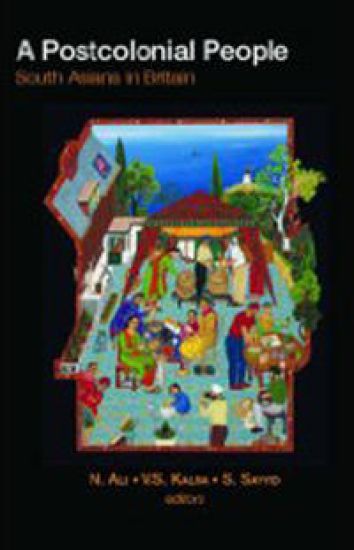
"A Postcolonial People" is a lively, critical survey of contemporary South Asian Britain that fills a conspicuous gap in the literature. This specially commissioned book combines conceptually innovative analysis with empirically rich studies to map out the diversity of the British Asian way of life. The migration and settlement of South Asians in large numbers in Britain is examined in the context of the postcolonial condition, in which boundaries between the West and Rest, centre and periphery, home and abroad are increasingly blurred. The contributors provide both fresh insights and vital information on the Asian British experience in its socio-economic, historical and cultural dimensions. The topics covered include: identity, the transformation of urban space, policing, healthcare, electoral politics, music, British Asian theatre and cinema.