Kirjojen hintavertailu – 12 859 829 kirjaa ja 27 kauppaa
Kirjailija
S. Subramanian
Kirjat ja teokset yhdessä paikassa: 19 kirjaa, julkaisuja vuosilta 2013–2023, suosituimpiin kuuluu Futilitarianism. Vertaile teosten hintoja ja tarkista saatavuus suomalaisista kirjakaupoista.
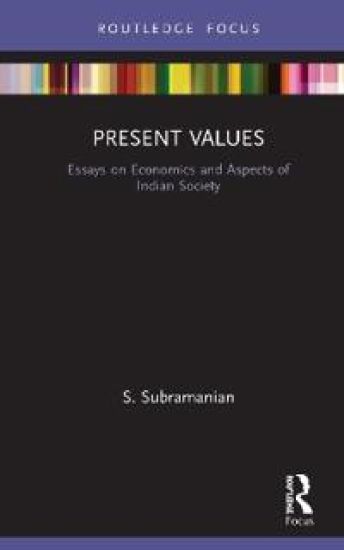
This volume is about economists, economics, and issues of concern to Indian society. Some essays are expository, and some satirical. Together, they offer a commentary on the state of the discipline of economics today and on aspects of contemporary India’s society and polity. The volume affords insights into, among other things, - the pervasive influence of economists such as Kenneth Arrow and Anthony Atkinson, and thinkers such as Tom Paine, Jonathan Swift, and Dadabhai Naoroji;- the place of markets and game theory (and even crime fiction!) in present-day economics; - the affectations and convoluted mathematisation of a good deal of ‘mainstream’ economics; and- India’s recent political climate, and the conduct of various arms of the legislature, the executive, and the judiciary in the country. Engaging and lucidly written, this volume should be of interest to scholars of economics, political science, development studies, South Asian studies, and, above all, the general reader.
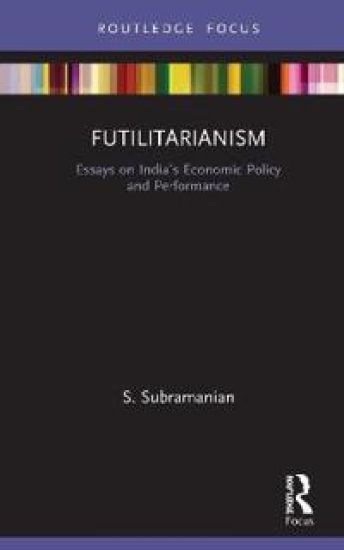
This volume is an overview of, and commentary on, aspects of contemporary India and its socio-economic policies. It focuses on India’s economy and society in recent years, and in the process it addresses structural issues of development such as those of population, poverty, inequality, health, and social exclusion. It reviews the adequacy and appropriateness of governmental response to these problems, in terms of public policy, narrowly conceived, and philosophical orientation, more broadly conceived. The concern is not only with economic achievement and human development but also with the framework of civic rights, personal liberty, and institutional autonomy within which the exercise of governance is perceived to be carried out. The essays in this volume were originally written with the general-reader-as-involved-citizen very much in mind as the intended target. However, it should also be of interest to scholars of economics, political science, development studies, and South Asian studies.
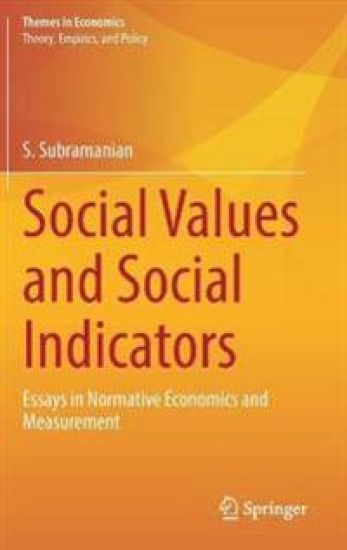
The book is a collection of essays written since 2010, and dealing, in one way or another, with the place of values in economic analysis. The centrality of values in the collection is not surprising, given that the thematic concerns informing the essays in the book relate principally to methodological issues in economic enquiry, to the normatively constrained aggregation of personal preferences into collective choice, and to problems of logical coherence and ethical appeal in the axiom systems underlying the measurement of economic and social phenomena such as poverty, inequality and literacy. While many of the essays are more or less technical in nature, they are all explicitly motivated by considerations that go beyond the formalisms of presentation to an involvement with the role of moral reasoning in economic analysis. In particular, the essays emphasize the importance of ‘ought propositions’ in a science which is all too often regarded as being wholly and exclusively ‘positive’ in its orientation. The book should be of particular interest to researchers, students, and public policy makers.
The book is a collection of essays written since 2010, and dealing, in one way or another, with the place of values in economic analysis. The centrality of values in the collection is not surprising, given that the thematic concerns informing the essays in the book relate principally to methodological issues in economic enquiry, to the normatively constrained aggregation of personal preferences into collective choice, and to problems of logical coherence and ethical appeal in the axiom systems underlying the measurement of economic and social phenomena such as poverty, inequality and literacy. While many of the essays are more or less technical in nature, they are all explicitly motivated by considerations that go beyond the formalisms of presentation to an involvement with the role of moral reasoning in economic analysis. In particular, the essays emphasize the importance of ‘ought propositions’ in a science which is all too often regarded as being wholly and exclusively ‘positive’ in its orientation. The book should be of particular interest to researchers, students, and public policy makers.
This volume is an overview of, and commentary on, aspects of contemporary India and its socio-economic policies. It focuses on India’s economy and society in recent years, and in the process it addresses structural issues of development such as those of population, poverty, inequality, health, and social exclusion. It reviews the adequacy and appropriateness of governmental response to these problems, in terms of public policy, narrowly conceived, and philosophical orientation, more broadly conceived. The concern is not only with economic achievement and human development but also with the framework of civic rights, personal liberty, and institutional autonomy within which the exercise of governance is perceived to be carried out. The essays in this volume were originally written with the general-reader-as-involved-citizen very much in mind as the intended target. However, it should also be of interest to scholars of economics, political science, development studies, and South Asian studies.
This volume is about economists, economics, and issues of concern to Indian society. Some essays are expository, and some satirical. Together, they offer a commentary on the state of the discipline of economics today and on aspects of contemporary India’s society and polity. The volume affords insights into, among other things, - the pervasive influence of economists such as Kenneth Arrow and Anthony Atkinson, and thinkers such as Tom Paine, Jonathan Swift, and Dadabhai Naoroji;- the place of markets and game theory (and even crime fiction!) in present-day economics; - the affectations and convoluted mathematisation of a good deal of ‘mainstream’ economics; and- India’s recent political climate, and the conduct of various arms of the legislature, the executive, and the judiciary in the country. Engaging and lucidly written, this volume should be of interest to scholars of economics, political science, development studies, South Asian studies, and, above all, the general reader.
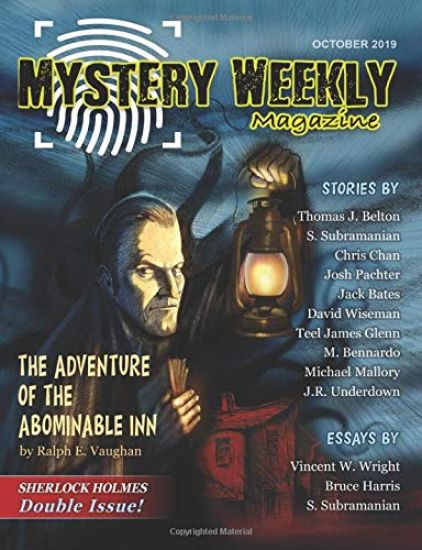
At the cutting edge of crime fiction, Mystery Weekly Magazine presents original short stories by the world's best-known and emerging mystery writers. The stories we feature in our monthly issues span every imaginable subgenre, including cozy, police procedural, noir, whodunit, supernatural, hardboiled, humor, and historical mysteries. Evocative writing and a compelling story are the only certainty. Get ready to be surprised, challenged, and entertained--whether you enjoy the style of the Golden Age of mystery (e.g., Agatha Christie, Arthur Conan Doyle), the glorious pulp digests of the early twentieth century (e.g., Dashiell Hammett, Raymond Chandler), or contemporary masters of mystery. In this issue: "The Adventure Of The Abominable Inn" by Ralph E. Vaughan is an episode that occurred while the world considered Sherlock Holmes but a shade pursuing houseboats upon the Styx. "Of Course He Pushed Him" by Chris Chan: This pastiche takes an alternate look at a famous fictional world. What would happen if one of fiction's most beloved characters were suspected of murdering his best friend? In "The Murderous Wood" by Thomas J Belton, it's 1917 in London when T. S. Eliot the poet meets Sir James Frazer the religious anthropologist to help Captain Robert Graves whose been accused of a ritual murder while on leave from the Western Front during WWI. In "The Case Of The Final Interview" by Teel James Glenn, the Holmes we know may not have been all we thought, nor Dr. Watson. "The Two-Body Problem" by Josh Pachter: In a tight job market, some academics will do anything to land a gig. In "Casualty Of The Bidding War" by Jack Bates, John Watson and Martha Hudson attempt to solve a murder without the assistance of their famous friend. "Hemingway's Hat" by David Wiseman is a cautionary tale asking how far will a desperate writer go to find the inspiration he craves? "Rousseau's Children" by M. Bennardo begins on the morning of a politically motivated execution, whereby a young journalist sees a chance for the condemned to be exonerated. In "The Adventure Of The Seven Nooses" by Michael Mallory, only Sherlock Holmes can decipher the deadly message concealed within a grisly collection of seven nooses delivered to a terrified client ... though the message, even the entire case, might prove to be something other than what it seems. "Counterpunch" by S. Subramanian: Being an account of 'Bull-dog' Drummond's Finally Final Round with Carl Petersen. In "The Body Pillow" by J. R. Underdown, poor old Geoffrey started the evening as their rich host and ended it murdered. Or ... was he murdered? Also presented are three essays on the works of Sir Arthur Conan Doyle: "An Indian Nobody's Affair With Mr Sherlock Holmes Of Baker Street" by S. Subramanian, "Words On A Page: Sherlock Holmes And The Variations Of Text" by Vincent W. Wright, and "The Reigate Squires Scrutinized" by Bruce Harris.
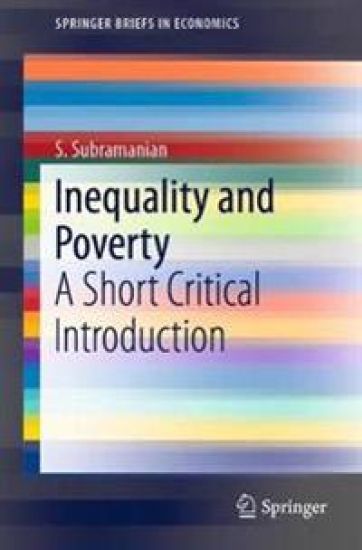
This book provides an entry into the subjects of disparity and deprivation, by attending to issues that have a bearing on certain salient philosophical and conceptual aspects of these subjects. The student doing a graduate course in the measurement of inequality and poverty is all too often plunged directly into the complexities of Schur-convex functions, dominance conditions, partial orders and the axiomatics of characterization theorems. Inequality and poverty as phenomena with profound social and moral implications for the world we live in tend to get submerged in a treatment of the subject that is more suggestive of applied mathematics than of the material conditions of life. This is in no way to deny that measurement must deal uncompromisingly with measurement, and therefore with the protocols of formal logic and technical rigour. Having said this, it seems fair to suggest that one’s appreciation of the formalities – as well as of the limitations and ambiguities -of measurement is only aided by a relatively gentle introduction to the subject. This would call for a prior, or accompanying, engagement with the underlying concepts, the philosophical bases, the political salience, the normative values, and the critical facts of the subjects under investigation. It is this necessary background that is emphasized in this book, which is a collection of articles published earlier in the popular press, and intended for consumption by any curious general reader or student with a taste for critical enquiry. The contents of the book will be useful as much for the aspiring scholar as for the interested lay reader looking for a gateway into the subject.
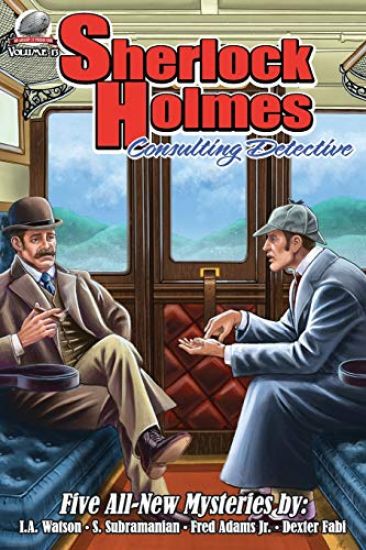
Cases Most Bizarre In their recorded exploits, Sherlock Holmes and Dr. Watson faced all kinds of mysteries; from the mundane to the most foul and insidious. They solved riddles involving blackmail, thievery and murder-each with the same devotion to serving justice no matter the outcome. In this latest collection of the bestselling series, Holmes and Watson will deal with three women all claiming to be the heir to a fortune, the brother of an old foe seeking revenge and a severed head sent to their apartment at 221B Baker Street. Writers I. A. Watson, S. Subramanian, Fred Adams Jr. and Dexter Fabi have created thrilling new adventures that will challenge the detective duo in the most bizarre ways ever imagined.
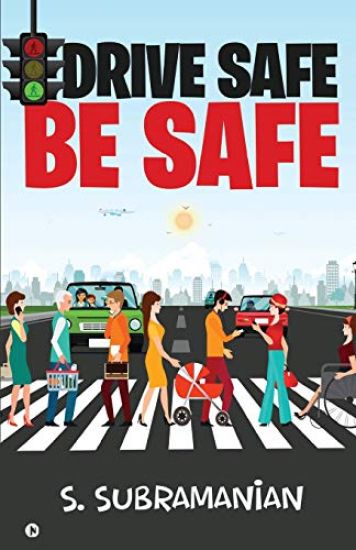
Here is a book, which embraces the entire population of our country irrespective of their caste religion, sex, and age. Automobiles and its developments had changed our way of life beyond our wildest dreams. It also brought us a number of serious problems like accidents, pollution, congestion etc. In 2017, India lost 4.07 Lakhs Crores. Because of accidents and congestion, pollution was the cause of death of 12.4 Lakh of people. The appalling human misery and economic losses by automobiles demand immediately implementable solutions. Many books have been written about this but; you will find this book is special and unique in many respects. In short 'THIS IS AN ACTION BOOK' however even small action will have an impact on society now and in future. Its main theme is 'YOU ARE THE ONLY PERSON WHO CAN AND SHOULD ENSURE YOUR OWN SAFETY.' Definitely, this is not for theoretical knowledge, but practical implementable recipes, which are bound to bring results.
In the last decade or so, and at a dizzyingly increasing rate, India has come to be recognized as 'a force to reckon with'. If it was 'India Shining' earlier, the present shibboleth is 'India Rising', or some other variant of it. This book is a satirical social commentary on contemporary India, aimed at correcting the view that the country has progressed to a point where it ought to be viewed either with exaggerated admiration or as a threat. The notion that it is a matter of legitimate urgency for India to be recognized, in quick order, as a super-power, as a permanent member of the United Nations' Security Council, and as 'number one' in the international cricket ratings, needs to be dispelled with. The book employs the literature of one's childhood and evocative line drawings to critically look at an unflattering list of the nation's real or imagined concerns: caste, pseudosecularism, minorityism, poverty, tradition, modernity, postcoloniality, liberalization, corruption, competition, nationalism, and NRI-ism.